Tickets Florence

History of Duomo Florence | Santa Reparta to Building of the Brunelleschi's Dome

The history of Duomo Florence is a fascinating journey that began before 1296 with the replacement of San Reparata church. Spearheaded by the Wool Merchants Guild, the construction faced challenges, leading to innovations by architects like Brunelleschi. From its origins in the 13th century to its completion in the 15th century, the Duomo has been of religious and cultural significance in Florence and beyond.

Brief timeline of Duomo Florence

  • 1296: Arnolfo di Cambio submits designs for Duomo Florence, and construction begins. 
  • 1418:* *Filippo Brunelleschi is awarded the project of completing the dome.
  • 1420: Construction of the dome begins. 
  • 1436: Construction of the cathedral, including the dome, is completed. The cathedral is consecrated by Pope Eugene IV.
  • 1601: Duomo Florence loses its bronze ball in a raging thunderstorm. 
  • 1871-1887: Decoration of the external façade of the Duomo Florence is completed. 
  • 1982: Duomo Florence is classified as a UNESCO World Heritage Site.  

Duomo Florence history explained in detail

The beginnings & growth

Before 1296

Before the iconic structure of Santa Maria del Fiore took shape, an older church called San Reparata stood on the site. Florence, emerging as a major European city, experienced a cultural and financial renaissance, fueled by thriving wool and banking industries. The Wool Merchants Guild spearheaded the construction of a new cathedral to replace San Reparata, forming the Opera del Duomo to oversee the project. The undertaking marked a period of unprecedented urban transformation, requiring the demolition of existing structures and rerouting of streets.
Construction challenges & Capomaestros

1296 - 1366

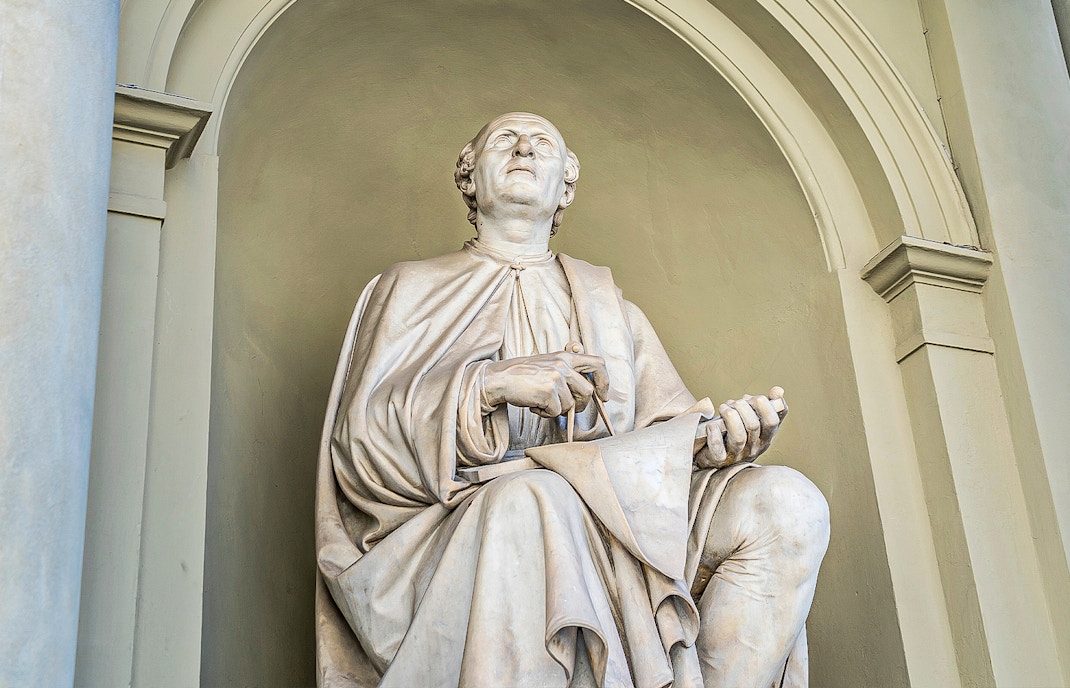
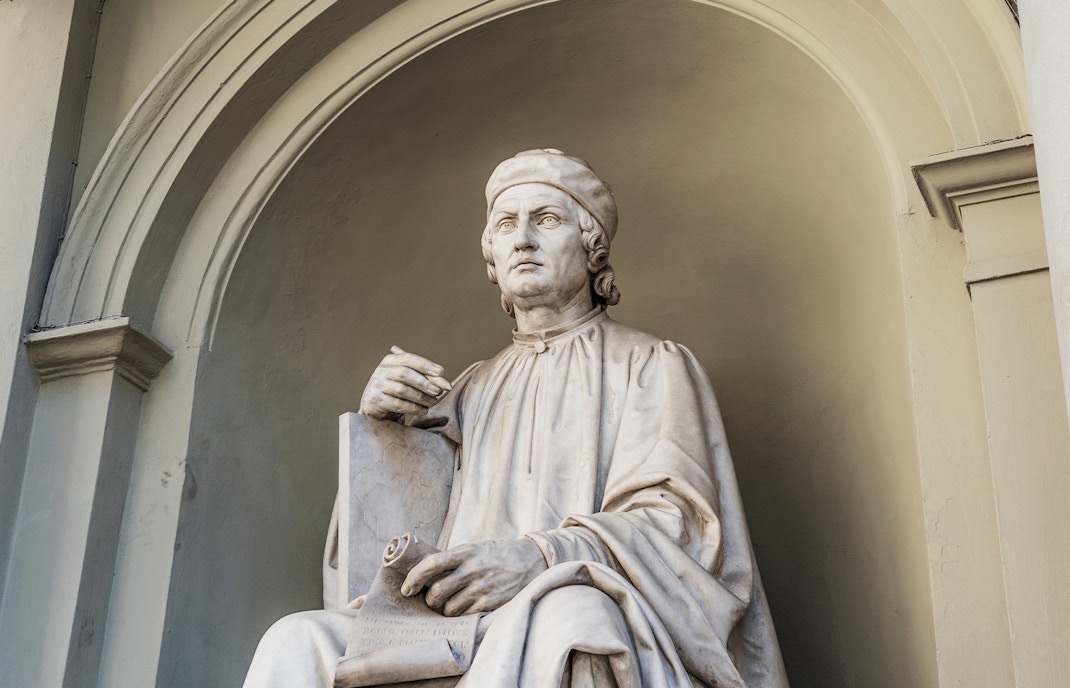
In 1296, construction commenced with Arnolfo di Cambio as the first capomaestro. However, the capomaestro role witnessed instability, rivalry, and corruption over the centuries. After Cambio's death, figures like Talenti, Giovanni Ghini, and Brunelleschi took charge. In 1366, a model competition was held to determine the final design for the cathedral. The winning model, focusing on shape and scale, laid the foundation for future capomaestros.

The Bell Tower - Campanile

1359 Onward

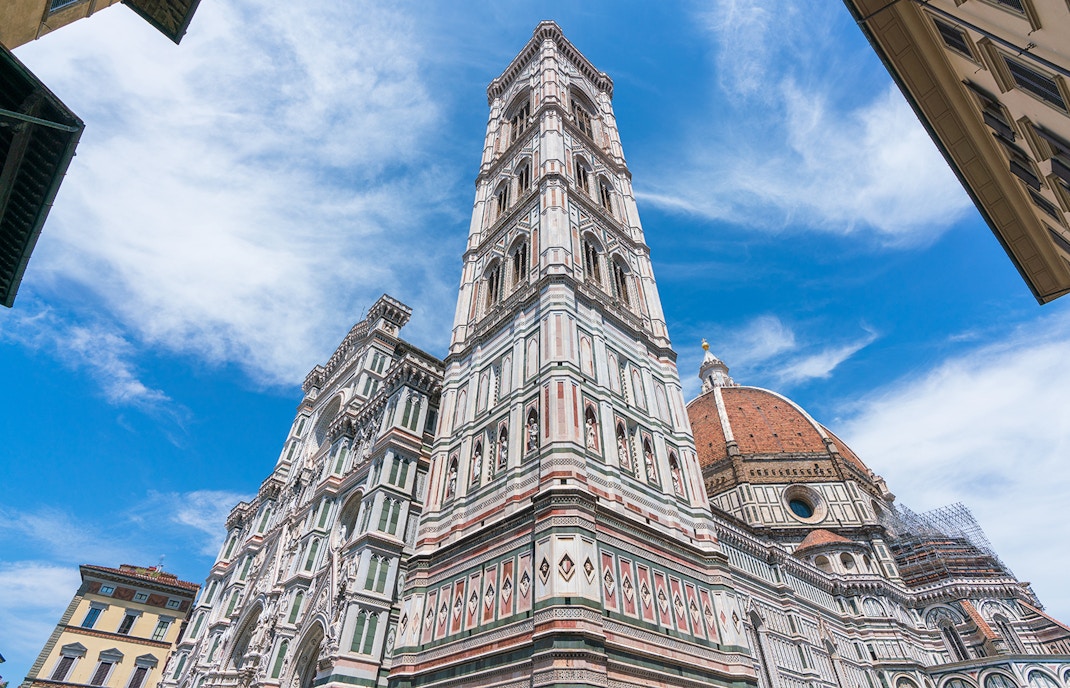
Adjacent to the cathedral, the 280-foot-tall Campanile, or bell tower, stands as a complex engineering feat. Completed in 1359 after nearly two decades of construction, it features octagonal buttresses, graduated orders, and openings for bell operation.

The missing Dome challenge

1366 - 1418

Despite decades of progress, the cathedral faced a significant hurdle – the missing dome. Challenges included constructing it without centering or external buttressing. In 1418, the Opera del Duomo organized a competition, seeking realistic solutions. The winning proposal came from a goldsmith named Filippo Brunelleschi, presenting a self-supporting dome design that adhered to the 1366 model. His ingenious solution secured the competition victory.

Brunelleschi's innovative Dome design

1420 Onward

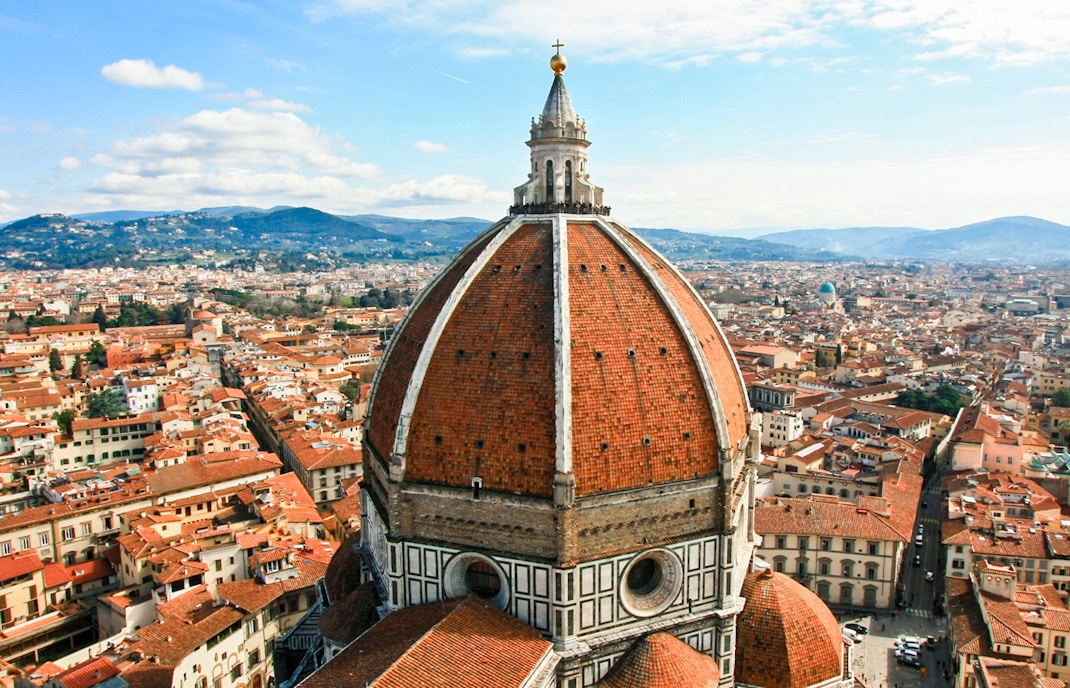
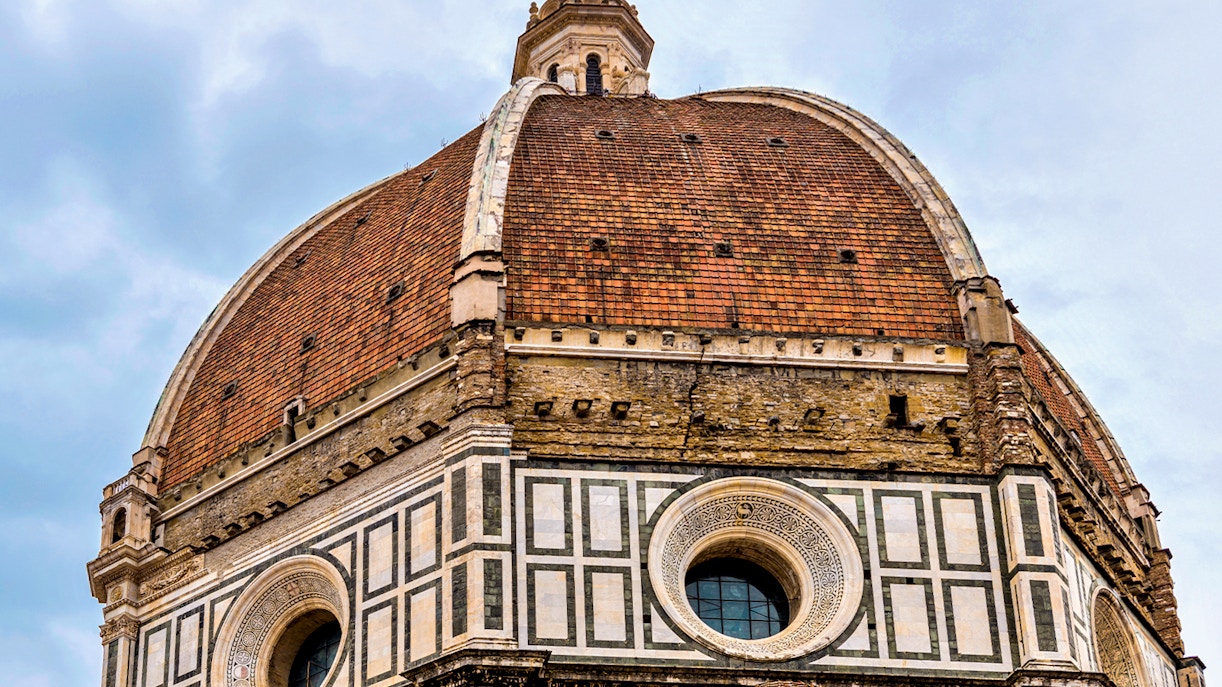
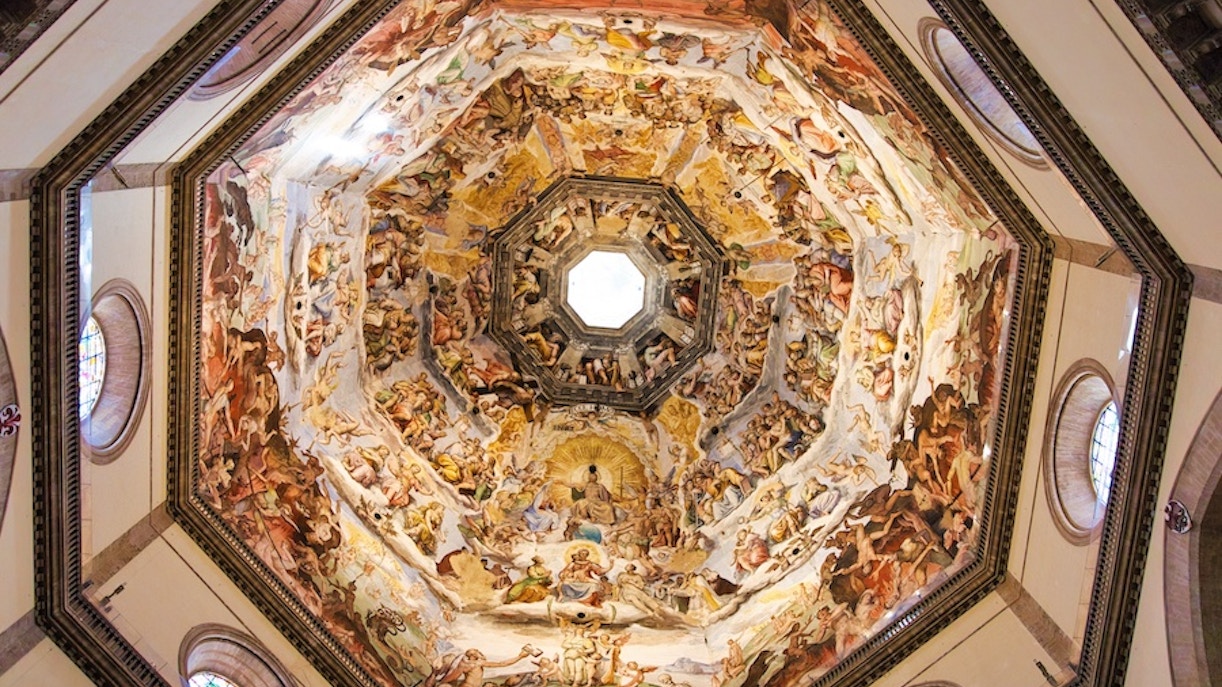
Brunelleschi's design featured a double-shell dome, with the exterior mimicking the 1366 model. The interior, a hemispherical dome, eliminated the need for centering during construction. To counter lateral thrust, Brunelleschi incorporated compression rings and a unique brick pattern. The two shells, joined with wooden ribs, created a lightweight yet structurally sound system. Despite facing multifaceted challenges, Brunelleschi completed the dome by 1436.

Climb Brunelleschi's Dome

The Baptistry - San Giovanni

Before 1059 - 15th Century

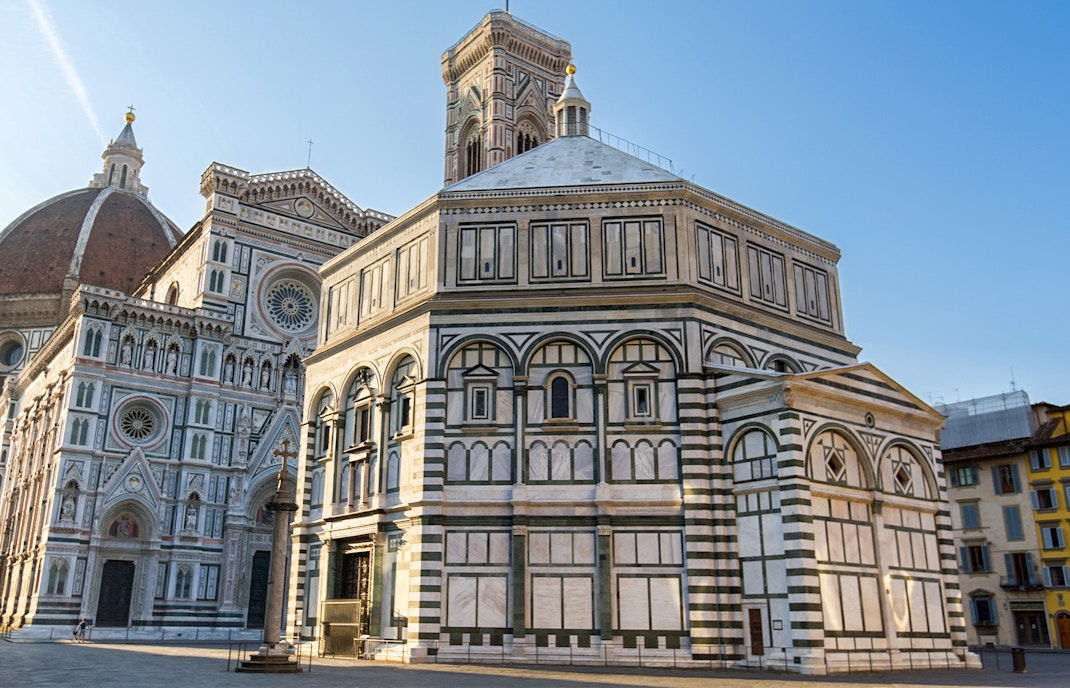
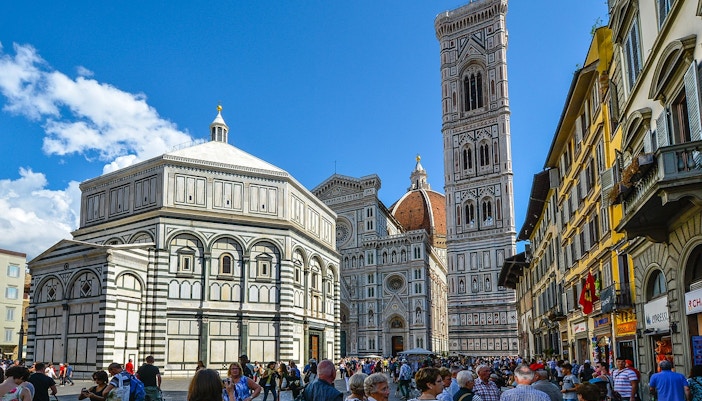
Preceding the cathedral, the Baptistry symbolized faith in Florence. Initially built in 897, it underwent reconstruction in 1059. The structure's white and green marble skin likely followed the reconstruction. While the interior referenced the Pantheon, the dome's unique design comprised eight curved segments.

Critique of the Florence Cathedral

Post-Construction

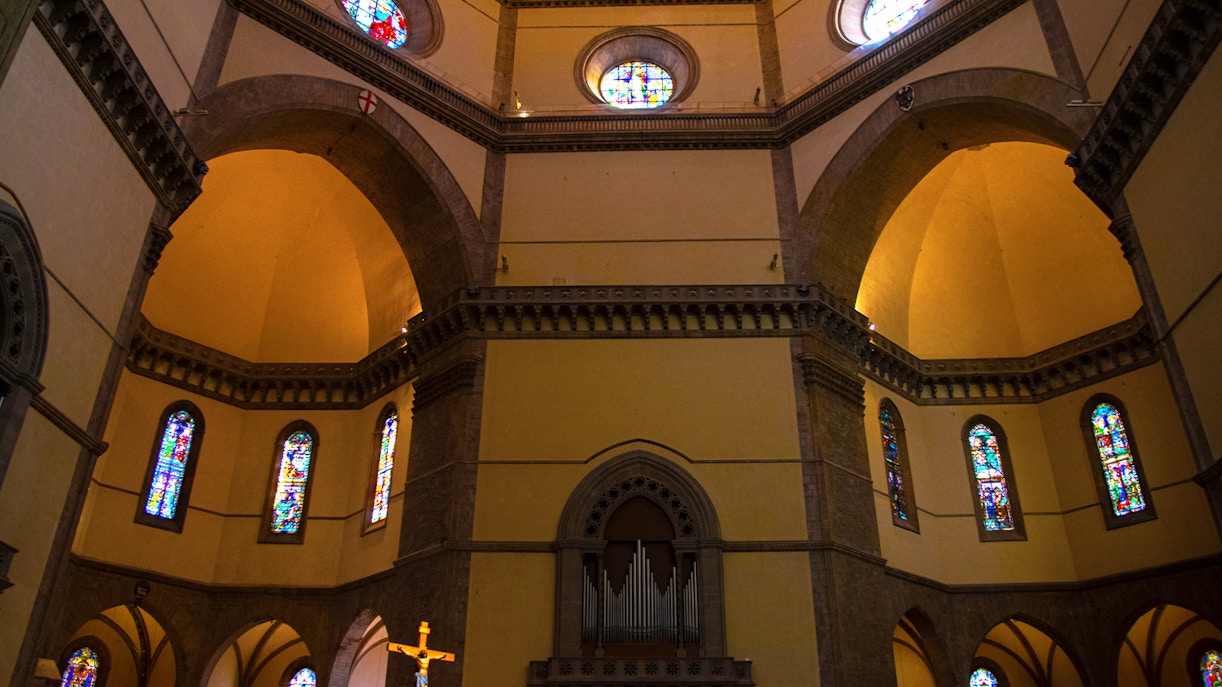
Despite being an engineering marvel, the Florence Cathedral faced criticism for its underwhelming interior space. The emphasis on exterior aesthetics surpassed interior considerations. The dark and dimly lit interior, coupled with seemingly flat finishes, raised concerns about the overall atmosphere. The architectural focus on eliminating buttressing may have compromised natural light, contributing to a less impressive internal environment.

Cracking of the Dome

Duomo Florence

Almost immediately after the dome was constructed, cracks started to appear in it. Since 1989, four fissures that run from the top of the dome to the church foundations have been observed. This startling discovery prompted three hundred monitoring devices to be attached to the dome of the Duomo Florence, making it the most carefully monitored structure during that time.

In 1934, Pier Luigi Nervi discovered that the cracks in the dome of the Duomo Florence opened and closed with the season. During winters, when the dome’s stone and bricks contract the cracks widen. During summers, as the material expands, the cracks in the dome get closed.

Duomo Florence & Renaissance architecture

Renaissance Architecture of Duomo Florence

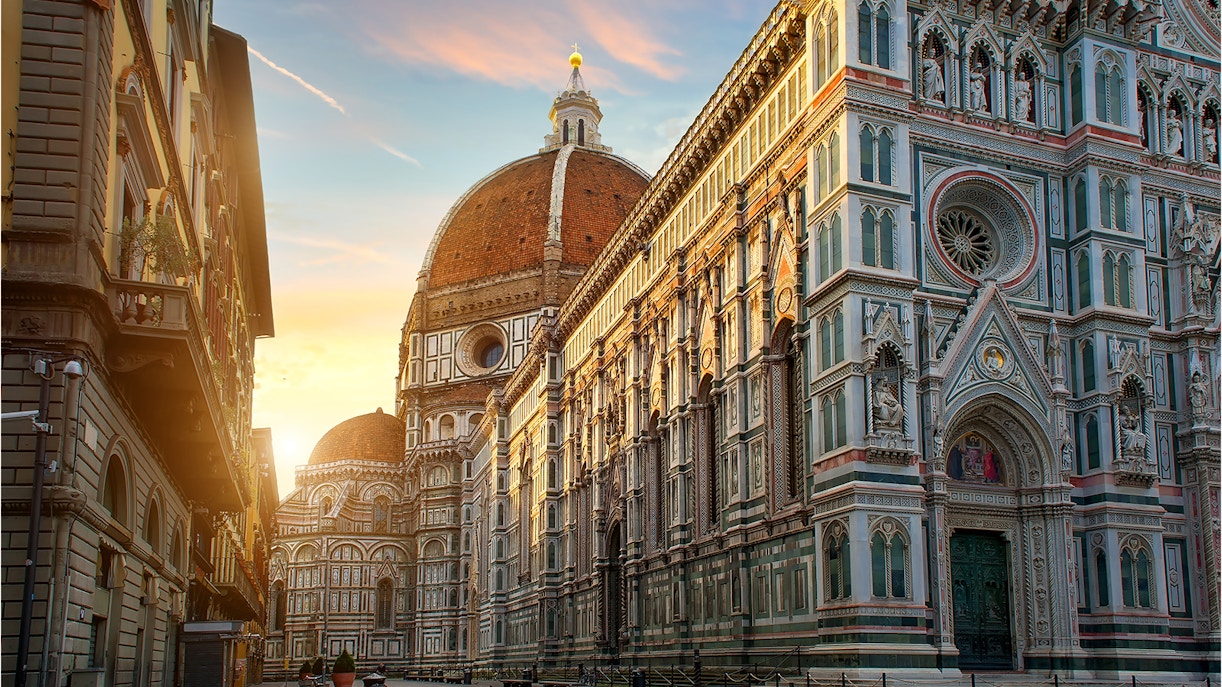
Topped with its famous red-tiled dome, the Duomo Florence towers above the city of Florence. Constructed in a Florentine Gothic and Renaissance architectural style, the Duomo Florence is one of the largest cathedrals in the world.

The Duomo Florence is considered to be the largest masonry structure in the world. Over four million bricks weighing more than forty thousand tonnes were used to construct the cathedral as per the designs submitted by Arnolfo di Cambio in 1296.

More on Duomo Florence's architecture

Discovery of the Santa Reparata

Santa Reparata at Duomo Florence

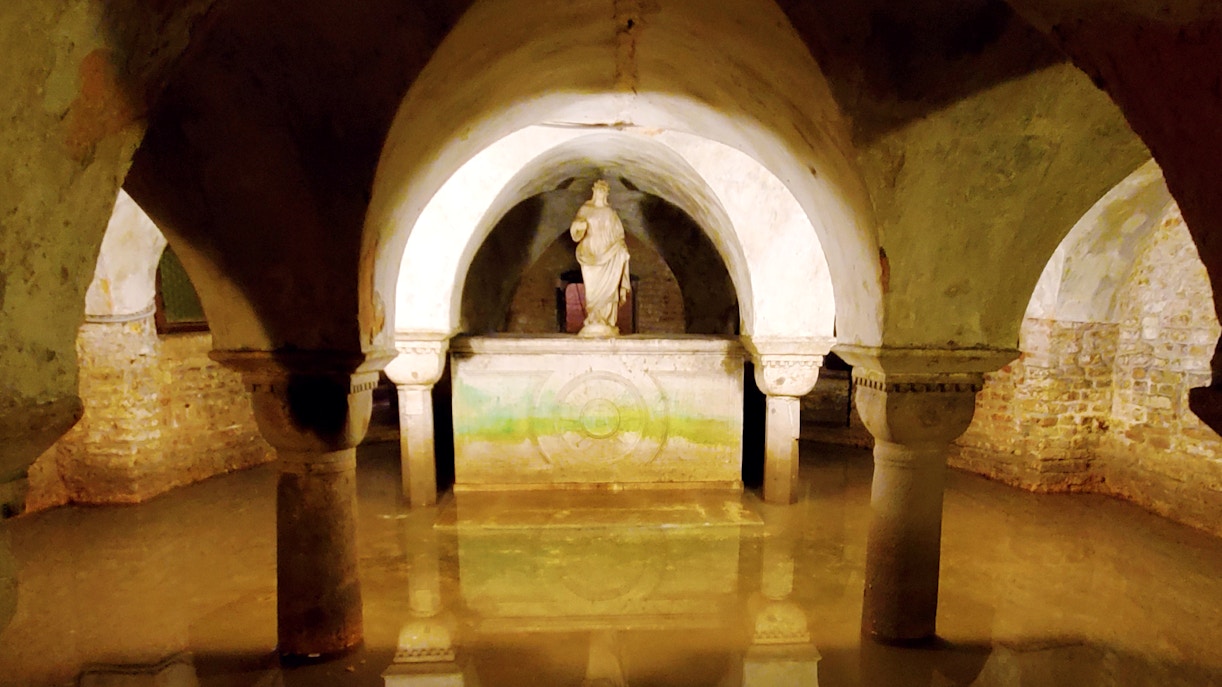
An archaeological excavation beneath the Duomo Florence from 1965 to 1973, led to the discovery of the remains of the Santa Reparata — the most tangible evidence of early Christianity in Florence.

One of the major complexes of early Christianity in the Tuscia region, Santa Reparata's importance was accentuated due to its proximity to the baptistry. It is believed that the foundation of the Santa Reparata was laid as a result of a vow that was made after the victory of the Christians over Radagaisus, King of the Goths, around 405 AD.

The church suffered extensive damage during the war between the Goths and the Byzantines, owing to which it was rebuilt during the Carolingian times. After this, the Santa Reparata was eventually demolished to make way for the present Duomo in Florence.

Restoration and Preservation

Duomo Florence
  • Restorations on the Duomo Florence started in September 2021 and have now been completed. Extensive restoration and preservation works were carried out on the Porta Dei Cornacchini of Duomo Florence.
  • The Porta doorway located on the north side of the nave of the Duomo and its surrounding sculptures underwent a series of works. Since the marble of the lion sculpture was severely damaged, they had to go through a rigorous and intense restoration process.
  • During the restorative works, extensive traces of color were found on the 1359-1360 sculpture of Madonna with Child and Adoring Angels that is situated directly above the door. This extensive damage can be attributed to natural degradation and previous restoration interventions. Investigations of the sculptures at the Duomo Florence revealed that a layer of brown oxalate was in touch with the marble sculptures, which was further covered by a coating of fluorosilicates, in the 1950s. The brown layer was protective and played a significant role in maintaining and preserving the marble sculpture at the cathedral. 

Duomo Florence today

Today, Duomo Florence is one of the most visited attractions in the city of Florence. Designated as a UNESCO World Heritage Site in 1982, the Duomo Florence is the fourth-largest cathedral in Europe.

Home to more than one thousand artworks and forty-four stained glass windows, the Duomo Florence is one of the most popular attractions in Florence. The Duomo an iconic landmark that is considered to be one of the most important churches in the world of Christianity as well as one the most stunning works of Gothic and Italian Renaissance architecture.

Visit Duomo Florence

Book Tickets to Duomo Florence

Florence Duomo with Brunelleschi Dome Access

Book now, pay later
Flexible duration
Audio guide
Guided tour

Free entry to Florence Duomo

Book now, pay later
Flexible duration
Audio guide
Guided tour

Combo (Save 20%): Brunelleschi Dome + Accademia Gallery + Uffizi Gallery Tickets with Audioguide

Audio guide

Frequently asked questions about Duomo Florence history

Construction of the Duomo Florence began in 1296 and was completed by 1436.

More reads

Location

Opening hours

Rules & Regulations