Tickets Florence

Gates of Paradise by Lorenzo Ghiberti

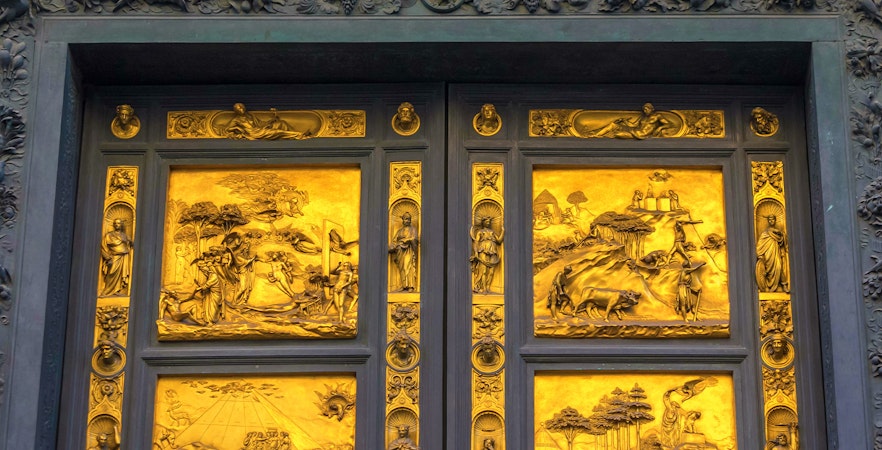
The Gates of Paradise are the legendary gilded bronze doors created by Lorenzo Ghiberti between 1425 and 1452 for the east portal of the Baptistery of San Giovanni in Florence.

Over five meters tall and weighing about eight tons, these doors depict ten sprawling Old Testament scenes in exquisitely detailed relief, showcasing early mastery of linear perspective and narrative depth.

Where is it located?

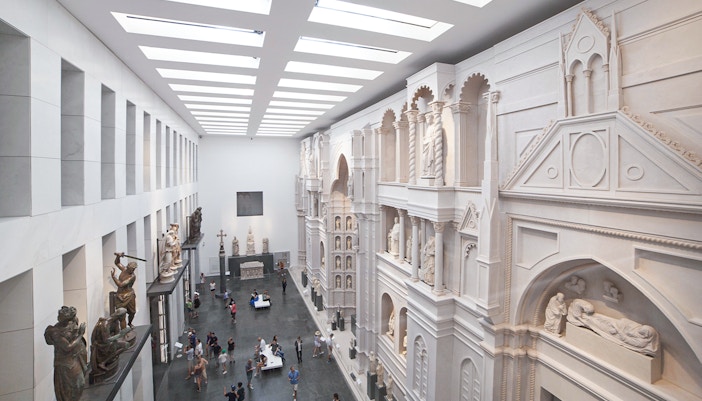
The original Gates of Paradise are displayed inside the Museo dell’Opera del Duomo in Florence, near the Baptistery of San Giovanni.

Tickets

Access to the Gates of Paradise is included with a Duomo complex pass, which covers the Museo dell’Opera del Duomo. For deeper insight into the doors’ layered biblical narratives and the remarkable history of their gilded bronze, join a guided tour that unpacks each panel’s stories, symbols, and the groundbreaking techniques behind Ghiberti’s masterpiece.

What makes the Gates of Paradise a masterpiece?

Narrative richness

Ten relief panels condense complex Old Testament stories with remarkable clarity and emotional depth.

Technical mastery

Ghiberti’s skill in gilded bronze casting achieves intricate detail and dimensionality.

Innovative perspective

The panels demonstrate early mastery of linear perspective, giving scenes visual depth uncommon at the time.

Cultural impact

The doors helped define Renaissance artistic ideals and solidified Florence’s leadership in the arts.

Story behind the Gates of Paradise: Timeline

  • 🎨🏆1401: Ghiberti wins the prestigious bronze door competition, surpassing rivals like Brunelleschi and cementing his rising reputation.
  • 🛠️📜 1425: The Arte di Calimala commissions Ghiberti to create a new set of doors for the Baptistery’s east portal, centered on Old Testament narratives.
  • 👥🔧1425–1452: Ghiberti and his workshop, featuring notable assistants, develop the doors using pioneering techniques like linear perspective and classical figure modeling.
  • ✨🌟1452: The completed doors astonish Florence. Michelangelo famously declares them worthy of “the gates of paradise.”
  • 🔍🛡️20th century: To protect them from environmental damage, the original panels undergo preservation and restoration.
  • 🏛️👀Today: The originals are housed in the Museo dell’Opera del Duomo, where visitors can admire their depth, storytelling, and unparalleled craftsmanship.

Enhance your visit with a guided tour

Enhance your visit with a guided tour

A guided tour gives insight into the doors’ layered biblical narratives and the remarkable history of their gilded bronze, unpacking each panel’s stories, symbols, and the groundbreaking techniques behind Ghiberti’s masterpiece.

Ideal viewing distance

Stand a few meters back to absorb the dramatic depth and composition of the relief panels, then move closer to admire finer details.

Notice the perspective work

Look for the early use of linear perspective, especially in the buildings and background structures, which shows how Ghiberti created a sense of real depth and space within each scene.

Appreciate the scenes’ complexity

Each of the ten panels weaves multiple Old Testament episodes into one composition, including scenes like Adam and Eve, Noah’s Ark, Moses receiving the Tablets, and the reign of Solomon, making slow, attentive viewing especially rewarding.

Photography tips

Photography is usually allowed without flash. For the best results, tilt your camera slightly to avoid glare from the glass cases, and move around the display to find angles that highlight the gilded bronze and bring out the depth of the reliefs.

Best time to visit

Visit in the morning or late afternoon when the galleries are quieter. These calmer hours give you more room to linger in front of each panel, appreciate the details, and enjoy unobstructed views of the artwork.
All that glitter is gatekeeping more than just gold!

From Michelangelo’s likening these doors to heavenly gates to the countless artistic secrets casted into them, there’s a world of stories waiting to be uncovered. Join a guided tour to see, hear, and experience them as a local expert leads you through over 570 years of history.

Did you know?

🛠️⏳ Ghiberti and his workshop spent 27 years crafting the doors’ ten monumental panels.

🔄🏛️ The originals were removed and replaced with replicas at the Baptistery to protect them from damage.

📖✨ The panels depict more than fifty Old Testament episodes in continuous narrative.

🧔🖼️ Ghiberti included a self-portrait among the figures in the reliefs.

Who created the Gates of Paradise?

Lorenzo Ghiberti (1378–1455) was a leading Italian Renaissance sculptor and goldsmith whose work defined a new artistic language in early 15th-century Florence. Trained originally as a goldsmith, he won a pivotal competition in 1401 that launched his career in monumental bronze work. Ghiberti’s workshop became a creative hub, involving artists such as Donatello and Michelozzo, and his mastery of bronze casting secured his status among Florence’s elite artists.

The Gates of Paradise, commissioned by the influential Arte di Calimala guild, represent the culmination of his technical skill and narrative vision. The doors’ innovative use of perspective and sculptural depth marked a turning point in Renaissance art and influenced generations of artists.

Frequently asked questions about the Gates of Paradise

Do I need separate tickets to see the Gates of Paradise?

The Gates of Paradise originals are included with the Museo dell’Opera del Duomo ticket, which may also grant access to other Duomo complex sites.

Are the doors still at the Baptistery?

Replicas are installed at the Baptistery’s east portal; the originals are preserved inside the museum for protection.

Can I photograph the panels?

Photography is generally allowed without flash, though rules can vary; always respect signage and staff instructions.

Why did Michelangelo say about the Gates of Paradise?

He believed their beauty and craftsmanship were worthy of heaven’s gates, and the name has endured ever since.

What do the Gates of Paradise represent?

They depict key Old Testament stories, scenes of creation, faith, and divine justice, crafted in detailed bronze relief to symbolize Florence’s devotion and the artistic ideals of the early Renaissance.

More reads

Opera del Duomo Musueum

Guided tours

Plan your visit