Official name: Cathedral of Santa Maria del Fiore
Attraction type: Cathedral
Location: Piazza del Duomo, 50122 Firenze FI, Italy | Find on Map
Founded: 1296
Area: 15,000 square meters (161,458 square feet)
Architectural style: Gothic and Renaissance styles
Main architects: Arnolfo di Cambio, Filippo Brunelleschi
Understanding the groundbreaking architecture of the Duomo Florence
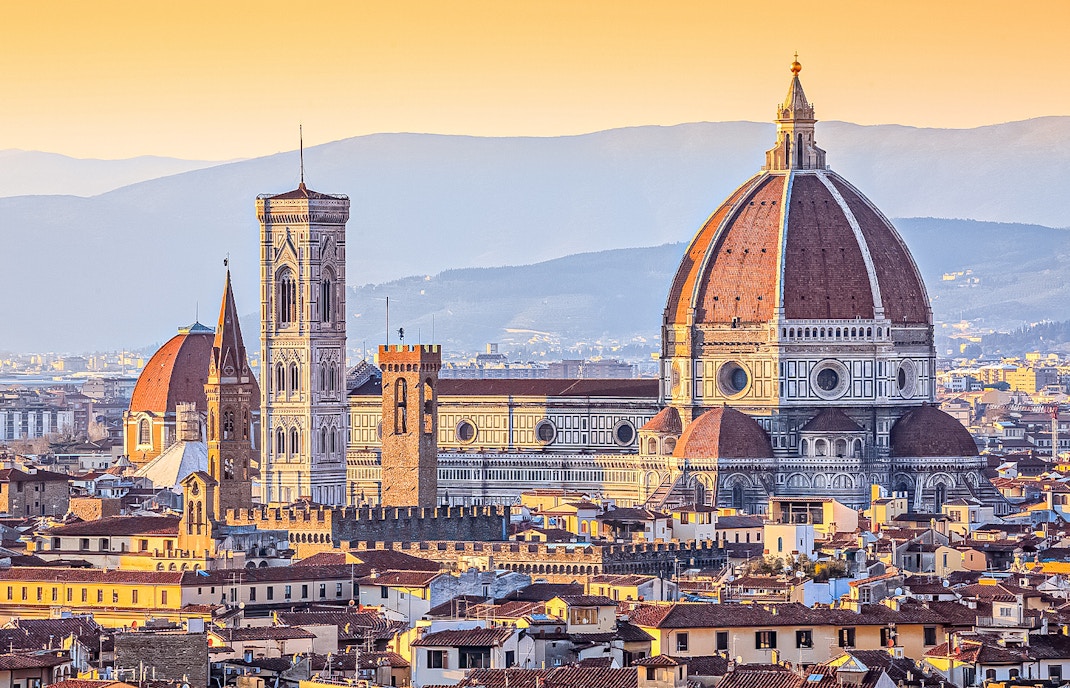
Duomo Florence is a Gothic church of incredible importance in Florence, named in honor of Santa Maria del Fiore. Its construction began in the 13th century but was only completed in the 15th century. Arnolfo di Cambio envisioned and designed most of the structure, except the dome, which was the creation of Filippo Brunelleschi. The exterior boasts colorful marble and intricate sculptures, while the interior showcases a blend of Gothic and Renaissance styles.
Duomo Florence architecture | Quick overview
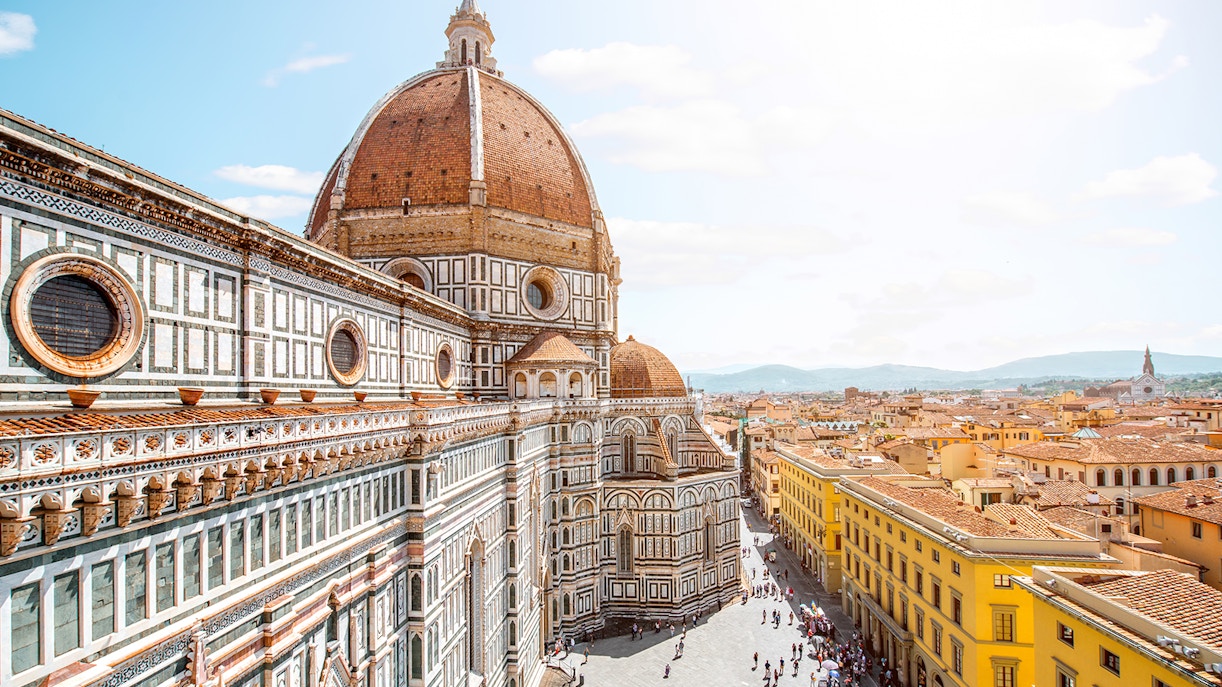
Architectural highlights of Duomo Florence
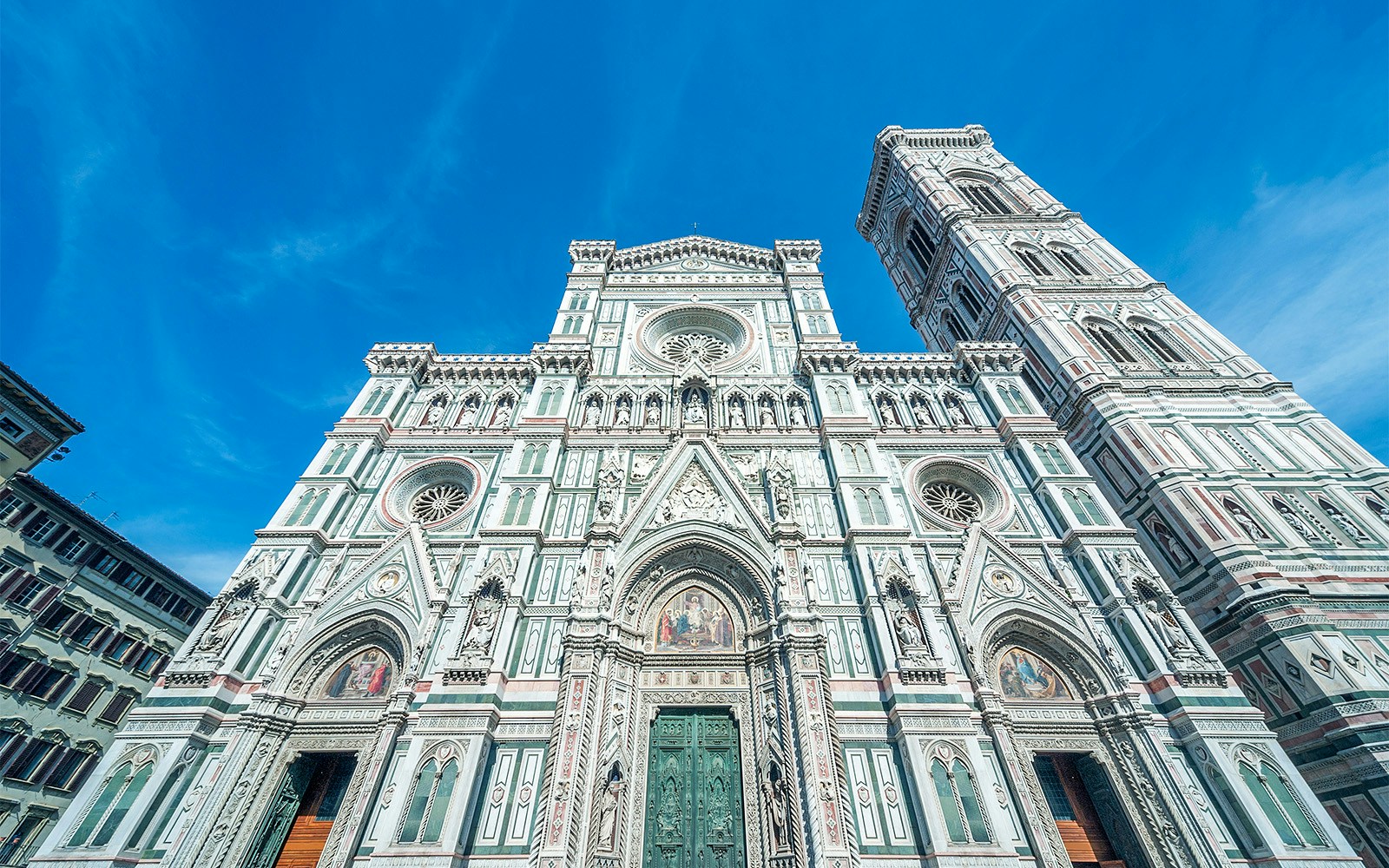
The Facade
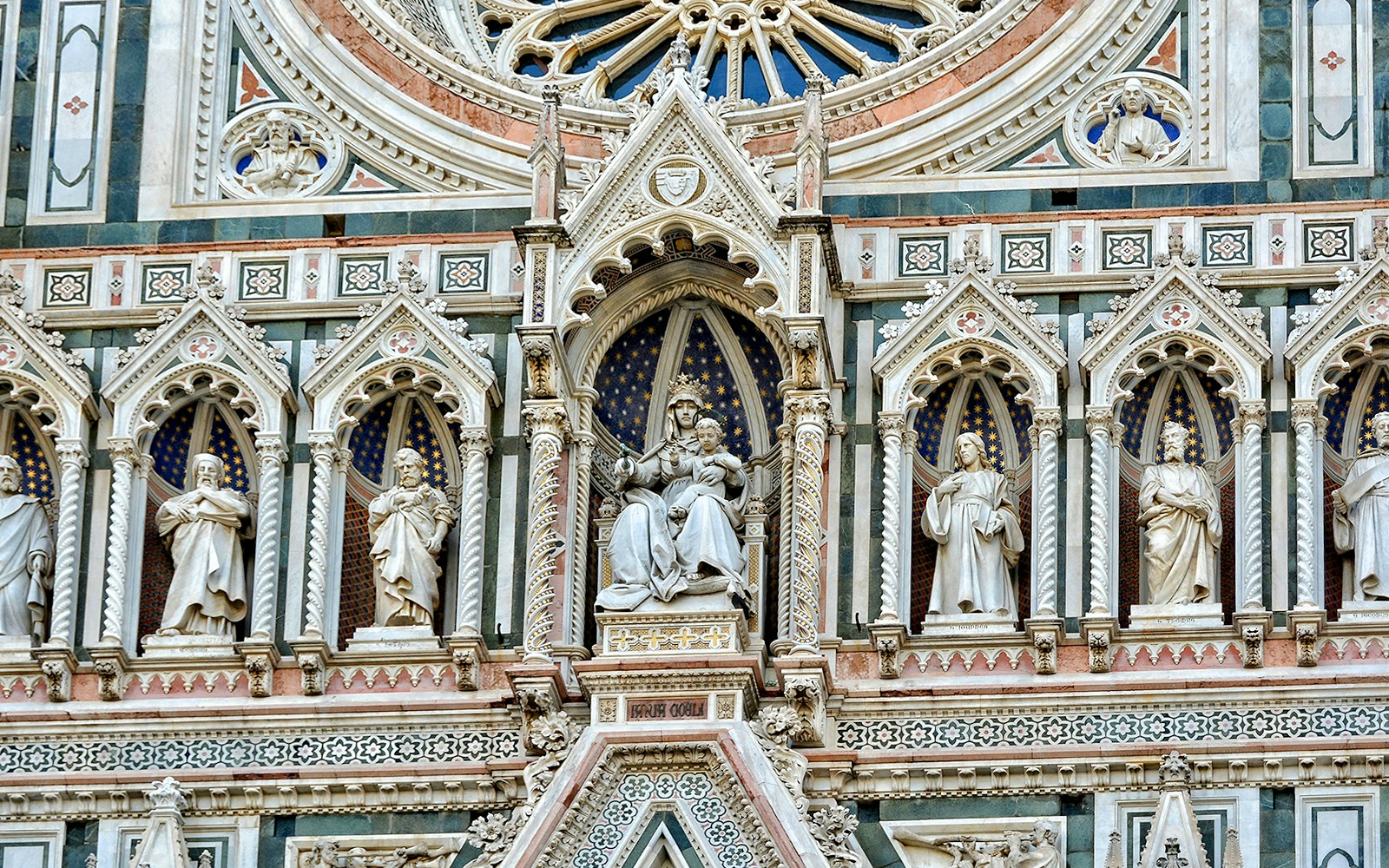
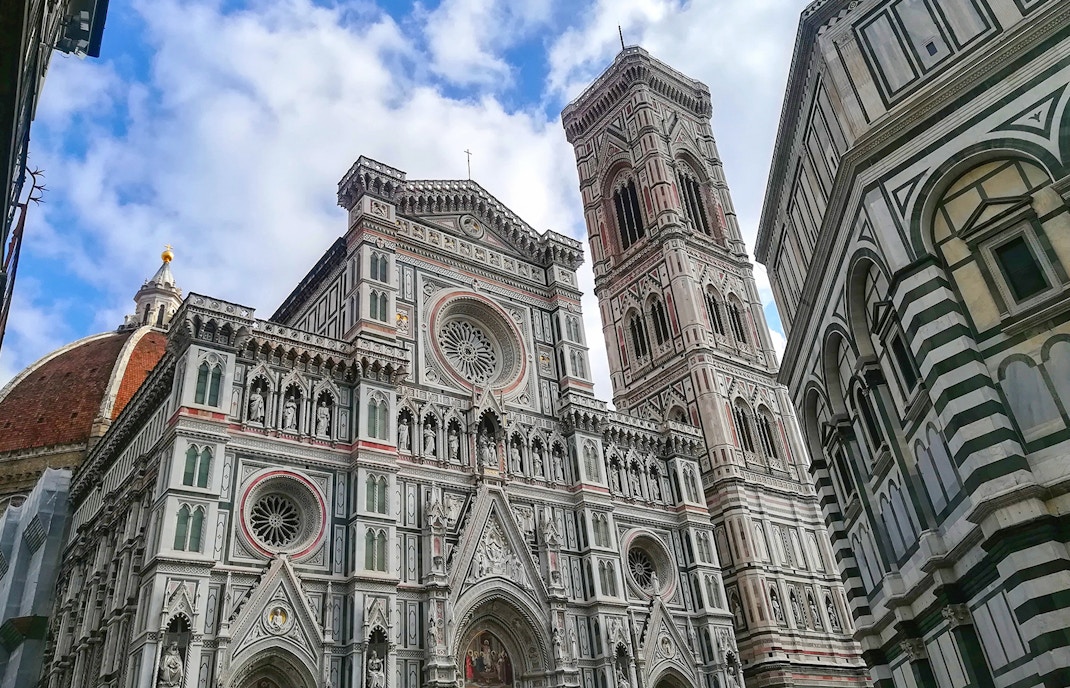
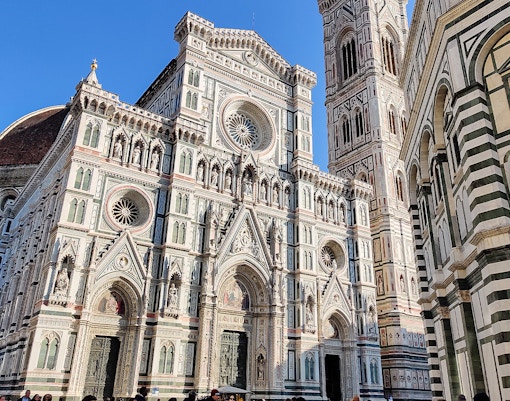
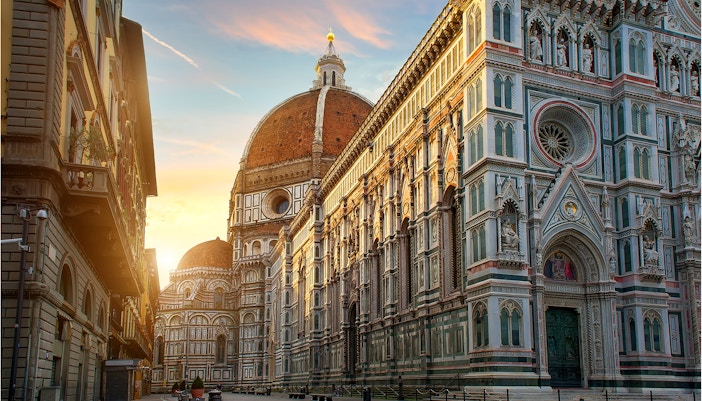
The ornate green, red, and white marble facade is an ode to Gothic and Renaissance design.
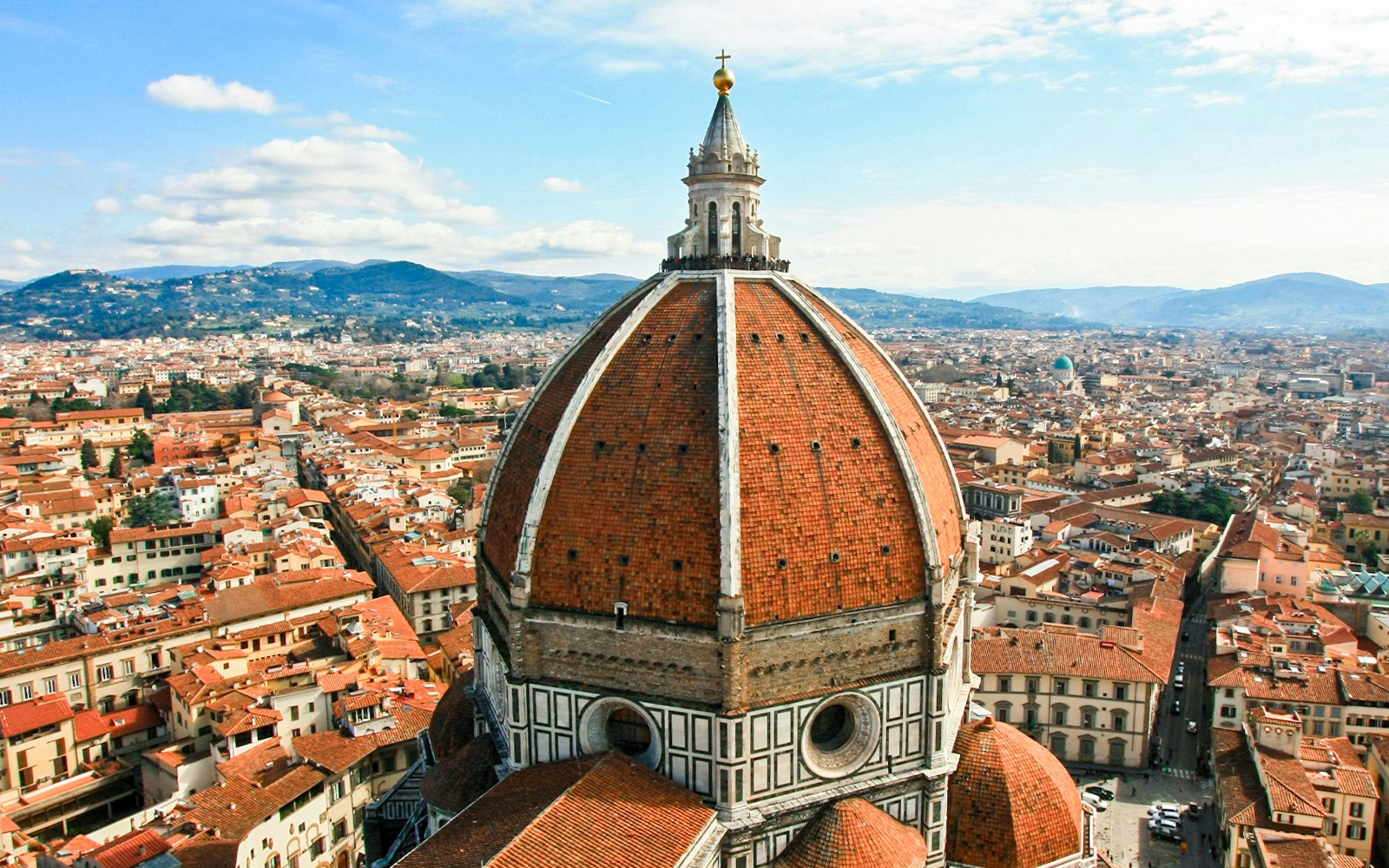
Duomo Florence architecture & design
Design and architectural features
The architectural style of the Duomo Florence is predominantly Gothic, with elements of Romanesque and Renaissance influences. The cathedral, designed by various architects over the centuries, exhibits the transition from Gothic forms to Renaissance aesthetics. The exterior features intricate sculptures and decorative elements, including the iconic pink, green, and white marble stripes that cover the façade. The interior is equally impressive, with soaring arches, stained glass windows, and beautiful frescoes.
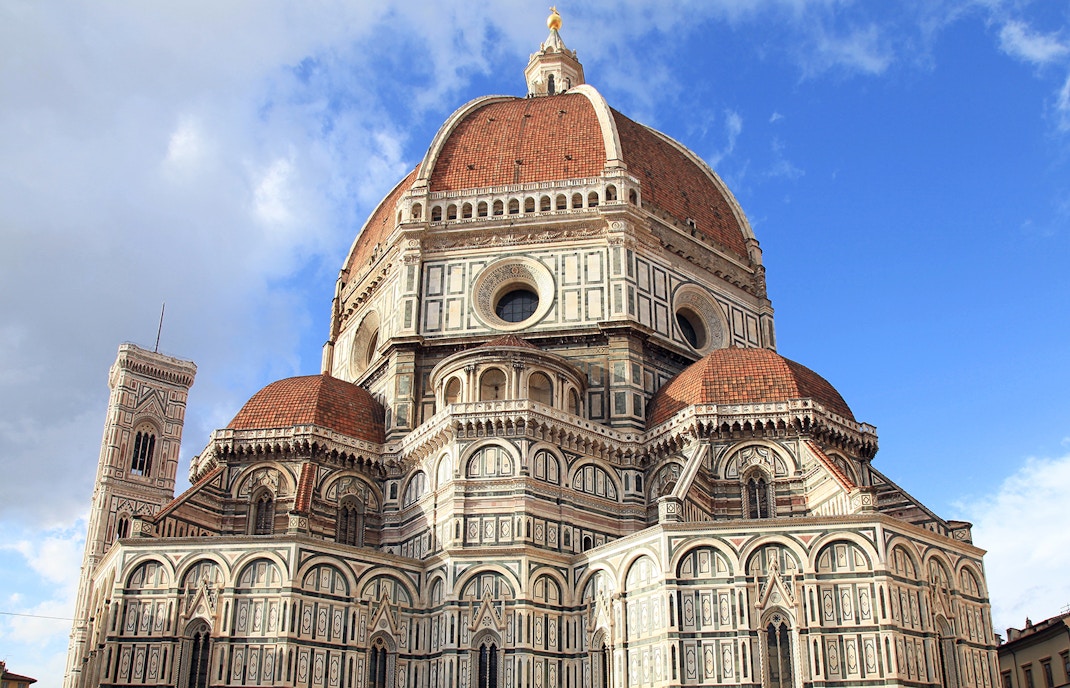
Dome and its construction
Brunelleschi's Duomo dome, a remarkable feat of engineering, is among the world's largest despite the cathedral's original design not accounting for its size. Scaffolding wasn't used either, with Brunelleschi solving the problem by constructing two shells of brick inside the other with a layer of concrete between them. The inner shell was supported by four enormous horizontal chains extended from the walls to the dome's base, providing stability and support.
Who built Duomo Florence?
Duomo Florence was fully completed over two centuries by two renowned Italian architects.
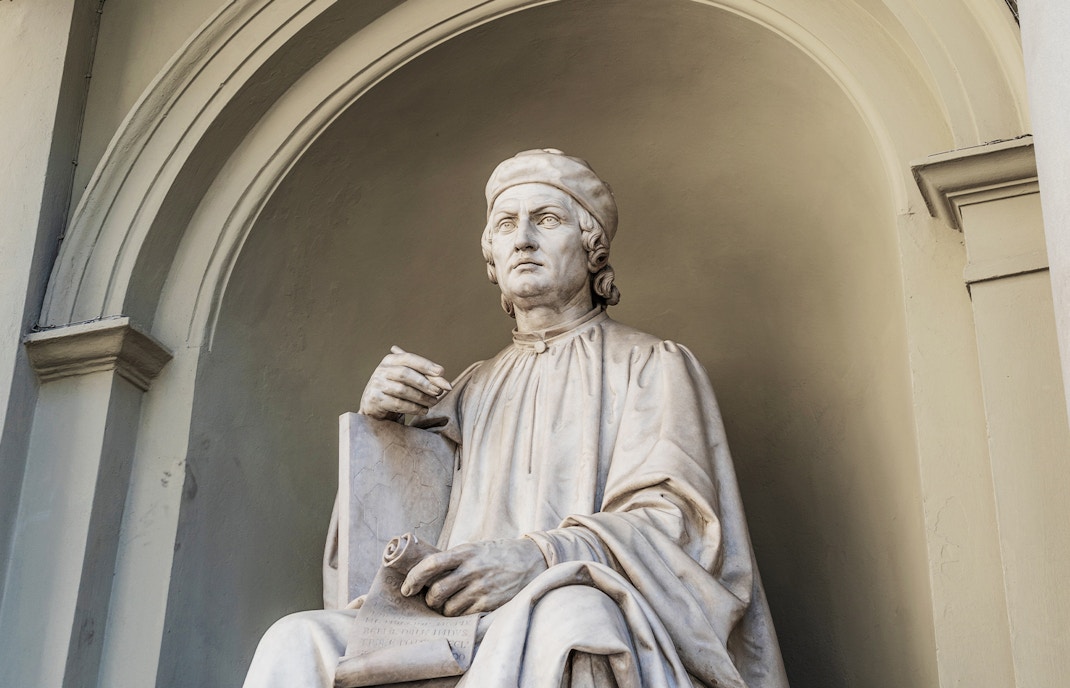
Arnolfo di Cambio
Arnolfo di Cambio, a skilled architect and sculptor born in Florence, played a pivotal role as the chief architect of the Cathedral of Santa Maria del Fiore, introducing Gothic architecture to Italy. His influence extended beyond the Duomo Florence, with notable designs for structures like the Basilica of Santa Croce and the Palazzo della Signoria, shaping the architectural landscape of Florence.
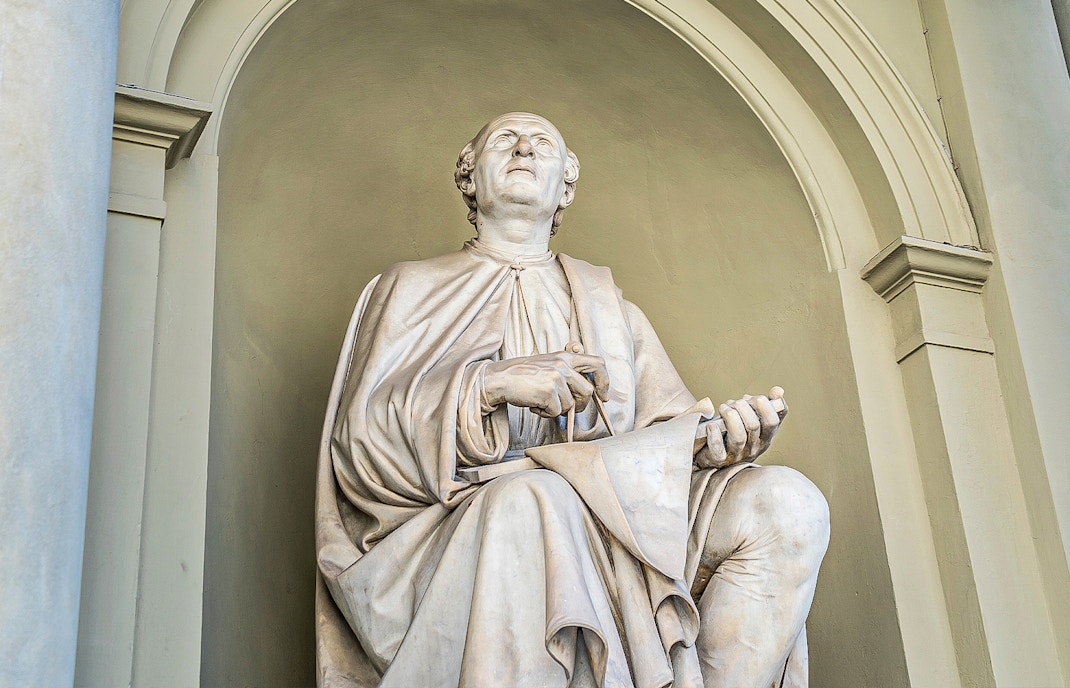
Filippo Brunelleschi
Born in 1377 in Florence, Filippo Brunelleschi, a skilled goldsmith turned architect, left an indelible mark on Renaissance art. Best known for designing the iconic dome of the Cathedral of Santa Maria del Fiore, he revolutionized architecture with innovative machines for construction. Lead architect of notable structures like the Church of Santo Spirito and the Ospedale degli Innocenti, Brunelleschi's legacy extends beyond his birthplace.
Structure of Duomo Florence
Materials used
- The exterior of the Cathedral of Santa Maria del Fiore building is made primarily of marble sourced from the nearby quarries of Carrara, Massa, and Prato.
- The pink, green, and white marble used in the exterior facade were chosen for their beauty and ability to withstand the weather. The base of the building is made of sandstone, while the ribbed vaults and arches are made of brick.
- The interior of the Duomo is also made of different types of marble, including white Carrara, green Prato, and red Siena marble. The intricate designs and sculptures that adorn the interior are made of stone, and the floors are made of colored marble in geometric patterns.
Innovative techniques
- Brunelleschi employed groundbreaking techniques for Duomo's cupola. For example, he used two layers of bricks instead of a wooden frame to support the dome.
- The inner and outer shells were connected by a self-supporting structure, which allowed for the dome to be very large without needing additional support from flying buttresses, which are typically used in Gothic architecture.
- Brunelleschi also used a special brick-laying technique called the herringbone pattern, which helped distribute the weight of the dome more evenly.
- To further reinforce the structure, he used iron chains that were embedded in the masonry. These chains added extra strength and durability to the dome, allowing it to withstand the test of time.
Stages of construction of Duomo Florence
*Early 14th Century:* The ambitious project to build the Cathedral of Santa Maria del Fiore began in 1296, with the initial designs by Arnolfo di Cambio. However, progress was slow, and the structure faced several interruptions.
*1401 - Brunelleschi's Ingenious Design:* Facing the challenge of constructing a massive dome without a temporary wooden support structure, a competition was held in 1401. Filippo Brunelleschi's innovative double-shell dome design won, marking a pivotal moment in Renaissance architecture.
*1402 - Beginning of Brunelleschi's Work:* Brunelleschi started working on the dome in 1420, utilizing groundbreaking techniques. He employed a herringbone brick-laying pattern, embedded iron chains for reinforcement, and created a self-supporting structure with inner and outer shells.
*1436 - Completion of the Dome:* Brunelleschi's ingenious engineering led to the completion of the dome in 1436. The structure, known for its immense size and architectural brilliance, became a symbol of Renaissance achievement.
*19th Century Additions:* In the 19th century, Emilio De Fabris added a Gothic Revival facade to the western side, enhancing the cathedral's external aesthetics.
Duomo Florence exterior
The Dome's facade
The exterior of the towering Duomo in Florence is a marvel of Renaissance architecture, with its pink, green, and white marble façade. As you approach the entrance, you will find intricate statues of saints and biblical figures carved into the stone created by artists such as Donatello and Andrea del Verrocchio standing guard.
Neo-Gothic additions
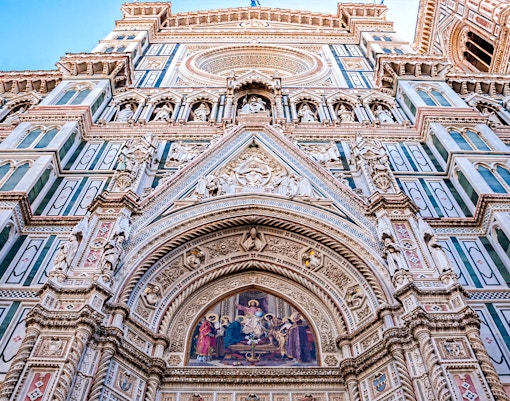
Emilio De Fabris contributed the neo-Gothic façade, erected between 1871 and 1887. Paying homage to the Mother of Christ, it features a central statue by Tito Sarrocchi, portraying Mary enthroned amidst Florentine figures, beautifully depicted in the pediment's mosaics.
Gothic rose window
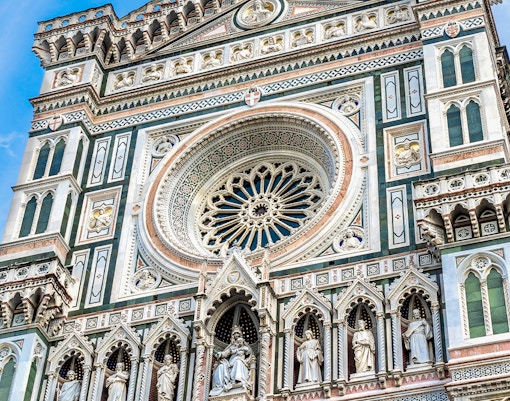
Crafted in the Gothic style, the Rose Window is a radiant circular masterpiece positioned above biblical statues. Inspired by structural innovations, it symbolizes unity and wholeness, featuring intricate stone tracery and stained glass that allows an abundant influx of light. Evolving from Roman oculi, it enhances the elegant appeal of the Duomo.
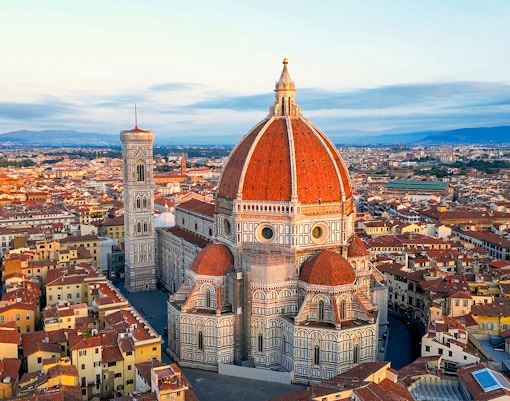
Brunelleschi's Dome
Rising high above the city, the dome is a testament to the skill and ingenuity of its architect, Filippo Brunelleschi. It is the first octagonal dome in history constructed without temporary wooden support. Brunelleschi employed innovative techniques, including double-shell construction, herringbone brickwork, and embedded iron chains.
Duomo Florence interior
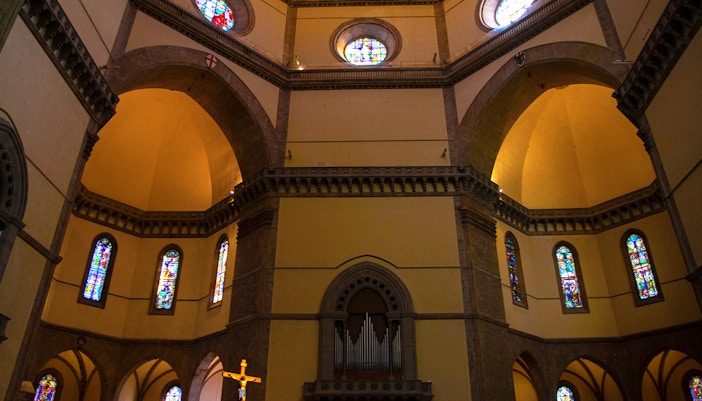
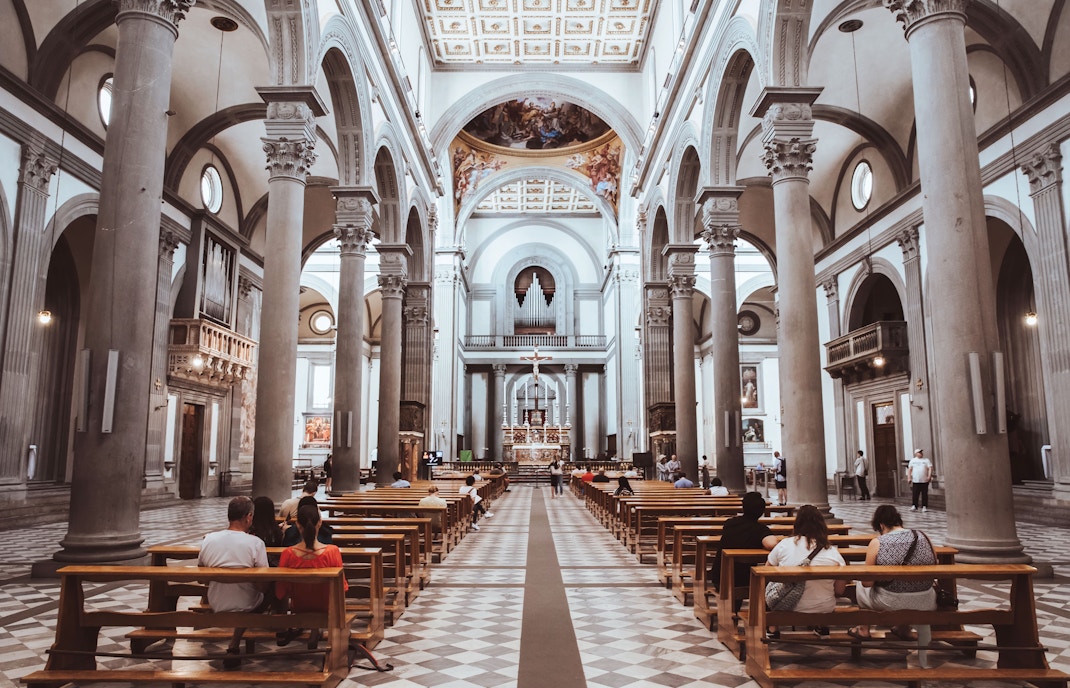
The interior of the Duomo in Florence is equally impressive, featuring stunning frescoes, intricate marble work, and beautiful stained glass windows.
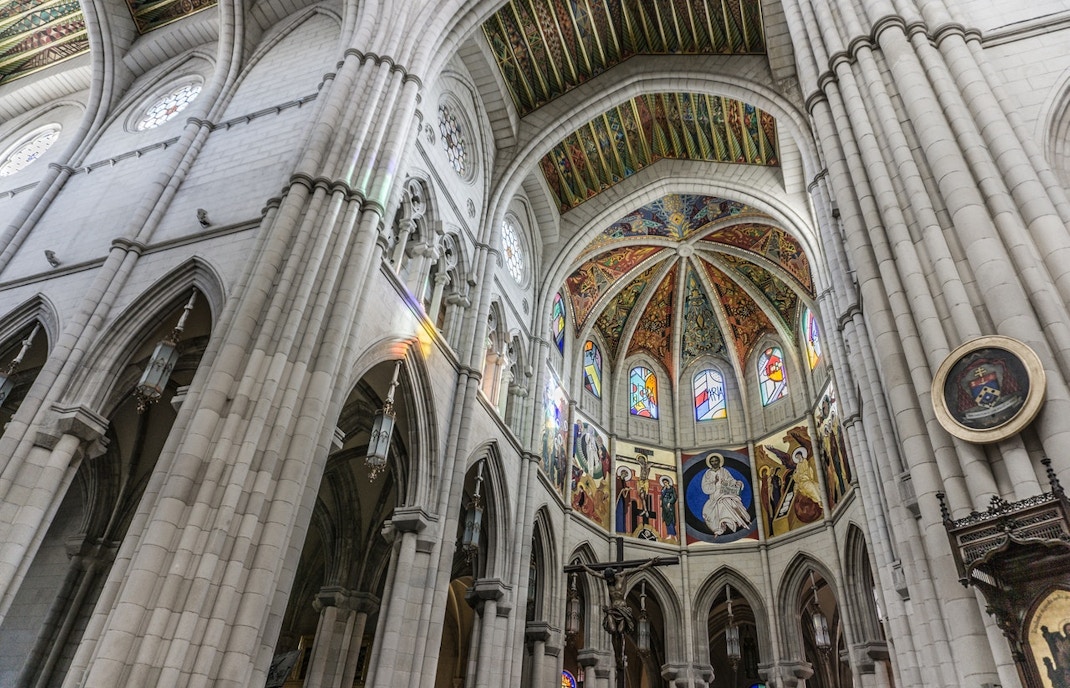
The frescoes
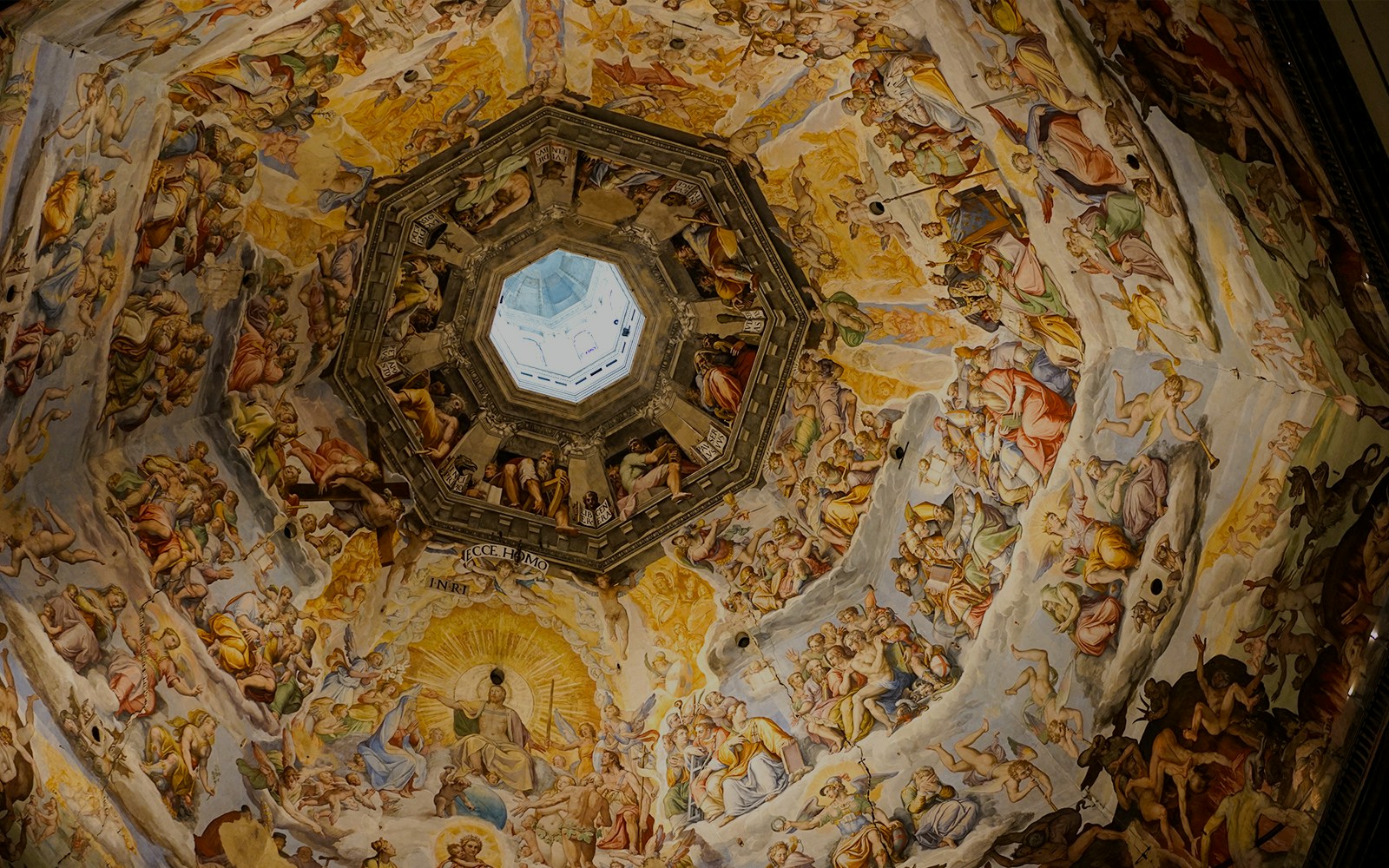
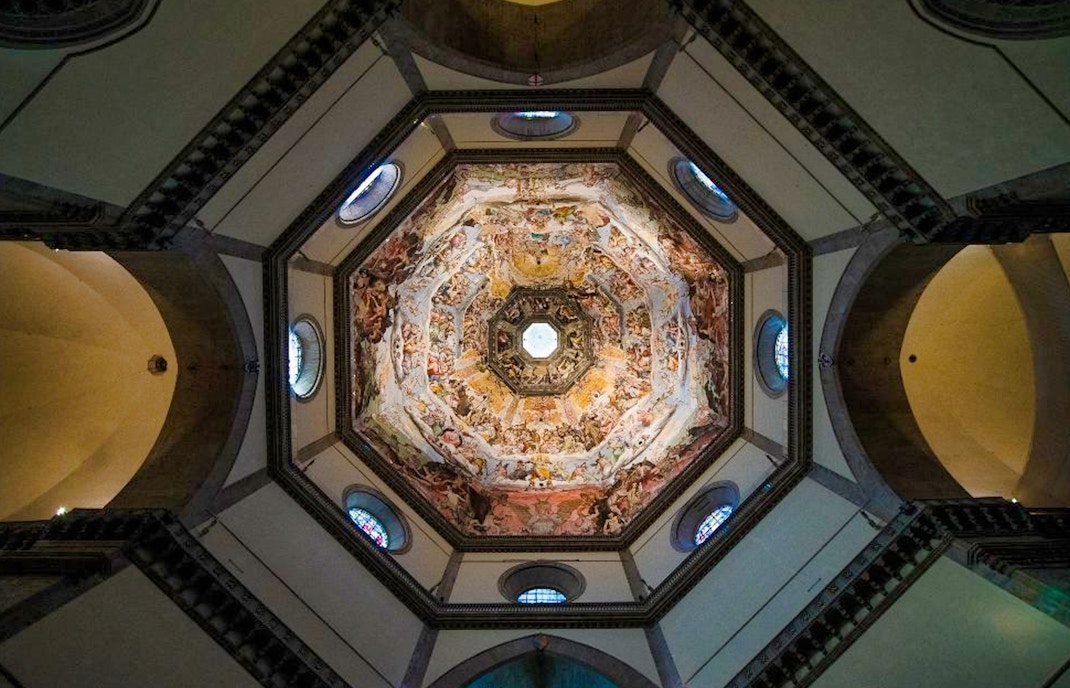
With a diameter of 45.5 meters and a height of 114 meters, it is one of the largest domes ever built. From inside the cathedral, you can see its supportive pillars, eight stone ribs, and the beautiful frescoes painted by Giorgio Vasari and Federico Zuccari, all lit by natural light, creating a warm and luminous atmosphere. There are several notable frescoes in the dome, but the most prominent is the one depicting the Last Judgment, created by Vasari and Zuccari.
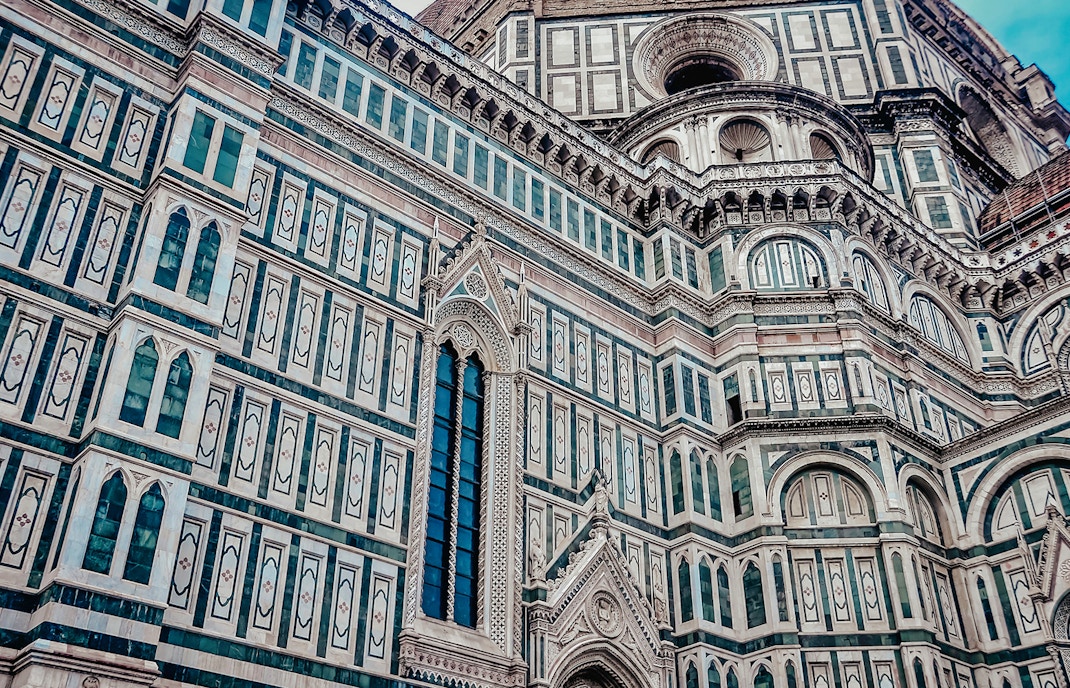
Stained glass windows
Stained glass windows, including the rose window above the main entrance, add to the majesty of the cathedral. Prominent artists of the Renaissance, including Lorenzo Ghiberti, Jacopo della Quercia, and Andrea della Robbia, designed the glass windows using vibrant colors and storylines. Some of the designs on the windows depict scenes from the Bible, the life of the saints, and the history of Florence.
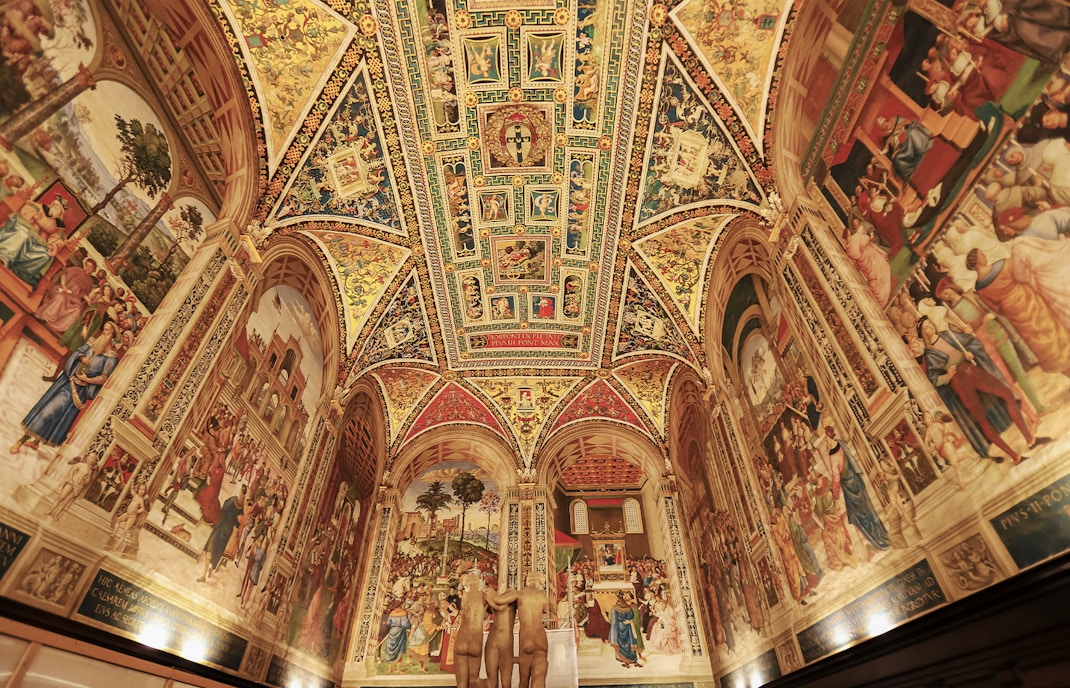
The Altar
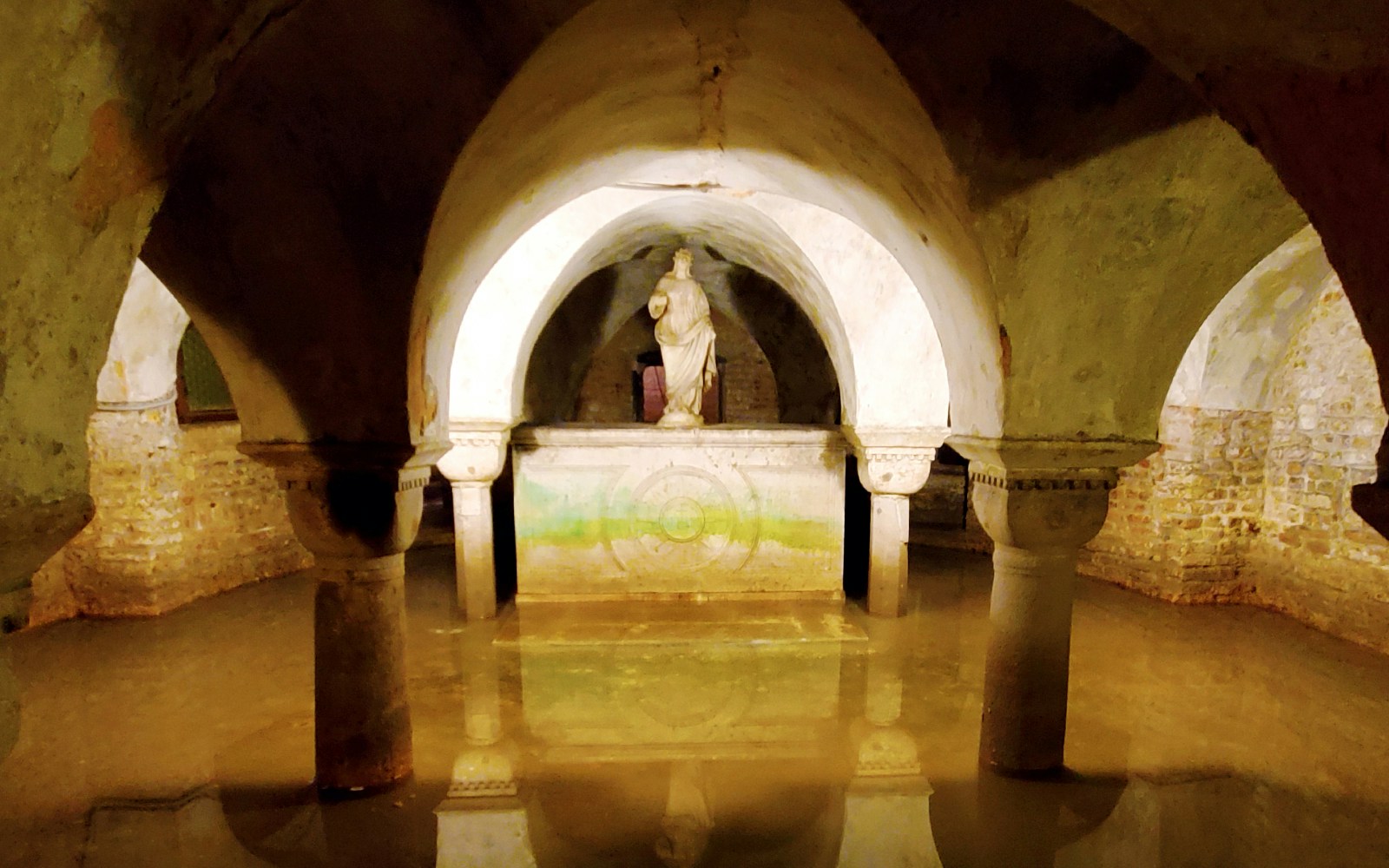
The main altar of Duomo Florence, located below the dome is made of white marble and features intricate sculptures and designs. Stunning frescoes and paintings surround it, including works by Domenico Ghirlandaio and Alessandro Allori.
Choir Stalls
The choir stalls, used for seating choir members and clergy, designed in the late 1400s, feature intricate carvings and sculptures that depict religious figures, symbols, and scenes. The stalls are made of walnut wood and are considered some of the finest examples of Renaissance woodwork.
Duomo Florence | Symbol of Renaissance Architecture
The Cathedral of Santa Maria del Fiore profoundly influenced Renaissance architecture and continues to inspire architects and designers even today. The combination of innovative construction techniques and classical elements, such as the use of Corinthian columns and Renaissance motifs, made the Duomo a symbol of Renaissance architecture.
Frequently asked questions about Duomo Florence architecture
Duomo Florence is an example of Italian Gothic architecture, incorporating elements of Renaissance and Romanesque styles. The cathedral's exterior features intricate pink, green, and white marble, and its design reflects a blend of medieval and Renaissance architectural influences. The iconic dome, designed by Filippo Brunelleschi, showcases Renaissance innovation.
The Duomo Florence was designed by several architects over the years, with Arnolfo di Cambio starting the project in 1296. However, Filippo Brunelleschi is credited as the architect of the iconic dome, a key feature of the cathedral, which was completed in 1436.
The construction of the Duomo Florence began in 1296 and was completed in 1436. The facade, however, was only completed in the 19th century.
The dome of the Duomo Florence was constructed without wooden support, a groundbreaking feat in architectural history. Filippo Brunelleschi, the architect, employed innovative techniques, including a double-shell construction. The inner and outer shells were connected by a self-supporting structure, eliminating the need for temporary wooden scaffolding. Additionally, Brunelleschi used a herringbone brickwork pattern to distribute the weight evenly and embedded iron chains for added stability. This engineering marvel contributed to the dome's grandeur and remains a testament to Brunelleschi's ingenuity.
Duomo Florence is over seven centuries old.
Duomo Florence cathedral measures 153.6 meters (504 feet) in length, 40.6 meters (133 feet) in width, and 90.5 meters (296 feet) in height.
Duomo Florence is 90.5 meters (296 feet) in height.
The Duomo Florence was constructed using a variety of materials such as white and green marble, pink and green marble, along with stone and brick. The dome was made using brick and reinforced with iron chains.
Duomo Florence is known for how it blends together Gothic and Renaissance architecture as well as its distinctive dome, which was considered a groundbreaking engineering feat during the Renaissance.
The Cathedral of Santa Maria del Fiore's interior is filled with stunning works of art and architecture. You can admire the intricate frescoes, inlaid marble floor, intricate wooden choir stalls, and the stunning dome designed by Filippo Brunelleschi.
The architecture of the Duomo in Florence, particularly the innovative techniques used by Filippo Brunelleschi in constructing the dome, had a profound impact on Renaissance architecture, inspiring new developments in structural engineering, design, and construction techniques. The dome's self-supporting double shell structure, use of herringbone brick patterns, and embedded iron chains set a new standard for durability and stability in architecture, and influenced the development of new forms of domes and vaulting systems in buildings throughout Europe.
The dome is the largest masonry dome in the world and was a major feat of structural engineering at the time it was built. The significance of the dome lies in its innovative design and construction techniques.
The façade of the Duomo Florence blends Gothic and Renaissance styles. It is decorated with intricate sculptures, inlays, and reliefs narrating Christianity's story and the city's history.
The dome of the Duomo of Florence is unique among Renaissance domes because it was built using a double shell structure, with stone and brick used in alternating courses. The design and construction, with its intricate geometry and use of light and shadow, add to its beauty.
The Duomo Florence's exterior is a masterpiece of Renaissance architecture. Its façade features intricate statues of saints and biblical figures by artists like Donatello and Andrea del Verrocchio, a Gothic-style stained rose window, and relief sculptures by Emilio De Fabris. The iconic dome, designed by Filippo Brunelleschi, showcases intricate brickwork in a herringbone pattern, highlighting innovative techniques. Overall, the exterior is a testament to the Duomo's grandeur, beauty, and historical significance.
Yes, guided tours are available for visitors interested in delving deeper into the architecture of the Duomo Florence. These tours are led by expert guides who provide insights into the historical and architectural aspects of this iconic structure, offering a comprehensive understanding of its design, construction, and cultural significance. Joining a guided tour is an excellent way to enhance your experience and appreciate the nuances of the Duomo's architecture.
More reads

Guided Tours
Opening Hours