- Official name: Galleria degli Uffizi
- Location: Piazzale degli Uffizi, 6, 50122 Florence, Italy (Google Maps: ‘Uffizi Gallery’)
- Category: Renaissance palace complex and art museum
- Commissioned by: Cosimo I de’ Medici
- Lead architect: Giorgio Vasari
- Construction: Begun in 1560, completed in stages in the late 16th century
- Style: Renaissance and Mannerist
- Layout: U-shaped complex with 2 long wings, a central courtyard, and galleries across 2 main floors
- Headline fact: Built as magistrates’ offices, it later became one of Europe’s earliest public museums
Uffizi Gallery Architecture: Vasari’s riverfront offices turned Medici museum
A long stone courtyard opening toward the Arno is your first clue that the Uffizi was conceived as more than a container for paintings. Designed by Giorgio Vasari for Cosimo I de’ Medici in the 1560s, the building began as a highly ordered complex of government offices and later evolved into a dynastic gallery. That layered story is what makes the Uffizi especially rewarding for design-minded visitors. When people search for the Uffizi Gallery architect, they are really asking how politics, urban planning, and Renaissance taste came together in one of Florence’s most studied buildings.
{jumplink target="Quick overview of the architecture of Uffizi Gallery" text="Quick overview"}
{jumplink target="Architectural style(s) & influences" text="Styles & influences"}
{jumplink target="Architectural highlights of Uffizi Gallery / Design highlights & iconic features" text="Highlights"}
{jumplink target="Who designed/built Uffizi Gallery?" text="Who designed it?"}
{jumplink target="History of Uffizi Gallery’s architecture / Stages of construction" text="History"}
{jumplink target="The exterior of Uffizi Gallery" text="Exterior"}
{jumplink target="The interior of Uffizi Gallery" text="Interior"}
{jumplink target="Best Uffizi Gallery tickets & tours to explore Uffizi Gallery architecture" text="Tickets & tours"}
{jumplink target="Frequently asked questions about Uffizi Gallery’s architecture" text="FAQs"}
Quick overview of the architecture of Uffizi Gallery
Quick overview
Architectural style(s) & influences
The Uffizi belongs to the late Renaissance and is strongly shaped by Mannerism. Renaissance architecture favors order, proportion, and references to the architecture of ancient Rome. Mannerism, the style that followed, keeps that classical grammar but uses it in a more dramatic and intellectual way. At the Uffizi, you see both: a rigorously symmetrical plan, repeated bays and columns, and a long perspective that feels almost like a stage set for Medici power.
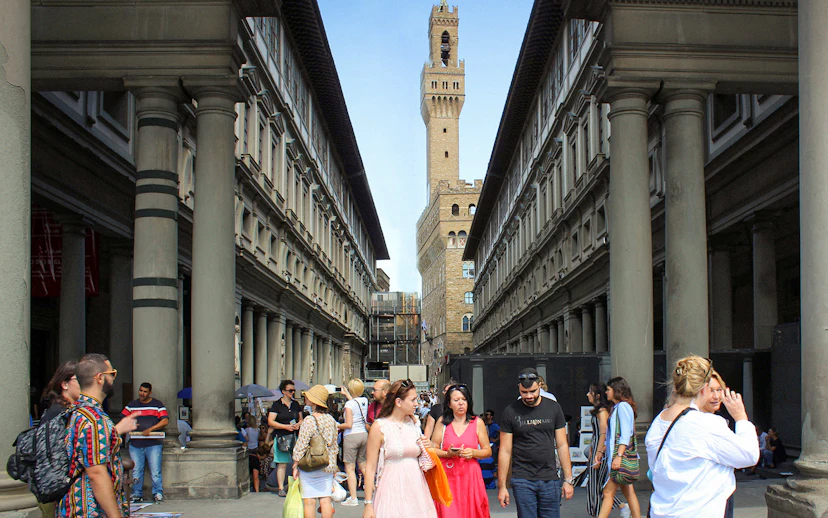
What makes the building distinctive in Florence is that it behaves like a street, a piazza, and a palace at once. Unlike the fortress-like Palazzo Vecchio or the more inward-looking Accademia, the Uffizi turns urban space into architecture. Visitors spot this immediately in the courtyard’s vanishing lines, the restrained gray-stone detailing, and the opening toward the river.
| Landmark | Original function | Style signal | What feels distinctive |
| --- | --- | --- | --- |
| Uffizi Gallery | State offices | Renaissance + Mannerist | Long urban courtyard and processional rhythm |
| Palazzo Vecchio | Civic palace | Medieval + Renaissance additions | Defensive mass and tower |
| Accademia Gallery | Teaching and display spaces | Later museum adaptation | Interior-focused, less urban drama |
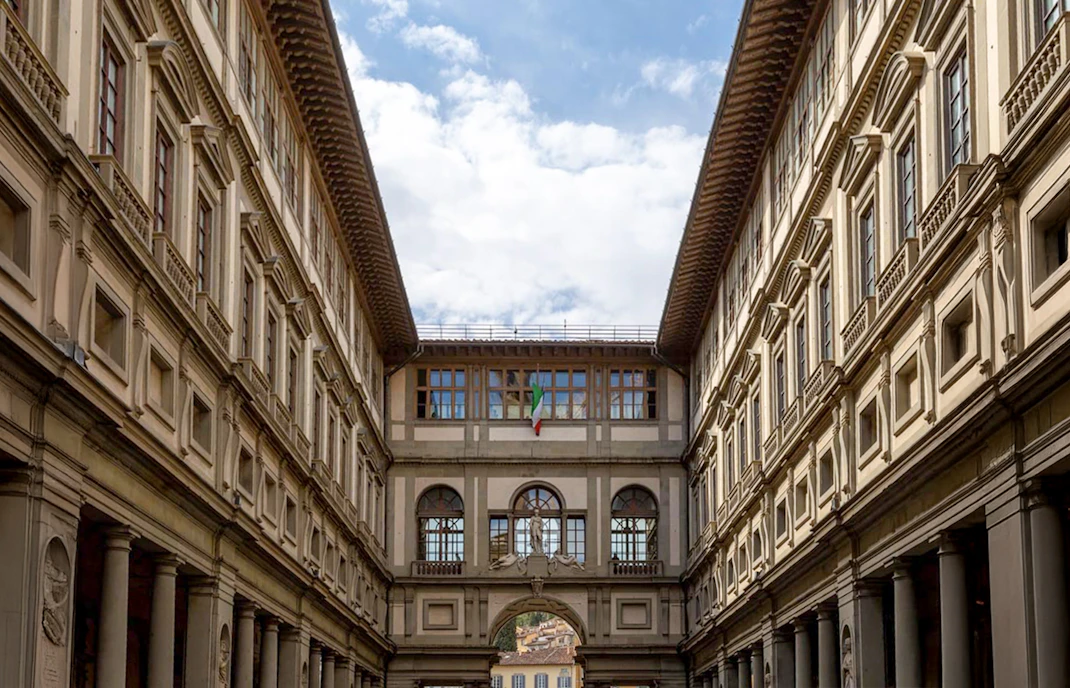
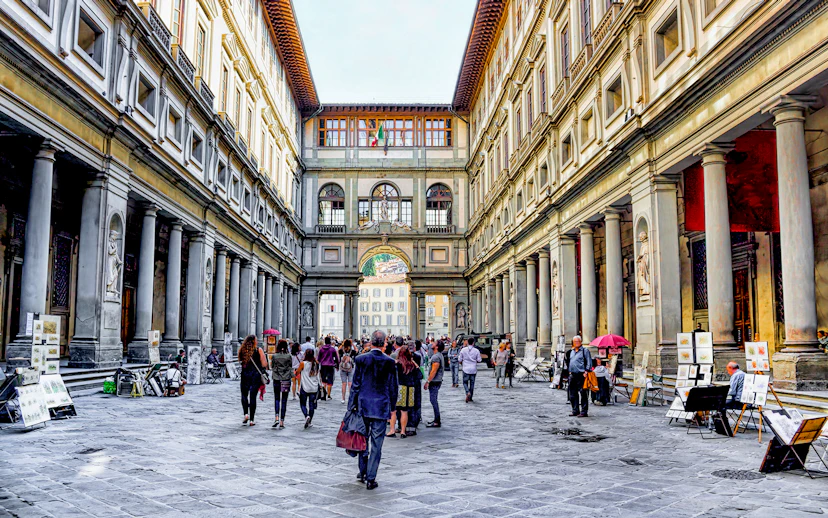
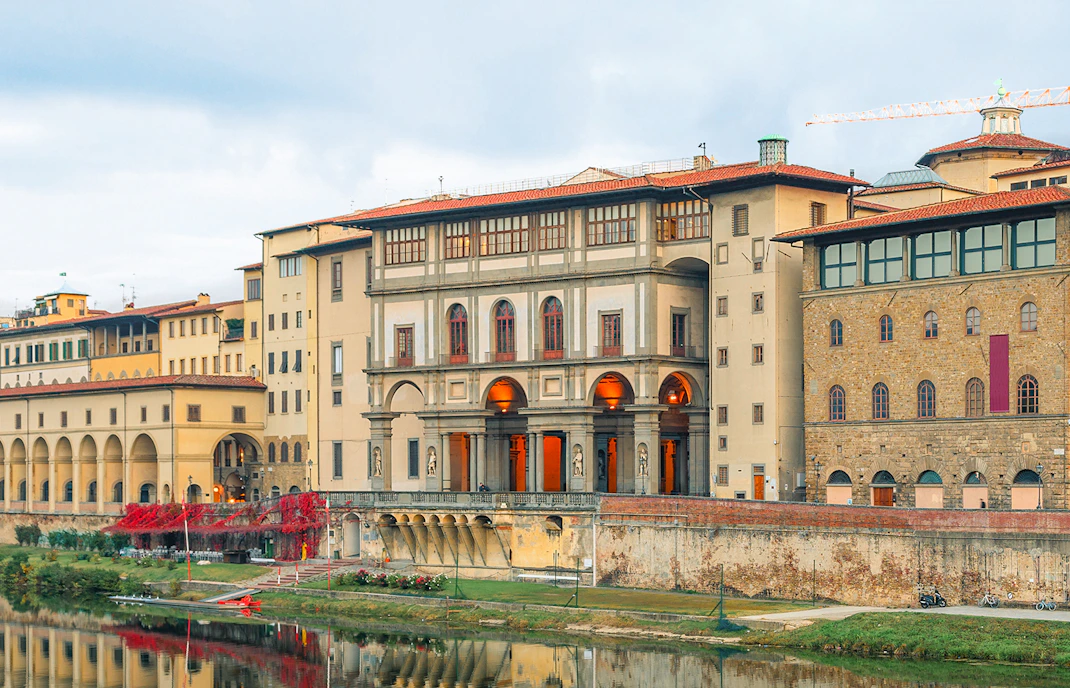
Courtyard perspective
A straight view down the Uffizi courtyard, with repetitive arches and columns pulling the eye toward the bright opening at the Arno.
Stone detailing
A close-up of pietra serena columns, cornices, and façade rhythm, showing the contrast between gray stone and pale wall surfaces.
Who designed/built Uffizi Gallery?
Giorgio Vasari
Architect, painter, and Medici court artist, Vasari designed the Uffizi as a disciplined administrative machine and a carefully staged urban statement. His long courtyard and ordered façades still define the complex.
Cosimo I de’ Medici
As patron rather than architect, Cosimo I set the agenda. He wanted the Florentine magistracies gathered in one place, turning architecture into an expression of centralized Medici authority.
Bernardo Buontalenti
Buontalenti contributed to later refinements, most famously the Tribuna, which shifted the complex closer to a purpose-built gallery. His interventions helped transform offices into a space for display and collecting.
Architectural highlights of Uffizi Gallery / Design highlights & iconic features
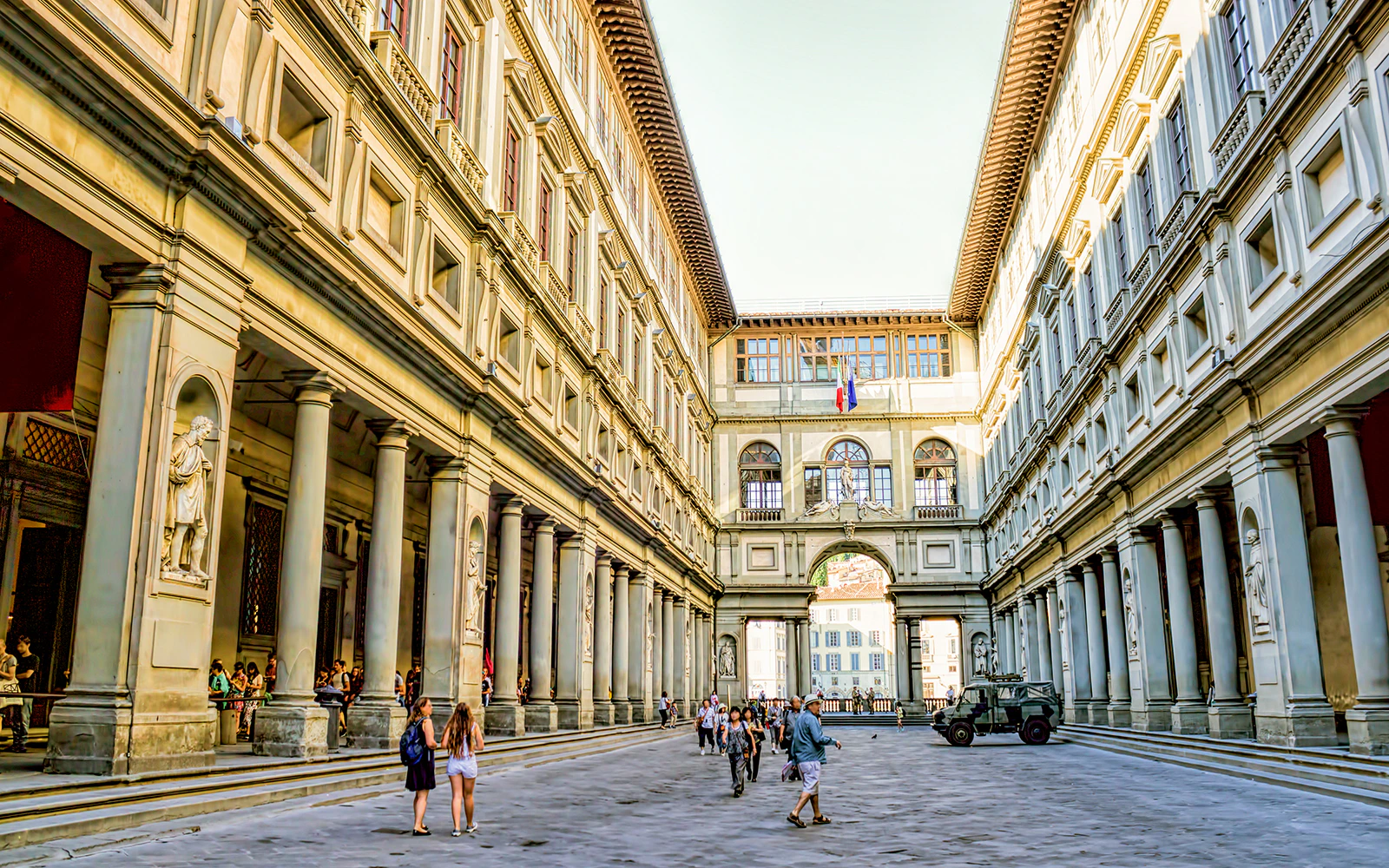
The U-shaped courtyard
The long cortile works like an outdoor hall, channeling your gaze from Piazza della Signoria toward the river and turning urban perspective into one of the building’s most memorable effects.
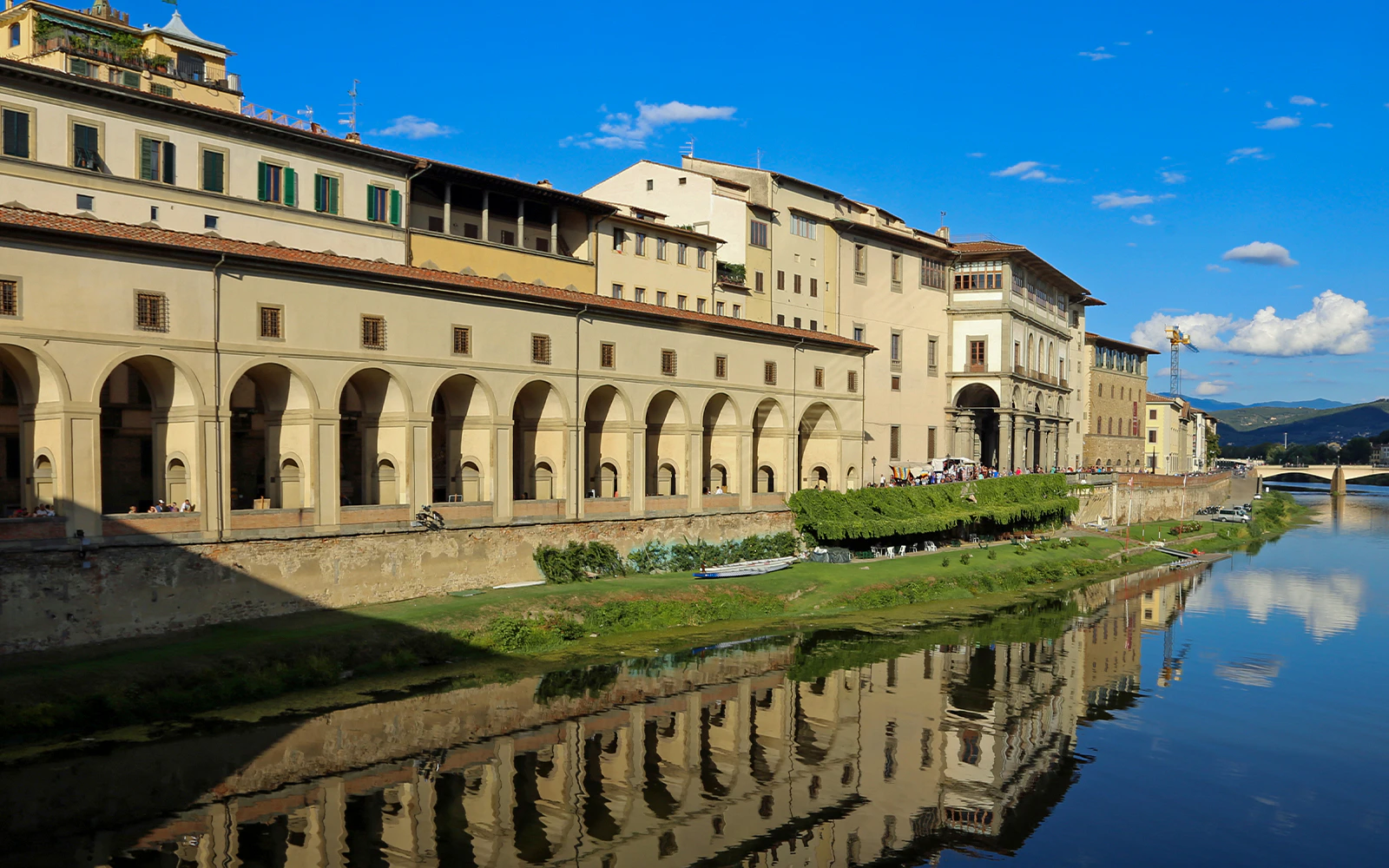
Cosimo I’s administrative project
In 1560, Cosimo I de’ Medici commissioned Vasari to gather Florence’s major magistracies in one centralized complex. That practical function explains the Uffizi’s long wings, repetitive bays, and unusually rational circulation. The name itself comes from uffizi — ‘offices’.
Vasari’s urban design
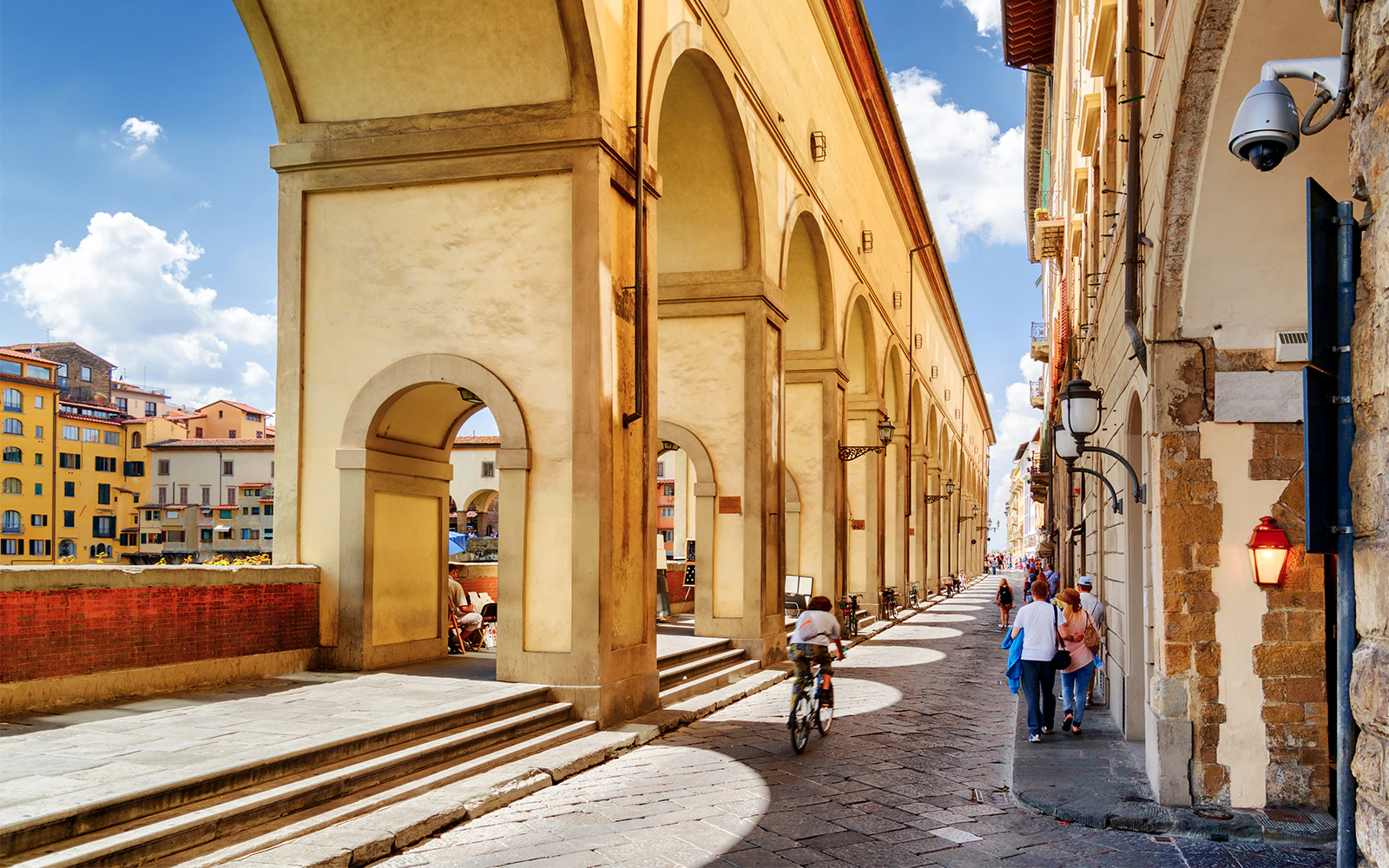
Vasari did more than design a building. He reshaped a slice of Florence between Piazza della Signoria and the Arno into a ceremonial corridor of power. In 1565, he also created the Vasari Corridor, linking the complex to the Medici’s residences and reinforcing the political geography of the city.
From offices to gallery
After Vasari’s death in 1574, the building continued to evolve. Under Medici patronage, parts of the upper floor became spaces for art and dynastic collections, culminating in rooms such as the Tribuna. By 1769, the Uffizi was open to the public, marking its shift from courtly possession to museum.
Modern restoration and visitor upgrades
Recent decades have focused on conservation, accessibility, safety, climate control, and clearer visitor flow, especially after the damage Florence suffered in the 1966 flood. The architectural challenge has been to protect a 16th-century shell while making it function as a major modern museum.
Read more about the history of the Uffizi Gallery.
The exterior of Uffizi Gallery
The exterior of Uffizi Gallery
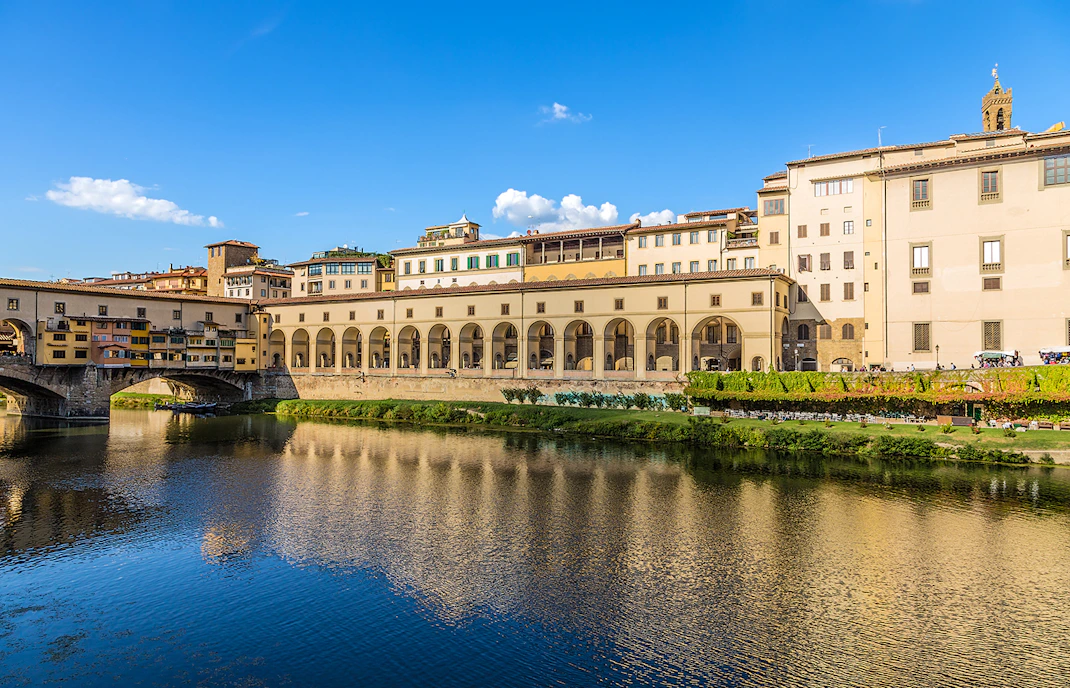
From Piazza della Signoria, the Uffizi does not hit you with a dome or tower. Instead, it pulls you inward. Two long, measured wings create a narrow stone canyon that feels deliberate and theatrical, guiding your eye toward the pale light at the river end. The façades are restrained rather than ornate, built from a Florentine vocabulary of smooth wall surfaces, gray pietra serena details, regular openings, and crisp horizontal lines.
As you move closer, the courtyard becomes the real façade. Columns, arches, and repeated bays establish a near-musical rhythm, while later statues in the wall niches add a layer the original 16th-century design did not yet have. At the Arno edge, the space opens and breathes. Conservation has inevitably shaped what you see today: repairs after centuries of wear, flood-related protection following 1966, and discreet updates that allow heavy daily visitor use without erasing the original urban drama. Arrival here feels less like reaching a museum entrance and more like stepping into a Renaissance idea of the city.
The interior of Uffizi Gallery
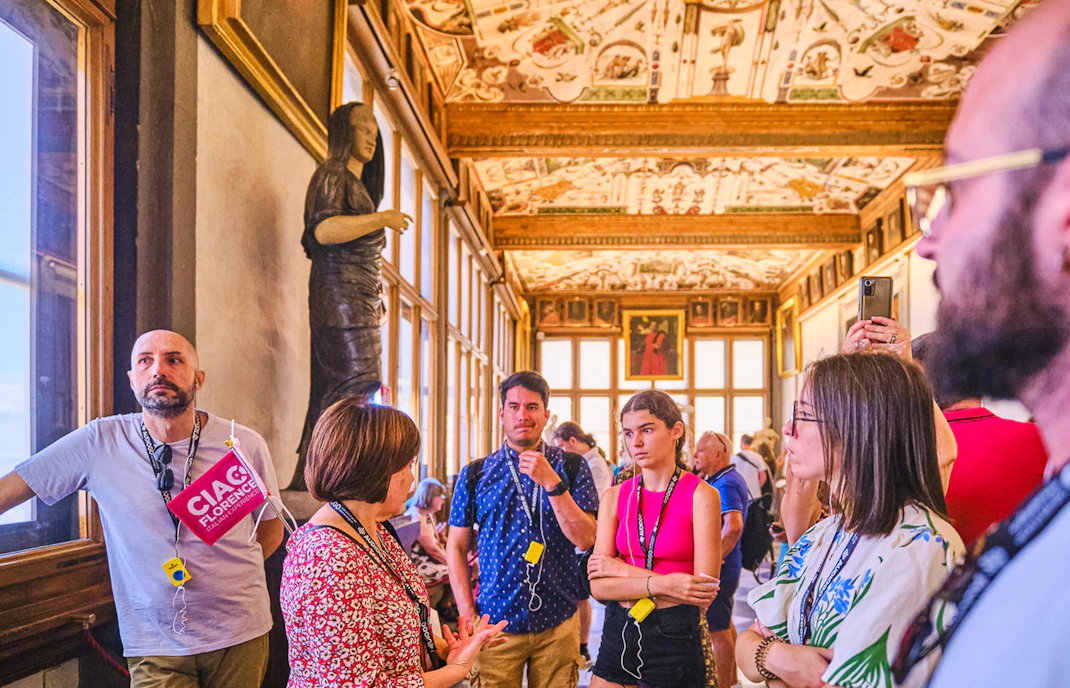
The corridors
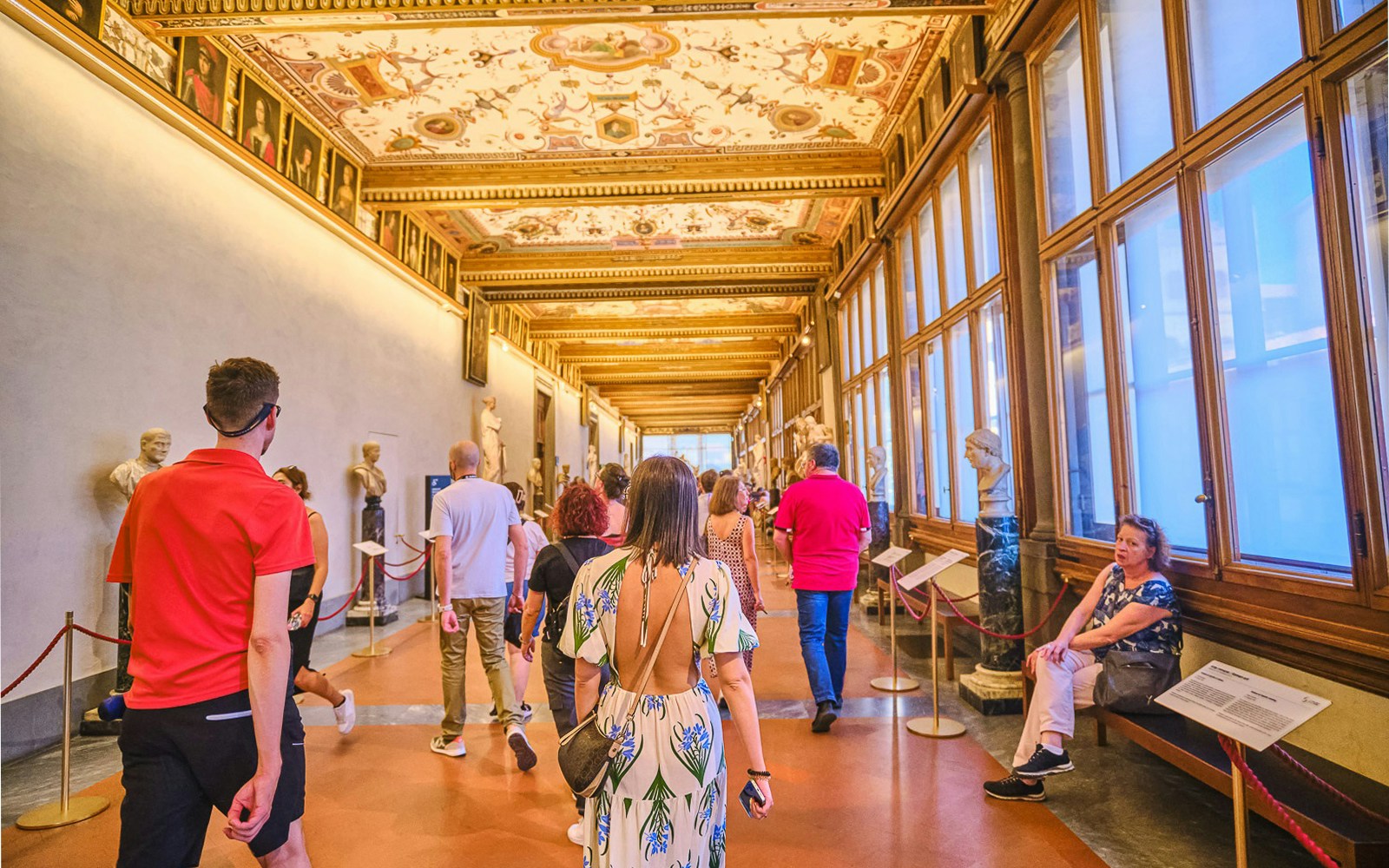
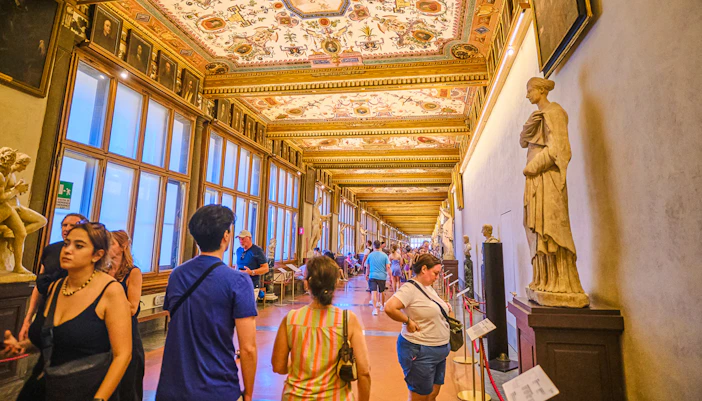
The first strong interior impression is linearity. Long upper corridors, lit by repeated windows and edged by sculpture, turn movement itself into part of the architectural experience. They were ideal for circulation when the building housed offices, and they still organize a museum visit with remarkable efficiency.
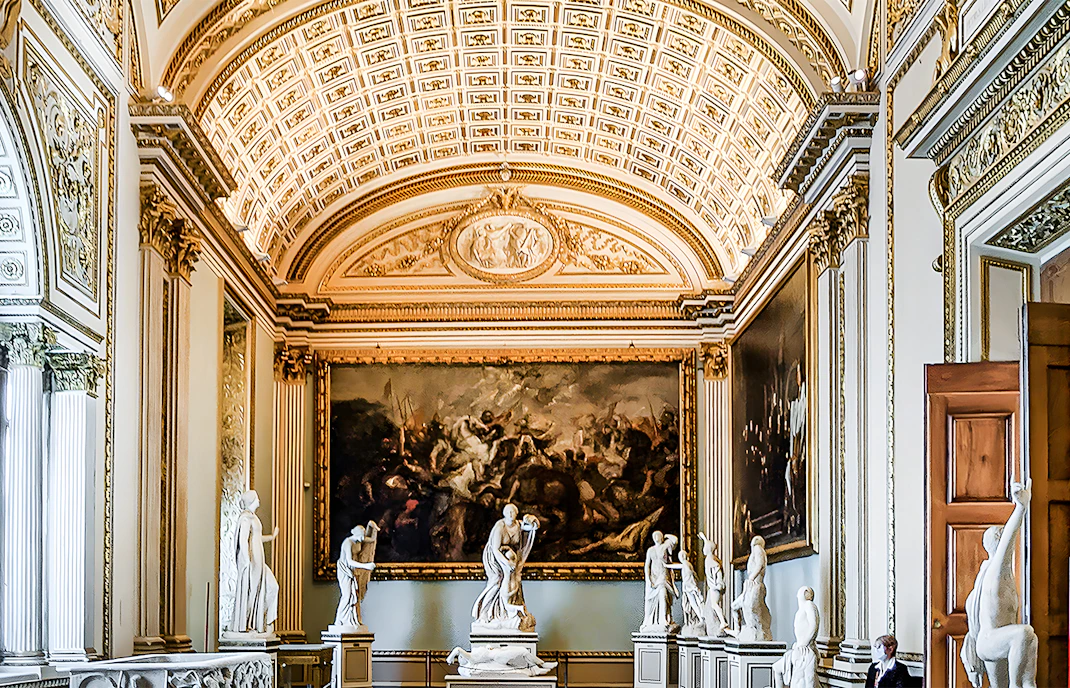
The sequence of rooms
Off the main corridors, galleries open in a measured progression rather than a single overwhelming hall. This creates a rhythm of compression and release: corridor, room, corridor, room. Ceilings, door frames, and wall treatments give each section a slightly different mood, but the larger structure remains legible.
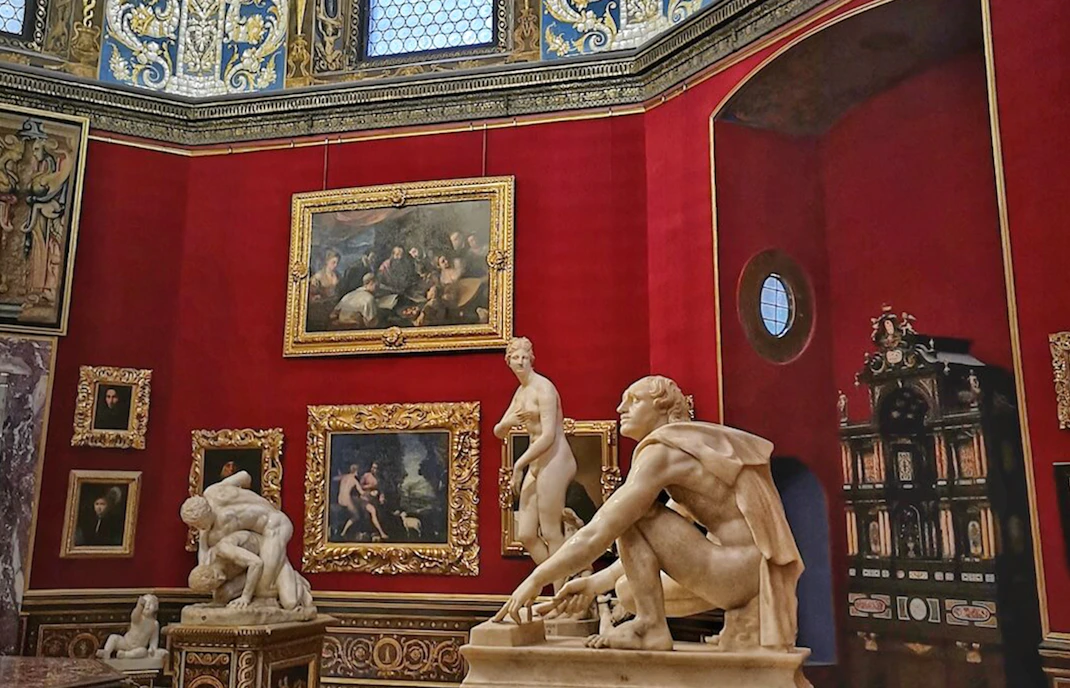
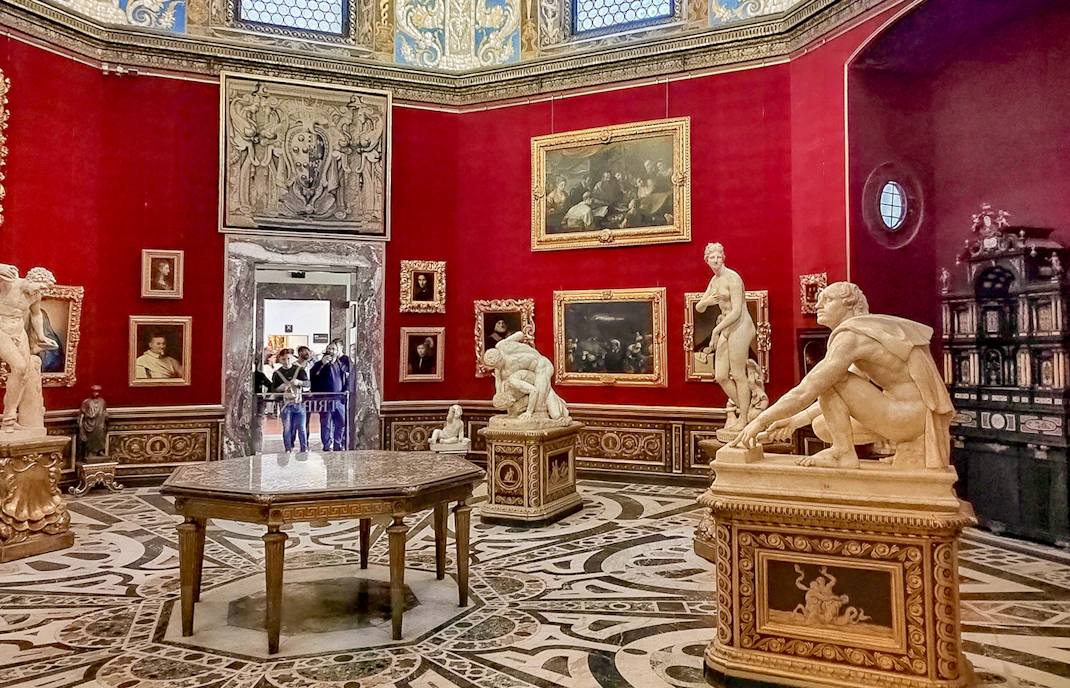
The Tribuna and view points
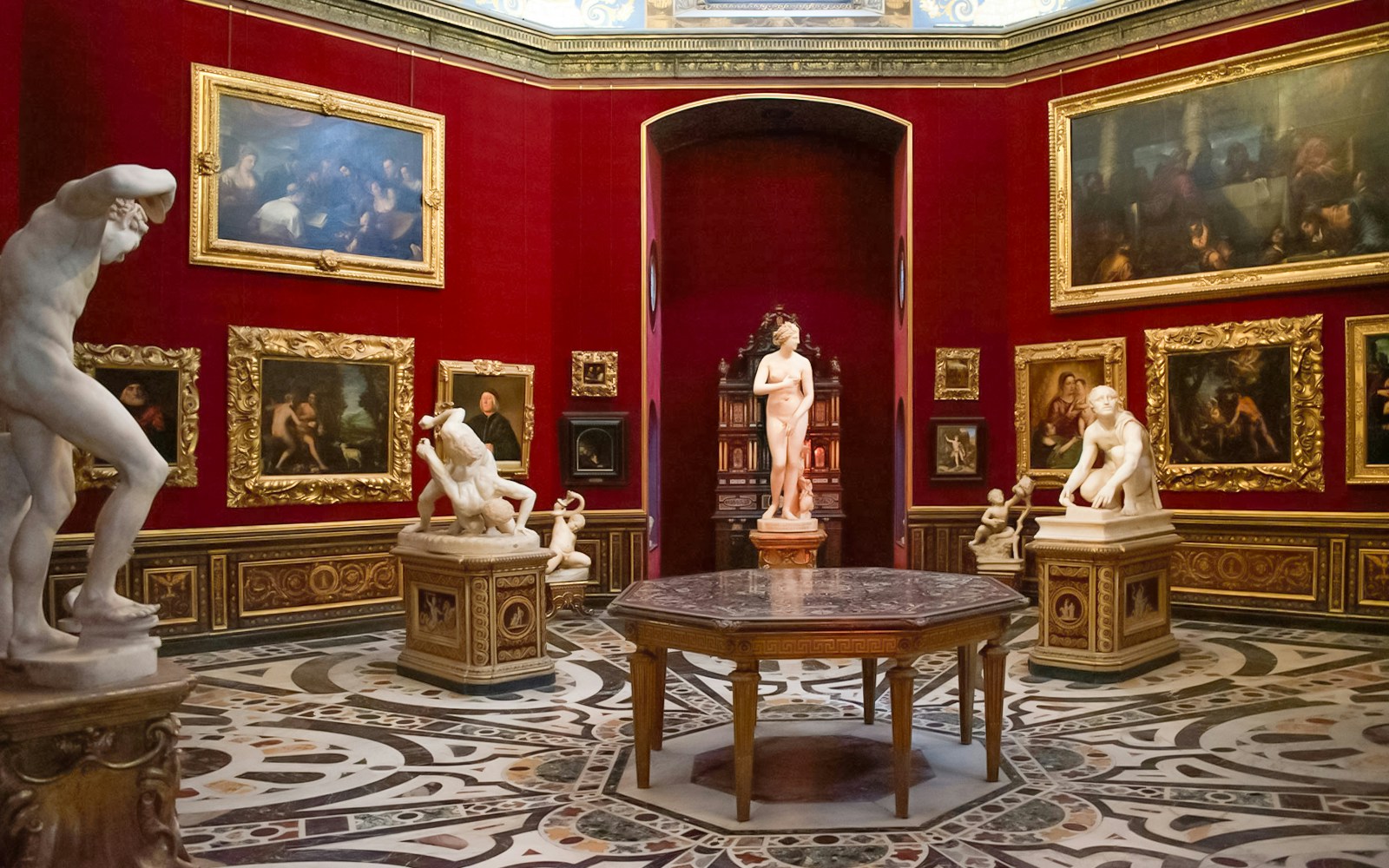
The Tribuna breaks this linear logic with a centralized, octagonal plan designed for wonder. Elsewhere, windows toward the Arno and city rooftops remind you that the Uffizi is embedded in Florence, not sealed off from it. Understanding these shifts in space makes the visit richer than simply moving from painting to painting.
Explore more in this inside the Uffizi Gallery guide.
Frequently asked questions about Uffizi Gallery’s architecture
Giorgio Vasari was the original architect, working for Cosimo I de’ Medici from 1560 onward. His design organized state offices into a coherent urban composition, which is why the building still feels planned, disciplined, and politically charged.
It reflects Renaissance ideals through symmetry, proportion, classical detail, and rational planning. At the same time, its long courtyard and controlled perspective add a more Mannerist sense of drama, turning order into a display of power.
No. It was designed first as administrative offices for Florentine magistrates. The upper levels gradually became spaces for Medici collections, which is why the museum route still follows the building’s original circulation logic so clearly.
Start with the courtyard, the repeated arches and bays, the opening toward the Arno, and the upper corridors once inside. The Tribuna is the key interior highlight if you want to see where collecting, display, and architecture meet most vividly.
Yes, but mostly through adaptation rather than rejection. Bernardo Buontalenti and later interventions introduced rooms and display spaces that helped convert the complex from offices into a gallery while preserving Vasari’s core framework.
Unlike fortress-like Palazzo Vecchio or the cathedral-centered drama of the Duomo complex, the Uffizi is quieter and more linear. Its distinction lies in transforming a working administrative block into one of Florence’s most elegant urban spaces.
Yes, the museum operates with modern conservation, accessibility, and safety systems in place. Detailed seismic engineering data is [Information unavailable] in standard visitor-facing sources, but the building is actively maintained and monitored as a major national museum.
More reads
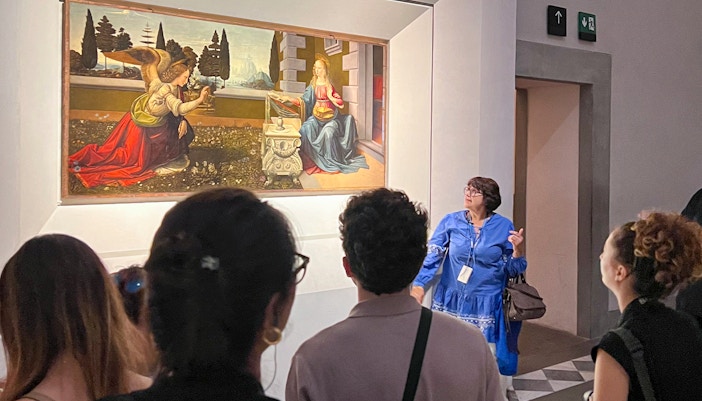
History of Uffizi Gallery
Inside Uffizi Gallery
Uffizi Gallery tickets