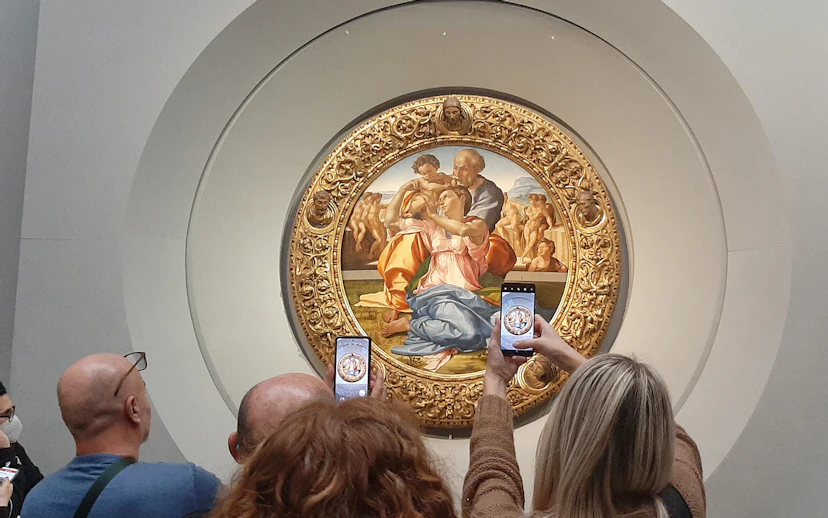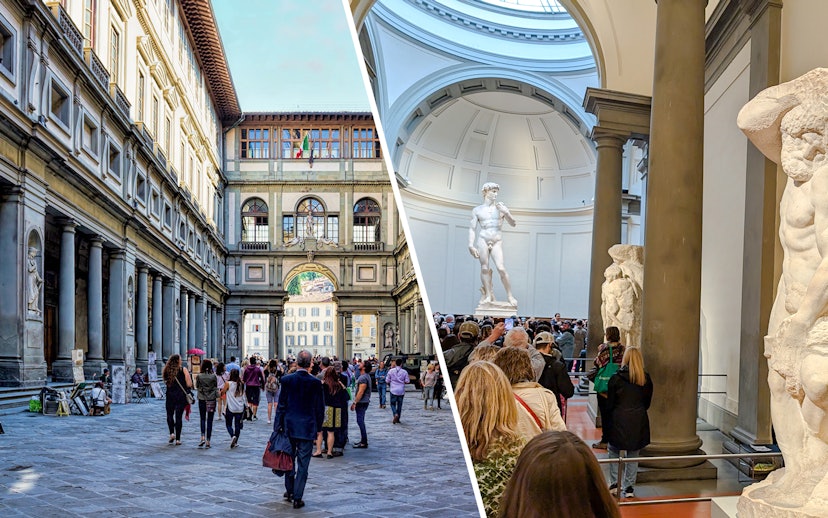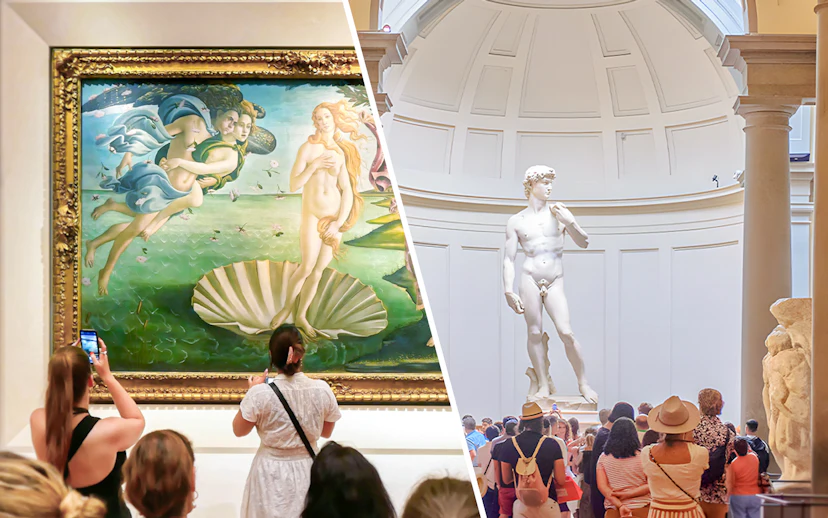










Take the first timed entry on a weekday, or aim for the last 90 minutes of the day. The room reads best when you can step back and scan the whole ensemble. Midday makes that harder, so avoid 11am–2pm if possible.
Top things to do in Florence
Overview
- Access: Included in all Uffizi tickets
- Separate ticket: Not required
- When you'll see it: Among the later rooms on the gallery route
- Visit duration: 5 to 10 min self-guided / 10 to 15 min with guide
- Best time: Early on a weekday, while the larger rooms are quiet
- Restrictions: No flash, no tripods or selfie sticks. Photography otherwise allowed.

The Niobe Room is included with all Uffizi Gallery tickets. No separate ticket is needed. You’ll usually reach it late in the standard museum route, after many of the headline painting rooms, and it’s best treated as a planned stop rather than something to revisit later. Book timed entry or a guided tour so you reach it with enough time, focus, and energy to read the sculpture group properly.
How to best experience Niobe Room

Best time to visit

How long to spend

Plan 10–15 minutes self-guided, or 15–20 minutes with commentary. That gives you enough time to understand the myth and circle the room once. If you only glance from the doorway, the sculptures flatten into separate statues.

Where it fits in your itinerary
You’ll usually meet the room late in the Uffizi circuit, when attention drops after Botticelli, Leonardo, and Raphael. Save some concentration for it. If your full visit is 2.5–3 hours, protect at least 15 minutes here.

Crowd patterns
The room bottlenecks when guided groups arrive together, especially late morning and early afternoon. At those times, the center fills first and sight lines disappear. Earlier and later slots let you move around the statues and read the story as a sequence.

What to prioritize if time is short
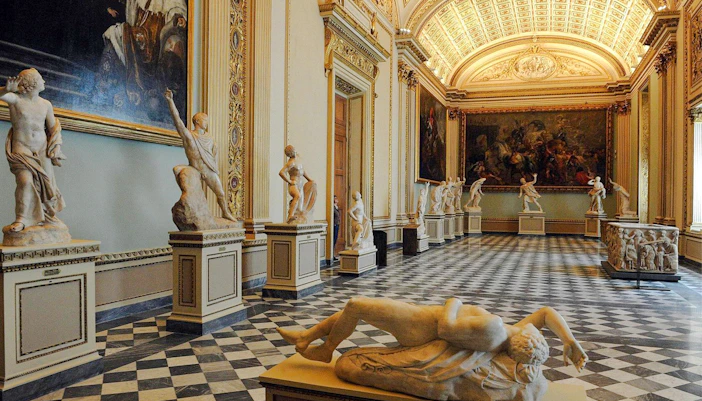
Stand back first, not close up. Read the group as a chain of panic, then focus on Niobe, the children nearest her, and the lower fallen figures. Skip prolonged label-reading elsewhere if this room matters more to you.

Common mistakes to avoid
Most visitors treat each statue as a separate object and miss the room’s drama. Start with the room as one scene, then move clockwise. Don’t stay glued to the doorway, and don’t forget to look low as well as straight ahead.
Best tickets to experience Niobe Room
| Ticket type | Why choose it |
|---|---|
Timed entry | Locks in your slot and gets you to the room without risking a sold-out day or a long ticket wait. |
Small-group guided tour | Best if you want the myth, sculptural details, and room layout explained clearly instead of piecing the drama together alone. |
Private tour | Best if the room is a priority and you want flexible pacing, questions, and time to circle the ensemble properly. |
Why it’s worth seeing

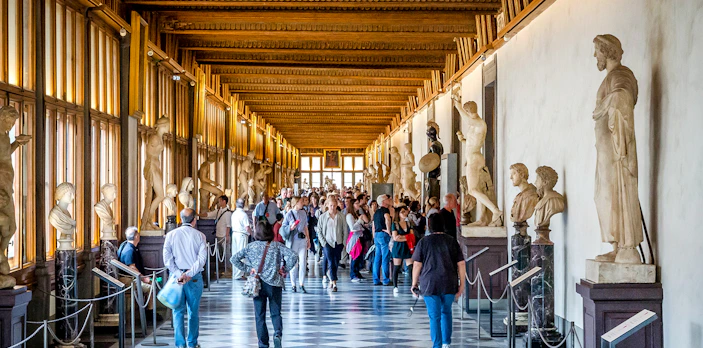
What makes the Niobe Room irreplaceable inside the Uffizi is that it tells a single myth through an entire room of sculpture, not through one masterpiece on one wall. Many visitors don’t realize the real subject is collective panic: the room makes full sense only when you read the statues together, not one by one. Start with the ensemble, then use these three stops to slow down your looking.

The full ensemble from the doorway
Pause just inside the entrance and look across the room before approaching any figure. This wide view lets you understand the group as a staged catastrophe, with bodies turning, fleeing, collapsing, and reacting across the same dramatic moment.

Niobe as the emotional center

Once you’ve taken in the room, move toward Niobe and study the protective, upward-thrown movement that anchors the scene. She is the emotional pivot of the group, and the surrounding figures make most sense once you read their fear in relation to her.

The low figures and broken rhythm
Don’t keep your gaze only at adult eye level. Look toward the lower bodies and figures nearer the edges, where the tragedy becomes more physical and immediate. These lower sight lines stop the room from feeling ceremonial and make it feel sudden.
Know before you go
- Open: Tuesday–Sunday, 8:15am–6:30pm
- Last entry: 5:30pm
- Closed: Mondays, December 25, and January 1
- Free entry day: First Sunday of each month, usually with heavier crowds
- Address: Piazzale degli Uffizi, 6, 50122 Florence, Italy
- Nearest station: Firenze Santa Maria Novella, about 20 minutes on foot
- Entry point: Enter through the main Uffizi access points at the courtyard, using the line for your ticket type
- Position in route: The Niobe Room is usually reached late in the standard museum circuit; allow roughly 1.5–2 hours from entry
- Direct access: No; the room has no independent entrance outside the main gallery route
- Wheelchair access: Yes; the Uffizi is wheelchair accessible with ramps and elevators through the building
- Accessible route: Ask staff on arrival for the most direct route to later rooms, including the Niobe Room
- Room surface: The room itself is level once you reach the gallery floor
- Facilities: Accessible restrooms are available on site
- Support: Audioguide and digital guide options are available for visitors who want added context without joining a tour
- Photography: Personal photography is generally allowed, but flash photography and tripods are not permitted
- Bags: Large bags, backpacks, luggage, and umbrellas must be left in the cloakroom
- Food and drink: Not allowed inside the gallery rooms
- Artworks: Do not touch sculptures, bases, barriers, or display surfaces
- Re-entry: Not permitted once you leave the Uffizi
Frequently asked questions about the Niobe Room at Uffizi Gallery
Yes. Entry to the Niobe Room is included with every valid Uffizi Gallery ticket. No separate ticket exists.
No. It has no separate entrance and sits within the standard museum circuit. You must enter through the Uffizi and follow the route.
Usually late in the route. Allow roughly 1.5–2 hours from entry, depending on your pace and crowd levels.
About 10–15 minutes self-guided, or 15–20 minutes with commentary. It works best when you read the ensemble, not make a quick pass.
Yes. It’s included on guided Uffizi visits when the standard route is open. A guide helps decode the myth and the room’s sight lines.
Usually, yes. Individual rooms can close or reroute for maintenance, so check the official Uffizi site or ask staff on arrival.
Yes, for personal use under current Uffizi rules. Flash, tripods, and bulky equipment are not allowed inside the galleries.
It’s a sculptural story told across one room, not a sequence of paintings. You read movement and fear across the whole ensemble.
Yes. The Uffizi has ramps and elevators, and the room itself is level once reached. Ask staff for the most direct accessible route.