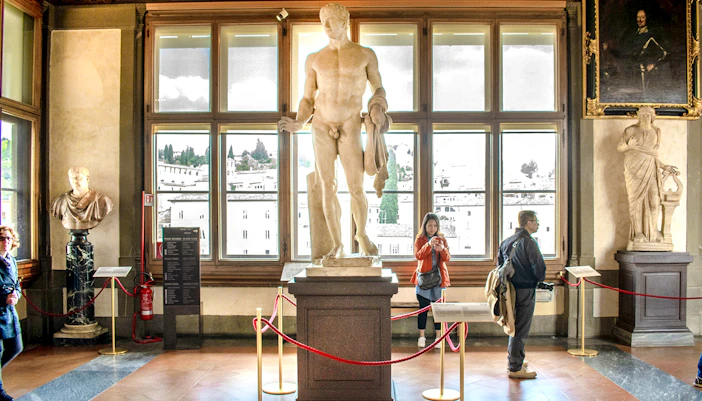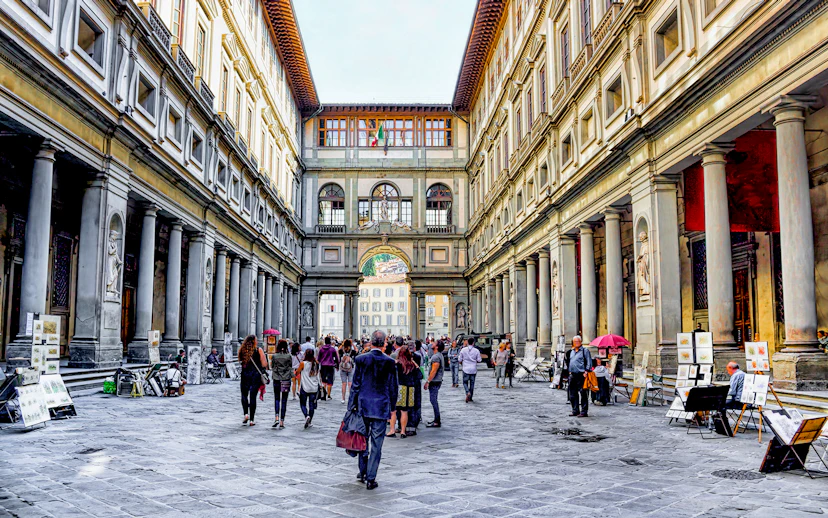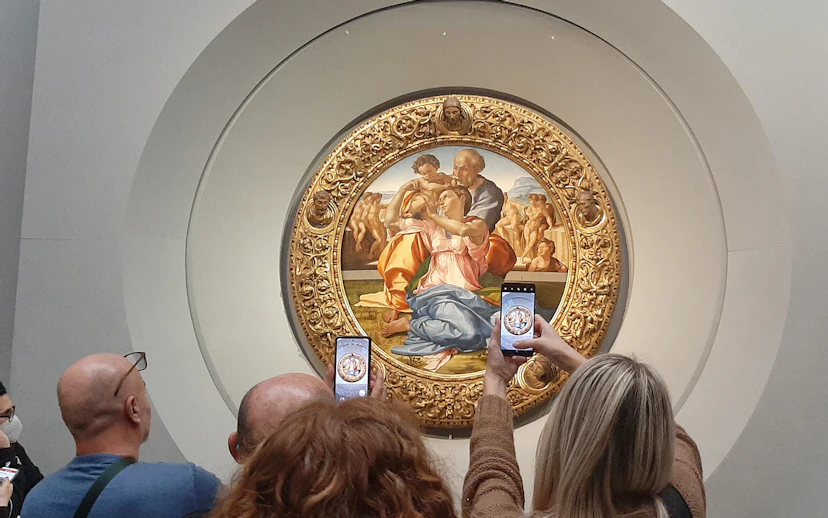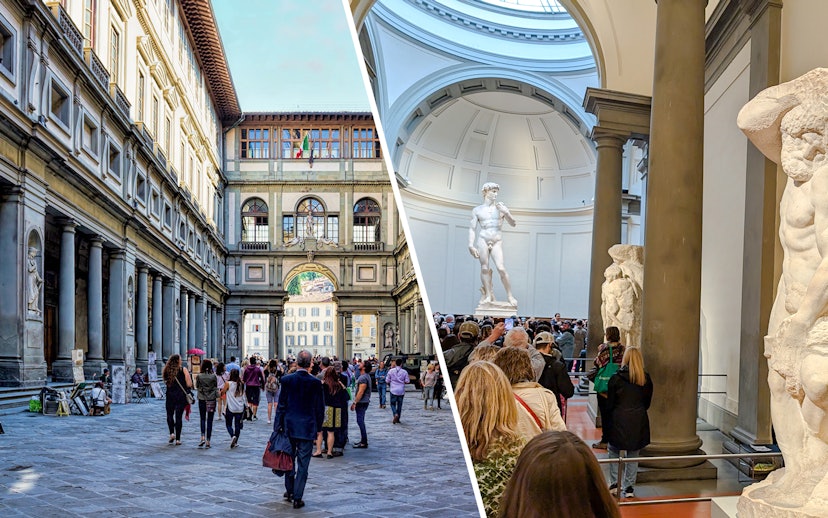




Aim for the first entry slots on a weekday, ideally before 10am. The room is much easier to understand before the late-morning buildup spreads through the central Uffizi route. Arrive later, and you may get only a compressed, shoulder-to-shoulder view.
Tribuna degli Uffizi tickets
Included with Uffizi Gallery tickets
Timings
RECOMMENDED DURATION
3 hours
Top things to do in Florence
Overview
- Access: Included in all Uffizi tickets
- Separate ticket: Not required
- When you'll see it: Among the early rooms on the gallery route
- Visit duration: 3 to 5 min, viewed from the doorways
- Best time: Early on a weekday, since visitors bunch at the entrances
- Restrictions: Cannot be entered; viewed from the threshold. No flash.

The Tribuna degli Uffizi is included with all Uffizi Gallery tickets. No separate ticket is needed. You’ll reach it midway through the main gallery route on the upper-floor sequence, and while it is part of the standard visit, it’s easy to pass too quickly if you don’t know what it is. Book a guided tour so you reach it before the route gets congested and have enough focus to read the room properly.
How to best experience Tribuna degli Uffizi
Best time to visit
How long to spend
Self-guided: allow 8–12 minutes. With a guide: allow 12–15 minutes, because the room’s design needs explanation as much as observation. If you spend less than 5 minutes here, you’ll register it as a passage rather than a destination.

Where it fits in your itinerary
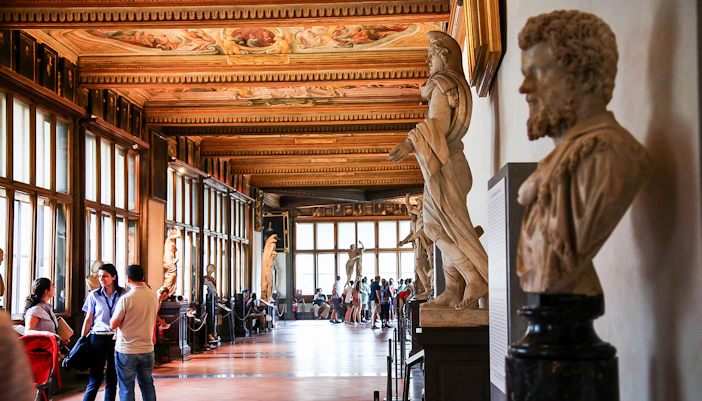
You’ll usually encounter the Tribuna midway through the upper-floor route, not at the start or the end. Budget about 45–60 minutes to reach it at a steady pace. Don’t exhaust yourself in the first run of rooms, or you’ll rush through it.

Crowd patterns
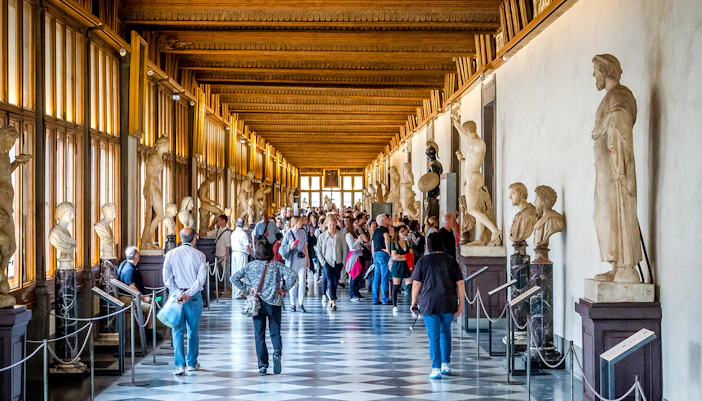
Crowds peak from late morning into early afternoon, when several timed-entry waves overlap. Because the room is compact and octagonal, even a moderate number of visitors can shrink your sightlines quickly. Earlier and later slots give you the space to stand back and read it whole.

What to prioritize if time is short
Stand near the center first, then look up before looking around. After that, slowly turn to read the octagonal plan, the ceiling, and the perimeter display. If you focus only on one sculpture or wall, you’ll miss the room’s logic.

Common mistakes to avoid
The most common mistake is treating the Tribuna as a corridor between bigger-name rooms. Pause as soon as you enter, and scan ceiling to floor before moving on. Another mistake is looking only at eye level, which makes the room seem smaller and less deliberate.
Best tickets to experience Tribuna degli Uffizi
| Ticket type | Why choose it |
|---|---|
Timed entry | Best if you want flexibility and enough time to pause here without following a group pace. |
Guided tour | Best for understanding why this room mattered to the Medici, not just what sits inside it. |
Why it's worth seeing
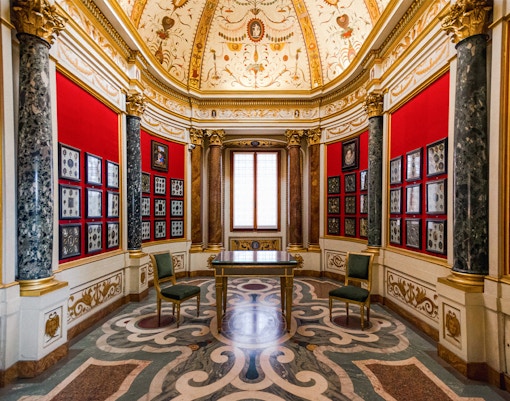
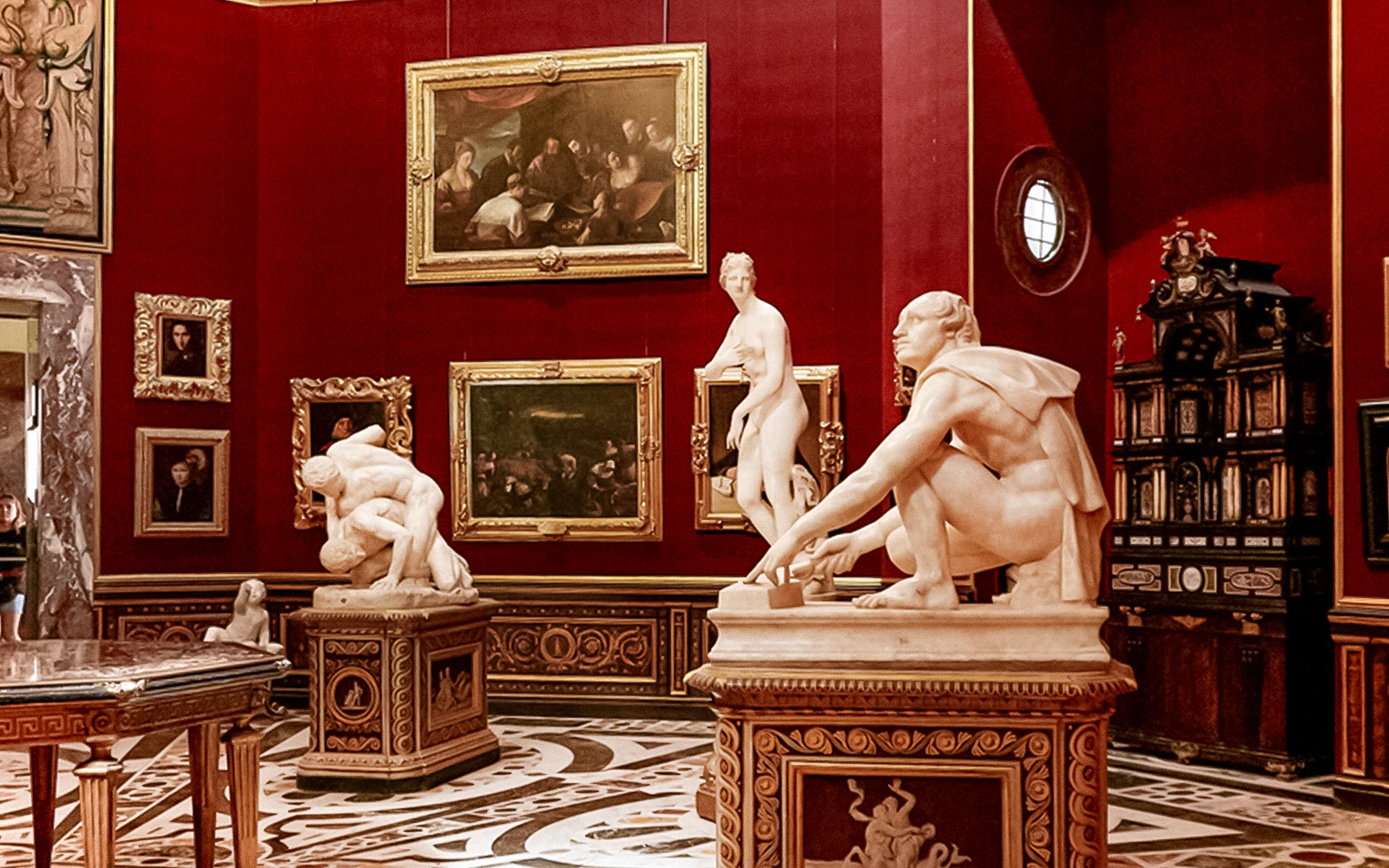
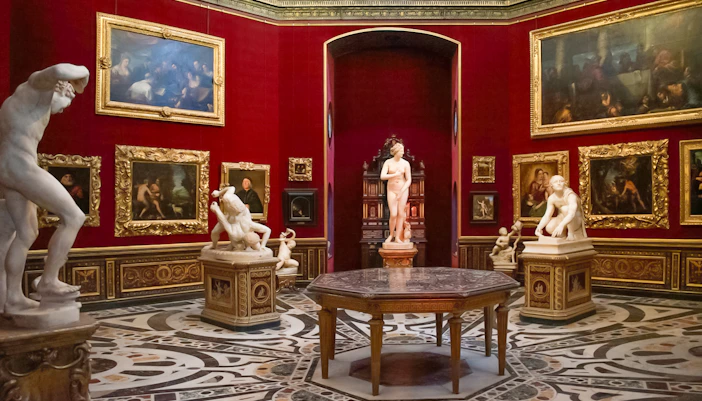
The Tribuna is the one room in the Uffizi that still feels like a Medici collecting idea made physical: not just art on walls, but a total environment. Most visitors don’t realize it was designed as a concentrated display of precious objects, antiquities, color, light, and status. That changes how you should look at it. You’re not entering just another gallery room — you’re entering a statement about how a ruling family wanted art to be seen.

The octagonal room
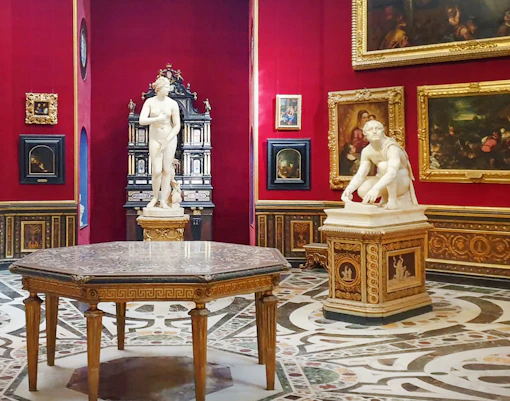
Even if you can't enter, don’t hug the doorway. Move a few steps inward and turn slowly through all 8 sides of the space. The octagonal plan is the point: it creates a controlled, almost theatrical setting where every wall, opening, and object placement contributes to the room’s effect.

The dome and ceiling
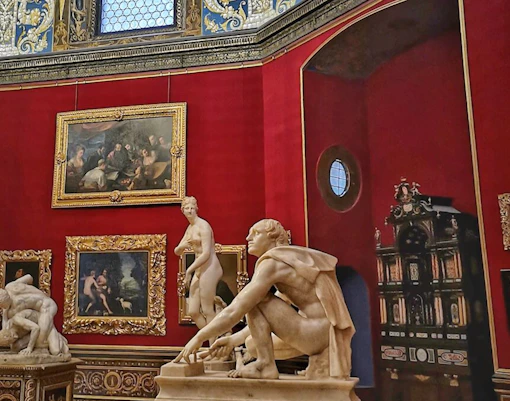
Look straight up once you reach the center. The domed ceiling and lantern pull your eye vertically, making the room feel more like a cabinet of marvels than a normal museum chamber. It was built in the 1580s for Francesco I de' Medici to hold the family's most prized treasures beneath a mother-of-pearl domed ceiling.

The perimeter display
After looking up, shift your attention to the sculptures and display rhythm around the edges. The perimeter is arranged to frame the room as a curated world of classical prestige. This is where the Tribuna stops being decorative and starts reading as Medici strategy.

Medici Venus
The Medici Venus is a 1st-century BC Greek marble, a Hellenistic take on the goddess of love standing nude and modestly shielding herself. Long the most celebrated antique sculpture in the Medici collection, it gives the Tribuna its centrepiece and was once considered the ideal of female beauty, copied and admired by artists across Europe.
Know before you go
- Open: Tuesday to Sunday, 8:15am–6:30pm
- Last entry: 5:30pm
- Closed: Mondays, January 1, and December 25
- Free entry day: First Sunday of each month; expect the heaviest crowding
- Address: Piazzale degli Uffizi, 6, 50122 Florence, Italy (Google Maps: ‘Uffizi Gallery’)
- Nearest station: Firenze Santa Maria Novella, about a 20-minute walk
- Entry point: Enter through the main Uffizi Gallery entrance; the Tribuna has no separate access
- Position in route: Midway through the upper-floor gallery sequence
- Time from entrance: Allow about 45–60 minutes to reach it at a steady self-guided pace
- Wheelchair access: The Uffizi Gallery is wheelchair accessible, with ramps and elevators through the main route
- Accessible route: Ask staff at entry for the elevator route to the upper-floor galleries
- Inside the room: The floor is level, but crowd density can reduce turning space at busy times
- On-site support: Accessible restrooms are available in the gallery building
- Guide options: Selected Uffizi tickets include digital Audioguide formats; written gallery labels help if you prefer reading over audio
- Photography: Personal photography is generally allowed without flash; tripods and professional photo gear are not permitted
- Large items: Bags, backpacks, luggage, and umbrellas must be left in the cloakroom before entry
- Food and drink: Not allowed inside gallery spaces
- Re-entry: Not permitted once you leave the Uffizi
- Room etiquette: Keep voices low and avoid blocking the center or doorway when the room is busy
Frequently asked questions about the Tribuna at Uffizi
Yes. Entry to the Tribuna is included with every valid Uffizi Gallery ticket. No separate ticket exists.
No. The Tribuna has no independent entrance and sits within the main gallery route. You must enter through the Uffizi. While it can't be technically 'entered' by stepping inside the room, you can get a good look at its interiors from the cordon outside.
Usually midway through the upper-floor route. Allow about 45–60 minutes from entry, depending on how long you stop in earlier rooms.
Allow 8–12 minutes self-guided, or 12–15 minutes with a guide. The room rewards a short but deliberate pause.
Yes. Uffizi guided tours normally pass through it as part of the core route and explain why the room matters.
Yes, usually without flash. Tripods, large setups, and blocking circulation while taking photos are not allowed.
Yes. Use the Uffizi’s elevators and accessible route to reach it.
The room itself. Stand in the center, look up at the dome, then read the octagonal layout before studying individual objects.
The flooring. It is a stunning, highly delicate geometric mosaic made of multi-colored marble and precious stones (pietra dura). It simply cannot withstand the physical weight and friction of thousands of daily visitors walking over it. The second is microclimate and space: funneling standard museum crowds into that tight space would create humidity and temperature spikes, threatening the ancient Roman sculptures and Renaissance masterpieces housed inside (including the famous Medici Venus).