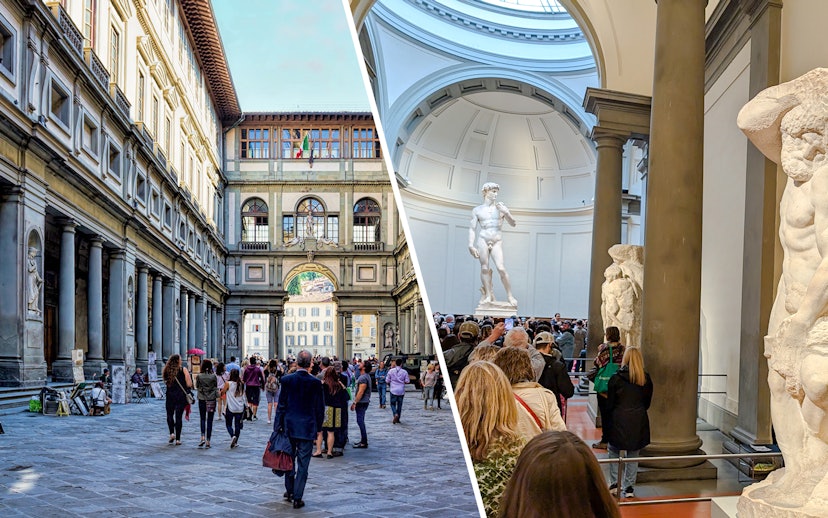
Choose the first entry slot or the final two hours of the day. Midday groups cluster around David and neighboring rooms. Earlier or later visits let you circle the casts calmly, so avoid 11am–3pm if you can.
Included with Accademia Gallery tickets
Timings
RECOMMENDED DURATION
3 hours

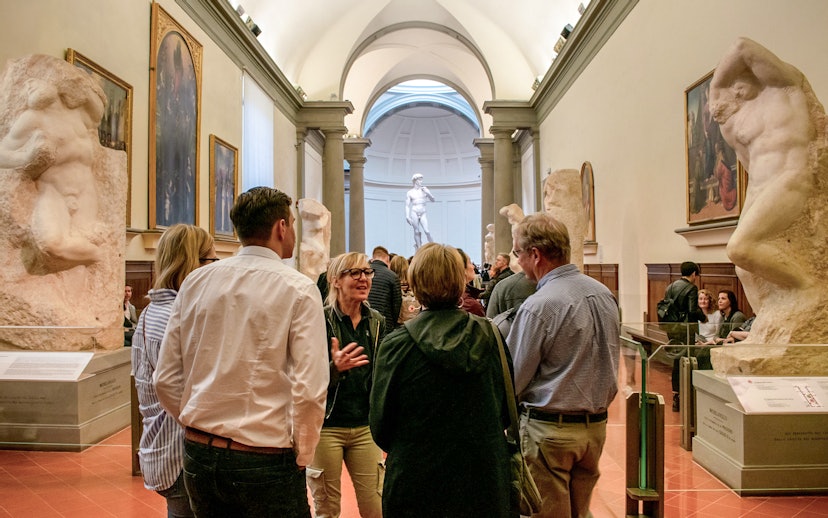
Gipsoteca Bartolini is included with all Accademia Gallery tickets, and no separate ticket is needed; it stands out because it shows sculpture in its making, not only sculpture in its finished marble form. You’ll usually reach it midway through the ground-floor visit, and it sits naturally within the main museum route rather than as a separate detour. Give it 15–20 minutes and, if possible, pair it with a guided or audio-supported visit so the plaster casts read as working tools rather than anonymous white figures.
Choose the first entry slot or the final two hours of the day. Midday groups cluster around David and neighboring rooms. Earlier or later visits let you circle the casts calmly, so avoid 11am–3pm if you can.
Plan 15–20 minutes self-guided, or 20–30 minutes with a guide or audio guide. That is enough to understand the room and study two or three major casts. Give it less, and it blurs into a hallway.
Treat it as a reset point between headline works, not an optional detour. Most visitors reach it after the early rooms and before the museum’s busiest zone. Keep enough attention in reserve so you do not rush straight through it.
Crowding here follows David’s crowd cycle. Between late morning and early afternoon, guided groups bunch together, and the room feels compressed. In the first hour after opening and later in the afternoon, sightlines improve, and you can stand back from the casts.
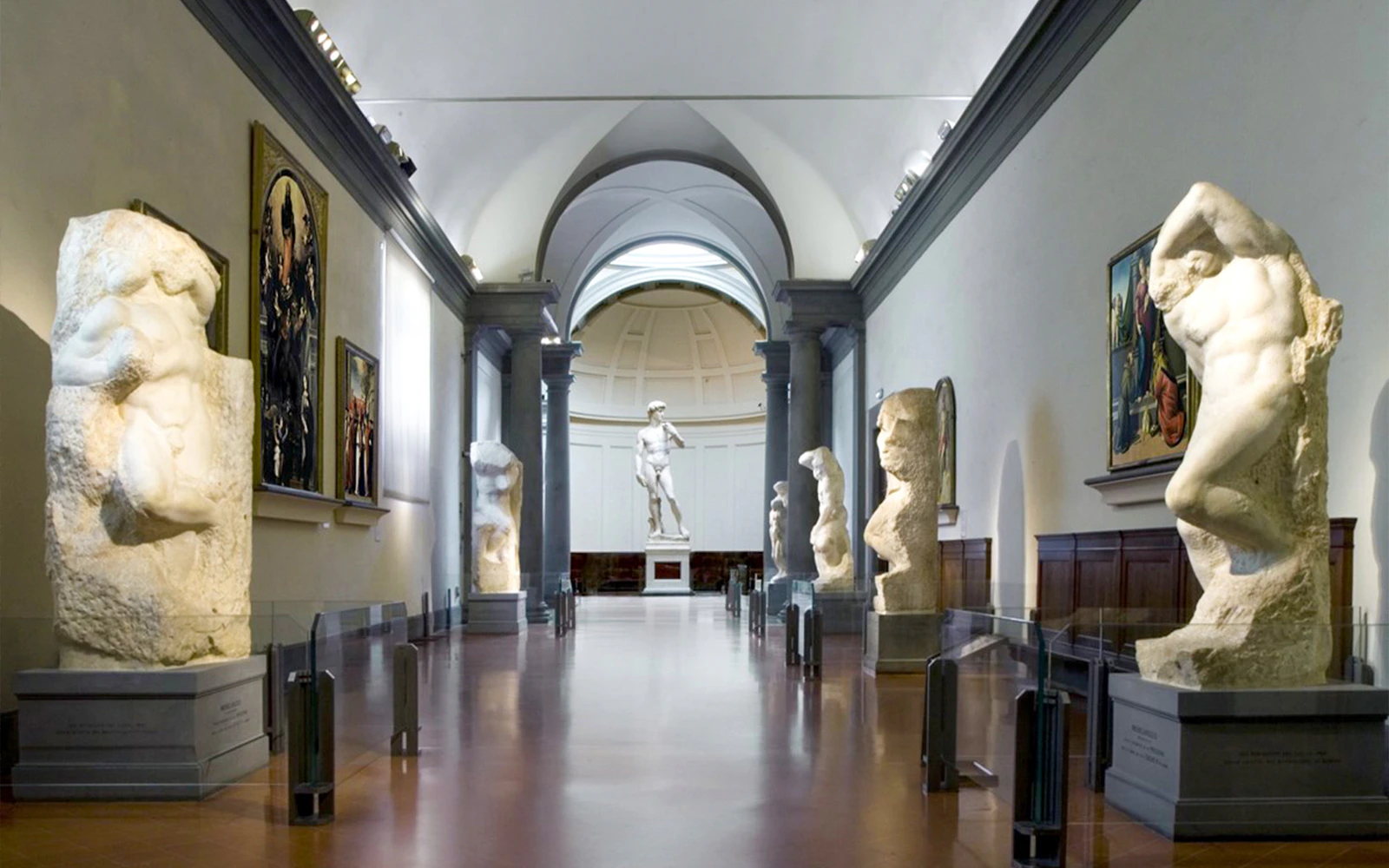
Start with the full-scale cast of Giambologna’s Rape of the Sabines, then compare it with Bartolini’s quieter plaster models and portrait busts along the side walls. Stand back first, then move close to inspect surface textures.
Most visitors see white plaster and assume ‘unfinished copies,’ then walk on. Do not do that. These models explain planning, proportion, and marble carving, and they make more sense when you still have attention left for looking closely.
| Ticket type | Why choose it |
|---|---|
Priority entry | Reach the Gipsoteca without wasting energy in the outdoor queue, and save your focus for quieter rooms inside. |
Ticket with audio guide | Best if you want independent pacing, but still need context for why plaster casts matter within the Accademia visit. |
Guided tour | Strongest option for linking the Gipsoteca to David, Michelangelo, and the wider story of sculpture-making in Florence. |
Most visitors enter the Accademia looking for a finished masterpiece, but Gipsoteca Bartolini shows the stage before mastery becomes marble. The surprise is that plaster casts can reveal movement more clearly than polished stone, because you notice seams, pins, corrections, and the sculptor’s problem-solving. Use this room to look for process, not perfection. The three highlights below will change how the rest of the museum reads:
At the centre of the hall, this full-scale plaster version lets you walk around the twisting composition without piazza crowds. Circle it slowly and watch how three bodies lock into one upward spiral.
Along the side walls, Bartolini’s busts and figure studies show how a sculptor tested expression, hair, and drapery before marble. Move close enough to read edges and transitions; this room rewards near looking.
Look for seams, joins, and subtle corrections in the plaster surfaces. They reveal decisions usually hidden in polished marble. If you want to understand sculpture as a process, this is the most instructive room in the museum.
For much of its life, this hall functioned as a teaching collection, preserving the plaster stage between idea and carved stone. Lorenzo Bartolini’s models anchor the room, while works by artists in his circle show how 19th-century Florence trained sculptors through observation, copying, and revision. Today, the Gipsoteca gives the Accademia a second identity: not only a home for finished masterpieces, but also a record of how sculpture was studied and made.
Purist sculptor whose plaster models define the hall and its teaching legacy.
Bartolini’s pupil, represented through models that extend the studio tradition in 19th-century Florence.
His Rape of the Sabines cast lets you study the composition at close range.
Address: Via Ricasoli 58/60, 50129 Florence
Yes. Entry is included with every valid Accademia Gallery ticket. No separate ticket exists.
No. Any Accademia ticket gets you in. Priority entry saves energy, audio guides add context, and guided tours explain why the plaster casts matter.
No. It has no independent entrance. You must enter through the Accademia Gallery and follow the museum route inside.
Usually, midway through the ground-floor visit. Allow about 5–10 minutes from security and entry to reach it at a normal pace.
Plan 15–20 minutes self-guided, or 20–30 minutes with a guide or audio support. The room rewards slow looking, not a quick walk-through.
Yes. It is included in Accademia Gallery guided tours. A guide helps connect the plaster casts to sculpture-making, not just finished masterpieces.
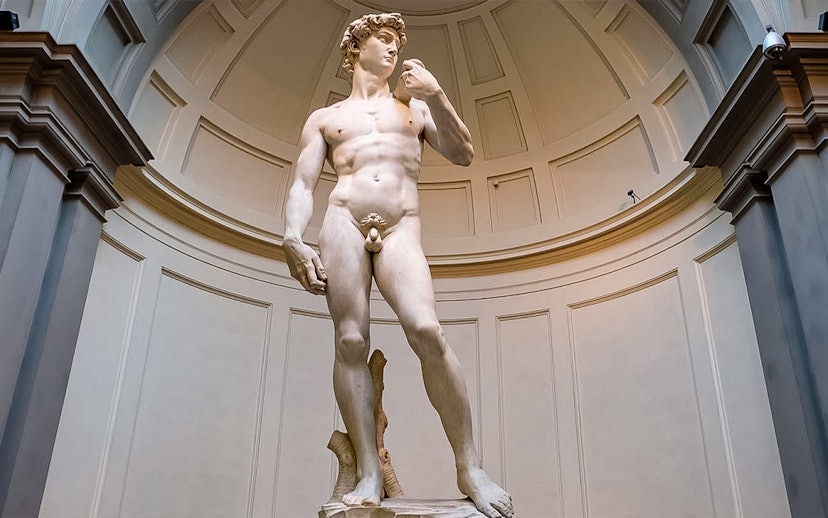
Yes. It adds the missing ‘how it was made’ perspective. If David shows finished perfection, the Gipsoteca shows planning, revision, and studio method.
Yes, but only without flash. Tripods, selfie sticks, and filming equipment are prohibited throughout the Accademia Gallery.
Yes. Accademia Gallery priority entry tickets offer audio guide or digital guidebook upgrades, and guided tour options add a clearer narrative around the plaster casts.
Save 30–60 mins in ticket lines and enter Europe’s oldest art school turned museum at your chosen time slot.
Inclusions #
Skip the line entry ticket
Audio guide in English, French, Italian, Spanish, German & Chinese (as per option selected)
Guided tour of the Accademia Gallery (as per option selected)
Digital guidebook in English (as per option selected)
Exclusions #
What to bring
What’s not allowed
Accessibility
Additional information
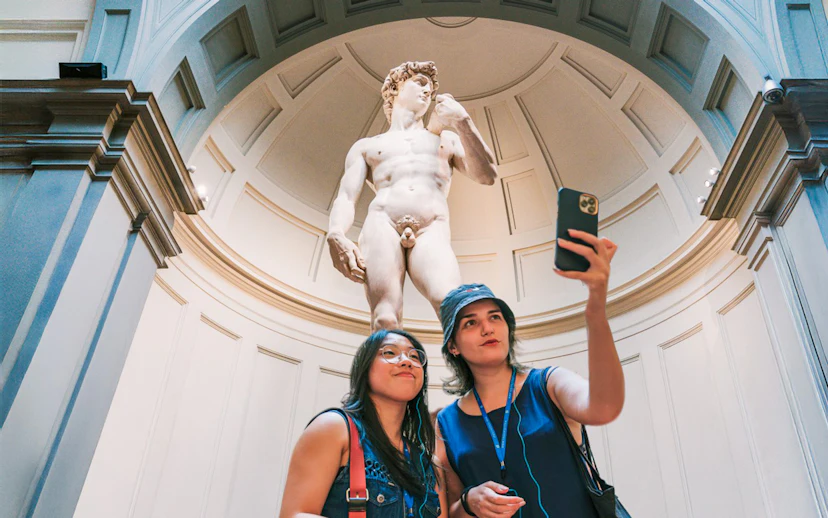
From quick entry to deep context, experience David and the Renaissance masterpieces through an insider’s lens.
Inclusions #
Guided tour of Accademia Gallery with priority entry
Expert English, Spanish, French, Italian, Portuguese or German-speaking guide (as per option selected)
Headsets
What to bring
What’s not allowed
Accessibility
Additional information
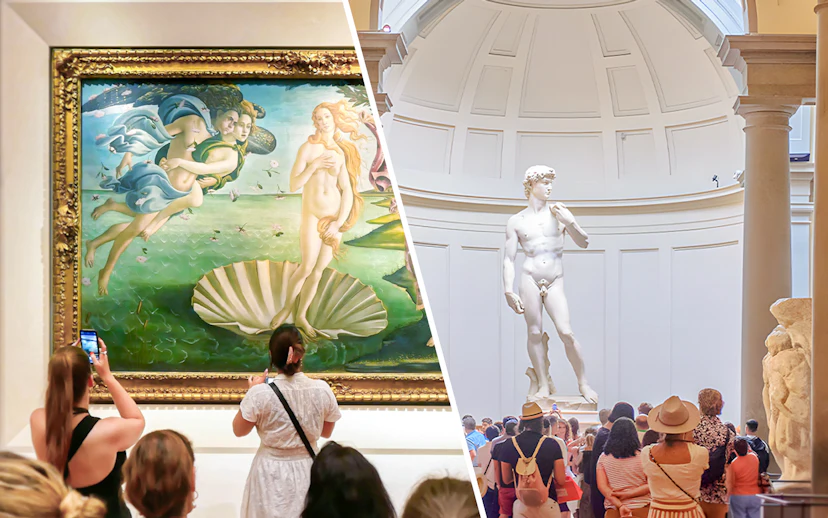
Save at least 25% by covering Florence’s two most‑visited galleries in one plan.
Inclusions #
Uffizi Gallery
Timed entry to the Uffizi Gallery
Digital audio guide for the Uffizi Gallery
Accademia Gallery
Priority entry to the Accademia Gallery
Audio guide in English, French, Italian, Spanish, German, and Chinese
Exclusions #
What to bring Uffizi Gallery
Accademia Gallery
What’s not allowed Uffizi Gallery
Accademia Gallery
Accessibility Uffizi Gallery
Accademia Gallery
Additional information
Skip the lines and skip the stress: enjoy smooth entry so you can focus on the Uffizi’s Renaissance treasures and Accademia’s world-famous David.
Inclusions #
Timed entry to Uffizi Gallery
Timed entry to Accademia Gallery
Exclusions #
Live guide
Transfers between the two galleries
Audio guide
Access to Vasari Corridor
Uffizi Gallery:
Accademia Gallery:
Just you, your guide, and Michelangelo’s masterpieces on a fully customizable private tour.
Inclusions #
Private tour of the Accademia Gallery with skip-the-line access
Group size of your choice (standard price for 2 people; cost increases with additional guests)
Expert guide available in English, Portuguese, German, French, Russian, Spanish, or Italian
Radio headsets for groups of more than 6 people
Exclusions #
What to bring
What’s not allowed
Accessibility
Additional information