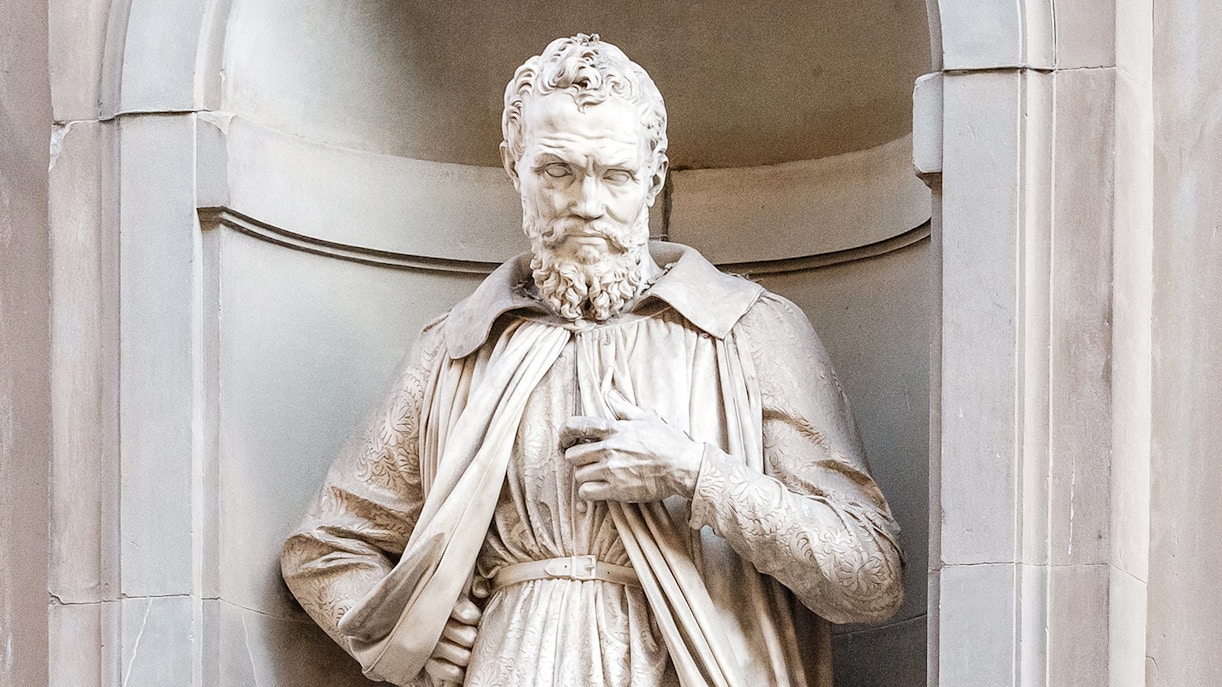
🎨 Michelangelo was just 26 years old when he began carving David.
Quick overview
- Access: Included in all Accademia Gallery tickets
- Separate ticket: Not required
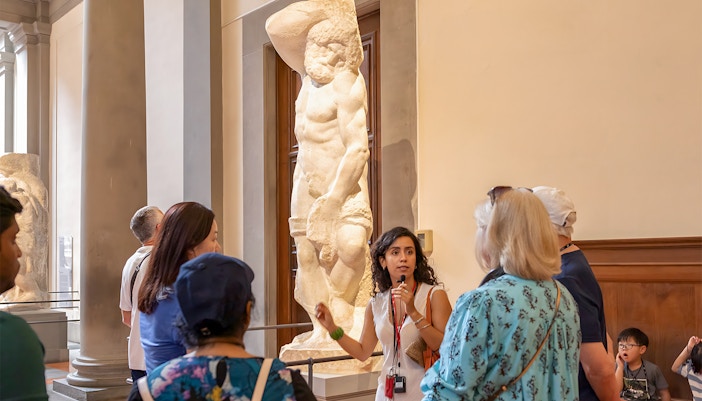
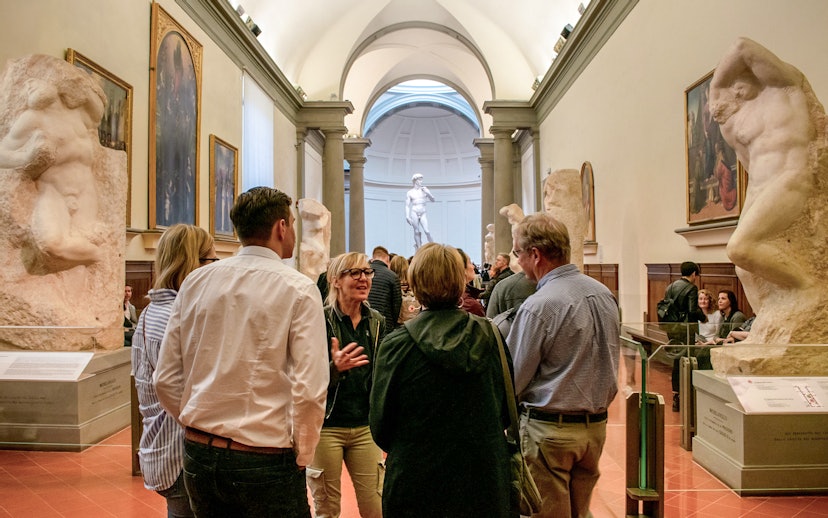
- When you’ll see it: Midway through the main route, at the end of the Hall of the Prisoners
- Visit duration: 10–15 min self-guided / 20–25 min with guide
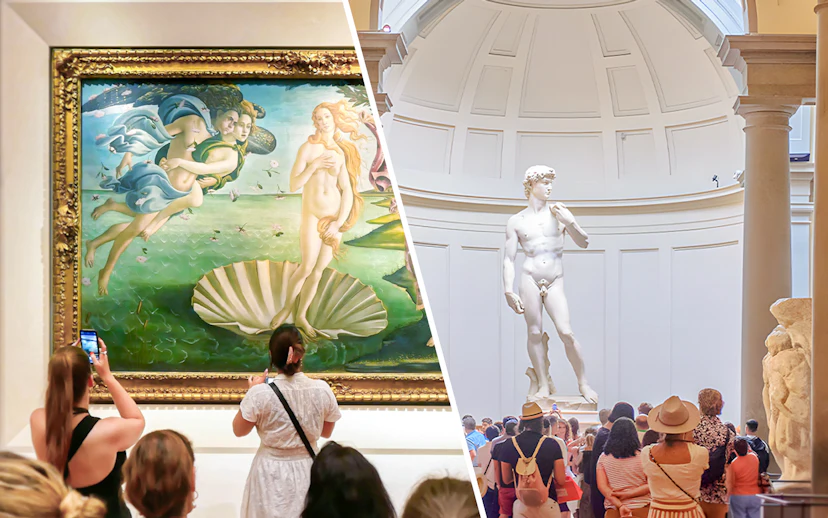
- Best time: First entry slot or late afternoon; late morning and midday are busiest around the statue
- Restrictions: Non-flash photography only. Large bags, tripods, selfie sticks, food, and drinks are prohibited
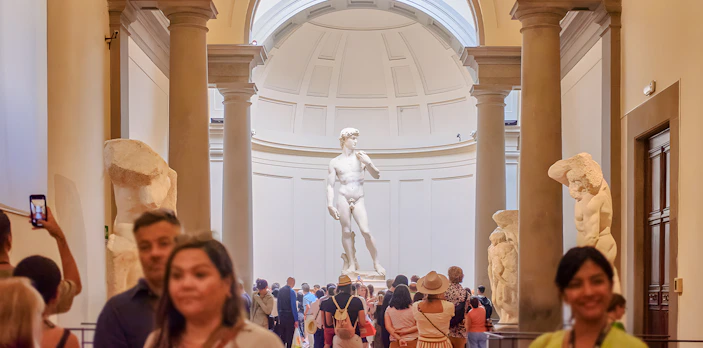
Accessing Accademia's colossal masterpiece
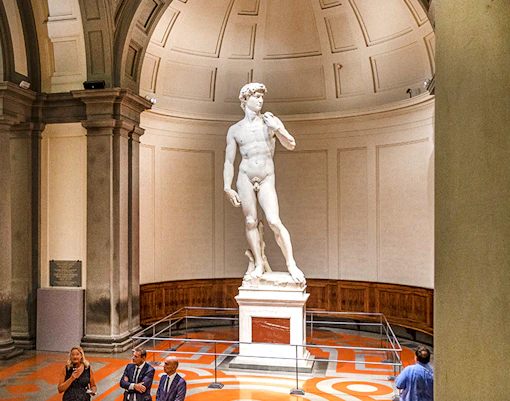
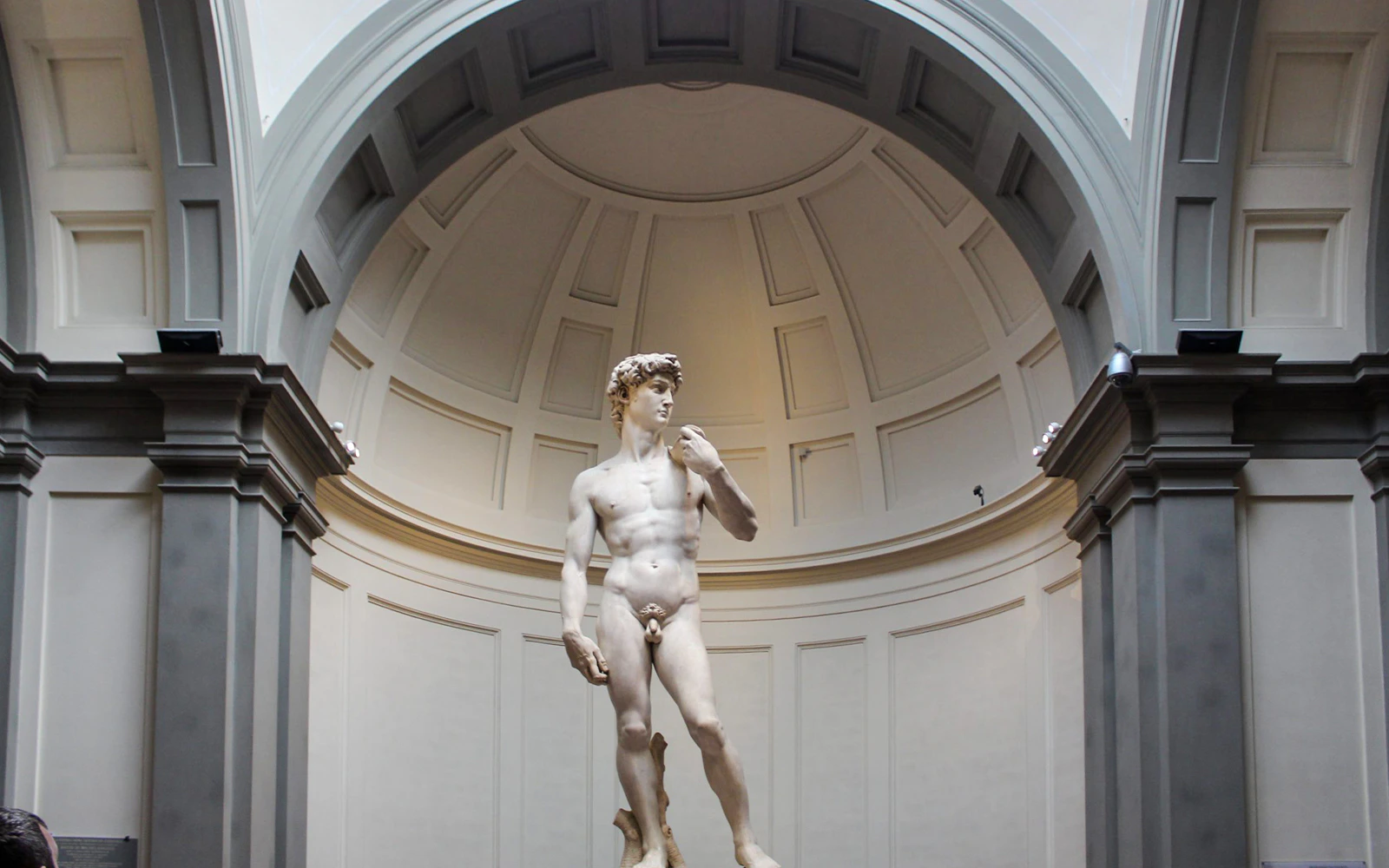
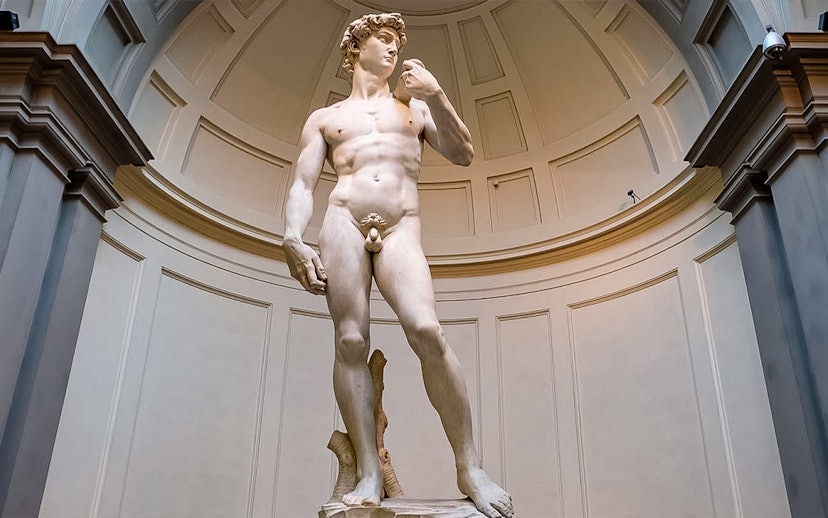
Michelangelo’s David is included with all Accademia Gallery tickets, and no separate ticket is needed. Inside the gallery, the original 5.17m marble figure matters because Michelangelo turned a difficult, previously abandoned block into Florence’s clearest image of civic strength. You’ll reach it after the Hall of the Prisoners rather than at the entrance, so use priority entry or a guided visit to arrive before the midday crowd closes in around the pedestal.
How to best experience Michelangelo’s David
Your Statue of David ticket options explained
| Ticket type | What’s included | Includes David? | Starting price | Recommended tours |
|---|---|---|---|---|
Timed-entry | Timed gallery entry with optional audio guide or hosted entry | Yes | €27 | Timed-entry ticket |
Guided tour | Live guide (EN/IT/ES/FR/DE), expert insights | Yes | €33 | Guided tour |
Private tour | Exclusive tour of Gallery with your group | Yes | €137 | VIP private tour |
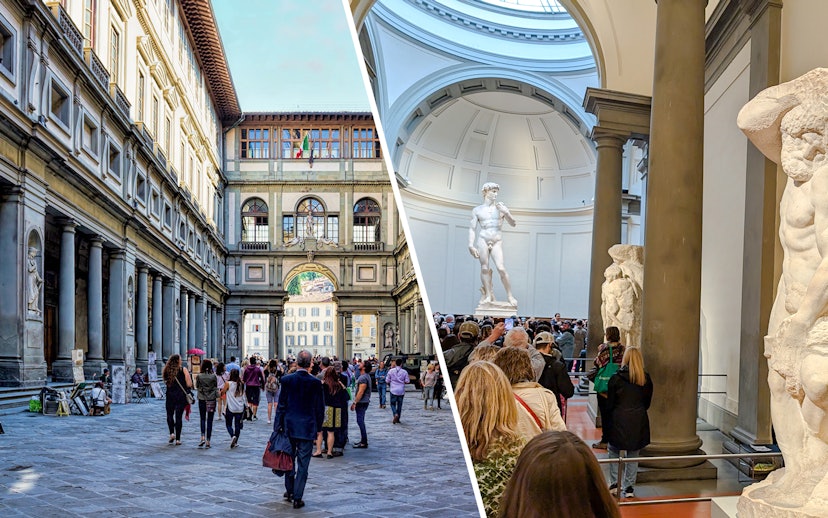
Combo: Uffizi Gallery + Accademia timed entry | Fast track Uffizi & Accademia access with audio guides at each site | Yes | €50 | Combo tickets with audio guide |
Did you know?
David, beyond the marble.
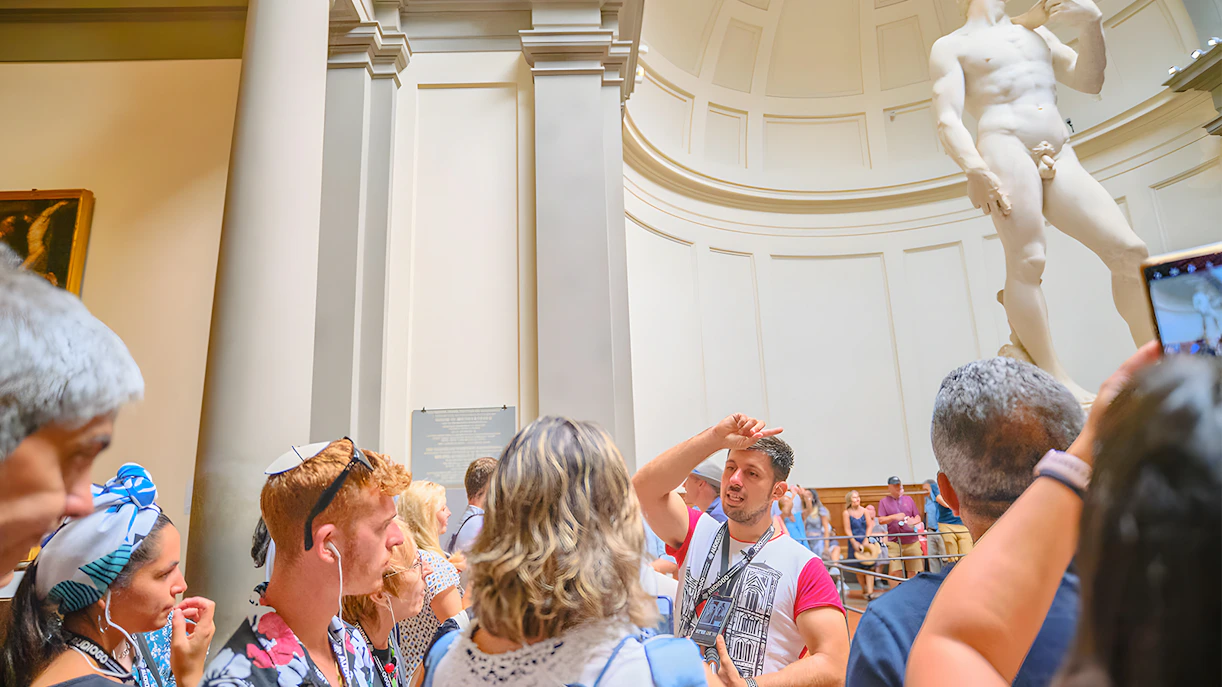
Consider these just the highlights. A guided tour reveals the stories, secrets, and symbolism that make David truly remarkable.
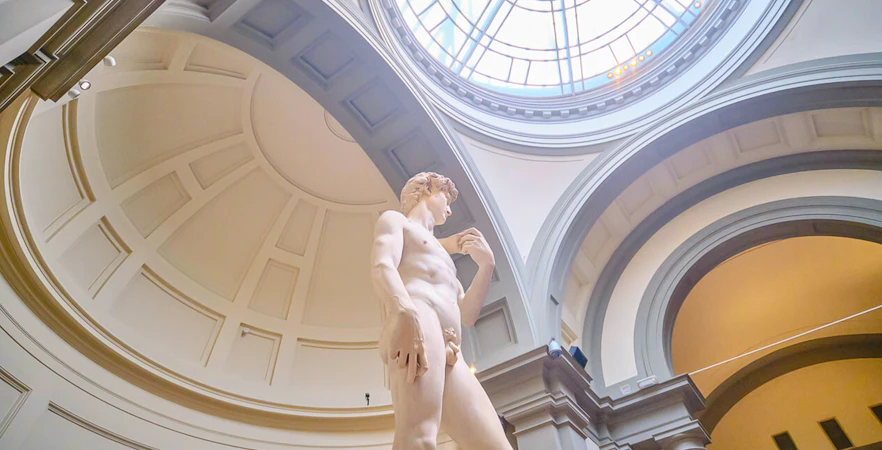
What makes David a masterpiece? See for yourself
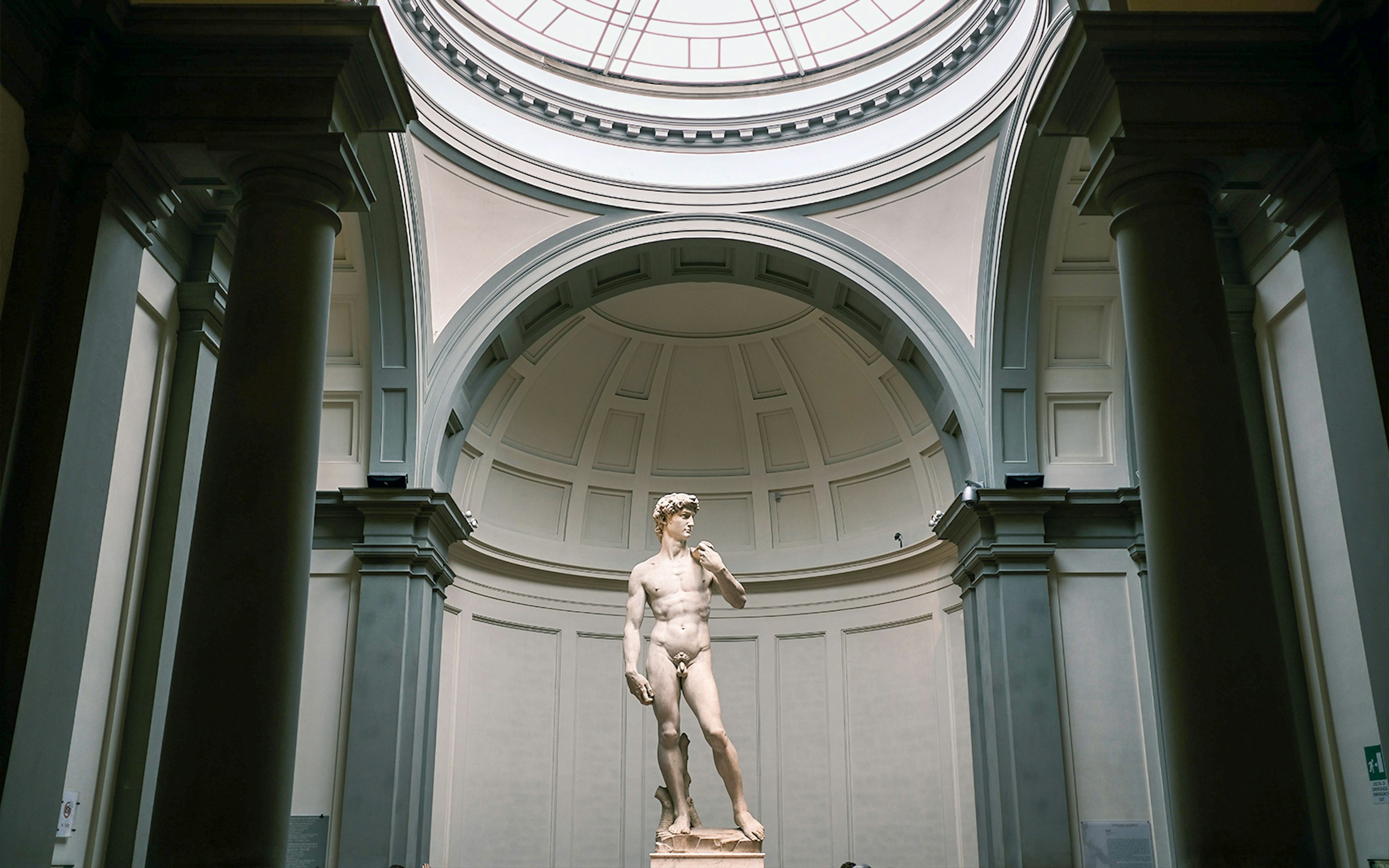
1/6
Artistic Brilliance
Michelangelo’s David is more than just a statue—it’s a story captured in marble, a testament to the brilliance of Renaissance art. As you stand before this towering masterpiece, every detail tells a story of strength, courage, and artistry.
To truly appreciate the statue, take your time to observe the finer details. Here’s a guide to the key elements that make this sculpture a timeless icon.
A hero’s resolve
Take a closer look at David’s expression: calm yet intense, his gaze fixed on an unseen Goliath. Michelangelo chose to capture the pivotal moment before the battle, emphasizing his quiet determination and readiness rather than the triumphant aftermath.
Notice his stance: The subtle shift of weight onto one leg, known as contrapposto, gives David a natural, relaxed posture. Yet, there’s tension in his body—his muscles taut and his pose deliberate—hinting at the action to come.
The incredible detail: From veins to curls
Study the veins coursing along David’s hands, the defined muscles of his arms and torso, and the gentle twist in his torso—all testaments to Michelangelo’s deep knowledge of human anatomy.
Take a closer look at the textures: the intricate curls of David’s hair, the folds of his brow, and even the subtle slingshot strap crossing his back. These meticulous details breathe life into the marble, transforming it into a dynamic, lifelike figure.
A David of Goliath proportions
At an impressive 17 feet tall, David towers over visitors, but Michelangelo cleverly adjusted his proportions for dramatic effect.
His head and hands are slightly larger than expected, emphasizing strength and focus when viewed from below.
This deliberate exaggeration ensures the statue’s impact matches its towering scale, making David appear both imposing and heroic.
Intellect triumphs over brute force
Look closely at the slingshot, draped casually over David’s shoulder—it’s almost easy to miss. This understated weapon symbolizes that David’s true strength lies in his intellect and faith, not brute force.
In his right hand, notice the stone: a small, simple tool representing determination and resourcefulness. These details highlight how even the humblest tools can achieve monumental victories.
Every angle tells a story
The Tribune’s skylight bathes David in natural light, enhancing its lifelike qualities and revealing new facets of Michelangelo’s artistry.
To fully appreciate the work, walk around it:
The front view captures his commanding confidence, showcasing his poised expression and ready stance.
The back view reveals the intricate details of his anatomy, from the tension in his muscles to the slingshot’s strap—testaments to Michelangelo’s unrivaled craftsmanship.
Who created the sculpture of David?
The story behind David
Know before you go
Frequently asked questions about Michelangelo’s David
A standard Statue of David ticket provides timed access to the Accademia Gallery and admission to see Michelangelo’s masterpiece in the Tribune Hall. Options like audio guides, hosted entry, and guided tours offer enhanced context and faster entry.
Yes! Timed entry ticket options let you bypass the ticket queue and head straight to security at your scheduled time—ideal for avoiding waits of up to two hours. Add hosted or skip-the-line guided tour upgrades for even faster access.
You’ll usually reach David after the Hall of the Prisoners, roughly 5–10 minutes after entry if you walk directly there.
If you're late, entry is not guaranteed—timed slots are strictly enforced. Arriving at least 15 minutes early is vital to allow enough time for security checks and meeting your group.
Yes. The gallery and David hall are accessible, and staff can direct you to step-free routes and elevator access where needed.
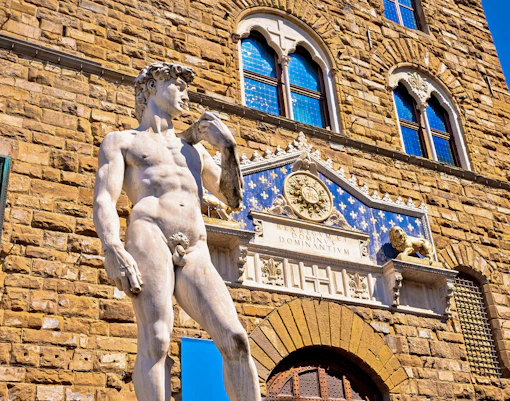
David was part of a series of Biblical statues commissioned to adorn the roofline of Florence Cathedral. However, its massive size and intricate details were deemed too extraordinary to be placed so high, leading to its prominent placement in Piazza della Signoria.
Michelangelo worked on David for approximately three years (1501–1504), meticulously carving it from a single block of Carrara marble abandoned by previous sculptors.
Michelangelo exaggerated David’s hands and head to symbolize strength and intellect—qualities that helped him triumph over Goliath. The proportions were also adjusted to ensure an imposing effect when viewed from below.
Michelangelo is said to have commented on the statue of David by saying "I saw the angel in the marble and carved until I set him free." This quote highlights Michelangelo's unique approach to art, as he believed that the statue already existed within the marble block and his job was to reveal it.
Yes, historians believe David was originally painted in vivid colors, including gold accents. Over time, the paint faded, leaving the marble exposed as we see it today.
Estimates range from $100 million to $300 million, with insurers valuing it as high as $700 million. But its cultural and historical worth is truly priceless.
There are 30 life-sized replicas of David around the world. The first is in the Piazza della Signoria in front of the Palazzo Vecchio, where the David statue was originally erected; the second stands in the Piazzale Michelangelo
Michelangelo's David is depicted holding a slingshot in his right hand, ready to defeat the giant Goliath. The slingshot represents David's bravery and determination and highlights the statue's central theme of the triumph of the human spirit.
When unveiled in 1504, David inspired awe and controversy. Its lifelike detail, imposing size, and nudity drew both admiration and criticism, while its strength and defiance made it a powerful symbol of Florence’s independence and Renaissance excellence.
In 1991, Piero Cannata struck David’s toes with a hammer, causing damage that required restoration. The statue has also weathered over time, but repeated restorations have kept it remarkably well preserved.
More reads