Witness Michelangelo’s David in Florence – A Renaissance masterpiece

Michelangelo’s Statue of David, standing 17 feet tall and carved from a single block of Carrara marble between 1501 and 1504, is a Renaissance masterpiece that symbolizes courage and artistic brilliance.

Depicting the Biblical hero David poised before his battle with Goliath, this iconic statue showcases Michelangelo’s unparalleled mastery of anatomy and emotional expression. Originally intended for the Florence Cathedral, David now resides in the Galleria dell'Accademia, attracting millions of visitors annually with its intricate details and profound historical significance.

Plan your visit to the Accademia Gallery to marvel at this masterpiece and immerse yourself in its legacy. Secure your David tickets in advance to skip the long lines and experience Michelangelo’s David up close.

Where is the statue of David located?

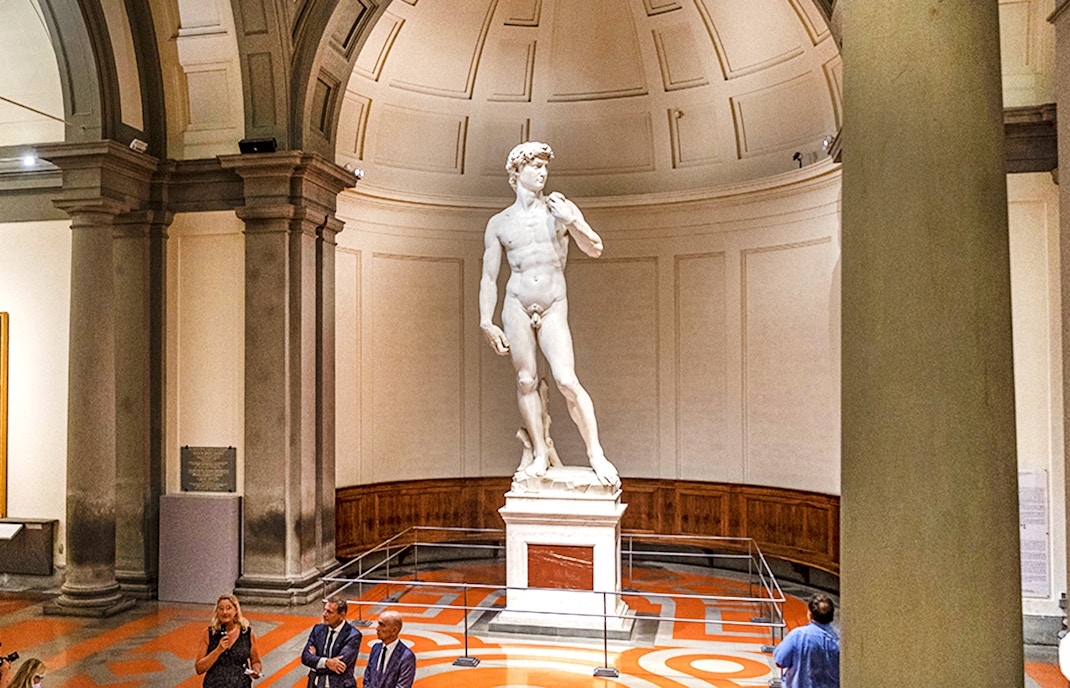
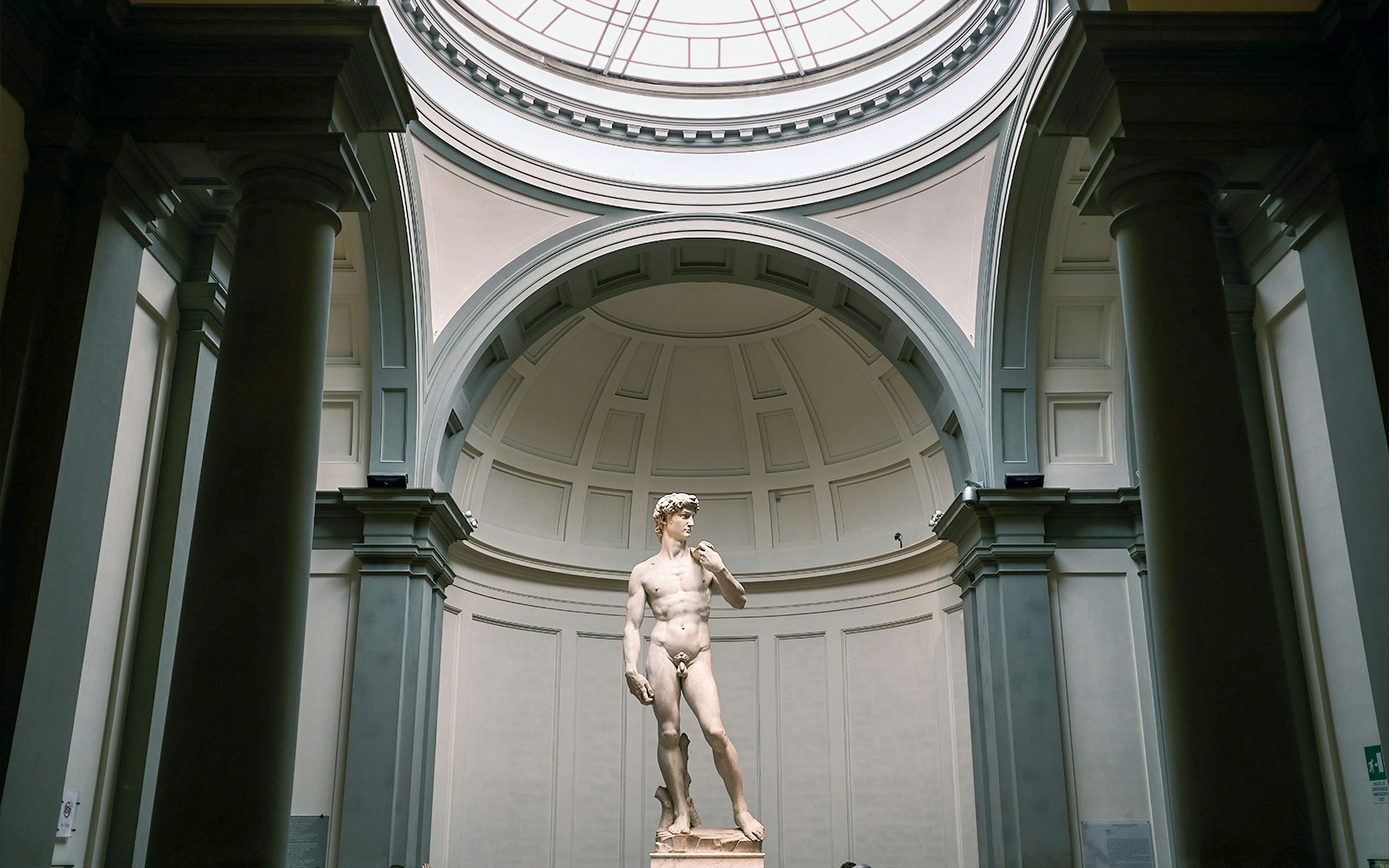
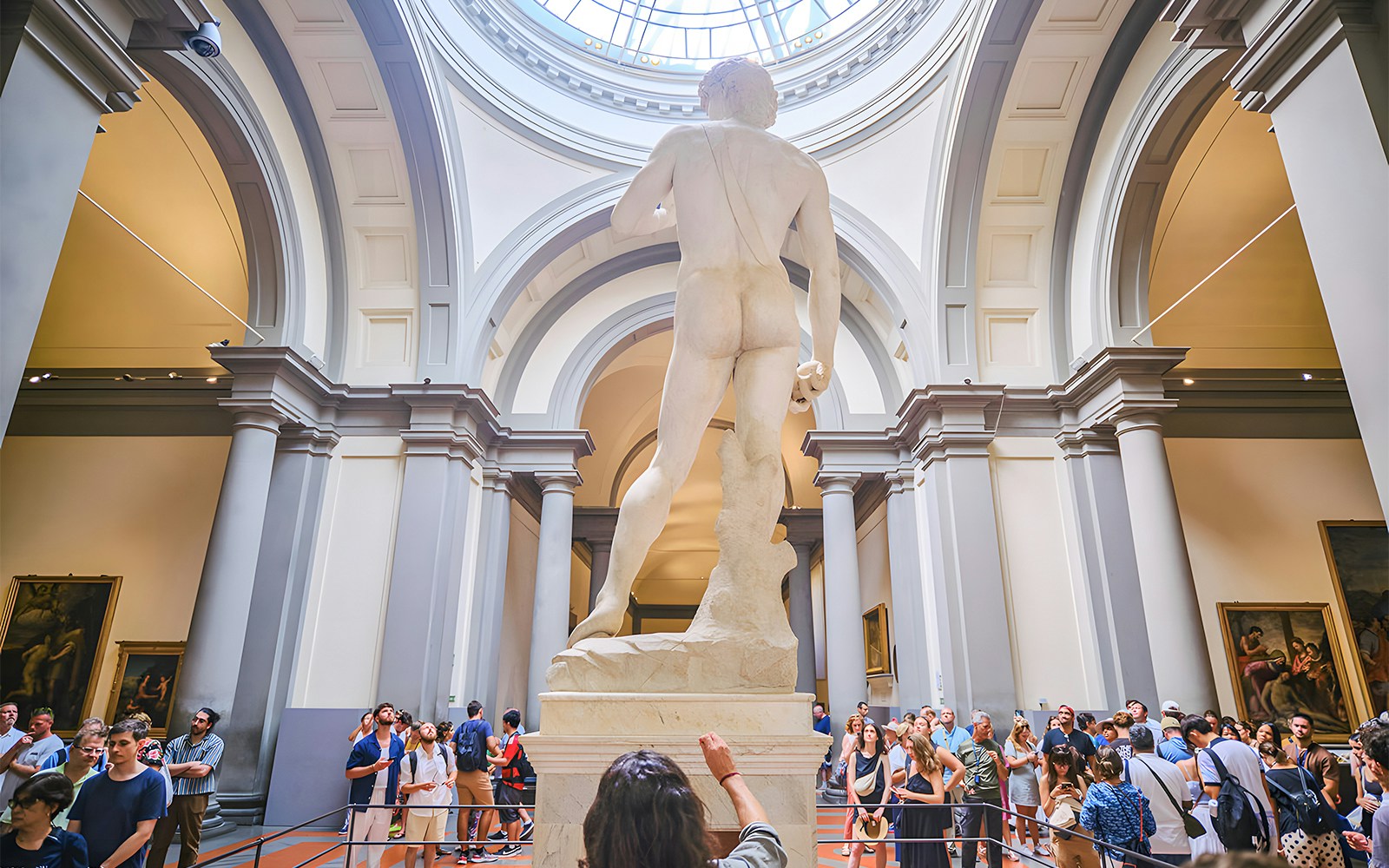
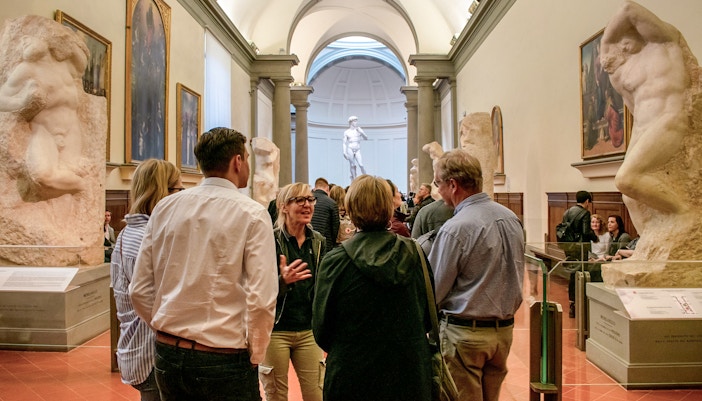
Michelangelo’s Statue of David is housed in the Tribune Hall of the Accademia Gallery in Florence, Italy—a room custom-built in the 19th century by architect Emilio De Fabris to spotlight this iconic masterpiece.

Located on the first floor, the circular Tribune is bathed in natural light from a skylight above, allowing for a striking 360-degree view of David in all his grandeur. The gallery is centrally located and easily walkable from key Florence landmarks like the Duomo and Piazza San Marco.

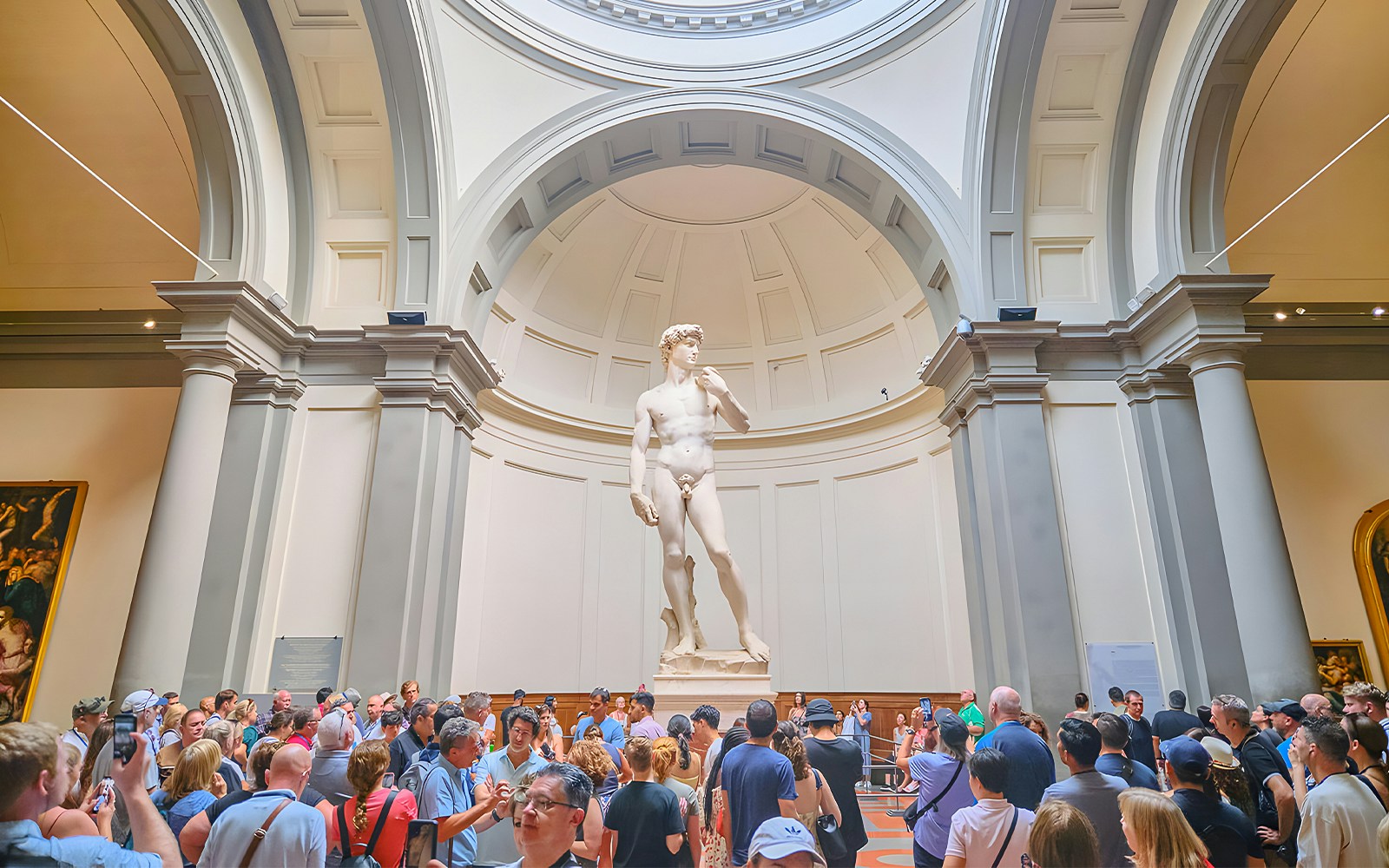
📍 Go early (8:15–9:30am) or late (after 5pm) for fewer crowds and clearer views.
Directions to Accademia Gallery

How to view it best?

  • Explore from every angle:
    Walk around the sculpture to admire its intricate details from every perspective. The front view captures David’s commanding confidence, while the back reveals the incredible tension in his muscles and the subtle slingshot strap.
  • Observe the skylight effect:
    The Tribune’s skylight bathes the statue in natural light, creating dramatic highlights and shadows. Notice how the lighting shifts throughout the day, adding depth to the statue’s lifelike qualities.
  • Focus on the details:
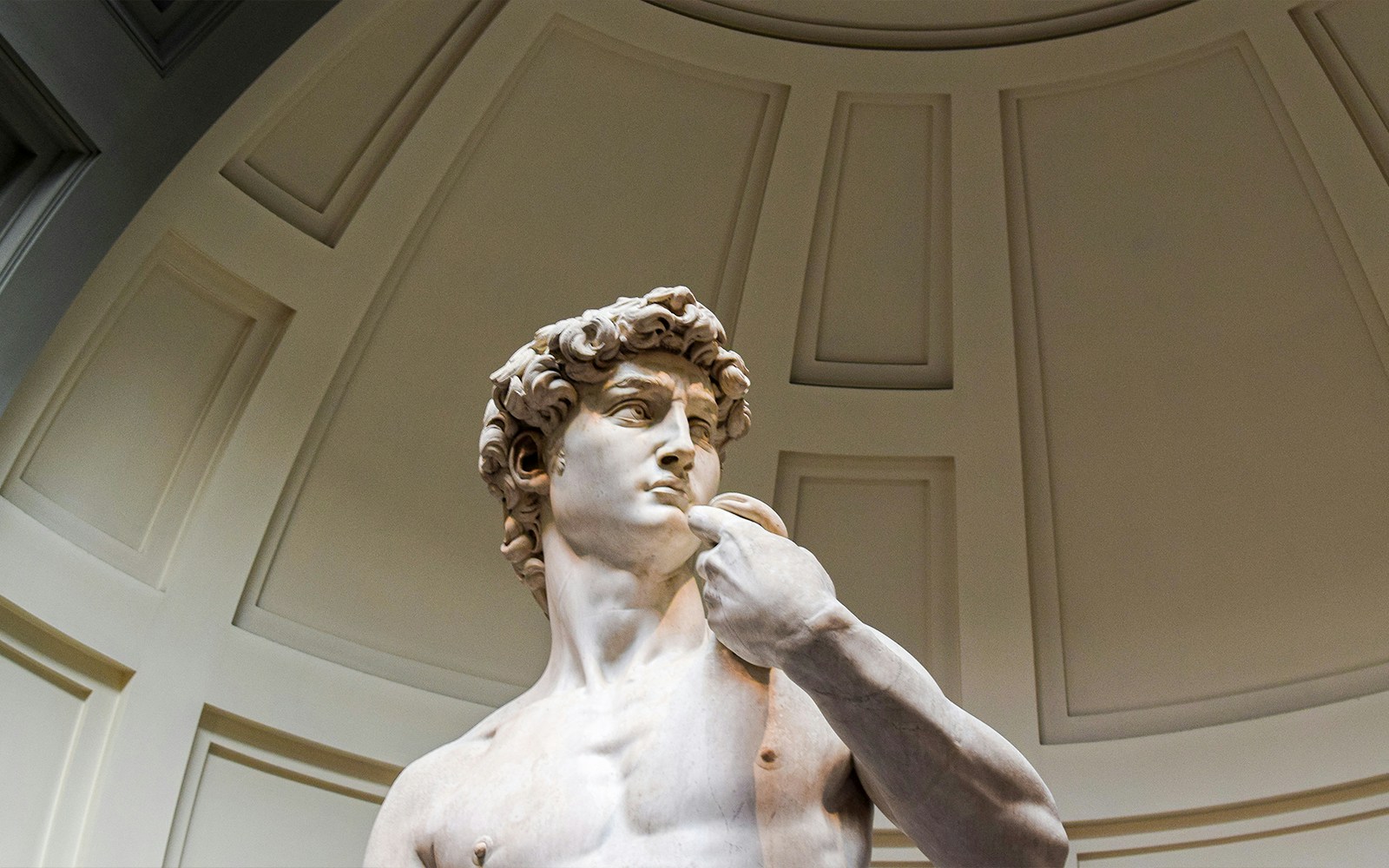
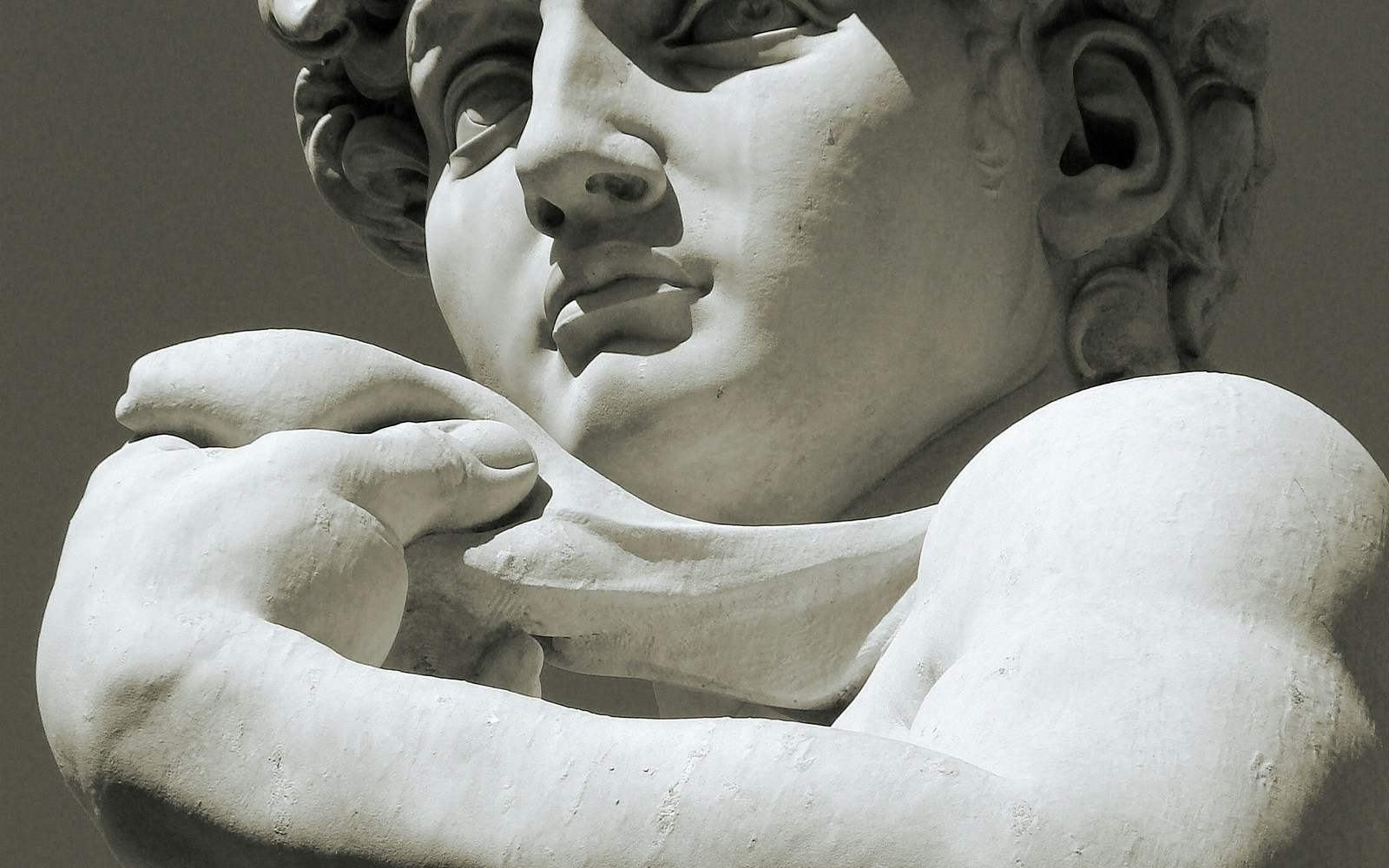
    Pay attention to David’s muscles, veins, curls, and even his heart-shaped pupils. These details showcase Michelangelo’s unparalleled artistry and elevate the statue from impressive to iconic.
  • Best time to visit:
    The gallery is busiest in the mornings and early afternoons. For a quieter experience, visit during the last two hours before closing.
  • How much time to allocate:
    Set aside at least 30–45 minutes to view David and explore the Tribune, giving you enough time to fully appreciate the statue and its surroundings without feeling rushed.
    To make the most of your time, explore our detailed guide on planning your visit to the Accademia Gallery for tips on tickets, timings, and more.

Book tickets to view the David at Accademia Gallery

Accademia Gallery Priority Entry Tickets

Book now, pay later
Flexible duration
Audio guide
Guided tour

Accademia Gallery Skip-the-Line Guided Tour

Free cancellation
Book now, pay later
1 hr.

Combo (Save 30%): Uffizi Gallery + Accademia Gallery Priority Entry Tickets with Audio Guide

Audio guide

Combo (Save 14%): Uffizi and Accademia Gallery Hosted Entry Tickets

Your Statue of David tickets & tours options explained

Timed entry tickets

  • Skip the line and enter at your chosen time to see David up close.
  • Add an audio guide for deep insights in 6 languages, or choose hosted entry for a seamless start with on-ground assistance.

Recommended tickets:

  • Accademia Gallery Timed Entry Tickets

Guided tours

  • Skip the line and dive into David’s story with an expert guide—learn about his pose, symbolism, and impact.
  • Get dedicated time in the Tribune and deeper context throughout.
  • Upgrade to a private tour for a tailored, one-on-one experience.

Recommended experiences:

  • Accademia Gallery Skip-the-Line Guided Tour
  • David & Accademia Gallery Private Tour
Book guided tours

Combo with Uffizi Gallery

  • See Michelangelo’s David at the Accademia, then walk into the Uffizi for Botticelli, Leonardo, and more.
  • A combo ticket covers both with reserved slots—no waiting.
  • Choose a guided tour to connect the dots between sculpture, painting, and the rise of the Renaissance.

Recommended experiences:

  • Combo (Save 5%): Uffizi Gallery + Accademia Gallery Tickets
  • Combo (Save 24%): Uffizi and Accademia Guided Tour
Visit Uffizi & Accademia

Did you know?

🎨 Michelangelo was just 26 years old when he began carving David.

⏳ It took 3 years to carve David, from 1501 to 1504.

🌧️ David stood outdoors for 350 years in Piazza della Signoria before being moved to the Accademia Gallery in 1873 to preserve it.

🪨 David weighs 6 tons. Moving the statue took 40 men and 3 days.

💔 David’s pupils are heart-shaped, symbolizing Florence’s love and resilience.

🖌️ David’s head and hands are oversized, designed to look perfect when viewed from below—showcasing Michelangelo’s genius.

💘 Some visitors experience dizziness and rapid heartbeat (Stendhal Syndrome) when seeing the statue, overwhelmed by its beauty.

🎨 Historians believe David was once painted in vivid colors, including gold accents. Over time, the paint faded, leaving the pure marble we see today.

The story behind David

Commissioning of the statue

In 1464, decades before Michelangelo's involvement, the Operai del Duomo, the governing body of Florence Cathedral, commissioned a series of twelve statues of Biblical figures to adorn its roofline. The original commission for David was awarded to Agostino di Duccio, and a colossal block of Carrara marble was prepared for the project. However, after initial attempts by other sculptors failed, the project was abandoned, leaving the marble—nicknamed “the Giant”—untouched for 25 years.

By 1501, a young Michelangelo Buonarroti, just 26 years old, was entrusted with the monumental task. Over the next three years, he worked tirelessly to transform the neglected block into the awe-inspiring figure of David, a masterpiece that would come to symbolize Florence’s spirit and resilience.

David’s symbolism

Following the exile of the Medici family in 1494, Florence became a republic, but this shift in power left the city politically unstable, leaving Florence vulnerable to threats from powerful neighbors like France and Spain. Once a thriving hub of banking and trade, the city also faced growing economic challenges.

Amid this period of political and social upheaval, David came to embody Florence’s spirit—bold, resourceful, and ready to face adversity.

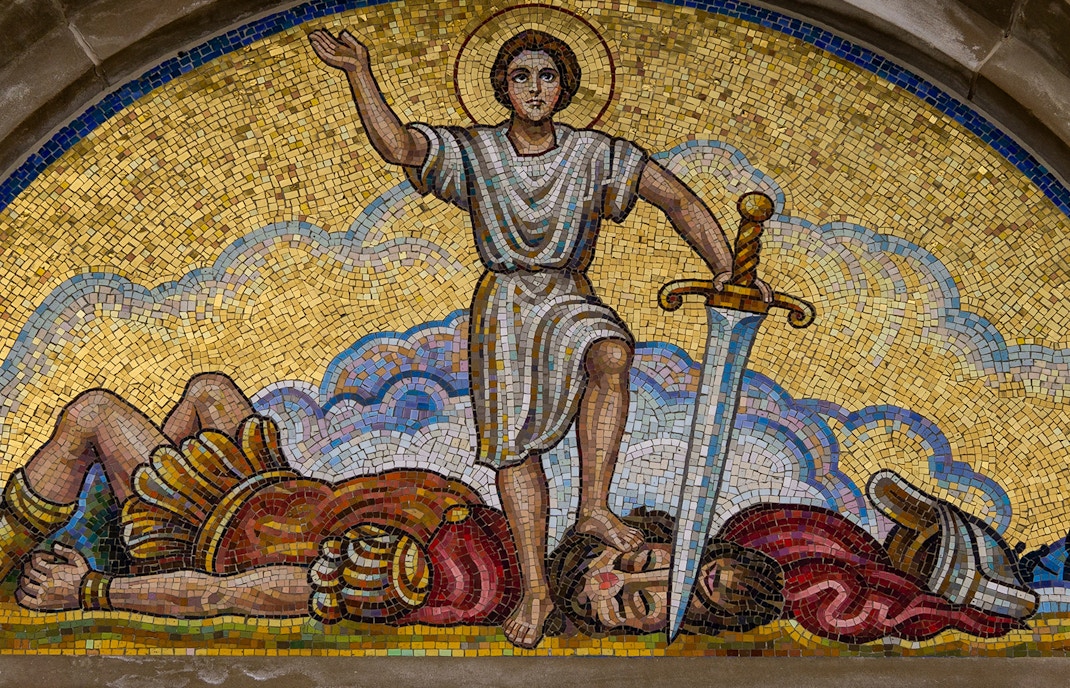
Unlike traditional depictions of David after his victory over Goliath, Michelangelo chose to portray the hero in the tense moment before the battle—calm yet determined, radiating courage and readiness. This unique interpretation imbued the sculpture with a deeper meaning, making the statue a representation of resilience, and strength.

Initial placement and controversy

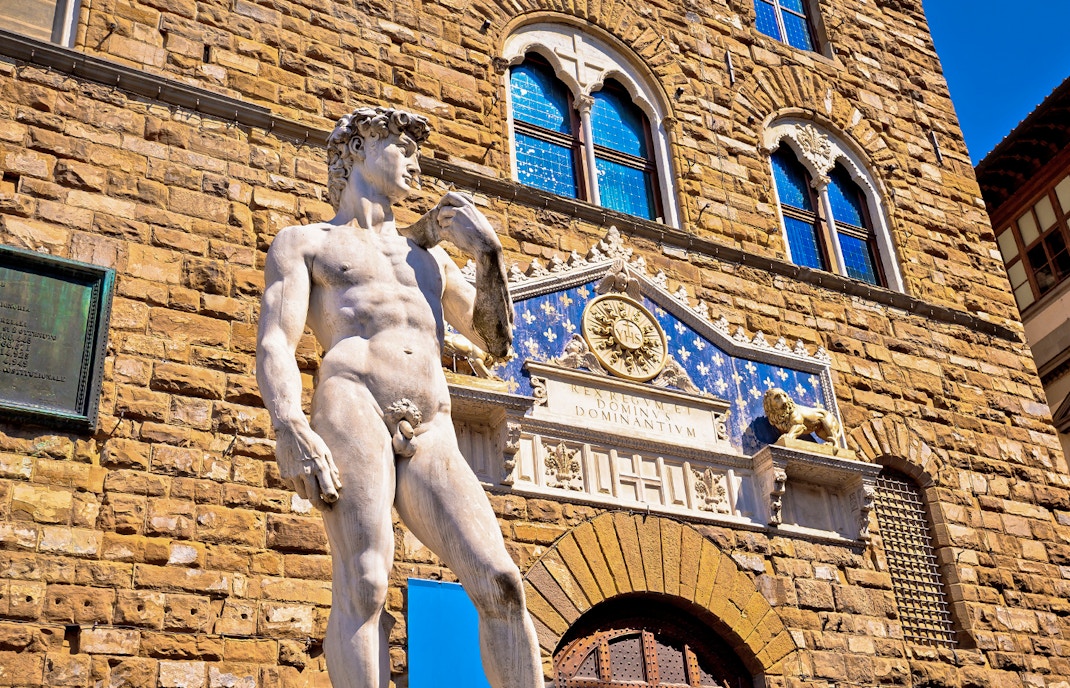
Originally intended to adorn the roofline of Florence Cathedral, David was deemed too magnificent to be placed so far from view. Instead, the statue was installed in Piazza della Signoria, in front of Florence’s government building, as a public symbol of freedom.

However, its bold nudity and colossal size sparked controversy among conservative factions. Some deemed it as inappropriate, while others hailed it as a testament to Renaissance ideals of humanism and the celebration of the human form.

The move to Accademia Gallery

Over the centuries, exposure to the elements began to take its toll on the statue. Partly motivated by concerns about the statue's preservation and partly by a desire to elevate the statue's status from a public monument to a work of art, in 1873, David was moved to the Accademia Gallery. A replica was erected in Piazza della Signoria to mark its original location.

Today, the statue is celebrated as a pinnacle of artistic achievement and a timeless symbol of resilience. Visiting this sculpture in the carefully curated Tribune of the Accademia allows viewers to experience not only its grandeur but also the rich history and legacy it represents.

History of the Accademia Gallery

Who created the sculpture of David?

David of Michelangelo

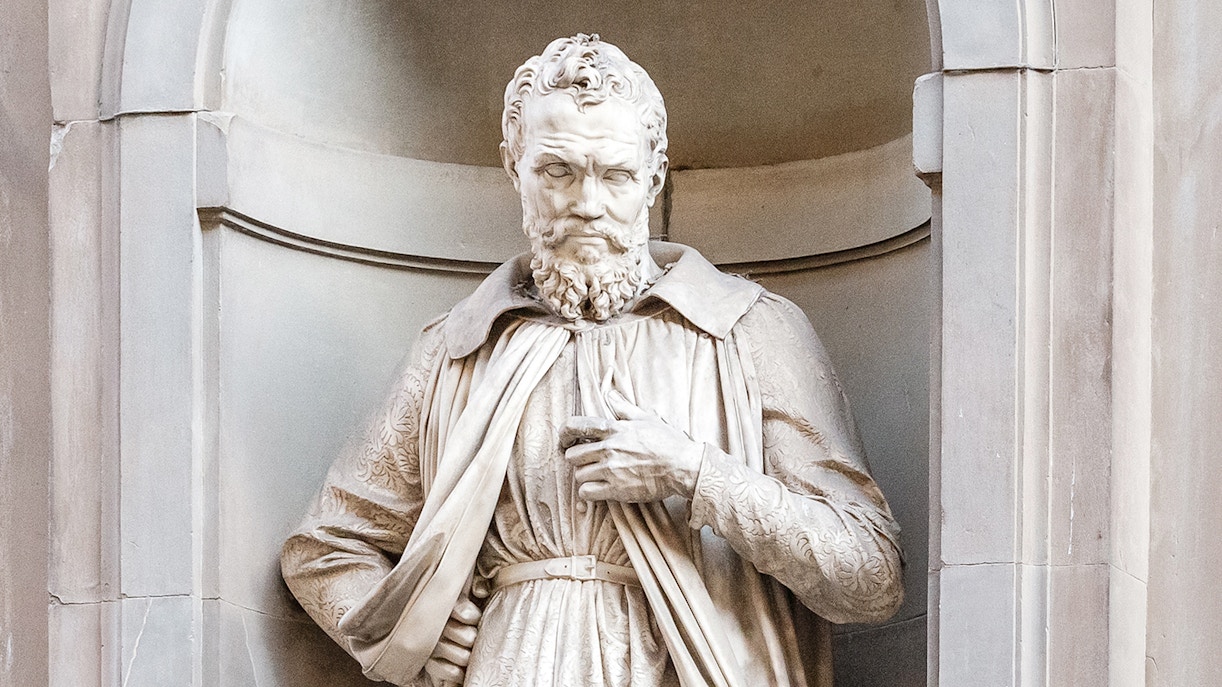
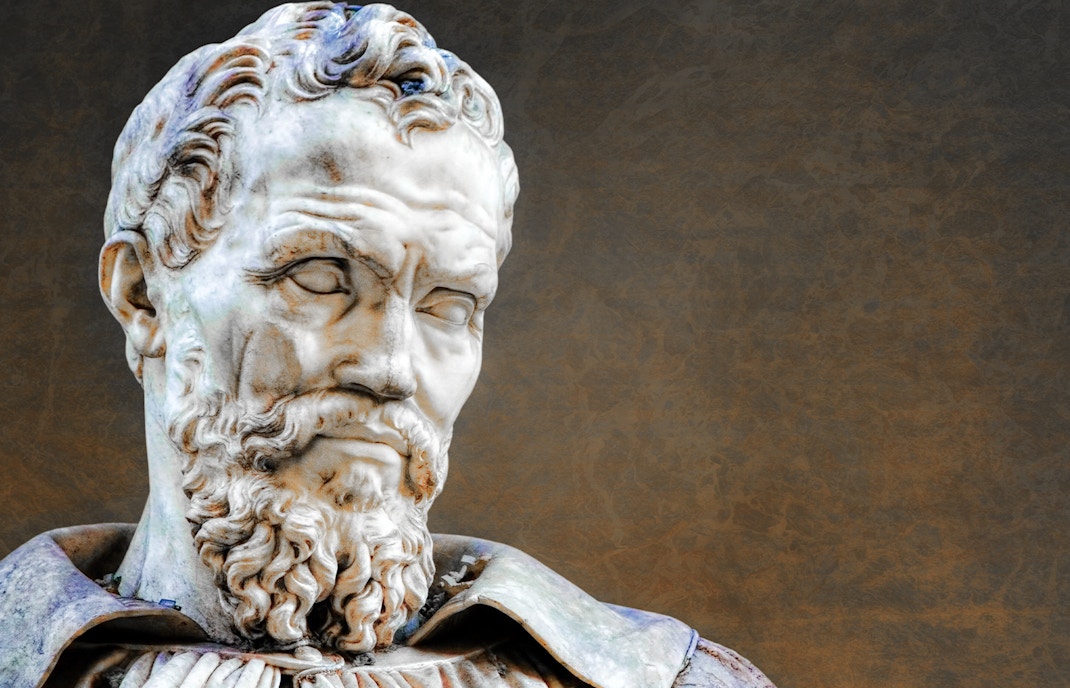
Michelangelo Buonarroti, one of the greatest artists of the Renaissance, created the David between 1501 and 1504. At just 26 years old, Michelangelo transformed a neglected block of Carrara marble into a masterpiece. Known for his exceptional skill in anatomy, Michelangelo approached sculpture with the belief that the figure already existed within the marble—he simply revealed it.

Michelangelo’s other celebrated works include the ceiling of Sistine Chapel and the Pietà, but David remains a defining symbol of his genius and the artistic heights of the Renaissance.

What makes David a masterpiece? See for yourself

Statue of David in Florence, Italy, showcasing Renaissance art and Michelangelo's craftsmanship.
Florence city tour with visitors exploring Accademia Gallery, viewing Renaissance art.
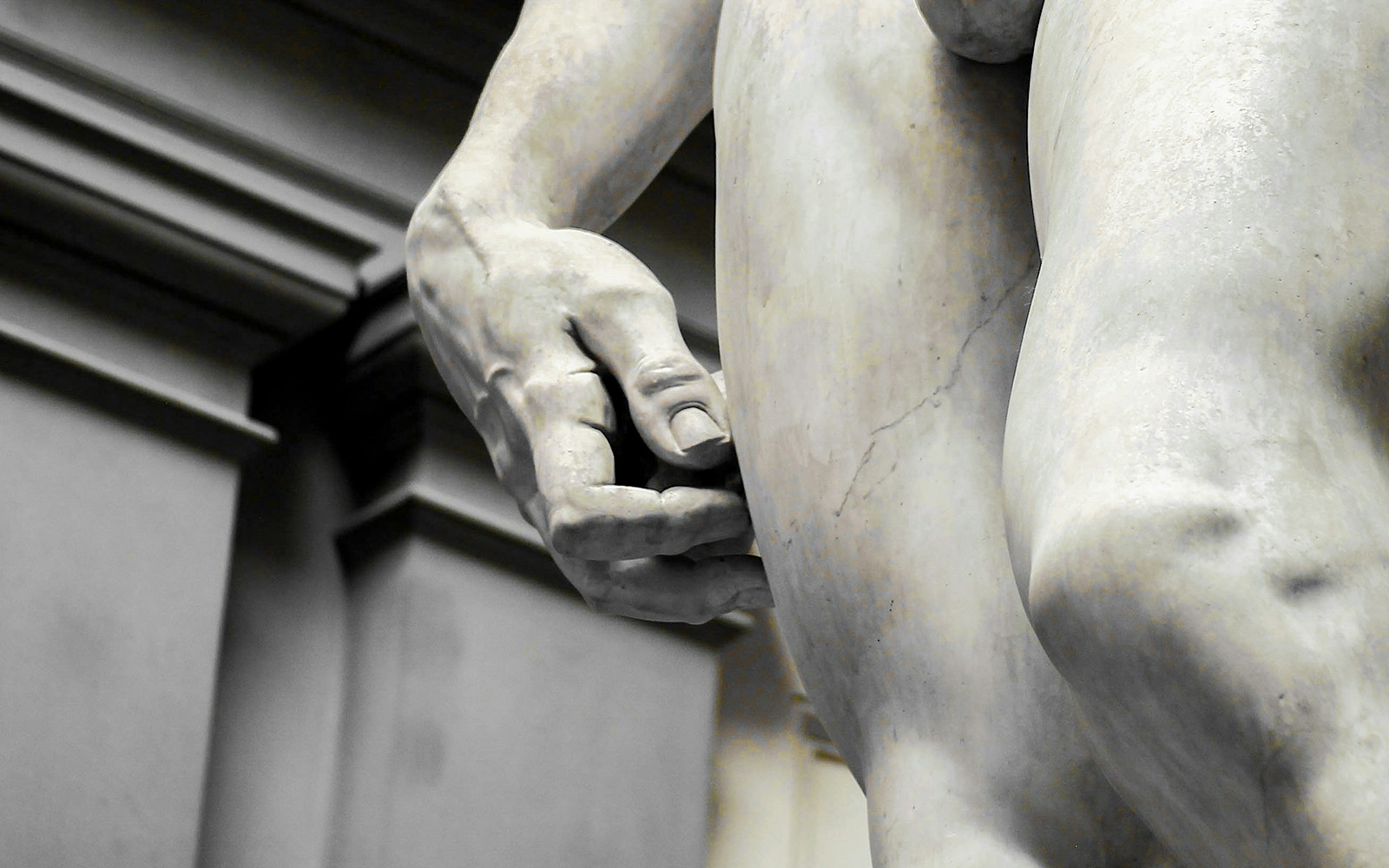
David statue's right hand detail in Florence, Italy.
Visitors viewing Michelangelo's David sculpture at Accademia Gallery, Florence.
David statue holding slingshot in Florence, Italy.
Florence city tour with visitors exploring Accademia Gallery, Uffizi Gallery, and enjoying lunch.
1/6

Artistic Brilliance

Michelangelo’s David is more than just a statue—it’s a story captured in marble, a testament to the brilliance of Renaissance art. As you stand before this towering masterpiece, every detail tells a story of strength, courage, and artistry.

To truly appreciate the statue, take your time to observe the finer details. Here’s a guide to the key elements that make this sculpture a timeless icon.

A hero’s resolve

Take a closer look at David’s expression: calm yet intense, his gaze fixed on an unseen Goliath. Michelangelo chose to capture the pivotal moment before the battle, emphasizing his quiet determination and readiness rather than the triumphant aftermath.

Notice his stance: The subtle shift of weight onto one leg, known as contrapposto, gives David a natural, relaxed posture. Yet, there’s tension in his body—his muscles taut and his pose deliberate—hinting at the action to come.

The incredible detail: From veins to curls

Study the veins coursing along David’s hands, the defined muscles of his arms and torso, and the gentle twist in his torso—all testaments to Michelangelo’s deep knowledge of human anatomy.

Take a closer look at the textures: the intricate curls of David’s hair, the folds of his brow, and even the subtle slingshot strap crossing his back. These meticulous details breathe life into the marble, transforming it into a dynamic, lifelike figure.

A David of Goliath proportions

At an impressive 17 feet tall, David towers over visitors, but Michelangelo cleverly adjusted his proportions for dramatic effect.

His head and hands are slightly larger than expected, emphasizing strength and focus when viewed from below.

This deliberate exaggeration ensures the statue’s impact matches its towering scale, making David appear both imposing and heroic.

Intellect triumphs over brute force

Look closely at the slingshot, draped casually over David’s shoulder—it’s almost easy to miss. This understated weapon symbolizes that David’s true strength lies in his intellect and faith, not brute force.

In his right hand, notice the stone: a small, simple tool representing determination and resourcefulness. These details highlight how even the humblest tools can achieve monumental victories.

Every angle tells a story

The Tribune’s skylight bathes David in natural light, enhancing its lifelike qualities and revealing new facets of Michelangelo’s artistry.

To fully appreciate the work, walk around it:

The front view captures his commanding confidence, showcasing his poised expression and ready stance.

The back view reveals the intricate details of his anatomy, from the tension in his muscles to the slingshot’s strap—testaments to Michelangelo’s unrivaled craftsmanship.

Frequently asked questions about Michelangelo’s David

A standard Statue of David ticket provides timed access to the Accademia Gallery and admission to see Michelangelo’s masterpiece in the Tribune Hall. Options like audio guides, hosted entry, and guided tours offer enhanced context and faster entry.

More reads

Guided tours

Skip-the-line tickets

Artworks at the gallery