History of the Accademia Gallery | From an Art School to a World-Renowned Museum

The story of Accademia Gallery goes back to 1784, boasting of a rich and fascinating past of Italy while serving as a bastion of cultural heritage and a testament to the timeless beauty of Renaissance art. While its inception was on humble grounds, today, it has become one of the world’s most renowned museums, offering an unrivaled glimpse into the genius of Michelangelo, Botticelli, and several other celebrated artists.

1784: The Accademia Gallery is founded as a teaching facility for the students of the Academy of Fine Arts.

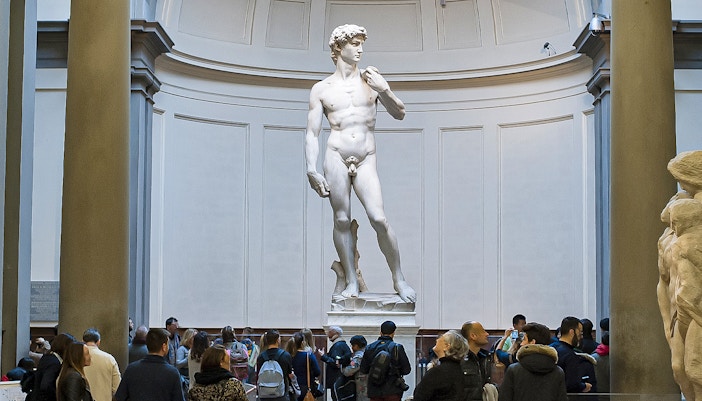
1873: The statue of David by Michelangelo is moved to the Accademia Gallery from the Piazza della Signoria.

1909: Michelangelo's Prisoners is added to the gallery's collection.

1950: The Byzantine rooms are opened, featuring 1300 panel paintings, along with The Hall of Colossus.

1980: The plaster cast models of Lorenzo Bartolini are added to the museum.

2013: The Hall of Colossus is expanded with a large collection of artworks from the 15th and 16th centuries.

18th Century

Establishment as an Academy for Artists

The Accademia Gallery was founded by Grand Duke Peter Leopold of Tuscany in 1784 as a teaching facility for the students of the Academy of Fine Arts. The Gallery was built on the spaces of the Hospital of Saint Matthew and the Convent of Saint Niccolo’ of Cafaggio. The walls of this place initially displayed the antic artworks which acted as didactic models for the students. It became a space for young artists to learn and practice their craft.
19th Century

Addition of the Statue of David

The Accademia Gallery progressively added artworks and paintings from monasteries and convents, so throughout the 19th century, it underwent several renovations and expansions to accommodate the growing collection of Renaissance art and to better preserve the works in its collection. In 1873, it was decided by the city that the masterpiece of Renaissance sculpture, Michelangelo's statue of David, will be moved here from Piazza Della Signoria for better preservation.

Michelangelo's David

Late 20th Century

In 1909 Michelangelo’s Prisoners was added to the collection in addition to tapestries, sculptures and paintings that led to a rearrangement of the gallery. Around the 1950s the Byzantine rooms were opened, which featured 1300 panel paintings together with The Hall of Colossus. The plaster cast models of Lorenzo Bartolini were added to the museum in the 1980s, which were housed in the 19th century room, previously used as a women's ward in St. Matthew’s Hospital.

Today the Accademia Gallery stands as a testament to the rich cultural heritage of Italy. In 2013, The Hall of Colossus was added with more artworks from the 15th & 16th centuries. Being home to some of the most iconic Renaissance artworks, including masterpieces like the statue of David, Venus & Cupid, Coronation of the Virgin, and more, Accademia Gallery is a paragon of Renaissance art and culture. The museum's conservation and restoration program is one of the most comprehensive in the world, and it has been instrumental in maintaining the integrity and longevity of the collections. By prioritizing the preservation of its collections, the Accademia Gallery is ensuring that the art and cultural heritage of the Renaissance period will continue to thrive and inspire for generations to come.

Visit Accademia Gallery, Florence

Book Accademia Gallery Tickets

Accademia Gallery Priority Entry Tickets

Book now, pay later
Flexible duration
Audio guide
Guided tour

Accademia Gallery Skip-the-Line Guided Tour

Free cancellation
Book now, pay later
1 hr.

Combo (Save 30%): Uffizi Gallery + Accademia Gallery Priority Entry Tickets with Audio Guide

Audio guide

Combo (Save 14%): Uffizi and Accademia Gallery Hosted Entry Tickets

A. The Accademia Art Gallery was built in the year 1784, which makes it more than 2 centuries old.

More Reads

Plan Your Visit

Skip The Lines

Accademia Gallery Halls