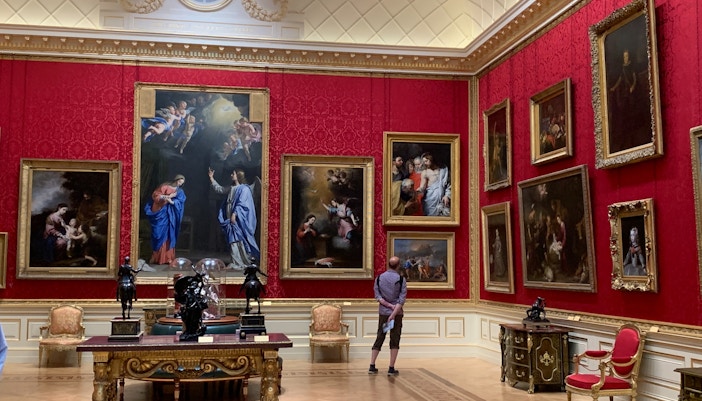
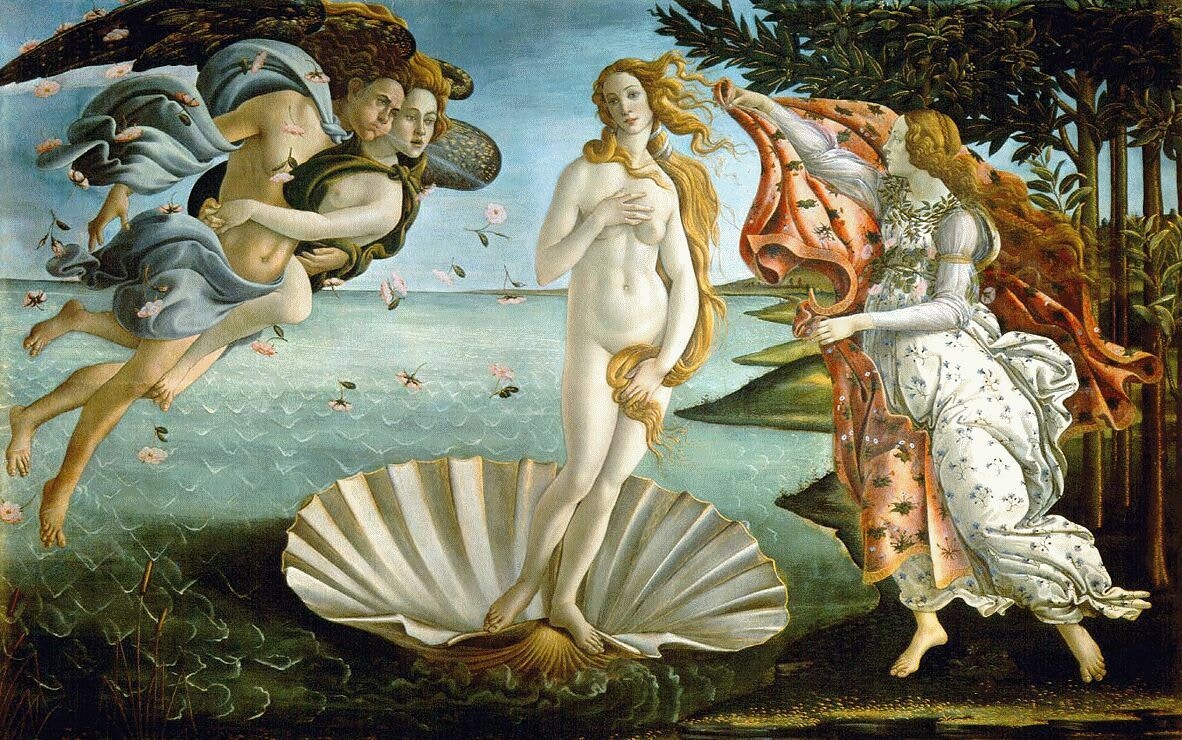
- See art masterpieces: You'll view some of the world's most famous artworks up close, like Botticelli's "The Birth of Venus" and Leonardo da Vinci's "Annunciation." It's like stepping into a history book filled with incredible paintings.
- Return to the Renaissance: The gallery itself is housed in a stunning Renaissance palace built in the 16th century. Walking through its corridors feels like you're traveling back in time, surrounded by rich history and architecture.
- Striking views of the city: From certain points in the gallery, you get breathtaking views of Florence. A lot of the windows offer some really wonderful views of the Arno River. In fact, you can even get a shot of the Ponte Vecchio from some of them.
- Be lured by the Medici family's mystery: The Uffizi Gallery is the Medici family's legacy. They were patrons of the arts and played a crucial role in Florence's cultural and political history. Exploring the gallery offers a glimpse into the Medici's world, their support of artists, and their impact on shaping Florence into the cultural hub it is today.
Quick Information
RECOMMENDED DURATION
3 hours
Timings
08:15–18:30
VISITORS PER YEAR
2008625
TICKETS
From $21.37
NUMBER OF ENTRANCES
5
EXPECTED WAIT TIME - STANDARD
2+ hours (Peak), 30-60 mins (Off Peak)
EXPECTED WAIT TIME - SKIP THE LINE
0-30 mins (Peak), 0-30 mins (Off Peak)
UNESCO YEAR
1982
Did you know?
Wander the Vasari Corridor, a covert passageway linking Uffizi to Pitti Palace across the Arno River, shrouded in historical intrigue.
Journey back to 3100 BCE with the ancient Egyptian masterpiece, the Narmer Palette, residing within Uffizi's renowned collection.
Explore the hidden treasures of Room 35, known as the "Room of the Loeser Bequest," showcasing antique furniture and paintings collected by Charles Loeser.
Book Uffizi Gallery Tickets
Uffizi Gallery Timed Entry Tickets
Book now, pay later

Audio guide
Uffizi Gallery Guided Tour
Book now, pay later
Combo (Save 20%): Uffizi Gallery + Accademia Gallery Timed Entry Tickets with Audio Guide
Audio guide
Florence 5-Day Pass: Uffizi Gallery, Pitti Palace & Boboli Gardens Tickets
Guided tour
Why visit Uffizi Gallery?
The Uffizi Gallery collection
- Paintings: The Uffizi Gallery has about 1,800 Italian Renaissance paintings by famous artists like Botticelli, Leonardo da Vinci, Raphael, and Caravaggio.
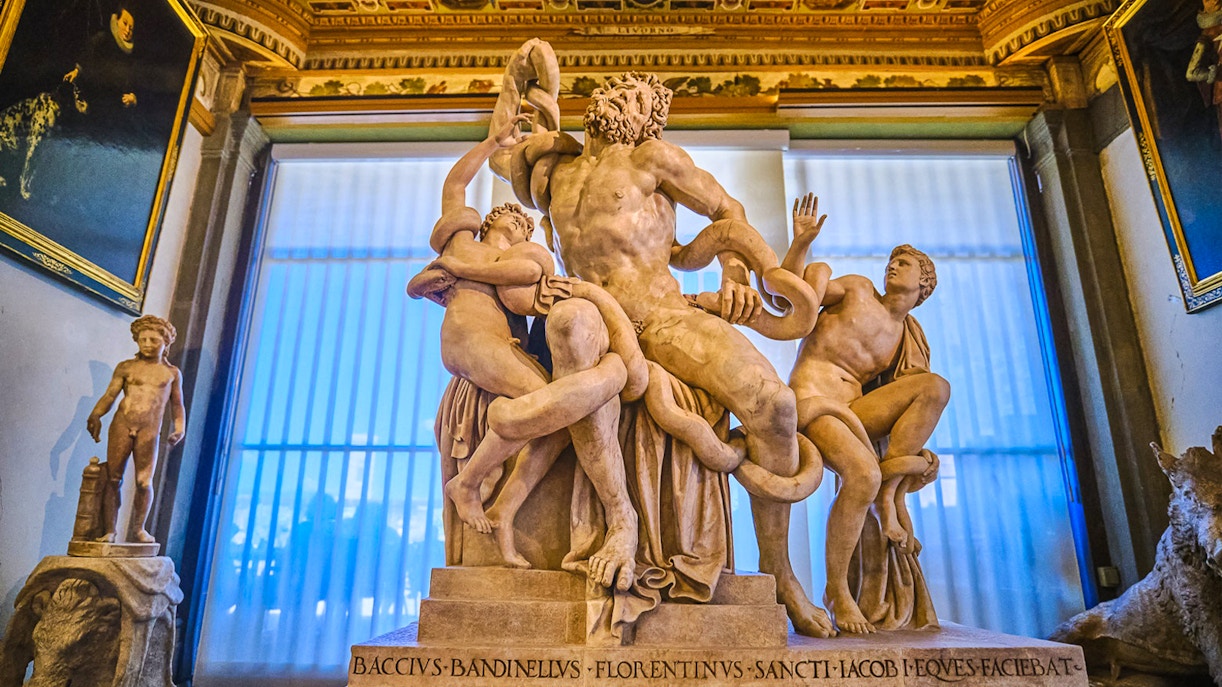
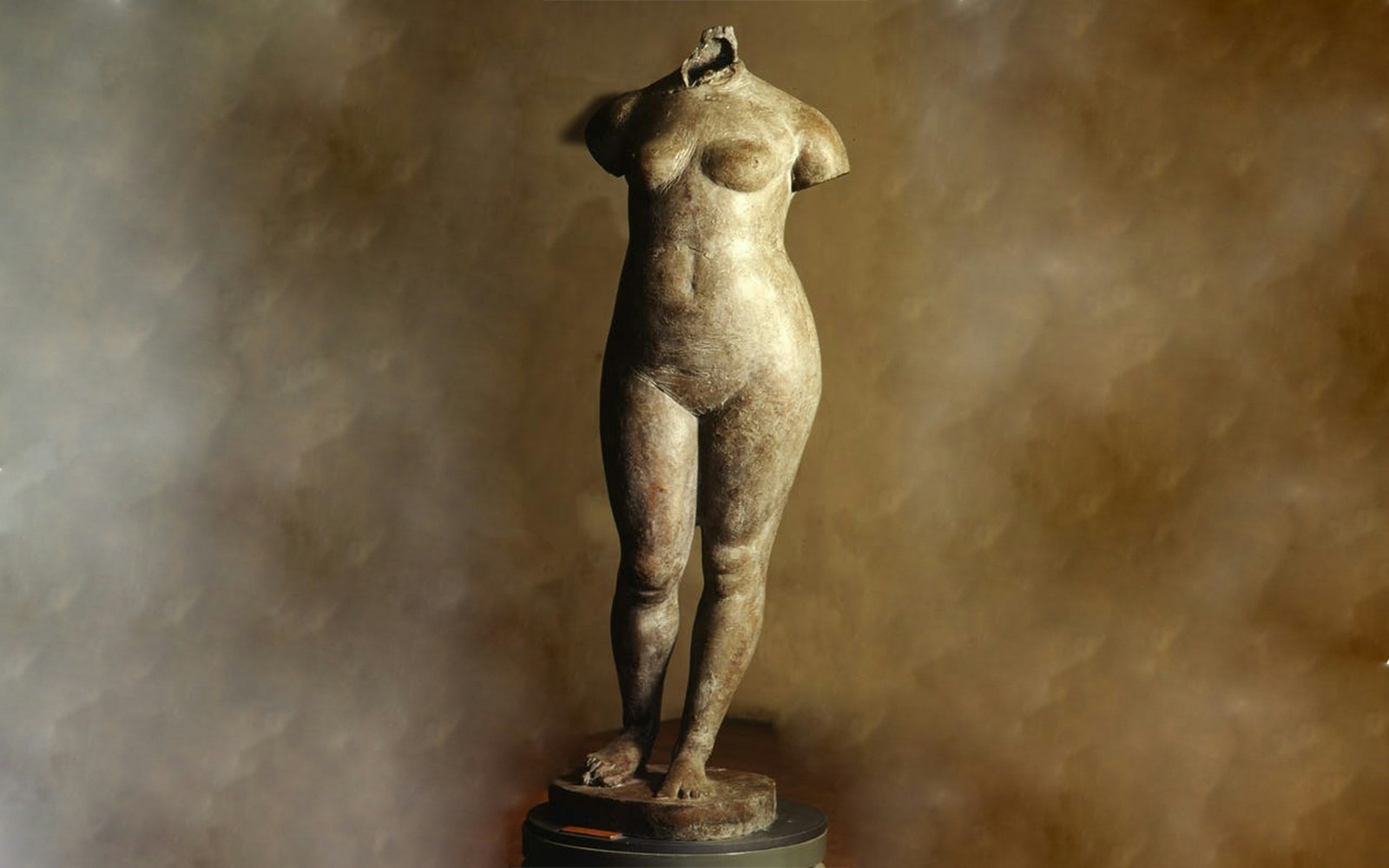
- Sculptures: The Uffizi's sculpture collection, though smaller than its paintings, includes notable pieces such as Michelangelo's 'Tondo Doni,' highlighting Renaissance mastery.
- Ancient artifacts: The collection also includes about 600 ancient artifacts such as vases and coins, offering insights into daily life and art from ancient civilizations.
- Prints & drawings: With approximately 100,000 prints and drawings, the Uffizi Gallery showcases artists' creative processes and the evolution of printing techniques, including detailed woodcuts and engravings.
Must-see highlights of Uffizi Gallery


The Uffizi Gallery floor plan
Ground floor
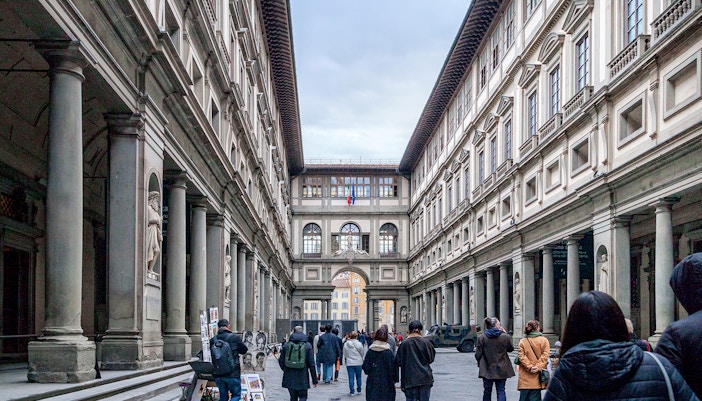
The Ground Floor of the Uffizi Gallery is practical, housing amenities like the audioguide station, bookshop, and cloakroom. It serves as the entrance and exit point for the museum. After exploring the first and second floors, visit the exit for souvenir shopping at the extensive bookshop, featuring Uffizi-related titles, a post office for mailing postcards, and an ATM.
First floor
The floor features a concise collection across four sections. The Blue Rooms (46 to 55) exhibit foreign artists like Rembrandt and Goya. The Red Rooms (56 to 66) display paintings and sculptures by Raphael, Andrea del Sarto, and others. The Carravaggesque Rooms (90 to 93) showcase Caravaggio's works. Additionally, the Balcony over the Arno presents three impressive sculptures, including the Medici Vase.
Second floor
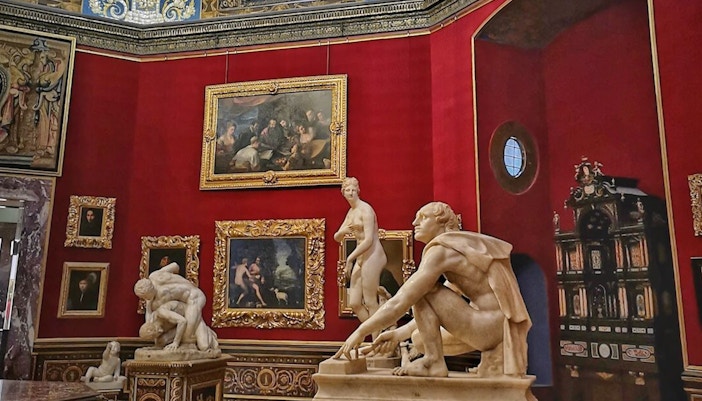
The Uffizi Gallery's second floor has 45 rooms arranged in a U-shape, featuring a diverse collection from ancient statues to Medici pieces. Highlights include Leonardo Da Vinci's "Adoration of the Magi" and "The Baptism of Christ," along with 15+ Botticelli works like "Birth of Venus." Explore miniatures, relics, ancient maps, and art by masters such as Lippi, Pollaiolo, Perugino, Signorelli, Bellini, Giorgione, Mantegna, and Correggio.
Brief history of the Uffizi Gallery
- 1560: Cosimo I de Medici initiates the construction of the Uffizi Gallery to house administrative and legislative offices in Florence.
- 1581: The top floor transitions into an art space, beginning the collection of artworks and family treasures.
- 1743: The last Medici, Anna Maria Luisa de Medici, signs the Family Pact, bequeathing the Uffizi Museum and its contents to the Tuscan state. The agreement ensures the artworks remain in Florence.
- 1769: The Uffizi Gallery officially opens as a museum, showcasing the extensive collection. While some artworks have been relocated to other Florence museums, the Uffizi remains a central repository of Italian Renaissance masterpieces.
Who built Uffizi Gallery?
The powerful Medici family, known for their patronage of the arts, commissioned the Uffizi Gallery's initial structure in the 1560s from Giorgio Vasari. Originally designed for administrative purposes, the Uffizi evolved into a renowned art gallery. Vasari, a prominent 16th-century artist and architect, departed from his ornate style, opting for a symmetrical and neutrally colored layout for the Uffizi Gallery, now one of the world's foremost art galleries.
Uffizi Gallery architecture
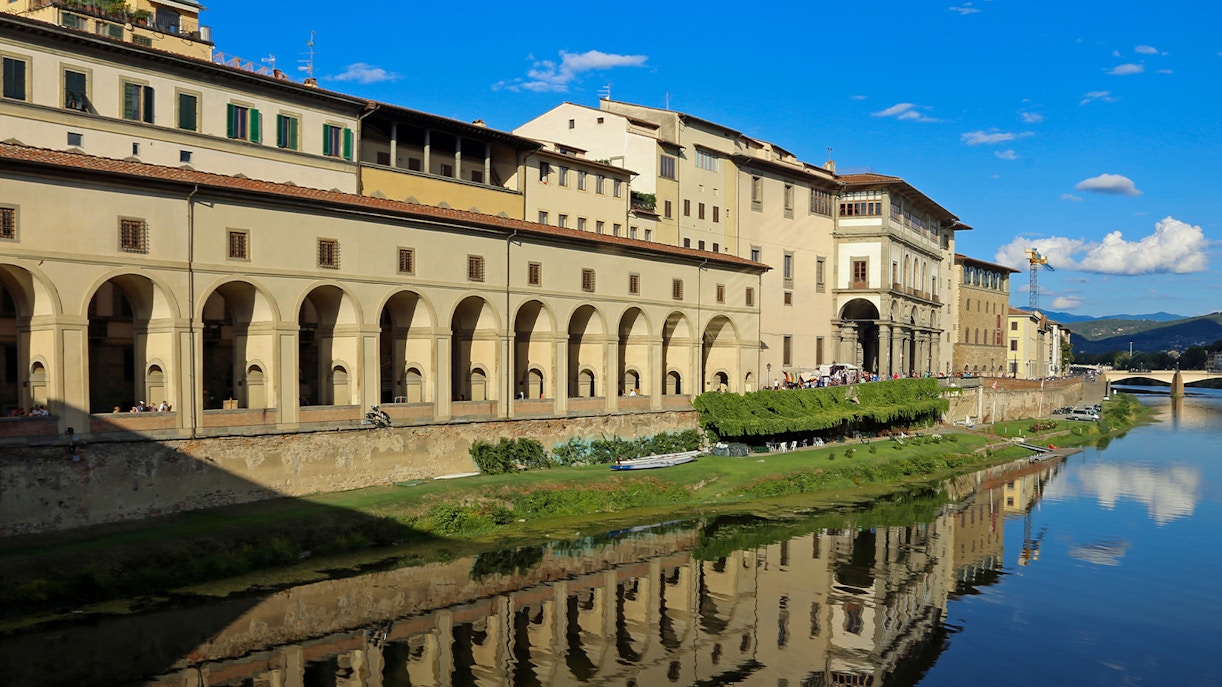
Uffizi Museum is a rare gallery where even the architecture of the venue is considered as important as the art. Some architectural highlights to look out for include the following:
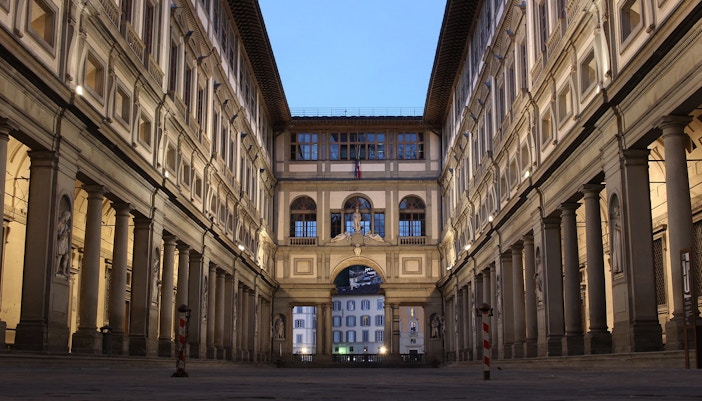
- The Uffizi Palace: Perhaps one of the most important pieces of Italian architecture from the 16th century, this was designed by Giorgio Vasari to house the offices (“uffizi”) of the magistrates of Florence. Created in Classical style, the space is open and bright.
- The Grand Staircase: This opulent staircase is divided into two parts. The first was designed by Vasari in the Florentine Renaissance style and stops at the first floor. The second part leads to the gallery floor and is designed in Neoclassical form.
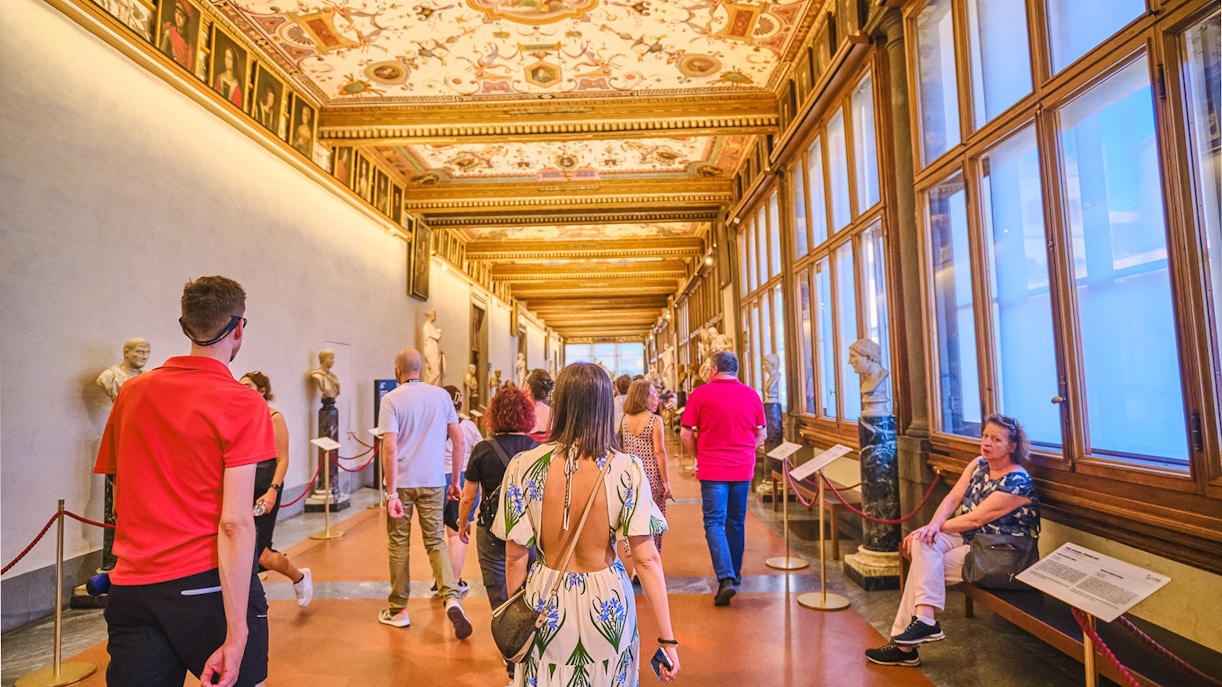
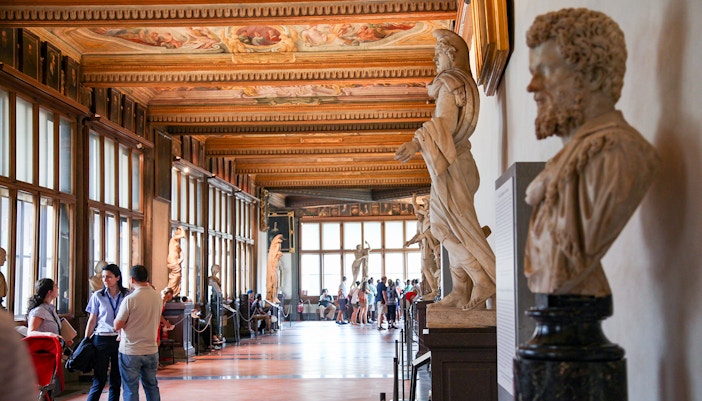
- The Gallery Corridors: The three corridors on the top floor of the Uffizi Museum feature frescoes that date back to 1550-1700 ca.
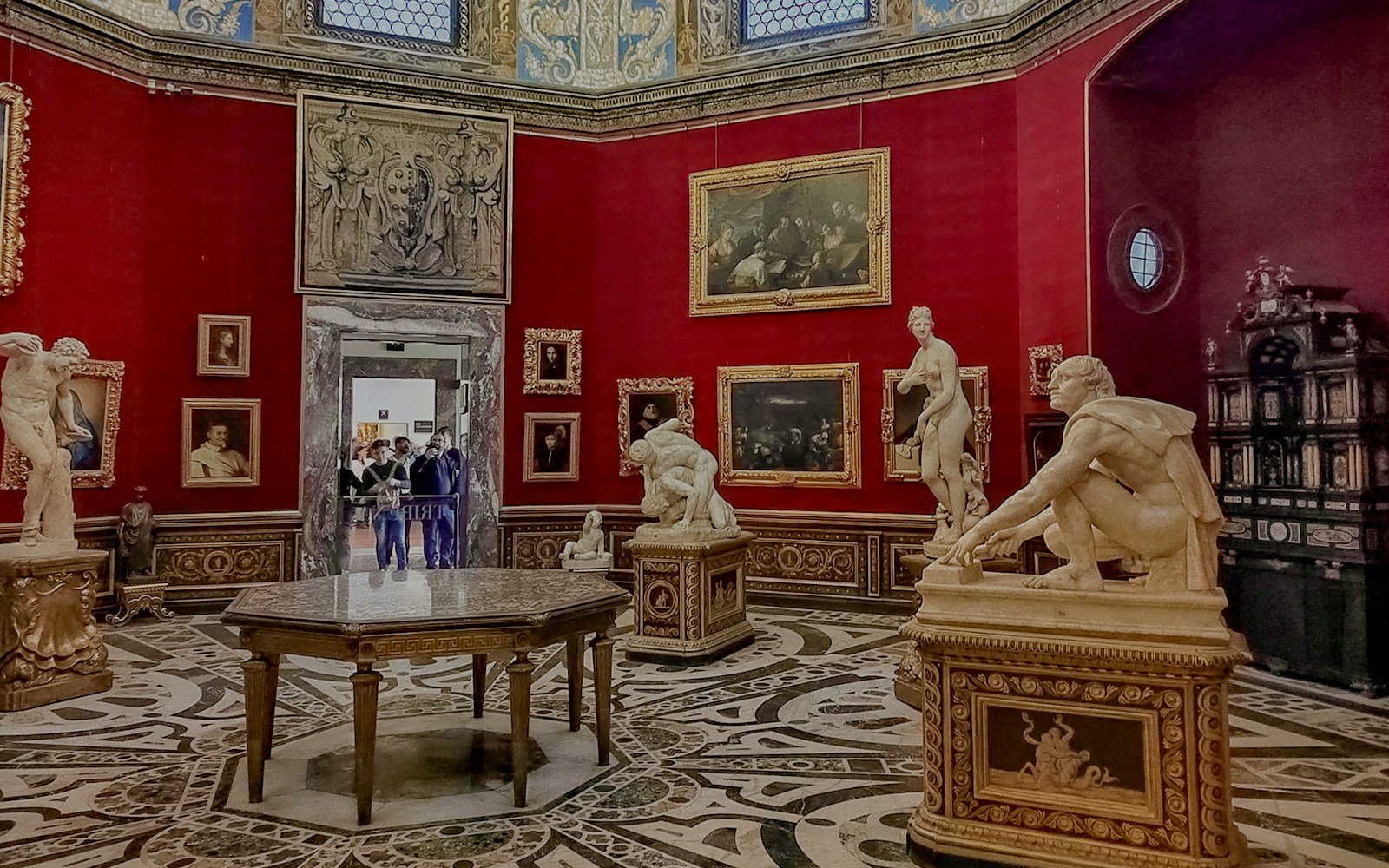
- The Tribune: Created in the early 1580s by Bernardo Buontalenti, the Tribune is an octagonal room that was designed in a way that alluded to the four elements.
Interesting Uffizi Gallery facts
- Literal meaning: "Uffizi" translates to "Offices" as the building initially served administrative purposes for the city of Florence. Later, it opened as a public museum in 1769, boasting over 250 years of captivating art history.
- Secret passage: The Vasari Corridor, a kilometer-long passage, connects Uffizi to Palazzo Vecchio and Palazzo Pitti, spanning the iconic Ponte Vecchio.
- Michelangelo's painting: "Doni Tondo" is Michelangelo's sole known movable painting, displayed at the Uffizi.
- Mud Angels' rescue: In 1966, international volunteers, known as "Mud Angels," helped salvage art from the Uffizi after severe flooding in Florence.
- Napoleon's patronage: Napoleon's positive impact on the arts is acknowledged at the Uffizi, unlike museums in Rome that he pillaged.
- Napoleon's sister in Tuscany: Elisa Baciocchi, Napoleon's sister, briefly governed Florence, aiming to modernize the city. Her initiatives were in sync with wider cultural and political shifts that played a role in the Uffizi's evolution into a public museum.
- Magnanimous donation: The entire Uffizi collection, valued in billions, was donated to Florence by Anna Maria Luisa dé Medici in 1737.
- Millions of visitors: With 2.1 million visitors in 2019, the Uffizi Gallery is a cultural magnet, despite its smaller size compared to global counterparts.
- Brief homecoming of Mona Lisa: Stolen in 1911, the Mona Lisa briefly graced the Uffizi's walls before returning to its home at the Louvre in Paris.
Frequently asked questions about Uffizi Gallery, Florence
The Uffizi Gallery, located in Florence, Italy, is one of the most famous and important art museums in the world. It houses a vast collection of priceless artworks, primarily from the Italian Renaissance, including masterpieces by artists such as Leonardo da Vinci, Michelangelo, and Botticelli.
The Uffizi Gallery boasts a wealth of artistic treasures spanning centuries. Key highlights include Leonardo Da Vinci's Annunciation and Adoration of the Magi, over 15 works by Botticelli, including the Birth of Venus and La Primavera, and Medusa by Caravaggio.
The Uffizi Gallery was originally constructed not as a museum, but as offices for the Florentine magistrates — hence its name, "Uffizi," which means "offices" in Italian. Commissioned by Cosimo I de' Medici, the first Grand Duke of Tuscany, the building’s primary purpose was to consolidate the administrative offices of the Tuscan state under one roof, as part of Cosimo’s efforts to organize and strengthen his newly established grand ducal administration.
Beyond this, the Uffizi was also intended to house the art collections of the Medici family, one of the wealthiest and most influential families in Europe at the time. As their collection grew, parts of the Uffizi were gradually used to display these works to a select audience, marking the beginning of its transition to a gallery. After the Medici dynasty ended in the 18th century, the last Medici heiress, Anna Maria Luisa de' Medici, bequeathed the entire collection to the city of Florence under the condition that it would never leave the city. This collection formed the core of the Uffizi Gallery as we know it today, officially opened to the public as a museum in 1765.
The Uffizi Gallery was designed and built by the renowned architect Giorgio Vasari beginning in 1560. Vasari was a protégé of the Medici family and he created this iconic building as part of his grand plan for the city.
It's known for its Renaissance architecture, with orderly columns, elegant arches, and geometric harmony reflecting the era's artistic ideals.
The Uffizi Gallery officially opened in 1765, when Grand Duke Peter Leopold of the House of Medici declared the collection of artwork open to the public.
The Uffizi Gallery is famous for its expansive collection of artwork from the Renaissance era, including some of the most celebrated pieces by Leonardo da Vinci, Michelangelo, and Raphael. It is also well known for its iconic architecture and breathtaking views of the Arno River and Florence cityscape.
Inside the Uffizi Gallery you will find a vast collection of artwork, including paintings, sculptures, and tapestries from the Medieval through Baroque periods. The museum also features a library and several temporary exhibits throughout the year. Additionally, the gallery is home to a number of important works of art, including Michelangelo's The Entombment, Sandro Botticelli's The Birth of Venus, and Raphael's Madonna of the Goldfinch.
Unfortunately, admission to the Uffizi Gallery is not free. However, discounted tickets are available to students and visitors under the age of 18. Other visitors will have to purchase Uffizi Gallery tickets to enjoy access to the museum.
Tickets for the Uffizi Gallery can be purchased online or in person at the museum. It is recommended to book ahead of time in order to avoid long lines and ensure availability.
The Uffiizi Gallery ticket prices start at €20.
The Uffizi Gallery is open from 8:15 am to 6:30 pm Tuesday through Sunday. It is closed on Mondays, and select public holidays, such as Christmas.
More reads
Plan your visit
Guided tours