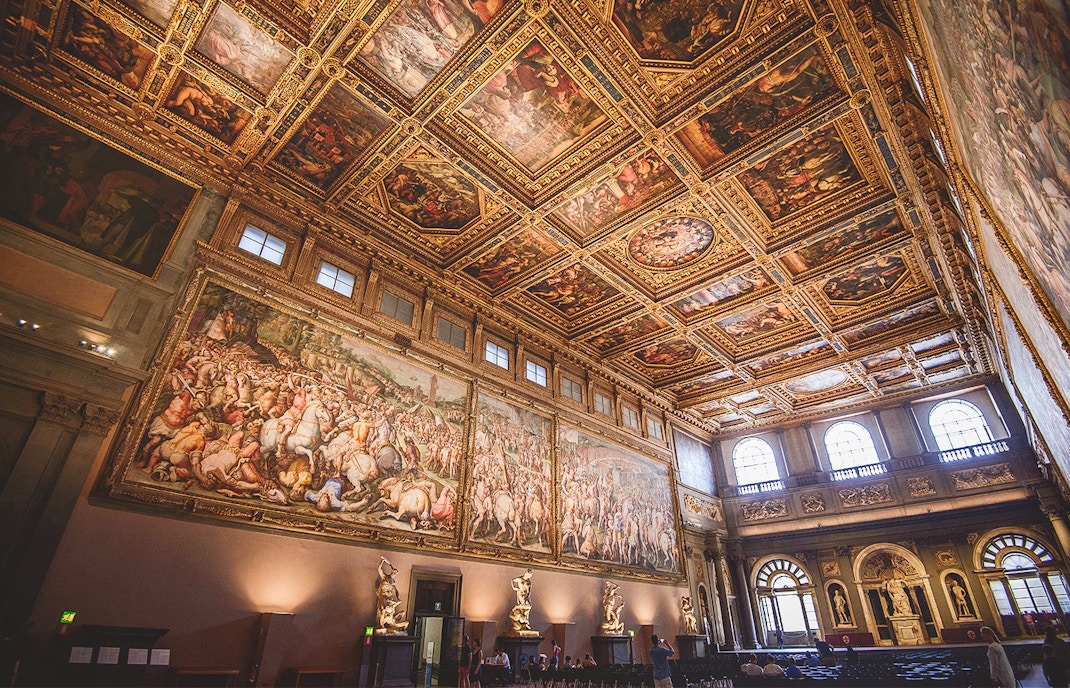
Palazzo Vecchio boasts an impressive collection of frescoes and murals adorning its walls and ceilings. Discover iconic works like Giorgio Vasari's Battle of Marciano and intricate historical narratives in the Hall of the Five Hundred. The Hall of Maps has ceiling paintings of 48 Greek constellations.
Peruse Palazzo Vecchio's unique collection of art
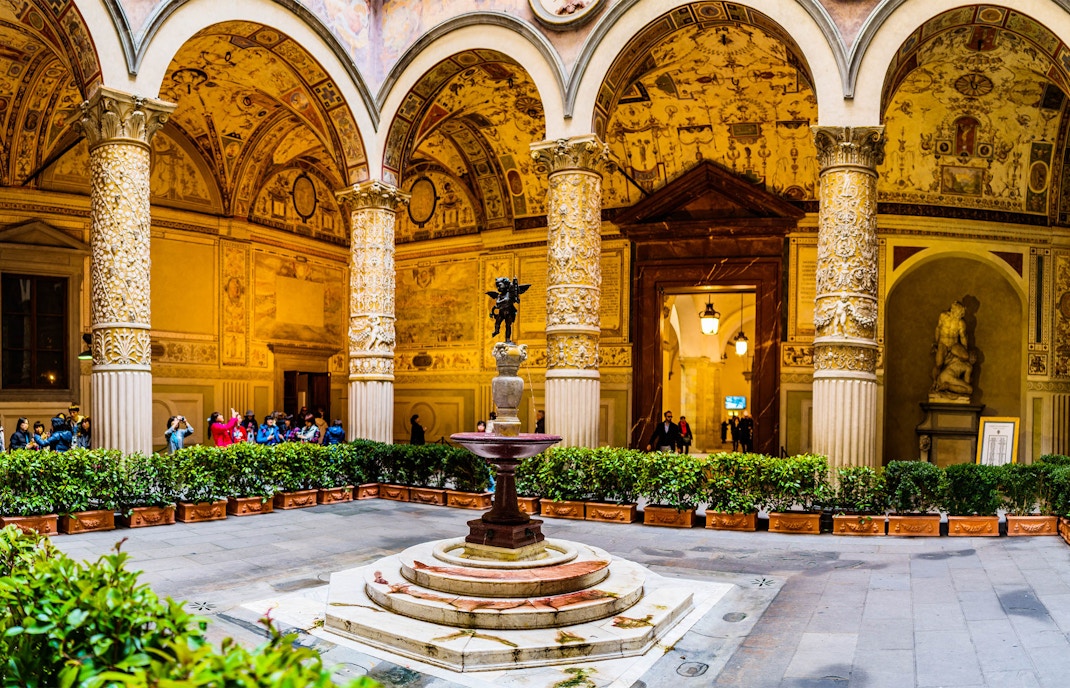
Palazzo Vecchio houses sprawling frescoes, like Vasari’s Conquest of Siena and Ghirlandaio’s Saint Zenobius, and evocative sculptures like Michelangelo’s Genius of Victory, Donatello’s Judith, Verrocchio’s Putto with Dolphin, and Bandinelli’s Hercules and Cacus. You will also encounter artistic excellence in the decor, like the intricate Hall of Maps cabinet-fronts or the gold and white ornamentation in the courtyard columns.
Types of artwork at Palazzo Vecchio
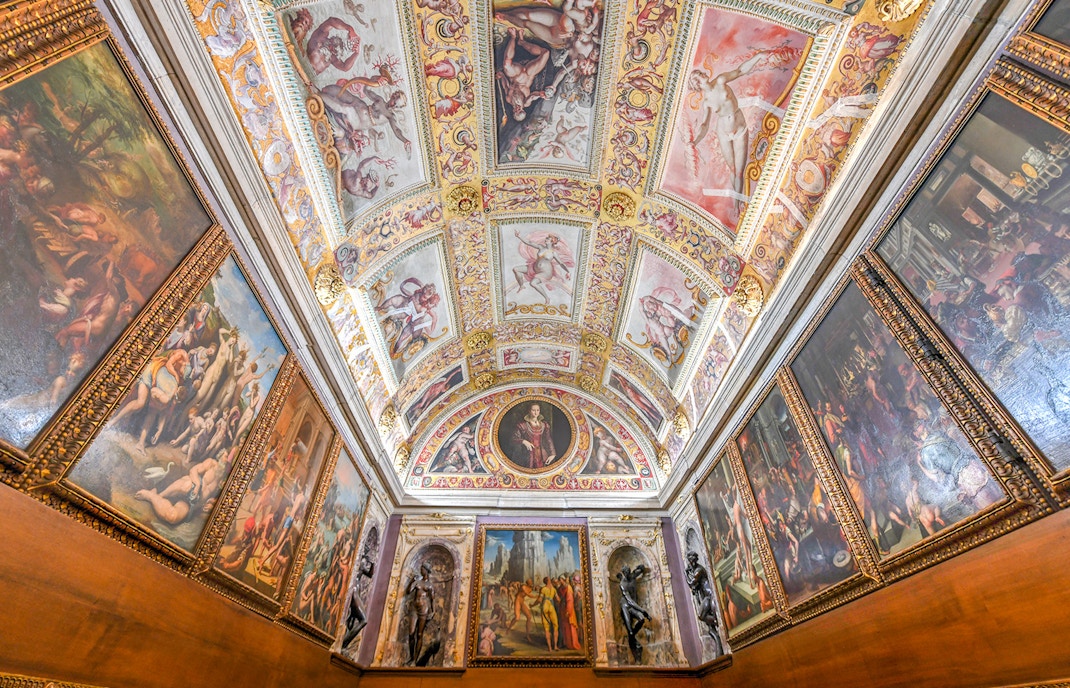
Frescoes and murals
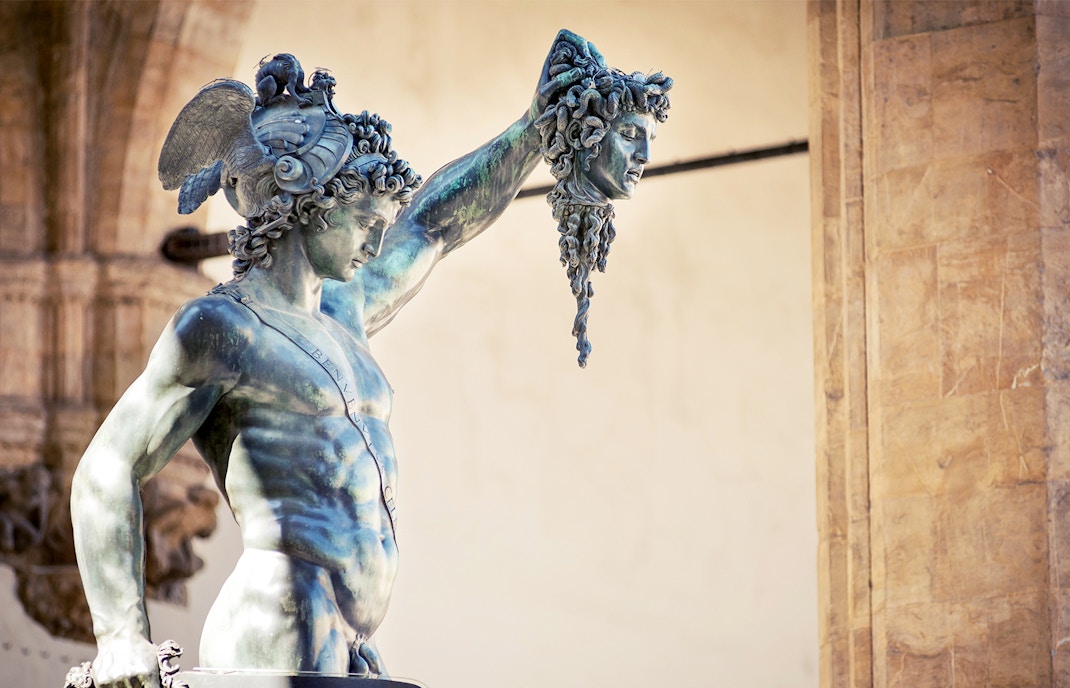
Sculptures and statues
Marvel at the exquisite sculptures that grace the halls of Palazzo Vecchio. From Michelangelo's powerful Genius of Victory in the Hall of the Five Hundred, to Donatello's powerful Judith in the Hall of Lilies, these masterpieces captivate with their artistic brilliance.
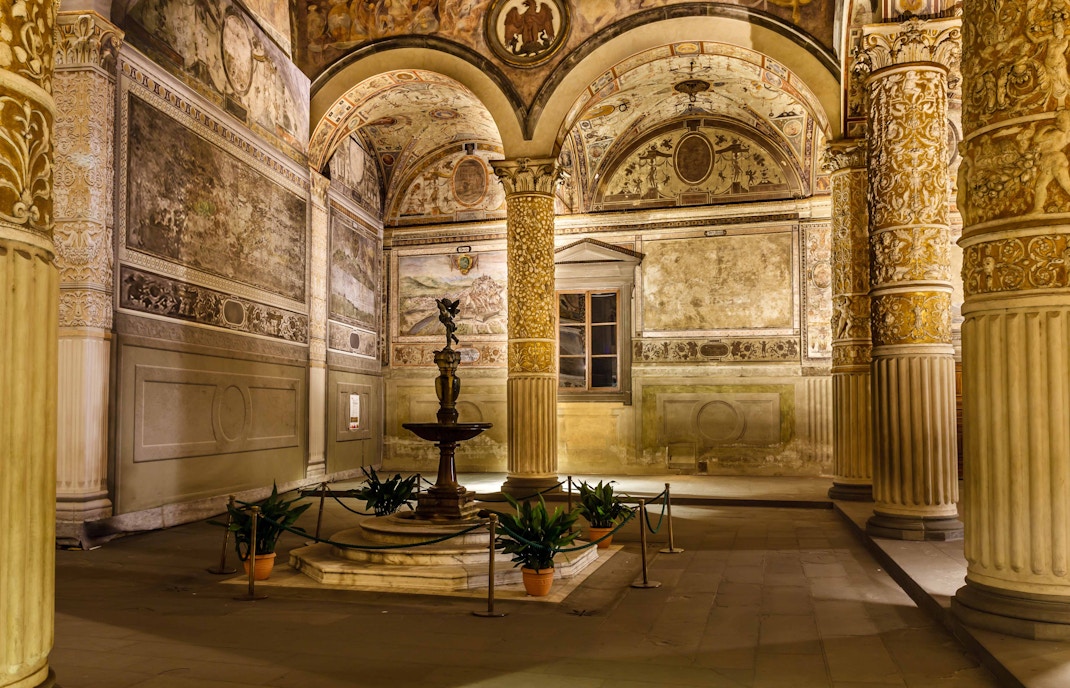
Tapestries and textiles
Delve into the world of woven artistry with the tapestries displayed throughout Palazzo Vecchio. These intricately crafted textiles depict scenes from mythology and history, offering a glimpse into the rich tapestry of Renaissance craftsmanship.
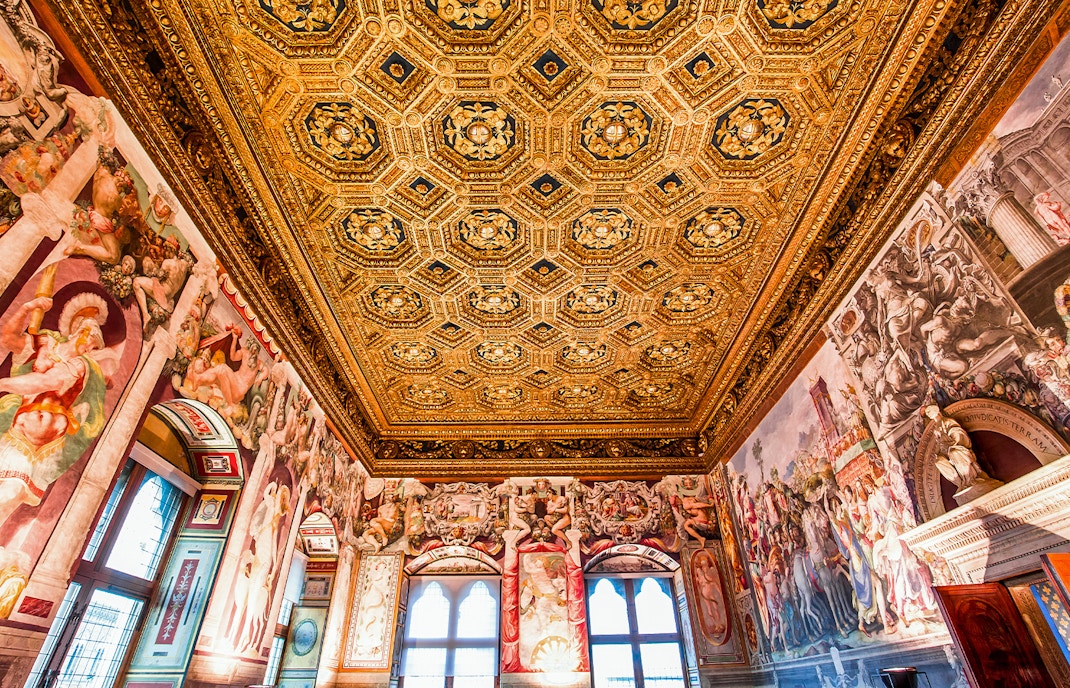
Hall of Lilies
Explore the Hall of Lilies, or Sala dei Gigli, a treasure trove of 14th-century artworks. Admire the delicate frescoes and intricate detailing that transports visitors back in time. The specific floral decor found on the walls symbolizes Florence's alliance with France.
Historical collections
Palazzo Vecchio houses a range of historical artifacts and collections that shed light on the palace's rich past. Explore exhibition rooms that showcase historical documents, artifacts, and objects of significance, offering a deeper understanding of the palace's role in Florentine history. The Loeser Collection is a permanent feature found on the Mezzanine level, donated from the private collection of art historian Charles Loeser.
Palazzo Vecchio courtyards
Step into the enchanting courtyards of Palazzo Vecchio, where artistic elements blend with architectural splendor. These serene spaces feature sculptures, fountains, and lush greenery, providing a tranquil retreat within the palace grounds.
Masterpieces inside Palazzo Vecchio | What to look out for
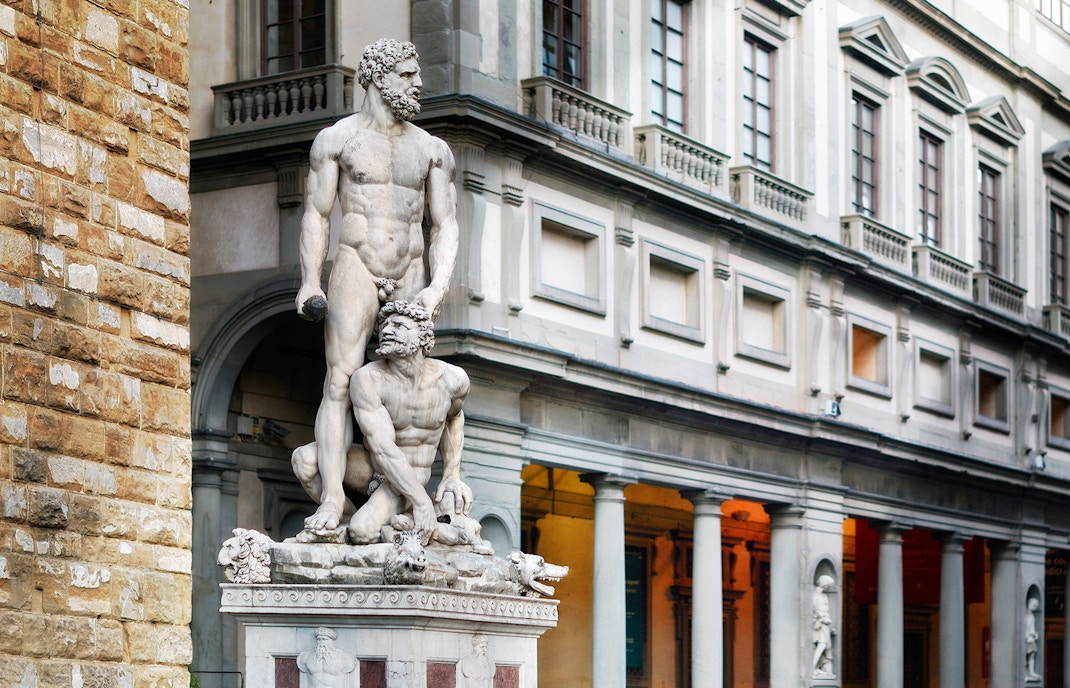
Hercules and Cacus
Artist: Baccio Bandinelli
In the Piazza della Signoria, you'll find a colossal marble statue depicting the epic struggle between Hercules and Cacus. Sculpted by Baccio Bandinelli in the 16th century, this artwork showcases the muscular figures engaged in a dramatic battle, symbolizing the triumph of virtue over evil.
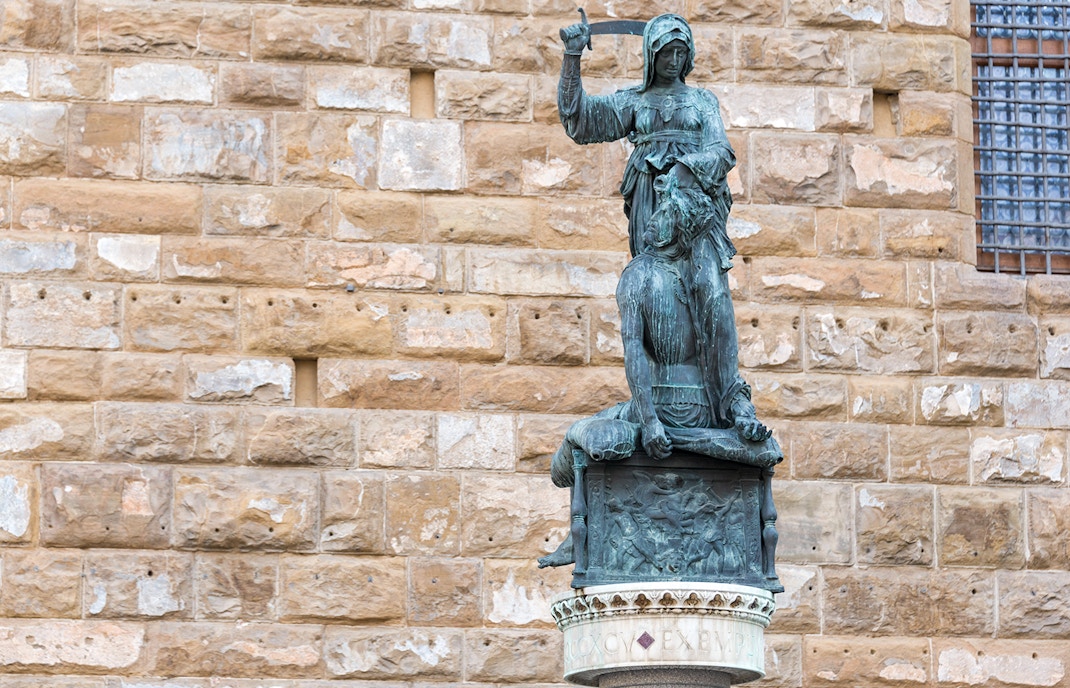
Judith and Holofernes
Artist: Donatello
Donatello's bronze sculpture, "Judith slaying Holofernes," resides in the Sala dei Gigli. Crafted in the 15th century, this masterpiece portrays the biblical heroine Judith, who decapitates the Assyrian general Holofernes to save her people. The sculpture exhibits Donatello's exceptional skill in capturing intricate details and dramatic intensity.

The Creation of Adam
Artist: Vasari and Zuccari
The fresco portrays the biblical narrative from the Book of Genesis, illustrating the iconic moment when God breathes life into Adam, the first man. The painting is part of a larger series of frescoes commissioned by Vasari to decorate the walls and ceiling of the Sala dei Cinquecento, which was the main hall of the Florentine Republic's government.
The Genius of Victory
Artist: Michelangelo
Michelangelo's marble sculpture, "The Genius of Victory," is located in the Hall of the Five Hundred. Created in the early 16th century, this impressive artwork depicts a winged figure holding a sword, symbolizing the triumph of Florence over its enemies. The sculpture showcases Michelangelo's skill in sculpting dynamic poses and evoking a sense of power and strength.

The Putto with Dolphin
Artist: Andrea del Verrocchio
In the courtyard of Palazzo Vecchio, you'll encounter Andrea del Verrocchio's bronze sculpture, the Angel with Dolphin. Crafted in the late 15th century, this charming artwork portrays a young winged child riding a dolphin. The sculpture exemplifies Verrocchio's ability to capture movement and express a sense of playfulness.
Frequently asked questions about Palazzo Vecchio artworks
The most famous include Vasari’s frescoes in the Salone dei Cinquecento, Michelangelo’s Genius of Victory, Donatello’s Judith and Holofernes, Bronzino’s portraits of the Medici, and Verrocchio’s Putto with Dolphin.
Vasari and his team painted massive frescoes in the Salone dei Cinquecento, depicting Florentine military victories, and the ceiling panels, glorifying Cosimo I de’ Medici. He also painted the Apartments of Leo X and Hall of Lilies.
No, it was originally sculpted for Pope Julius II’s tomb but remained unfinished. It was later placed in Salone dei Cinquecento, where it stands today.
This bronze statue symbolizes Florence’s republican strength. Originally placed outside in Piazza della Signoria, it was replaced by Cellini’s Perseus statue and moved inside the Hall of Lilies in Palazzo Vecchio.
Bronzino painted official Medici court portraits, including Eleanor of Toledo and her son. These works are known for their elegance, symbolism, and detailed textiles.
Leonardo’s unfinished fresco was lost when Vasari remodeled the hall. Some believe it may still exist beneath Vasari’s frescoes, hinted at by the inscription "Cerca Trova" (Seek and You Shall Find).
This secretive, windowless chamber is filled with Mannerist paintings, sculptures, and cabinets by Vasari, Allori, and Poppi, showcasing alchemy, nature, and Medici interests.
The Hall of Maps contains 53 painted maps of the known world in the 16th century, and a large rotating globe, one of the most advanced of its time.
Beyond the masterpieces, look for Ghirlandaio’s Saint Zenobius fresco, Bandinelli’s Hercules and Cacus, and the ceiling medallions of the Hall of Lilies, featuring medieval Florentine emblems.


