Quick Information

ADDRESS

Via del Proconsolo, 4, 50122 Firenze FI, Italy

Timings

08:45–13:50

VISITORS PER YEAR

200000

Plan your visit

Did you know?

The museum was officially established as the National Museum of Sculpture in 1865, making it the first Italian national museum dedicated primarily to sculpture.

Before it became a museum, the Palazzo del Bargello served as the residence of Florence’s chief magistrate and later as a police headquarters and prison.

Some sculptures now in the Bargello originally stood outdoors at Orsanmichele or Piazza della Signoria and were moved inside for conservation, with replicas placed outside.

Is Museo del Bargello worth visiting?

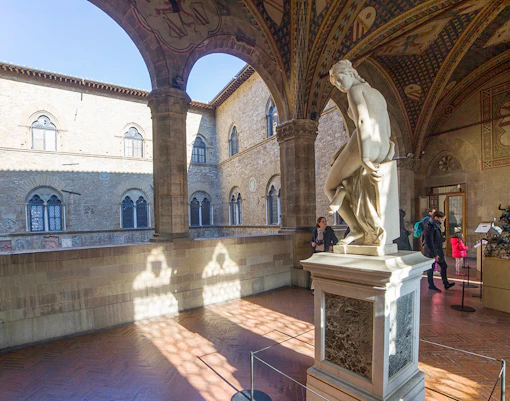
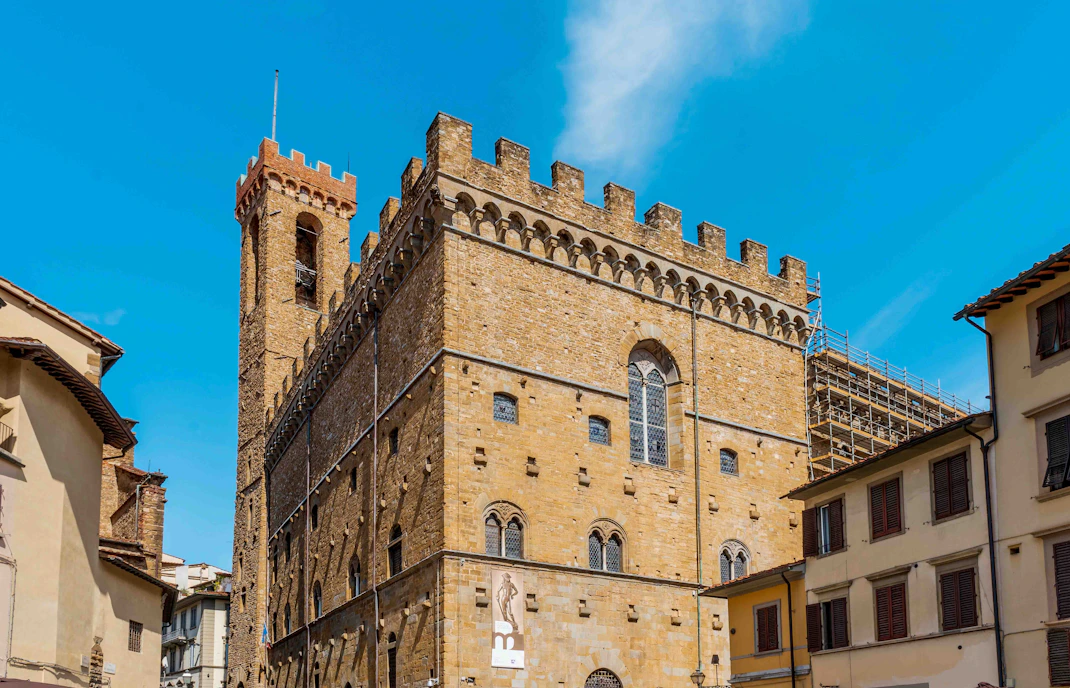
Step into Museo del Bargello and you’re surrounded by some of the finest Renaissance sculptures ever created, housed inside one of Florence’s oldest public buildings. The museum feels more like a quiet medieval fortress than a traditional gallery, which makes the experience feel intimate and focused.

Originally built as a 13th-century palace and later used as a prison, the Bargello now holds masterpieces by Donatello, Michelangelo, Verrocchio, and Cellini, each displayed in rooms that enhance their scale and detail. Unlike crowded Uffizi-style museums, here you can actually slow down and study the evolution of Renaissance sculpture up close.

The payoff is clarity rather than overwhelm—you leave with a deeper understanding of how Renaissance art developed through form, anatomy, and expression.

Skip it if: you prefer large, fast-paced museums or are only interested in paintings rather than sculpture.

What to see at Museo del Bargello

Placeholder Image Headout Blimp
1/6

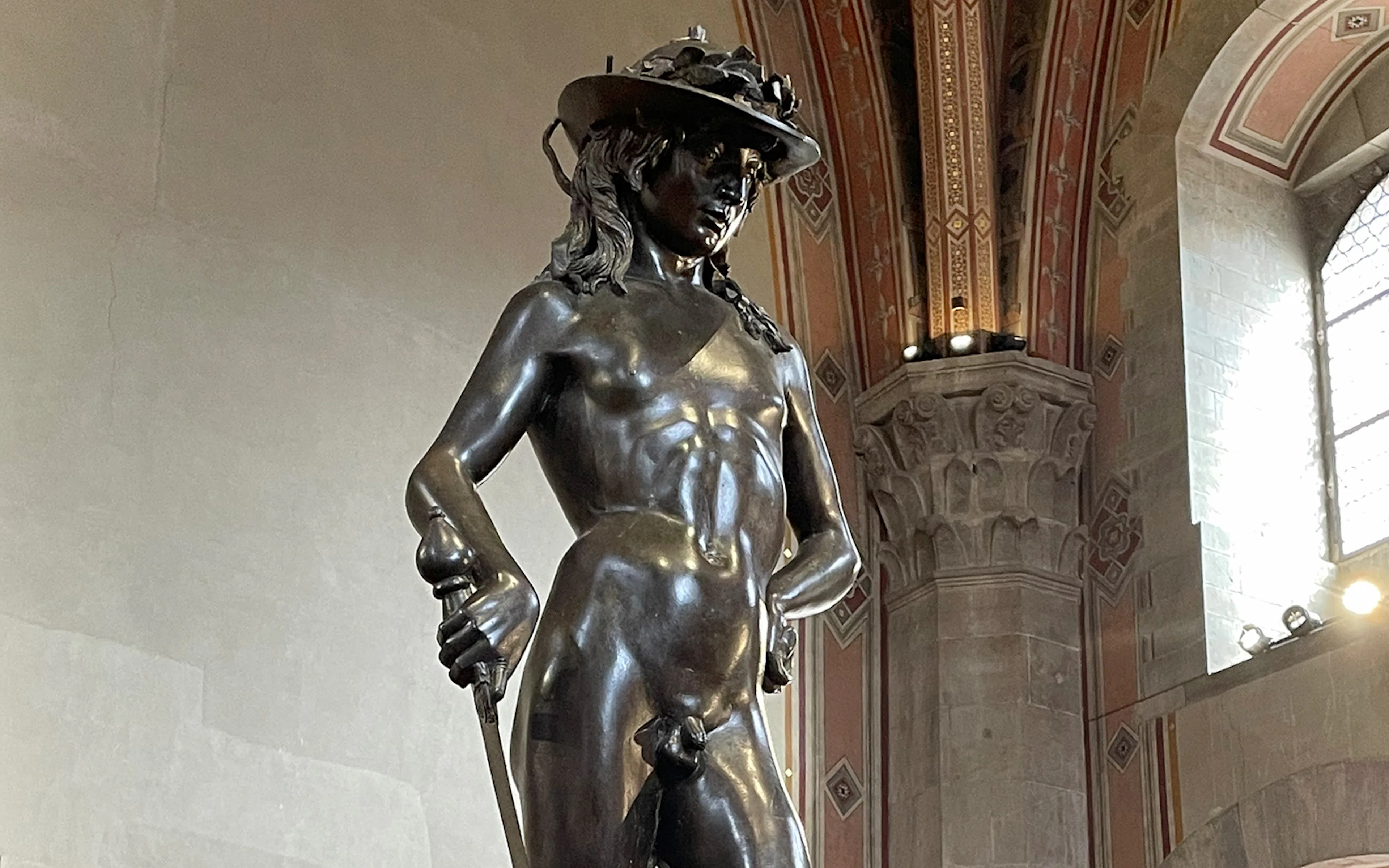
Donatello’s David

One of the museum’s most iconic works, Donatello’s bronze David is the first free-standing nude sculpture of the Renaissance. Its delicate posture and youthful expression mark a turning point in Western art history, blending realism with classical influence.

Michelangelo’s Bacchus

Michelangelo’s early masterpiece depicts Bacchus, the Roman god of wine, in a surprisingly lifelike and unsteady pose. The sculpture reflects the artist’s fascination with human anatomy and movement during his formative years in Florence.

Verrocchio’s David

This elegant marble sculpture shows a confident young David after defeating Goliath. Created by Andrea del Verrocchio, it is often noted for its refined details and the influence it had on his apprentice, Leonardo da Vinci.

Giambologna’s Mercury

Giambologna’s dynamic bronze Mercury appears to defy gravity as he balances on a single breath of wind. The sculpture captures the elegance and movement characteristic of late Renaissance Mannerism.

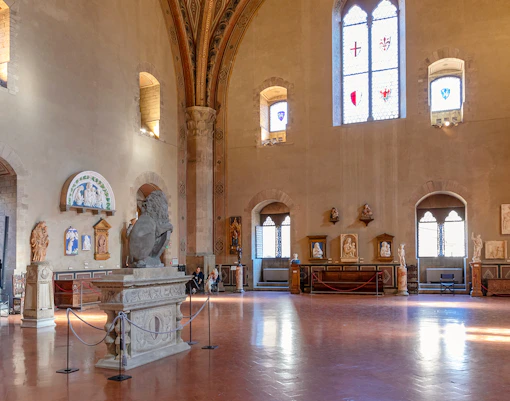
Salone del Consiglio

The grand hall of the Bargello features medieval architecture with coats of arms and historic frescoes. It provides a powerful backdrop for the sculpture collection and reflects the building’s original civic importance.

Decorative sculpture collection

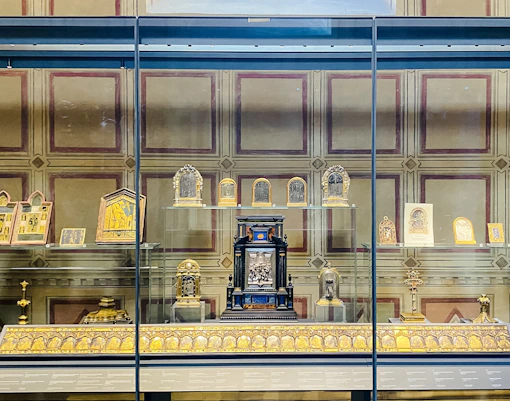
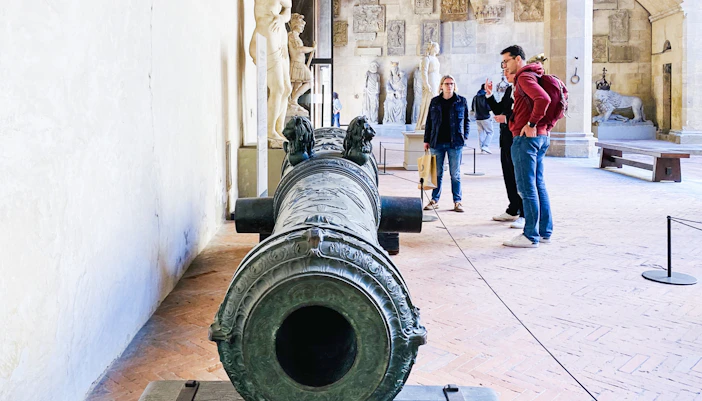
Beyond the famous masterpieces, the museum houses decorative reliefs, medals, and smaller Renaissance works that showcase the evolution of Florentine craftsmanship across centuries.

Discover Renaissance masterpieces in Florence

Museo del Bargello brings together some of the most important sculptures of the Renaissance, including works by Donatello, Michelangelo, and Verrocchio. A visit here offers a rare chance to see how Florentine sculpture evolved inside a historic medieval palace.

How to explore Museo del Bargello

Museo del Bargello is compact but rich in detail, so the best way to explore it is slowly, room by room. The collection is spread across different halls inside a historic medieval palace, making it easy to follow a natural walking route without rushing.

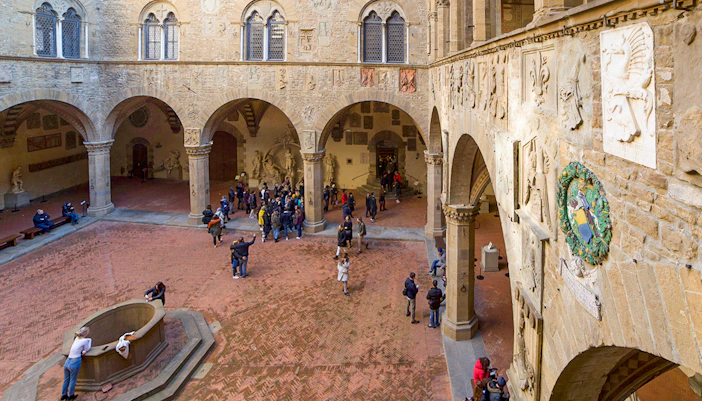
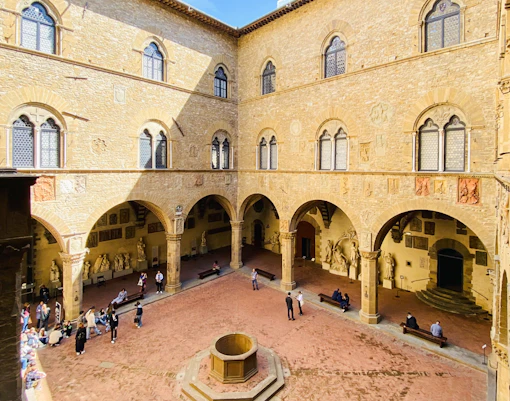
Start with the main courtyard

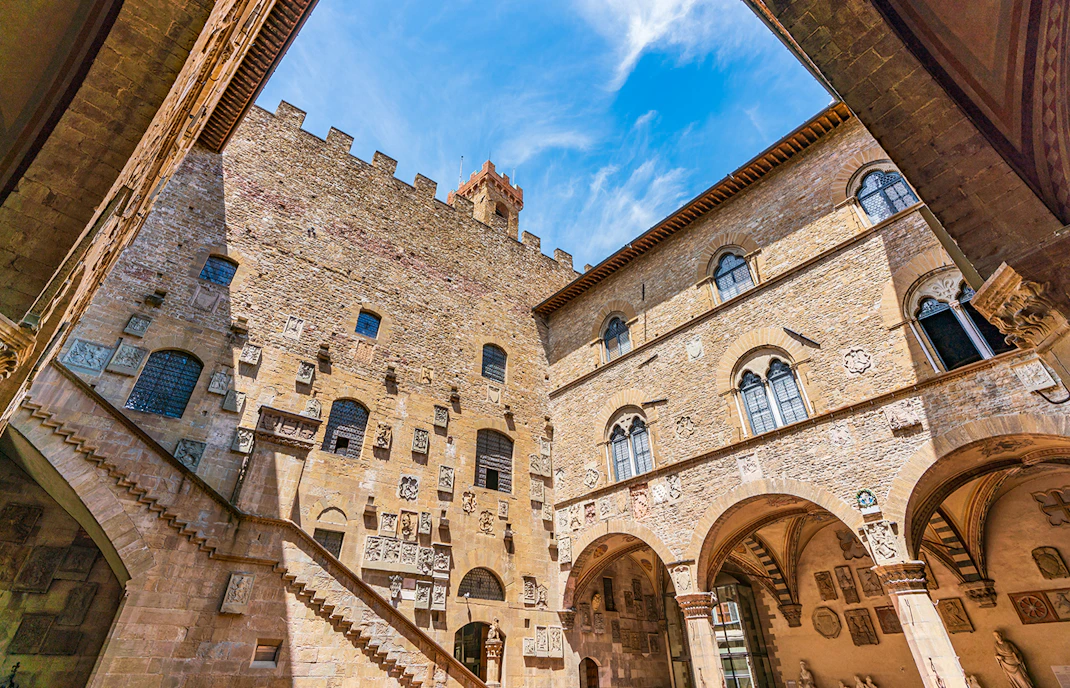
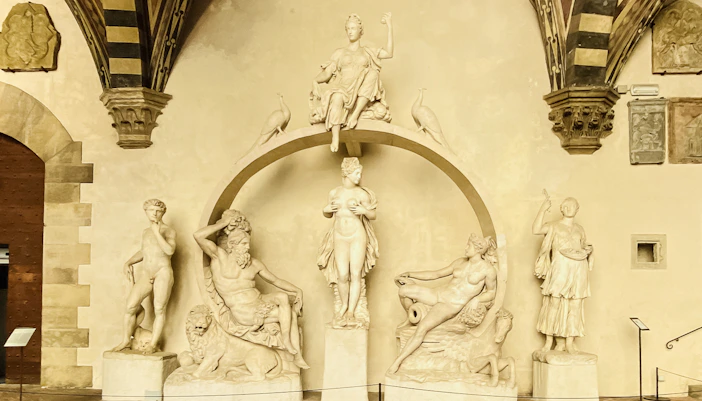
Begin your visit in the open courtyard, where Renaissance and medieval sculptures immediately set the tone. This space also helps you understand the building’s original civic and defensive function before it became a museum.

  • Central entry point
  • Intro to sculpture collection
  • Great for orientation

Focus on Renaissance masterpieces

Head straight to the main halls housing Donatello, Michelangelo, and Verrocchio. These rooms contain the museum’s most important works and show the evolution of Renaissance sculpture in Florence.

  • Donatello’s David
  • Michelangelo’s Bacchus
  • Verrocchio’s David

Explore the themed rooms

Move through rooms dedicated to decorative arts, medals, ivory, and bronze works. These collections reveal how Florentine craftsmanship developed beyond large sculptures into finer artistic traditions.

  • Decorative arts collection
  • Medals and bronzes
  • Lesser-known artworks

Take time in the Salone del Consiglio

End your visit in the grand Salone del Consiglio, one of the most atmospheric halls in the museum. Its frescoed walls and historic architecture offer a fitting backdrop to the Renaissance masterpieces.

  • Historic civic hall
  • Frescoes and coats of arms
  • Quiet final stop

Brief history of Museo del Bargello

  • 1255: The building is constructed as the Palazzo del Capitano del Popolo, serving as Florence’s first public civic headquarters and symbol of city governance.
  • 1502–1574: It becomes the seat of the Bargello (chief of police and justice), functioning as a court and prison for centuries. Many of its internal spaces are adapted for detention.
  • 1865: After Florence becomes the capital of a newly unified Italy, the building is repurposed as a national museum dedicated to Renaissance sculpture.
  • 19th century: Major restoration begins, and the palace is transformed into a curated space for masterpieces by Donatello, Michelangelo, Verrocchio, and others.
  • Today: Museo del Bargello is one of Florence’s most important sculpture museums, housing the finest collection of early Renaissance sculpture in Italy.

Who built Museo del Bargello?

Museo del Bargello was originally built in the mid-13th century (around 1255) as the Palazzo del Capitano del Popolo, designed as Florence’s first civic government building. It was commissioned by the Florentine Republic to serve as a symbol of public authority and justice rather than a royal residence.

The structure was likely designed by local civic architects and master builders of medieval Florence, following the typical Tuscan Gothic style of the period, with a strong, fortress-like appearance. Unlike later Renaissance buildings, its purpose was functional and political rather than artistic. Over time, it was modified to serve as a court and prison, before eventually being transformed into a museum in the 19th century.

Today, its architecture reflects this layered history, combining medieval civic design with its modern role as a home for Renaissance masterpieces.

Architecture of Museo del Bargello

Museo del Bargello is one of Florence’s finest examples of medieval civic architecture. Originally built as a fortress-like government building, its design reflects authority, strength, and public power rather than decorative intent. Over time, it was adapted for judicial use and later transformed into a museum.

Medieval Gothic civic design

The building showcases classic Tuscan Gothic architecture with a strong, fortress-like structure, tall rectangular form, and a central open courtyard. Its design reflects its original role as Florence’s seat of justice and civic authority.

  • Built in 13th century
  • Fortress-style structure
  • Central courtyard design

From prison to museum

Originally used as a government palace and later a prison, the building was carefully restored in the 19th century and converted into a museum. The transformation preserved its medieval character while adapting it for Renaissance sculpture display.

  • Former civic palace
  • Later used as prison
  • Restored in 1800s as museum

Why Museo del Bargello is important in Florence

Museo del Bargello is not just a sculpture museum—it represents the evolution of Florentine civic identity. Unlike grand palaces built for royalty, the Bargello began as a public government building, reflecting the rise of civic power in medieval Florence.

Today, its importance lies in its unmatched collection of early Renaissance sculpture. Works by Donatello, Michelangelo, Verrocchio, and Cellini are displayed in their original medium and scale, offering a rare chance to study the development of sculpture up close rather than behind glass in a crowded gallery.

The building itself also adds to its value. Its preserved medieval architecture creates an intimate setting where art and history feel closely connected, making it one of Florence’s most atmospheric museums.

Frequently Asked Questions about Museo del Bargello

Yes, Museo del Bargello is one of Florence’s most important sculpture museums, especially for Renaissance art lovers. It offers an intimate experience with masterpieces by Donatello, Michelangelo, and Verrocchio in a historic medieval building.

More reads

Timings

Directions

Plan your visit