Planning your visit to Museo del Bargello
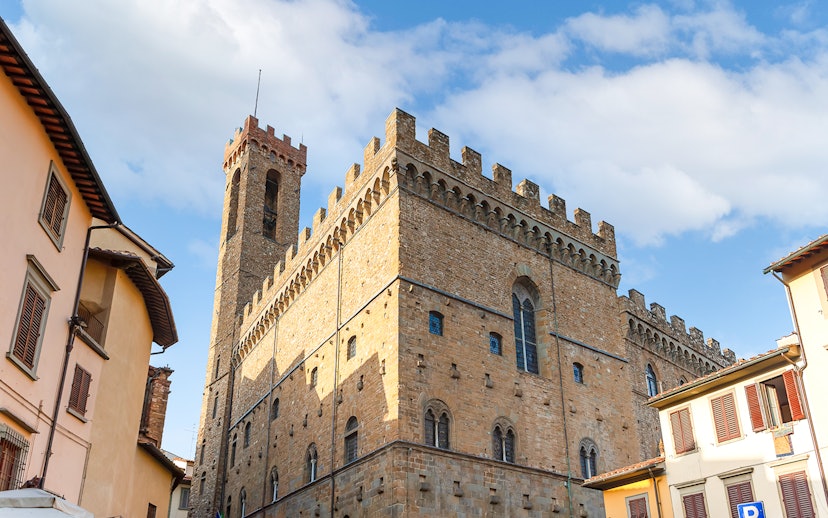
The Museo del Bargello is Florence’s great sculpture museum, best known for Donatello, Michelangelo, Cellini, and Giambologna in a compact medieval palace. The visit is easier than people expect in terms of crowds, but better planning still matters because the museum spreads its best works across multiple levels and smaller side rooms that are easy to rush past. The real difference between a quick stop and a rewarding visit is knowing where to slow down first. This guide covers timing, tickets, route, and what not to miss.
Quick overview: Museo del Bargello at a glance
If you want Florence’s Renaissance sculpture without the pressure and queues of the city’s bigger museums, start here.
- When to visit: Wednesday–Monday, 8:15am–1:50pm. 8:15am–10am is noticeably calmer than 11am–1pm, and the quieter early window makes it much easier to linger in the Donatello and Michelangelo rooms.
- Getting in: From €10 for standard entry. Headout currently offers Museo del Bargello Tickets. You can often buy on site without much trouble, but free-admission Sundays and spring weekends are the main times to book ahead.
- How long to allow: 1–2 hours for most visitors. It stretches toward the longer end if you spend time with the decorative arts rooms and the courtyard.
- What most people miss: The glazed Della Robbia terracottas, the arms and armor displays, and the courtyard itself all add context that the headline sculptures alone don’t.
- Is a guide worth it? A guide helps if you want sculpture context and artistic comparisons, but for a short visit with a clear shortlist, a self-guided route works well here.
Jump to what you need
🕒 Where and when to go
🗓️ How much time do you need?
🎟️ Which ticket is right for you?
🗺️ Getting around
♿ Facilities and accessibility
Where and when to go
How do you get to Museo del Bargello?
The museum sits in Florence’s historic center, a short walk from Piazza della Signoria and the Duomo, about 20 minutes on foot from Santa Maria Novella station.
Via del Proconsolo 4, 50122 Florence, Italy
- On foot: Piazza della Signoria → 5-minute walk → the route is flat and straightforward through the historic center.
- Bus: Nearest central stops around Via Martelli and Via del Proconsolo → 5–7-minute walk → easiest if you’re coming from Santa Maria Novella or farther neighborhoods.
- Taxi / rideshare: Drop-off near Piazza San Firenze or Via del Proconsolo → 2–4-minute walk → useful if you want to avoid cobblestones with luggage or strollers.
Which entrance should you use?
The Bargello is simpler than Florence’s blockbuster museums: there is one main entrance, and the bigger mistake is overthinking ticket strategy when queues are usually light.
- Main entrance: Located on Via del Proconsolo at the front of the palace. Expect 0–10 minutes during most mornings and 15–20 minutes on free-admission Sundays or busy spring weekends.
When is Museo del Bargello open?
- Wednesday–Monday: 8:15am–1:50pm
- Tuesday: Closed
- Last entry: Around 50 minutes before closing
- Free admission: First Sunday of each month, plus select national free-entry dates
When is it busiest? First Sundays, late mornings, and the April–September stretch are the busiest windows, when even this quieter museum feels more compressed in the main sculpture halls.
When should you actually go? Go at opening if you can — the early slot gives you the best chance to see Donatello’s and Michelangelo’s rooms before small-group tours and late-morning walk-ins build up.
Which Museo del Bargello ticket is best for you
| Ticket type | What's included | Best for | Price range |
|---|---|---|---|
Museo del Bargello Tickets | Entry ticket to the Museo del Bargello | A straightforward visit where you want guaranteed entry to the collection without adding a longer guided commitment to your day | €19.50 |
How do you get around Museo del Bargello?
Museum layout
The Bargello is a compact multi-level palace rather than a long linear museum, so it feels manageable, but smaller rooms and side collections are easy to skip if you don’t arrive with a route.
- Ground floor: Courtyard, major Donatello works, and some arms and armor displays → budget 30–40 minutes.
- First floor: Michelangelo hall, Donatello’s later works, and more bronze sculpture → budget 30–40 minutes.
- Second floor: Della Robbia glazed terracottas, decorative arts, ivories, and ceramics → budget 20–30 minutes.
Suggested route: Start with the courtyard, go straight to Donatello’s David, move up to Michelangelo’s room while your energy is highest, and leave time at the end for the Della Robbia and decorative arts rooms that most visitors rush past because they assume the museum ends with the big-name sculpture.
Maps and navigation tools
- Map: Pick up the floor plan at the entrance desk so you can mark the Donatello, Michelangelo, and Della Robbia rooms before you start.
- Signage: Room labels are clear enough for a self-guided visit, but the smaller decorative-arts galleries are easy to miss without a map.
- Audio guide / app: Free staff-led thematic talks on selected days are often more useful here than a device because they connect works across rooms and periods.
💡 Pro tip: Don’t leave the upper floors as an afterthought — that’s where many visitors start moving too quickly and miss the Della Robbia rooms entirely.
Where are the masterpieces inside Museo del Bargello?

Donatello’s *David*
Attribute — Artist: Donatello
This is the work most visitors come for, and it still feels startlingly modern in person. The figure’s relaxed stance, youthful body, and quiet confidence completely changed what sculpture could look like in Renaissance Florence. What many people miss is how intimate it feels compared with the giant heroic figures you see elsewhere in the city — you need to circle it slowly, not just stop for a front-on photo.
Where to find it: Ground floor, Sala del Camino
Michelangelo’s *Bacchus*
Attribute — Artist: Michelangelo
Michelangelo’s drunken god of wine is one of the most unusual statues in Florence because it feels unstable, playful, and slightly off-balance by design. It’s an early work, but you can already see the anatomical confidence that defines his later sculpture. Many visitors glance at the pose and move on too quickly; spend a minute with the twisting torso and the expression, which is what makes the piece memorable.
Where to find it: Ground floor, Michelangelo Hall
Donatello’s *Magdalene Penitent*
Attribute — Artist: Donatello
This painted wood sculpture hits differently from the bronze and marble around it. The figure is gaunt, stripped back, and emotionally raw, which makes it one of the most human works in the museum. Visitors often remember the bigger names and forget this piece, but it’s one of the clearest examples of Donatello’s range and willingness to reject idealized beauty.
Where to find it: First floor, Sala di Donatello
Della Robbia glazed terracottas
Attribute — Workshop: Della Robbia family
These luminous blue-and-white glazed reliefs are easy to underestimate if you came mainly for bronze and marble. Slow down here and you’ll see why the Bargello is so rewarding: the collection widens your idea of what Renaissance sculpture looked like, not just who made the most famous statues. Many visitors walk through too quickly because the room feels quieter and smaller than the blockbuster halls.
Where to find it: Upper galleries, Della Robbia rooms on the second floor
Giambologna’s *Mercury*
Attribute — Artist: Giambologna
This elegant bronze has the kind of movement that almost feels impossible in metal. The figure seems to rise upward rather than simply stand, which is exactly why it’s worth more than a passing glance. Visitors often remember Donatello and Michelangelo first, but this work shows how the collection extends beyond early Renaissance sculpture into a more theatrical, highly refined style.
Where to find it: Upper sculpture galleries, near the later Renaissance bronze displays
The courtyard and palace architecture
Attribute — Era: 13th-century civic palace
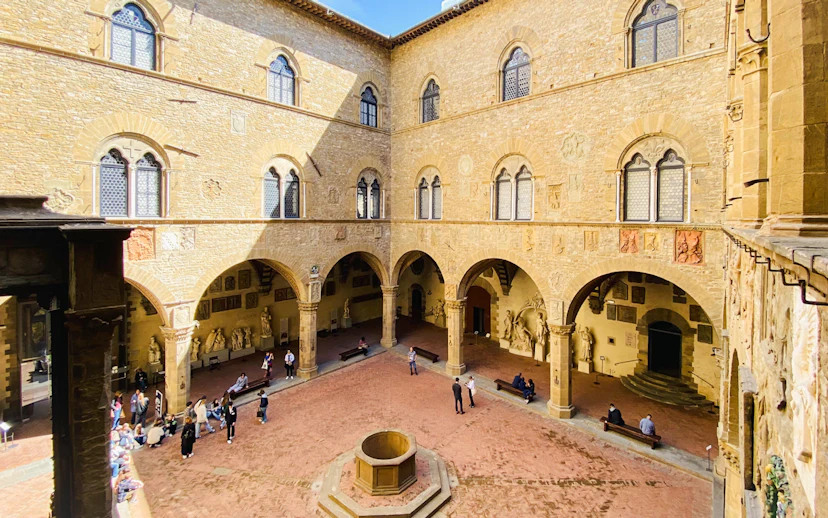
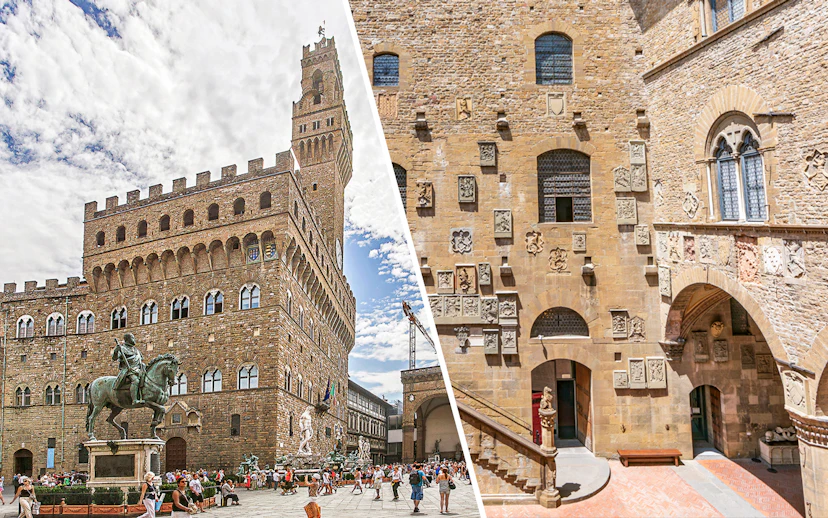
The courtyard is not just a break between galleries — it’s part of the visit. The coats of arms, arches, and stonework explain why the Bargello feels different from Florence’s more polished museum interiors, and the space gives the sculpture collection breathing room. Many visitors use it as a shortcut between rooms when it’s better treated as one of the museum’s most atmospheric stops.
Where to find it: Central courtyard, immediately after entry
Facilities and accessibility
- 🎟️ Ticket desk: Walk-in tickets and pass questions are handled at the entrance, which is useful because many visitors still decide on the spot here.
- 🪑 Seating / rest areas: The courtyard is the best place to pause, sit down, and reset before heading upstairs.
- 🗣️ Free thematic talks: Museum staff regularly run complimentary talks, which add real value if you want context without paying for a full guided tour.
- 🚻 Restrooms: Restrooms are available on site, so it’s worth using them before you settle into the upper-floor galleries.
- 🛗 Elevator: There is lift access to upper floors, though the palace is still a historic building with some physical limits in how fully step-free it feels.
- 📍 Nearby services: Because the museum is right in the historic center, cafés, pharmacies, and taxi pickup points are only a few minutes away once you exit.
- ♿ Mobility: The museum has some elevator access, but it is not fully wheelchair-accessible throughout, and parts of the historic layout still involve stairs and tighter transitions.
- 👁️ Visual impairments: Standard gallery labels are the main interpretation tool, so ask staff at the entrance for the clearest route and any current assistance options before you begin.
- 🧠 Cognitive and sensory needs: Early morning is the calmest time to visit, and the courtyard is the best low-stimulation space if the galleries start to feel visually dense.
- 👨👩👧 Families and strollers: The museum is compact enough for families, but the palace layout is less stroller-friendly than a modern museum and works better with a lighter, flexible route.
Museo del Bargello suits school-age children best, especially if they already have some curiosity about knights, armor, myths, or Michelangelo.
- 🕐 Time: With children, 60–90 minutes is usually the sweet spot, with the courtyard, David, Bacchus, and the armor displays giving the strongest payoff.
- 🏠 Facilities: The central courtyard helps break up the visit because it gives children a visual reset between sculpture rooms.
- 💡 Engagement: Frame the visit as a hunt for different materials — bronze, marble, wood, terracotta, and armor — and the museum becomes much easier for kids to follow.
- 🎒 Logistics: Bring a small bag, aim for opening time, and skip free-admission Sundays if you want more space to move.
- 📍 After your visit: Piazza della Signoria is only a few minutes away and gives children open space, statues, and enough room to decompress.
Rules and restrictions
What you need to know before you go
- Entry requirement: Standard entry is the normal way in, and if you’re using a reduced ticket you should carry the ID that proves eligibility.
- Bag policy: Travel light — the galleries are compact, and a small day bag is far easier to manage than luggage or a large backpack.
- Re-entry policy: Re-entry is not permitted on a standard visit, so once you leave, your museum visit is done for the day.
Not allowed
- 🚫 Food and drink: Eating and drinking are not for the galleries, so finish snacks and coffee before you go in.
- 🚬 Smoking / vaping: Smoking and vaping are not allowed inside the museum building.
- 🐾 Pets: Pets are not part of a normal museum visit, though service animals are generally accommodated.
- 🖐️ Touching exhibits: Sculpture, armor, and decorative objects must not be touched because close viewing is part of the experience, but physical contact risks damage.
Photography
Photography for personal use is generally fine, but keep it respectful and low-impact. The key limit is technique rather than room: flash is not the right choice around historic surfaces, and large tripods or bulky filming setups are not part of a standard visit. If a specific room or temporary display has tighter rules, follow the signage in that area rather than assuming the whole museum works the same way.
Good to know
- Free Sundays: First Sundays are free, but they’re also the one time this usually calm museum can feel crowded and compressed.
- Last entry: Don’t cut it too close — last entry is about 50 minutes before closing, which is not enough time for a satisfying visit.
Practical tips
- Booking and arrival: You usually don’t need to lock this museum in far ahead the way you would the Uffizi or Accademia, but free-admission Sundays and spring weekends are the exceptions; if you’re late, you’ll still lose your best quiet window even when entry is technically still possible.
- Pacing: Don’t spend all your attention on the first Donatello room and then speed through the rest — save at least 20–30 minutes for Michelangelo, the Della Robbia rooms, and the courtyard.
- Crowd management: The best slot here is the first hour after opening because the museum’s calm atmosphere is part of the value, and late-morning walk-ins flatten that advantage.
- What to bring or leave behind: Bring a small bag and a short must-see list; this is a museum where moving lightly helps because the route includes stairs, smaller rooms, and quick transitions between floors.
- Food and drink: Eat before or after your visit rather than planning around it — there’s better value outside, and the museum is short enough that a proper coffee or lunch stop works best once you’re back out in the center.
- What to slow down for: If you’ve already seen Florence’s famous painting museums, use Bargello differently: spend more time looking at material, texture, and sculptural detail rather than trying to ‘cover’ every room.
What else is worth visiting nearby?
Commonly paired: Uffizi Gallery
Distance: 400m — 5-minute walk
Why people combine them: It’s the clearest same-day art pairing in central Florence: Bargello gives you sculpture and a calmer pace, while the Uffizi delivers the big Renaissance painting canon.
Commonly paired: Florence Cathedral complex
Distance: 500m — 7-minute walk
Why people combine them: The Duomo works especially well after Bargello because you can move from close-up sculpture and decorative arts into Florence’s biggest architectural landmark without crossing the city.
Also nearby
Palazzo Vecchio
Distance: 350m — 5-minute walk
Worth knowing: This is the best nearby add-on if you want Florence’s civic history and grand rooms after the more focused museum atmosphere of the Bargello.
Santa Croce Basilica
Distance: 900m — 12-minute walk
Worth knowing: It’s a good second stop if you want more sculpture, tombs, and a major church interior without repeating the same museum format twice.
Eat, shop and stay near Museo del Bargello
- On-site: There’s no full café setup to plan around, so treat food here as an before-or-after decision rather than part of the museum visit.
- Better options nearby
- I Fratellini (6-minute walk, Via dei Cimatori 38R): Small Florentine sandwich counter, low-to-mid price range, and one of the fastest good-value options if you want to eat between major sights.
- All’Antico Vinaio (8-minute walk, Via dei Neri 65R): Famous stuffed schiacciata sandwiches, low-to-mid price range, and best if you want a substantial post-museum lunch.
- Caffè Gilli (9-minute walk, Via Roma 1R): Historic café, mid price range, and a better fit for coffee, pastry, or a slower break after a shorter museum visit.
- 💡 Pro tip: If you’re visiting at opening, plan coffee first and lunch after — the museum is short enough that stopping beforehand won’t throw off your day, and the late-morning restaurant rush outside is easier to time than trying to eat mid-visit.
- Museum bookshop: Art books, collection catalogs, and design-focused souvenirs near the exit make more sense here than generic Florence trinkets.
- Mercato del Porcellino: Leather goods, wallets, and classic Florence souvenirs in Piazza del Mercato Nuovo, about 7 minutes away on foot.
Yes — if your trip is short and you want to walk everywhere. The Bargello sits in the middle of Florence’s most useful sightseeing zone, so staying nearby cuts transit time and makes it easy to combine museums, churches, and evening walks. The trade-off is price: this part of the city is convenient and atmospheric, but rarely the cheapest base.
- Price point: The area skews mid-range to high, with the best value usually coming from small guesthouses rather than large hotel chains.
- Best for: Travelers on a short Florence stay who want to reach the Duomo, Uffizi, Palazzo Vecchio, and the Bargello on foot.
- Consider instead: Santa Maria Novella works better for train convenience and slightly broader hotel choice, while Oltrarno suits longer stays if you want a quieter neighborhood feel with easier evening dining.
Frequently asked questions about visiting Museo del Bargello
Most visits take 1–2 hours. That’s enough for the Donatello rooms, Michelangelo’s Bacchus, the courtyard, and the upper-floor decorative arts. If you like reading labels closely or want time with the Della Robbia collection, you’ll likely spend closer to 2 hours.
No, you usually don’t need to book far in advance for Museo del Bargello. This is one of Florence’s easier major museums to visit as a walk-in, especially on regular weekdays. The main exceptions are free-admission Sundays and busy spring or summer mornings, when booking ahead is more useful.
Arriving 10–15 minutes early is enough for most visits. The Bargello does not usually have the long security and queue buildup you get at Florence’s highest-demand museums, but showing up a little early still helps you start while the main sculpture rooms are quietest.
Yes, but a small bag is the practical choice. The museum sits inside a historic palace with tighter rooms and more stairs than a modern gallery, so oversized luggage or bulky backpacks make the visit less comfortable even when entry itself is straightforward.
Yes, personal-use photography is generally allowed, but flash and large tripods are the wrong fit for the space. If a temporary exhibition or specific room has stricter rules, follow the signs in that area rather than assuming the same rule applies museum-wide.
Yes, group visits are possible, and the museum works especially well for small groups. The collection is compact enough to stay manageable, but some rooms are intimate, so large groups move better if they keep a clear pace and don’t block the central viewing points around key sculptures.
Yes, especially for children who are old enough to engage with stories, myths, armor, and sculpture. It is not a hands-on museum, but it is short enough for a family visit to feel achievable, and the courtyard gives you a useful pause point between galleries.
Partly, but not fully. Some elevator access exists, which helps with the multi-level layout, but the museum is housed in a historic palace and parts of the route remain less than fully step-free. If accessibility is a deciding factor, ask staff about the clearest route when you arrive.
Food is much easier to handle near the museum than inside it. The Bargello is in the middle of Florence’s historic center, so cafés, sandwich shops, and sit-down restaurants are all within a 5–10 minute walk once you exit.
The best time to visit is right at opening. The museum’s biggest strength is its calmer atmosphere, and the first hour is when you can actually feel that advantage in the Donatello and Michelangelo rooms before late-morning foot traffic builds.
Yes, it’s absolutely worth it if you care about sculpture or want a less crowded Renaissance museum. The Uffizi gives you painting, and the Accademia gives you Michelangelo’s David, but the Bargello gives you a deeper, broader look at Renaissance sculpture in a quieter setting.