Tickets Florence

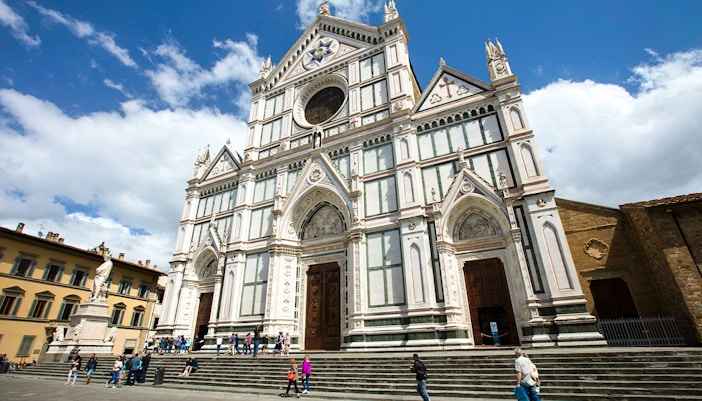
Plan your visit to Basilica of Santa Croce

Santa Croce is far more than a single church visit: your ticket covers the basilica, cloisters, Pazzi Chapel, refectory museum spaces, and a dense concentration of tombs, frescoes, and Renaissance art. The full complex spans about 12,000 m² and holds nearly 4,000 works, so even though the official estimate is around 50 minutes, most visitors need 1 to 2 hours to do it justice. The difference between a rushed visit and a rewarding one usually comes down to knowing which spaces to prioritise beyond the nave.

Essential info at a glance

Hours: Mon–Sat, 9:30am–5:30pm; Sun and selected religious holidays, 12:30pm–5:45pm. Last entry: 5pm. Closed on Christmas Day; hours can change on special dates.

Book ahead. Entry runs on timed quotas only. Santa Croce is usually easier than Florence’s blockbuster museums, but pre-booking gives you a fixed slot and avoids last-minute uncertainty.

Arrive 10–15 min early for your slot. If you show up more than 15 minutes late, staff may move you only if the next slot has space.

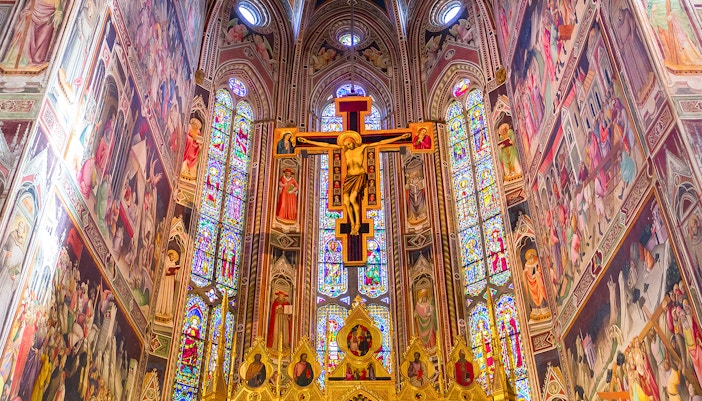
Visit takes ~50 minutes to 2 hours. The official minimum for the full complex is about 50 minutes, but it is worth staying longer for the Pazzi Chapel, Cimabue’s Crucifix, and the refectory museum spaces, not just the main nave and tombs.

Travel light. There is a left-luggage facility in Largo Bargellini, before the basilica entrance. Historic floors and steps can also slow you down in some areas.

Photos OK, no flash or tripod. Photography is allowed for private use, except during religious services. Phones should stay on silent.

No food or drink inside. Eating and drinking are not permitted anywhere in the complex.

Best times: Go right at opening on weekdays or in the late afternoon for a calmer visit. Sundays have shorter public visiting windows, so they can feel more compressed. This timing guidance is an inference based on the official hours and timed-entry setup.

Tickets: Basic entry €10 (+ €1 online fee) | audio guide +€4 online / +€6 onsite | guided tours from €20 | combo tickets available with Uffizi Gallery, hop-on-hop-off bus tours.


Everything you need to know for your Basilica of Santa Croce visit

Where and when to go?

Location

Location
Address: Piazza di Santa Croce 16, Florence

By train: Florence Santa Maria Novella railway station is about a 20-minute walk from the basilica.
By bus: Local buses C3, C4, 23, and 31 stop a few minutes from Santa Croce, depending on your route through the historic center.
By taxi: Taxis are easy to find in central Florence and usually cost around €8–€15 for short rides within the historic center, depending on traffic and time of day.

Entrance

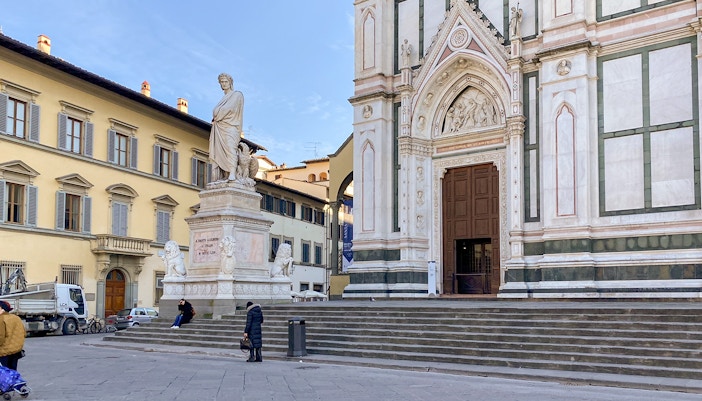
The main visitor entrance for Basilica di Santa Croce is on the north side of the complex in Largo Bargellini, not through the big front façade on Piazza Santa Croce. This is where regular ticketed visitors enter, and it is also the reference point for the ticket office and left-luggage area. Visitors coming to pray are directed to a side door on Largo Bargellini during normal visiting hours.

For accessibility, Santa Croce has a ramp on the north side in Largo Bargellini for visitors with reduced mobility and wheelchair users. There is also a raised platform at the cloister exit onto Piazza Santa Croce.

Timings

Monday–Saturday: 9:30am–5:30pm
Sunday & selected religious holidays: 12:30pm–5:45pm
Closed: Christmas Day
Last entry: 5pm

Best time to visit: Early morning on weekdays, right at opening, is usually the quietest window and the easiest time to enjoy the nave and tombs without too much foot traffic. Crowds tend to build from late morning into mid-afternoon, especially in peak Florence travel months.

Late afternoon visits are often calmer and easier to navigate, especially if you want to spend more time in the cloisters, Pazzi Chapel, and museum spaces after the main church interior.

Explore Basilica Santa Croce hours in depth

Navigating Basilica of Santa Croce

The Basilica of Santa Croce is not a one-room church stop. It is a monumental complex made up of the basilica, chapels, cloister areas, the Pazzi Chapel, and refectory museum spaces.

Basilica layout

Main areas: The complex is organized around the basilica interior, the cloisters, the Pazzi Chapel, and the refectory/museum spaces.

  • Basilica interior: This is where you begin with the nave, tombs, and side chapels, including the site’s best-known memorials and artworks.
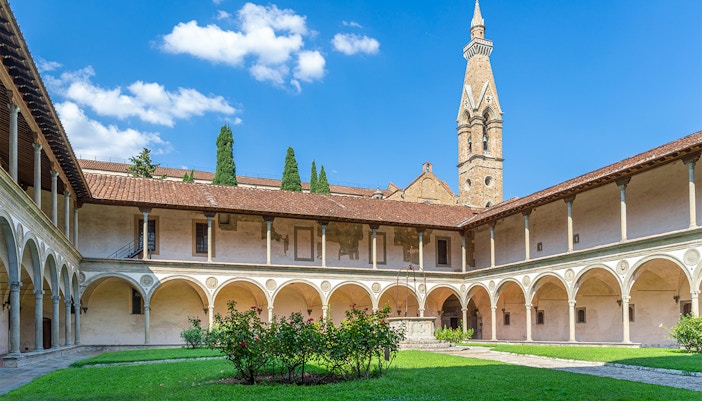
  • Cloister and chapel zone: Beyond the church interior, the route opens into the cloister side of the complex, including the Pazzi Chapel in the first cloister, one of the site’s most important Renaissance spaces.
  • Museum spaces: The wider complex also includes the refectory and related monument rooms, which many visitors miss if they treat Santa Croce as only a church visit.

Visitor flow

Start at the north-side entrance in Largo Bargellini, then move through the main basilica nave and tombs first. After that, continue into the chapel and cloister areas, then head to the Pazzi Chapel, before finishing in the refectory and museum spaces. That sequence works well because it starts with the busiest, most famous part of the visit and then moves into the quieter sections without making you feel like you are backtracking.

Tourist tools

Official app: Santa Croce offers an official app to help visitors understand the site and its treasures in more depth.

Audio guide: An audio guide is available for a fee on site and is one of the easiest ways to add context without needing to stop constantly and read signage.

Guided tours: Official guided tours are also available and can include access to areas that are not always open in a standard self-guided visit.

Explore Santa Croce with a guide

Santa Croce looks like a single church visit, but the experience unfolds through the nave, chapels, cloisters, Pazzi Chapel, and museum spaces. A guided tour follows this route in a clear, logical order, so you see the complex properly instead of in fragments.

Basilica of Santa Croce: Unmissable highlights

Main nave

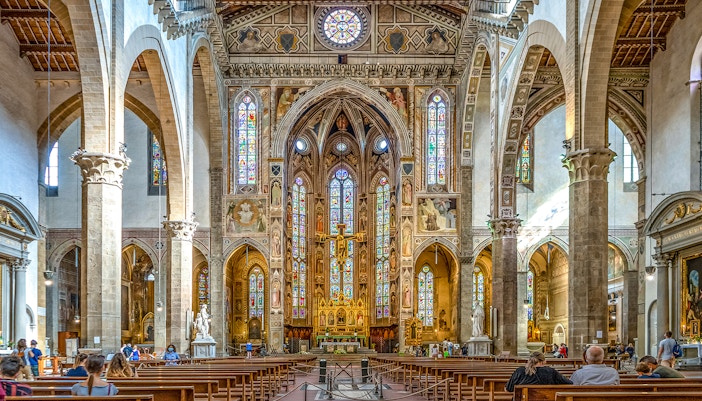
The nave is the emotional center of Santa Croce, with its broad Gothic interior and rows of major funerary monuments.

Michelangelo's tomb

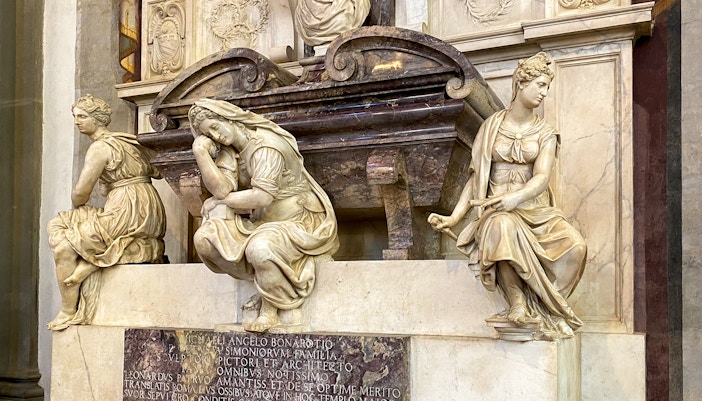
One of the most visited memorials in the basilica, and one of the strongest reasons many travelers come here in the first place.

Galileo's tomb

A major stop for visitors interested in science, Florence history, and Santa Croce’s role as a pantheon of great Italians.

Pazzi chapel

A quieter, more balanced Renaissance space that contrasts beautifully with the Gothic church interior.

Cloisters

These are worth your time because they slow the pace of the visit and help connect the church to the rest of the monumental complex.

Which Basilica of Santa Croce ticket is best for you

Ticket typeWhat's includedBest forPrice from

Skip-the-line tickets

Priority entry

Lowest-cost self-guided visit

From €11

Guided tours

Expert commentary

Keener insights into chapels, tombs, and history

From €20

Combo with Uffizi

Timed entry to Uffizi; fast-track access to the basilica

Comprehensive cultural visit

From €33

Hop-on-hop-off bus tours

24/48/72-hour unlimited access; Multi-stop sightseeing day

Quick, peripheral sightseeing with max coverage

From €32

Facilities and accessibility

Restroom sign with male, female, and wheelchair symbols on a pole.

📶 Wi-Fi: Available on site for quick lookups and digital visitor tools
🚻 Restrooms: On-site facilities make a longer visit more comfortable.
🎒 Left luggage: Useful if you want to explore without bulky bags.
🛍️ Bookshop: Pick up guidebooks, souvenirs, and visit-related items.
🧃 Drink machines: Handy for a quick refreshment before or after your visit.
🎧 Audio guides: Add helpful context as you move through the complex. Must be purchased on-site at a fee if required.

Wheelchair access sign indicating barrier-free entry.
  • Ramp location: The main step-free ramp is on the north side of the basilica in Largo Bargellini. This is the key accessible entry for wheelchair users and visitors with reduced mobility.
  • Raised platform location: There is also a raised platform at the cloister exit onto Piazza Santa Croce. This supports access between the basilica/cloister side of the complex.
  • Accessible parts: The nave and aisles of the basilica are easy to move through for wheelchair users.
  • How to reach the Pazzi Chapel and Refectory accessibly: To visit the Refectory and the Pazzi Chapel, the official route is to leave the basilica via the Largo Bargellini ramp and re-enter through the Arnolfo di Cambio cloister on Piazza Santa Croce.
  • Not wheelchair accessible: The chapels in the transept, the Novitiate Corridor, and the Sacristy with Cimabue’s Crucifix are on a raised level reached by a few steps and cannot be negotiated with a wheelchair.
Family enjoying a ride at an amusement park.

Santa Croce works well for families because the visit is compact enough to do in 60–90 minutes if needed, but broad enough to stretch longer with older children. The tombs, open cloister areas, and big-name historical figures give the visit an easier hook than a more text-heavy museum.

Rules and Restrictions

Important information

  • Entry: Visitors can enter at any time during the opening hours. All visitors pass through security screening at the main entrance in Largo Bargellini.
  • Cloakroom: Large bags, backpacks over 40×35×15 cm, umbrellas, and tripods must be stored in the free cloakroom before entering.
  • Re-entry: Once you exit, re-entry is not allowed.

Not allowed

  • Food & Drink: No eating or drinking inside the complex; food can only be consumed in the entrance cafeteria area.
  • Smoking & Vaping: Smoking and vaping are prohibited inside the basilica and the cloisters.
  • Pets: No pets allowed, except for certified service animals with documentation.
  • Behavior: Running, touching artworks, or leaning on protective barriers is strictly prohibited.

Good to know

  • Photography: Photography is allowed for personal use, but flash and selfie sticks are not permitted. No photography is permitted during a religious service. Video recording is allowed in public halls only.
  • Dress code: Bare shoulders or shorts are not allowed; respectful dress is expected since it is a religious site.

Practical tips

  • Duration: Santa Croce is small enough to explore in 1–2 hours. Many visitors leave after the main church, but continuing to the Pazzi Chapel and refectory museum areas adds important context to the historical and artistic experience.
  • Take a break: After visiting the nave, take a moment to sit on benches in the cloisters. This gives you a chance to relax while appreciating the peaceful space, especially after exploring the tombs and major monuments.
  • Don’t miss the Pazzi Chapel: While the main nave and tombs are the highlight for many, the Pazzi Chapel is a masterpiece of Renaissance architecture. Make sure to head towards the cloisters after the nave to fully appreciate its historical significance.
  • Explore the refectory museum spaces: Many visitors miss the refectory and museum spaces that showcase not only art but also the monastery’s history. Allocate time to see the museum's exhibits, which offer insight into the site’s past and the religious figures interred here.

Must-visit landmarks near the Basilica of Santa Croce

Duomo Florence

Distance: ~500 m from Basilica Santa Croce
Travel time: 5–7 min walk
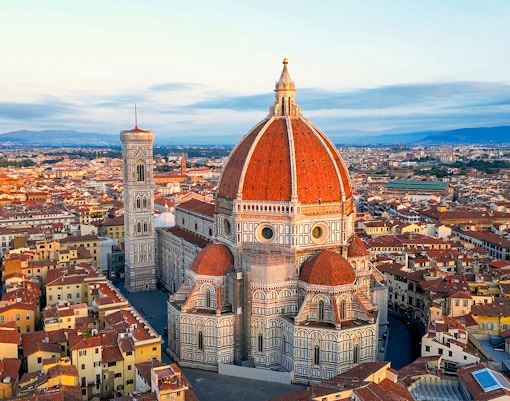
Why visit: Florence’s iconic cathedral complex, featuring Brunelleschi’s Dome and stunning artwork. Many visitors explore both in the same morning.

Visit Domo Florence

Uffizi Gallery

Distance: ~1 km from Basilica Santa Croce
Travel time: 12–15 min walk
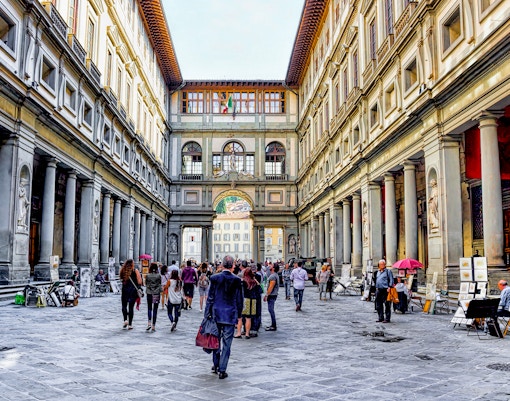
Why visit: Home to the world’s finest Renaissance art, including works by Botticelli and Leonardo da Vinci. After Santa Croce, the Uffizi offers a deeper dive into the period’s masterpieces, making it a natural next stop.

Book Uffizi Gallery tickets

Accademia Gallery

Distance: ~1 km from Basilica Santa Croce
Travel time: 12 min walk
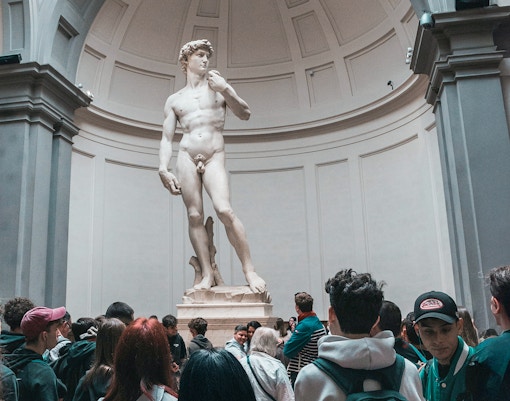
Why visit: Famous for Michelangelo’s David, the Accademia is one of Florence’s most iconic museums. It’s easy to pair with your visit to Santa Croce due to its proximity, making it ideal for art lovers keen to explore Florence’s Renaissance masterpieces.

See David at the Accademia

Palazzo Vecchio

Distance: ~1 km from Basilica Santa Croce
Travel time: 12 min walk
Why visit: Florence’s historic town hall, Palazzo Vecchio, offers grand interiors and a climbable tower. Situated in Piazza della Signoria, it’s conveniently located for visitors looking to add more iconic landmarks to their Florence itinerary.

Add Palazzo Vecchio to your Florence itinerary

Eat, shop & stay near Basilica of Santa Croce

Takeaway coffee being handed over at Café Kitsuné Palais Royal.

No full restaurant on site. For sit‑down coffee & snacks within easy reach:

  • Caffè Mario (Piazza di Santa Croce 2R, 1‑min walk): Classic Italian cafe with great espresso, pastries, panini, and outdoor seating with basilica views — perfect for a break after exploring the church.
  • Cafe Dolce Amaro (Borgo la Croce 45R, ~4‑min walk): Cozy neighborhood spot with excellent coffee and light bites; relaxed vibes away from the main square.
  • FLUID - Specialty Coffee & Sharing (Borgo la Croce 59R, ~4‑min walk): Highly regarded specialty coffee with carefully brewed espresso and filter options — a local favorite.
  • Coffee Mantra (Borgo La Croce 71R, ~5‑min walk): Stylish coffee shop with excellent brews, pastries, and light snacks — ideal for coffee aficionados.
  • Book Opera (Via Ghibellina 44R, ~3‑min walk): Great coffee and pastries right near Santa Croce; high reviews for quality and service.
  • Le Vespe Cafè (Via Ghibellina 76R, ~4‑min walk): Brunch‑friendly cafe with American‑style and Italian options, rated very highly for atmosphere and food.
Couple shopping at La Vallee Village, Paris, holding bags and pointing at a store window.

Main Gift Shop (Near Exit)

Books on Michelangelo, Galileo, Machiavelli, postcards, magnets, and replicas of famous tombs and monuments. Signature items include art prints, plaster casts, and jewelry inspired by the basilica’s art and history.

San Lorenzo Market (15-minute walk)

Famous for its leather goods, including jackets, bags, belts, and accessories, the San Lorenzo Market is a must-visit for souvenirs and authentic Florentine items. You’ll also find a variety of local food products and handmade crafts.

Via dei Calzaiuoli (10-minute walk)

This bustling shopping street runs from Piazza del Duomo to Piazza della Signoria and is home to a range of stores selling high-end fashion, local jewelry, and artisanal items. Perfect for window shopping or picking up more elegant souvenirs.

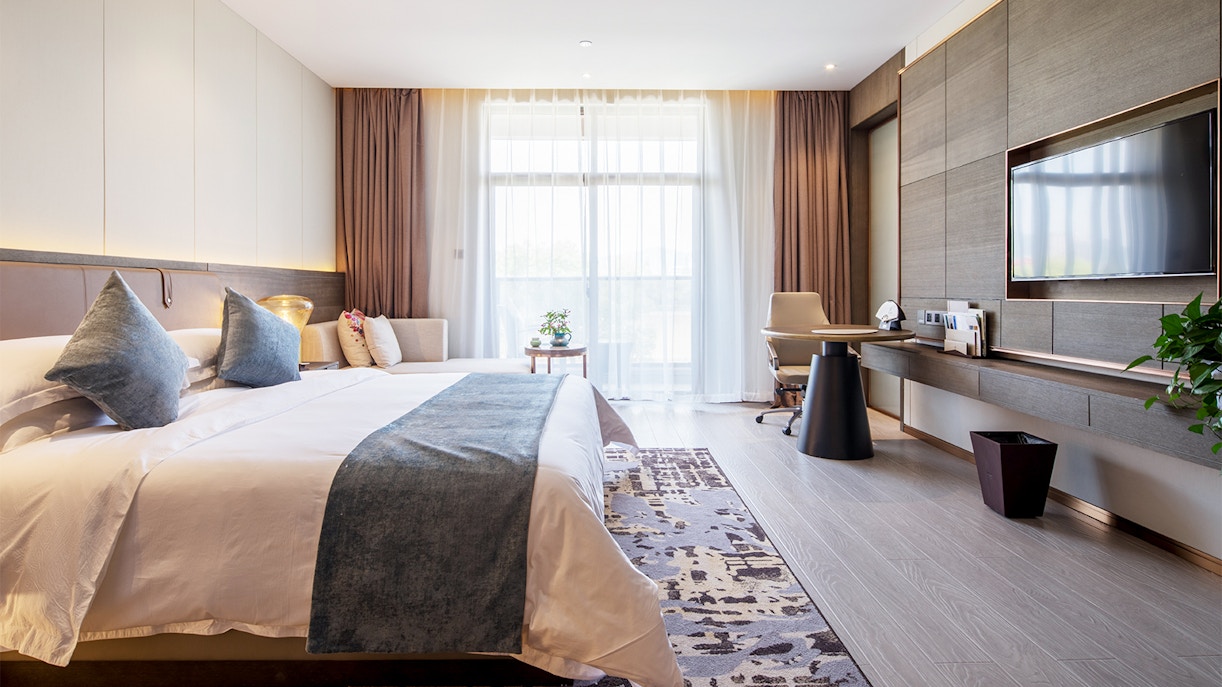
Luxury hotel room with king-size bed, modern decor, and large window.

The area around Basilica Santa Croce is centrally located in Florence’s historic heart, offering a perfect blend of culture and convenience. It's walkable to many major attractions, including the Duomo (10-15 mins) and Ponte Vecchio (15 mins), making it a great base for 1-3 night stays. The neighborhood is quieter than the bustling city center, with a local vibe, cafes, and plenty of charming shops. While still a lively area, it’s ideal for those who want a more relaxed atmosphere with easy access to major sights.

Luxury: Plaza Hotel Lucchesi (5-min walk) – Elegant boutique hotel with one of the best rooftop bars in the city. Google Maps
Mid-range: Hotel Santa Croce (5-min walk) – Cozy, comfortable rooms with a classic Florentine atmosphere. Google Maps
Budget: The "YellowSquare" Florence (5-min walk) – Affordable, modern dorms and private rooms, great for budget travelers. Google Maps
Airbnb Alternative: Stylish apartments near Santa Croce (3-7 min walk) – Fully equipped for families, perfect for longer stays.

Tip: For a quieter experience, Santa Croce offers more space and a local charm compared to the bustling center. Families and those looking for a relaxed atmosphere will enjoy staying closer to Santa Croce, while art lovers can easily access the main attractions by foot.

Frequently asked questions about visiting Basilica of Santa Croce

About 50 minutes is the official minimum for the full site, but most visitors spend 1 to 2 hours if they use the audio guide or stop properly in the chapels and museum areas.

More reads