History of the Vasari Corridor | Florence’s Hidden Passage

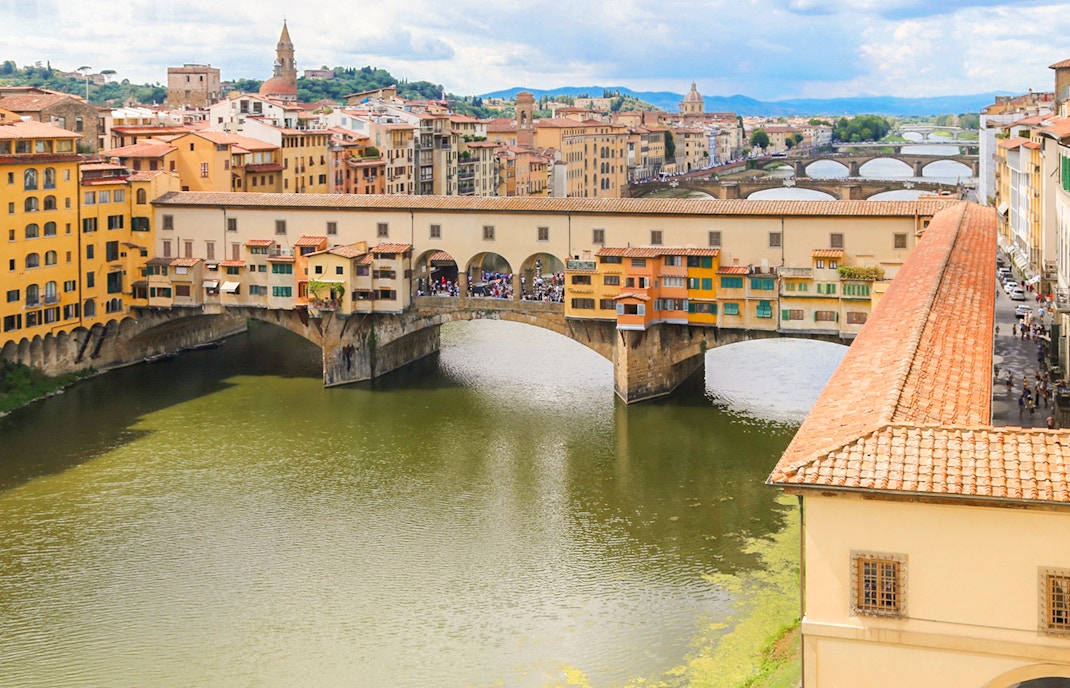
The Vasari Corridor is a historic and architectural marvel that connects two of Florence's most famous landmarks: the Uffizi Gallery and the Palazzo Pitti. Built in the 16th century, this elevated passageway is a testament to the power and influence of the Medici family, who ruled Florence during the Renaissance. To truly understand the significance of the Vasari Corridor, it is essential to explore the Medici family’s legacy, their influence on Florence’s art and architecture, and the fascinating story behind the corridor's creation.

Learn more about the Vasari Corridor

A brief timeline

  • 1565: Grand Duke Cosimo I de' Medici commissions architect Giorgio Vasari to construct the Vasari Corridor, connecting the Uffizi Gallery to the Palazzo Pitti and facilitating secure movement for the Medici family.
  • 1993: A car bomb detonated by the Sicilian Mafia damages the corridor, prompting significant restoration efforts.
  • 2016: The corridor closes for safety reasons, initiating a comprehensive restoration project.
  • 2024: After extensive restoration, the Vasari Corridor reopens to the public, offering a unique historical experience.

Vasari Corridor’s history in detail

Commissioned by Cosimo I de' Medici

Year: 1565

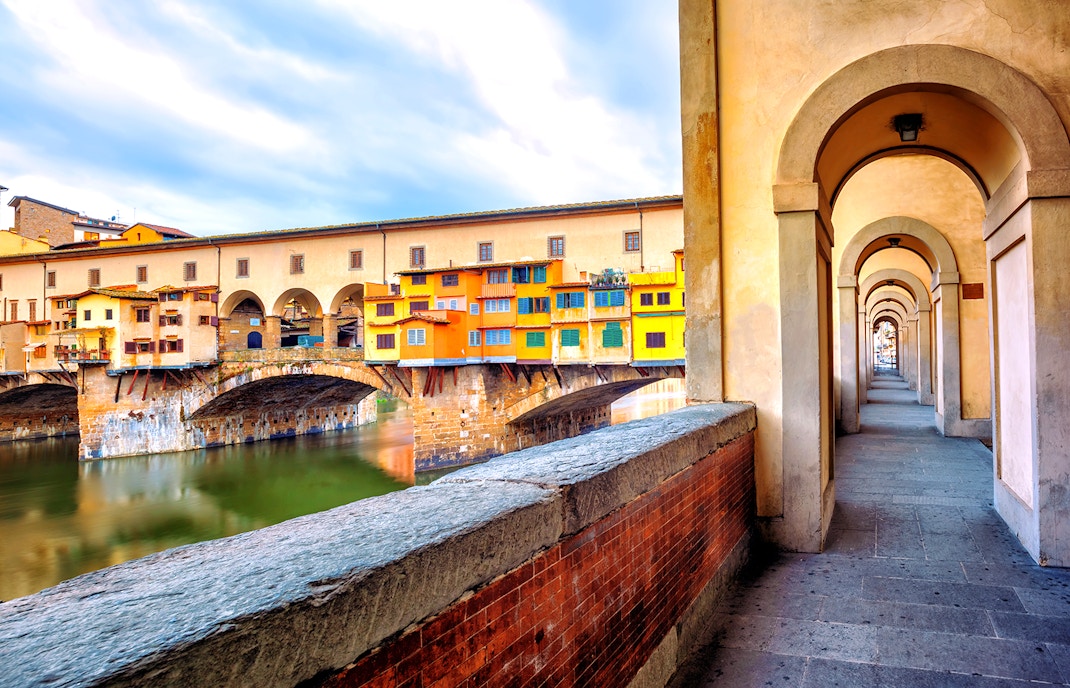
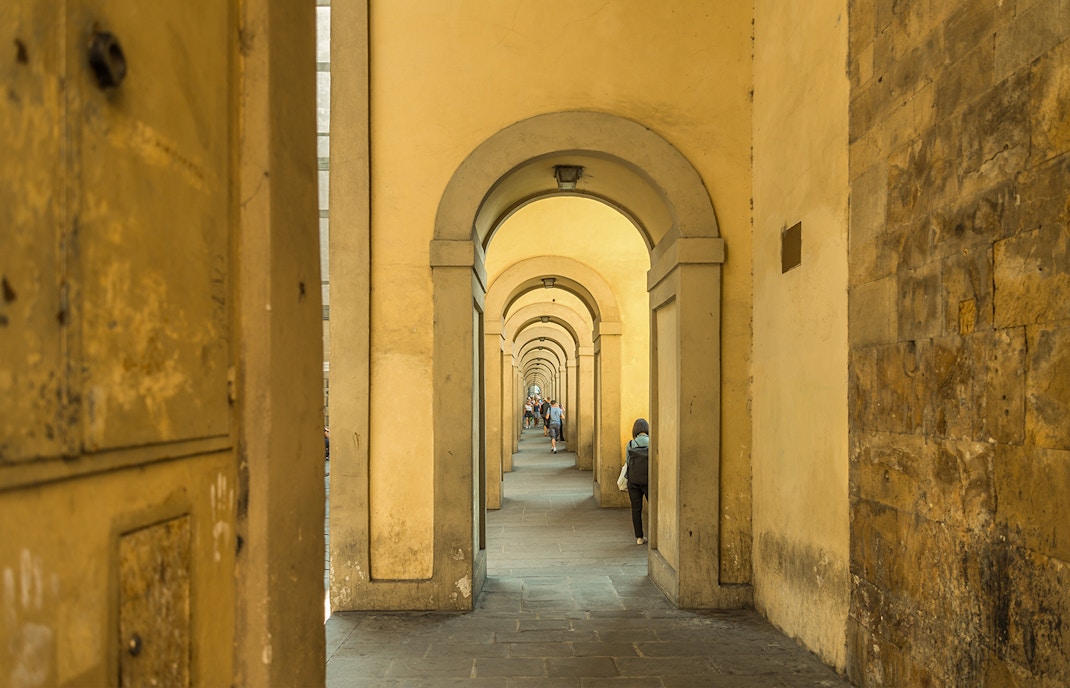
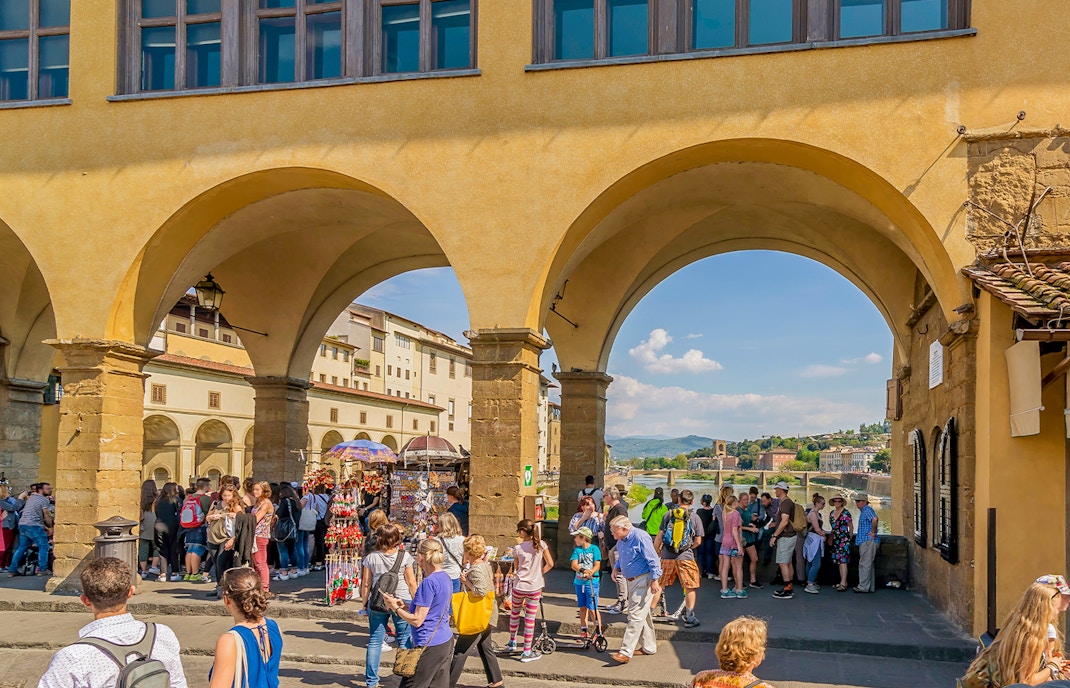
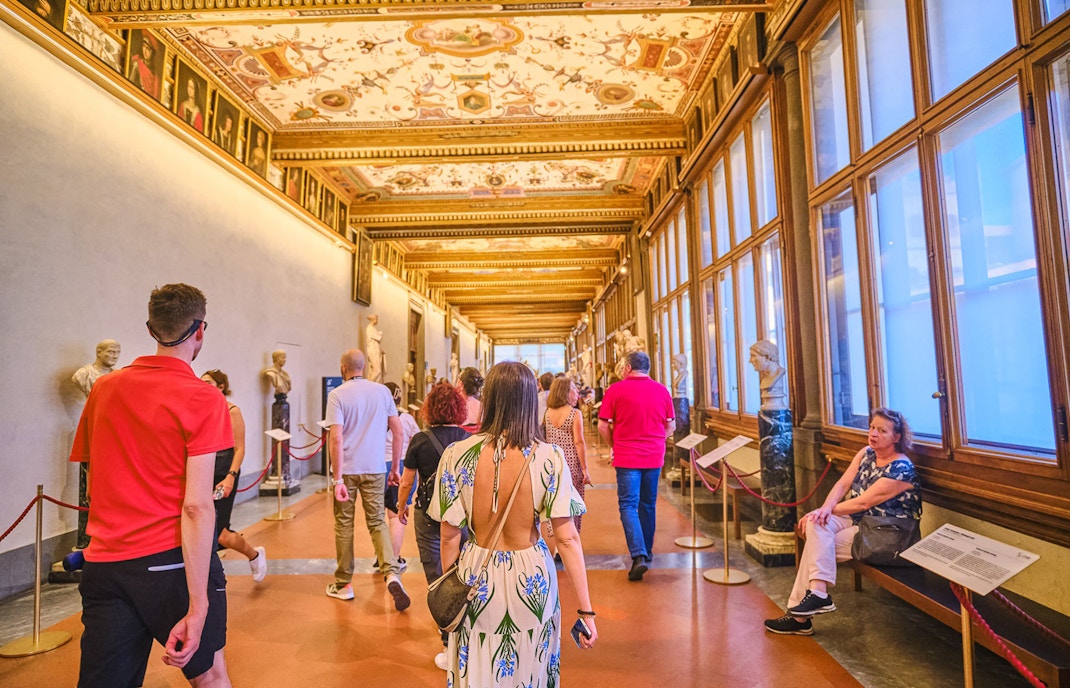
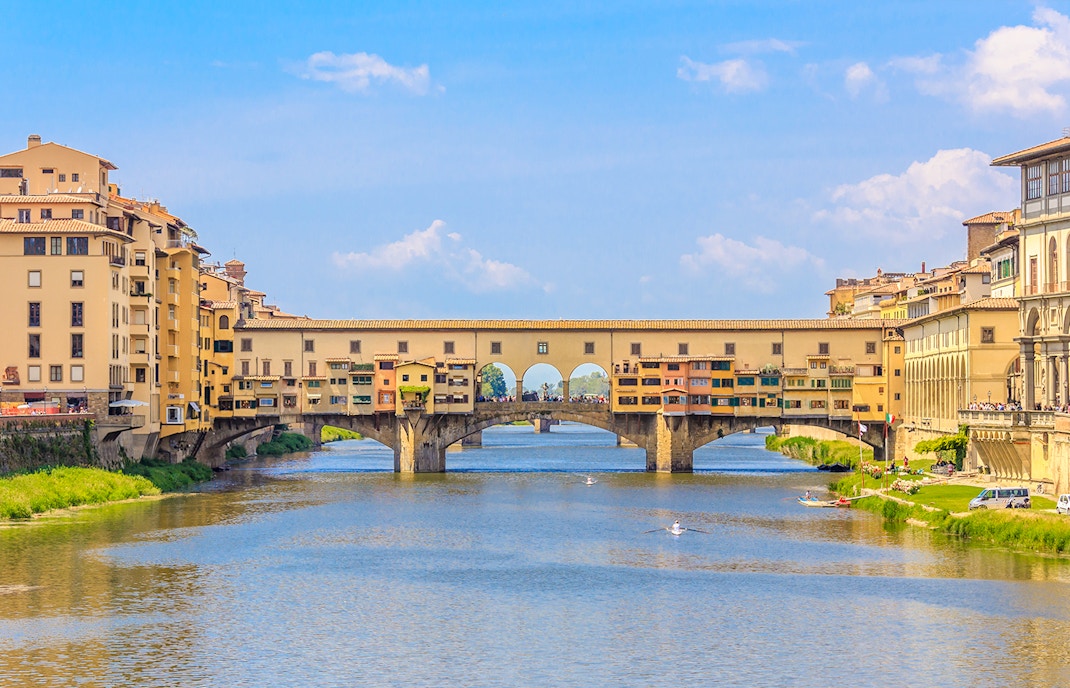
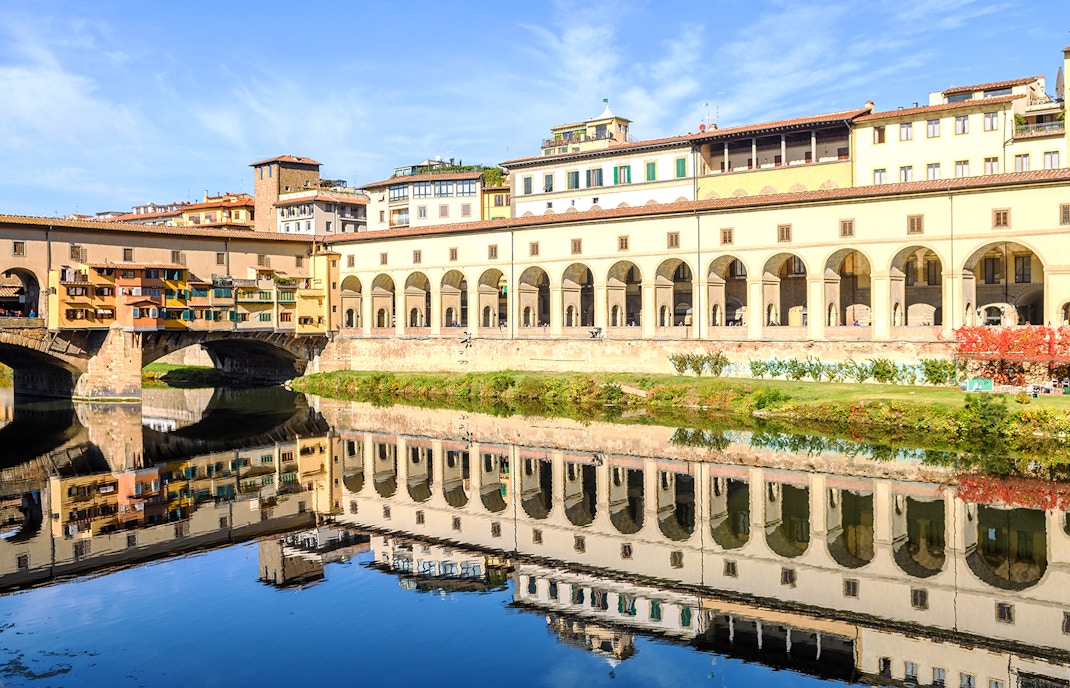
The Vasari Corridor was created as a private passageway for the Medici family, allowing them to travel from the Uffizi Gallery, where they conducted state business, to their residence at the Palazzo Pitti. Designed by Giorgio Vasari, the corridor was constructed to be a hidden and secure route. The walkway extends over the Ponte Vecchio and offers stunning views of Florence, including its iconic landmarks like Piazza della Signoria and the Palazzo Vecchio. A distinctive feature was its arrangement through the Ponte Vecchio, where the Medici altered the bridge's shops to allow for the passageway.
Creation of the self-portrait collection

Year: 1664

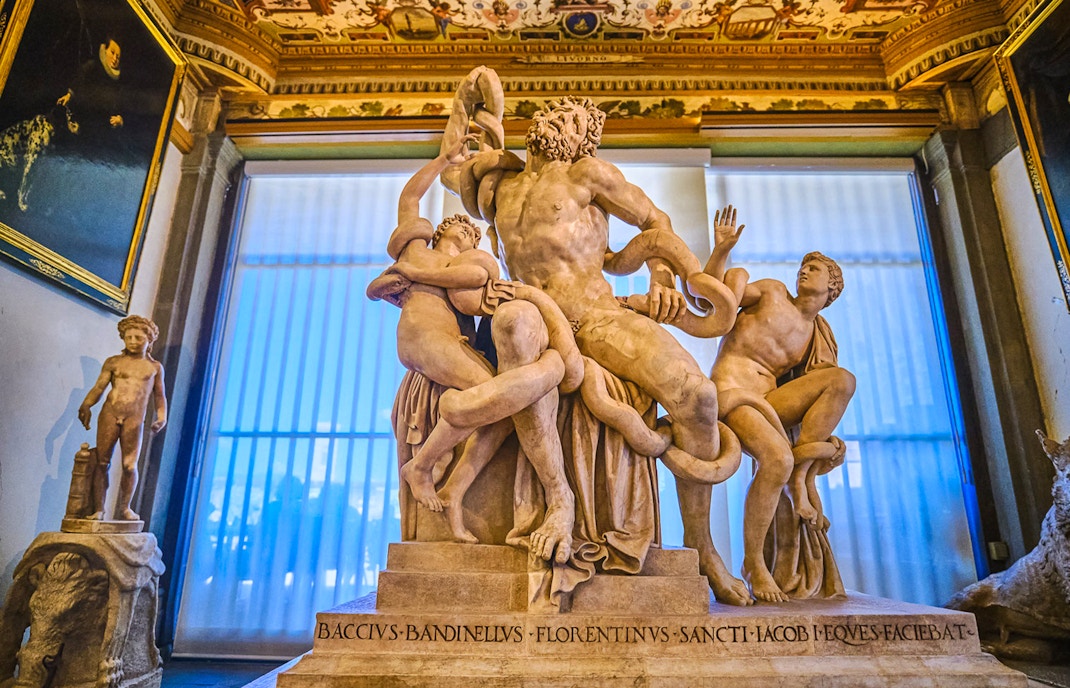
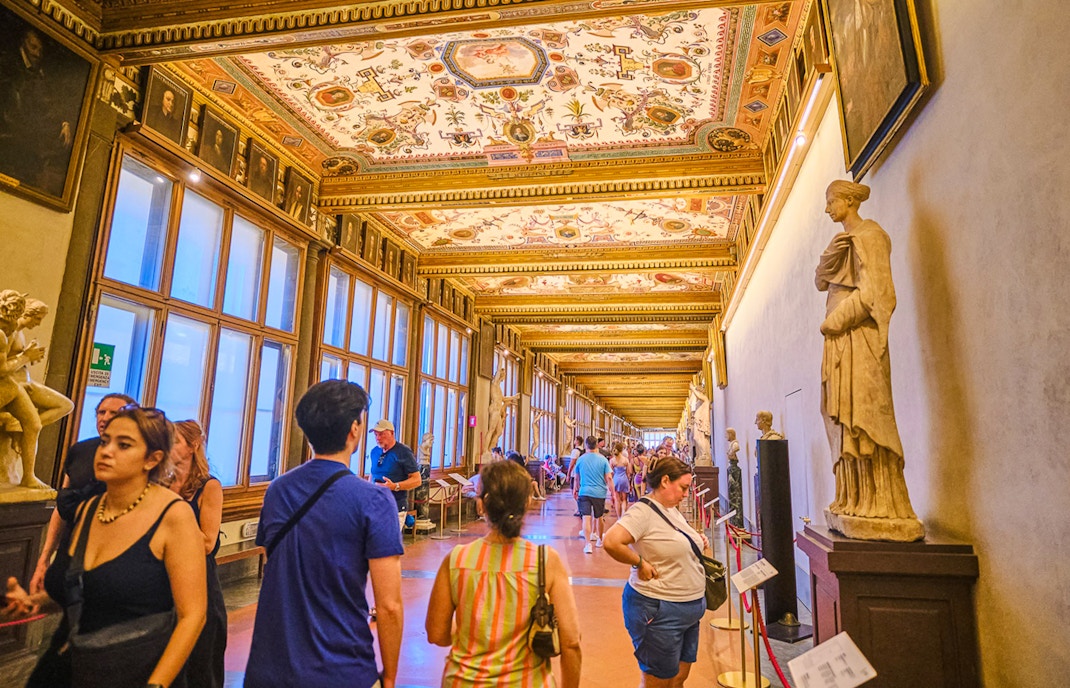
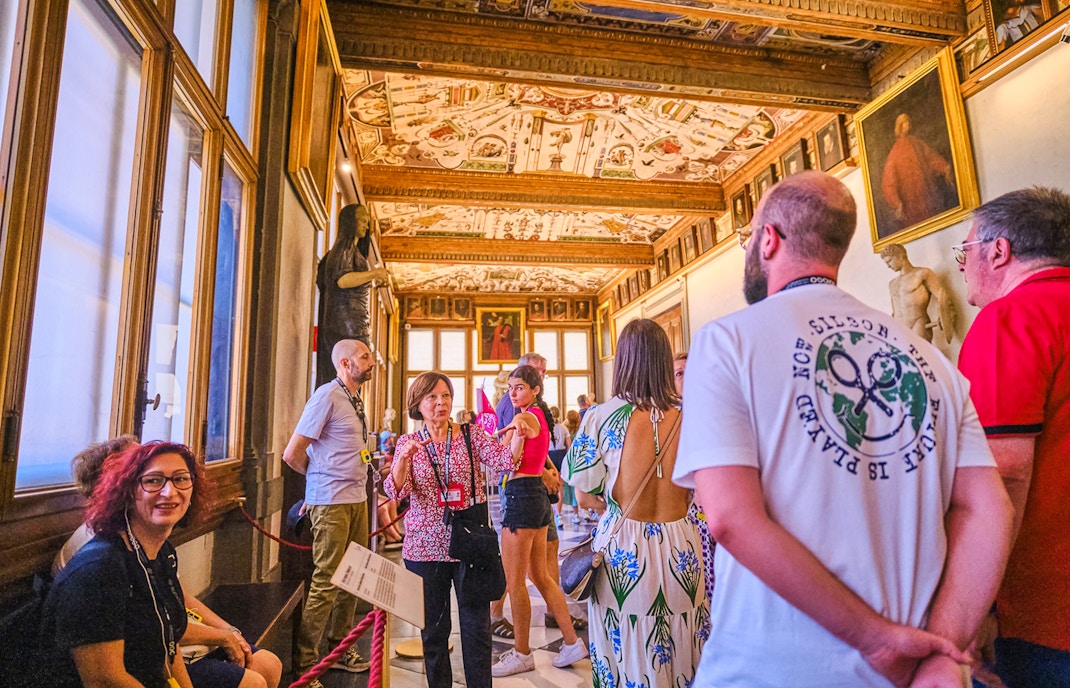
Cardinal Leopoldo de’ Medici, a prominent member of the Medici family, began the installation of self-portraits in the Vasari Corridor with the aim of creating one of the largest and most significant collections of its kind in the world. This collection grew over time, with more than 200 self-portraits.

The end of the Medici family

Year: 1737

The Medici family’s rule in Florence ended in 1737, with the death of Anna Maria Luisa de' Medici, the last member of the family. However, the family’s legacy lived on through their art and the collection of treasures they bequeathed to the city, ensuring that their cultural and artistic influence remained. The Vasari Corridor continued to function as a private passageway but gradually began to attract more attention from the public as Florence’s role as a cultural center grew.

Hitler’s visit and the corridor’s modifications

Year: 1938

During Adolf Hitler's visit to Italy, the Vasari Corridor was altered for his convenience. It is believed that some of the central windows in the Vasari Corridor were specially enlarged to offer Hitler an impressive view of the city, reflecting his connection to Mussolini's regime.

Additionally, many paintings were moved to the Uffizi for protection from bombings.

Night of the Bridges

Year: 1944

During the 'Night of the Bridges' on August 3-4, retreating Nazi forces blew up all Florence's bridges to hinder the advancing Allied troops preparing to liberate the city. Hitler, admiring the view and aware of the artwork stored in the Vasari Corridor, ordered that the Ponte Vecchio be spared by retreating troops. It remains the only bridge in Florence untouched by the war.

Bombing and damage to the corridor

Year: 1993

In 1993, the Vasari Corridor became a casualty of the political turbulence of the time when it was damaged during a bombing aimed at the Uffizi Gallery. The bombing was carried out by the Mafia, with the intention of striking at the cultural heart of Florence. The explosion caused significant damage to the corridor and surrounding buildings, but thanks to careful restoration work, much of the corridor was preserved. During this restoration, experts worked to maintain the corridor’s historical integrity while repairing the damages caused by the bombing.

Closed to the public

Year: 2016

The Vasari Corridor was temporarily closed to the public for safety reasons and extensive restoration work. The closure was necessary to preserve the corridor’s architectural integrity, which had been affected by time, environmental factors, and previous damage. The restoration focused on ensuring the safety of both the structure and the valuable art collection housed within, including its frescoes and ceilings.

Reopening to the public

Year: 2024

After a long period of restoration and improvements, the Vasari Corridor officially reopened to the public in 2024.  The restoration introduced several key improvements, including enhanced safety features, better lighting, accessible pathways, and upgraded security systems.

Visit Vasari Corridor

Opposition to the Vasari Corridor

While the Medici family's influence was widespread, not all of Florence's noble families were fully supportive of the Medici’s plans, particularly regarding the construction of the Vasari Corridor. One notable instance of this opposition came from the Manelli family, who owned the Manelli Tower, a medieval tower in the path of the corridor.

The Manelli Tower stood in a strategic location, directly in the way of the intended route for the Vasari Corridor, which was planned to connect the Palazzo Pitti to the Uffizi Gallery and the Palazzo Vecchio. The Medici family’s plan to construct this private passage over their rivals’ property, especially such a prominent family residence, was met with resistance.

The Medici had to adapt their plans to build the corridor around the Manelli Tower. This led to the corridor being slightly altered to avoid directly passing through the tower, making the Manelli Tower one of the few buildings around which the corridor had to be carefully routed.

Vasari Corridor today

Today, the Vasari Corridor is a key part of Florence’s cultural landscape. It is not only an essential link between the Uffizi Gallery and the Palazzo Pitti, but also a significant piece of the Medici Mile—a collection of sites that reflect the immense influence of the Medici family on Florence’s development.

Plan your visit to Vasari Corridor

Frequently asked questions about the history of the Vasari Corridor

The Vasari Corridor was commissioned by Grand Duke Francesco I de' Medici in 1565. It was designed to connect the Uffizi Gallery to the Palazzo Pitti, allowing the ruling Medici family to move safely and privately between their offices and residence, without the need to walk through the streets of Florence.

More reads

About Vasari Corridor

Plan your visit to Vasari Corridor