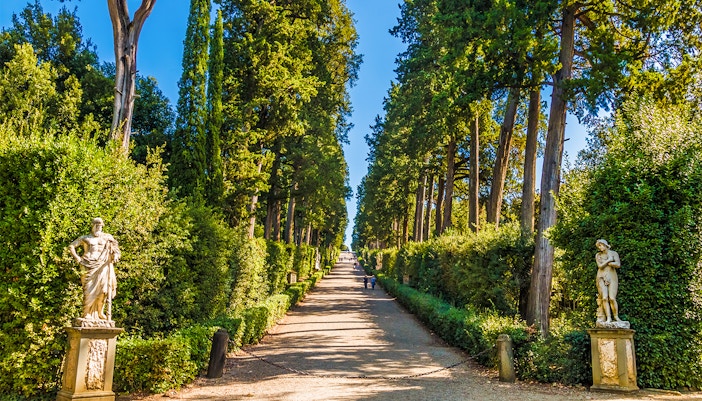
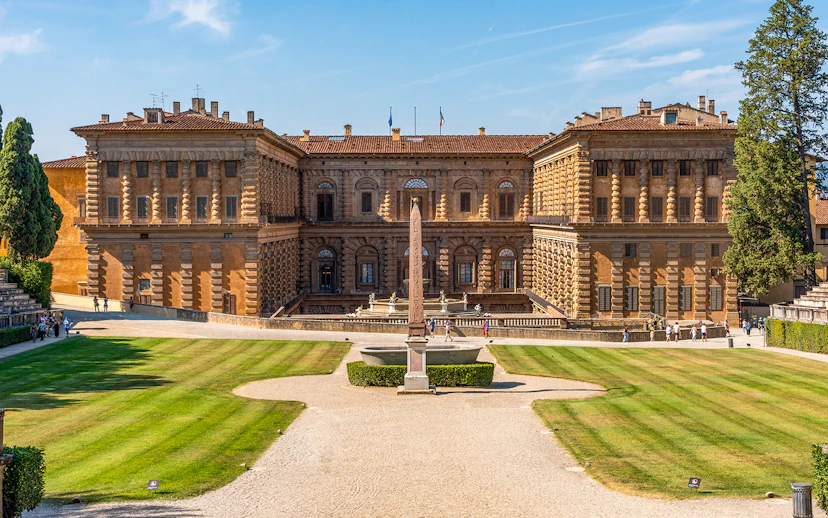
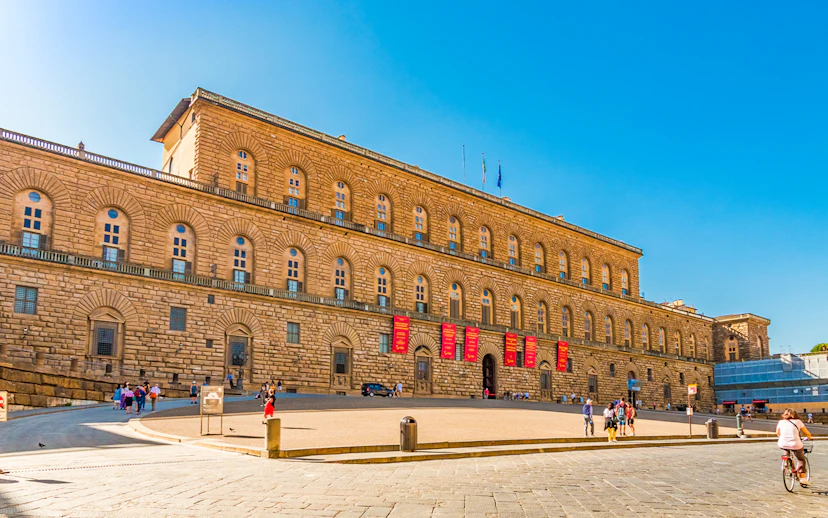
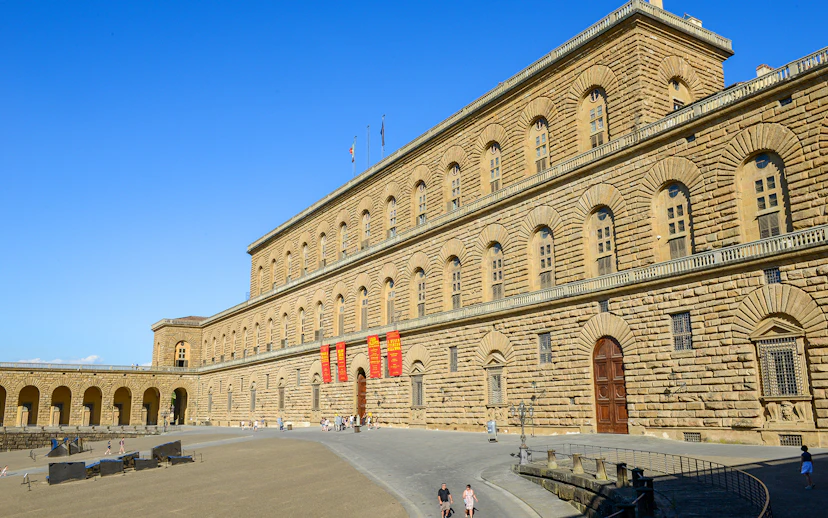
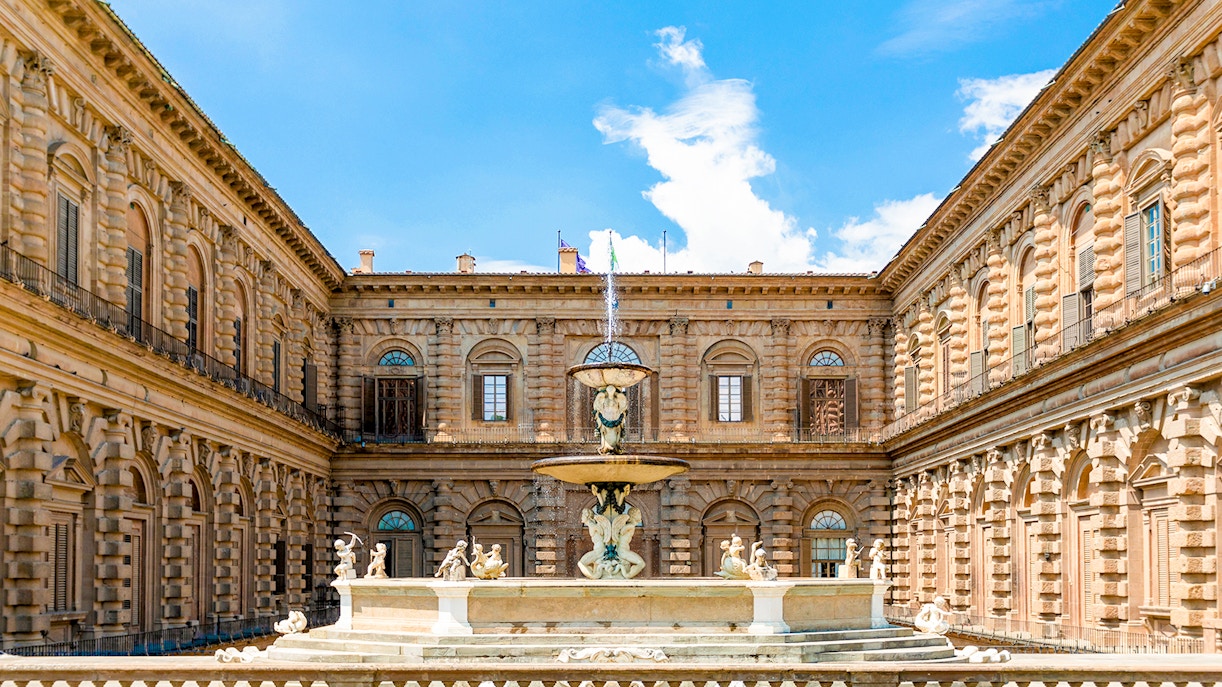
- Location: The Palatine Gallery spills over to Royal and Imperial Apartments covering the entire first floor of Pitti Palace.
- Year opened: 1828
- Founder: Leopoldo I of Lorraine
- Total rooms: 28 Rooms exhibiting over 500 artworks
- Highlights: Works by Raphael, Titian, Perugino, Correggio, Peter Paul Rubens, and Pietro da Cortona, also sculptures, porcelains, tapestries, and furnishings.
Palazzo Pitti
4.4(2,518)
Palatine gallery tickets & tours
Included with Palazzo Pitti tickets
Timings
RECOMMENDED DURATION
2 hours
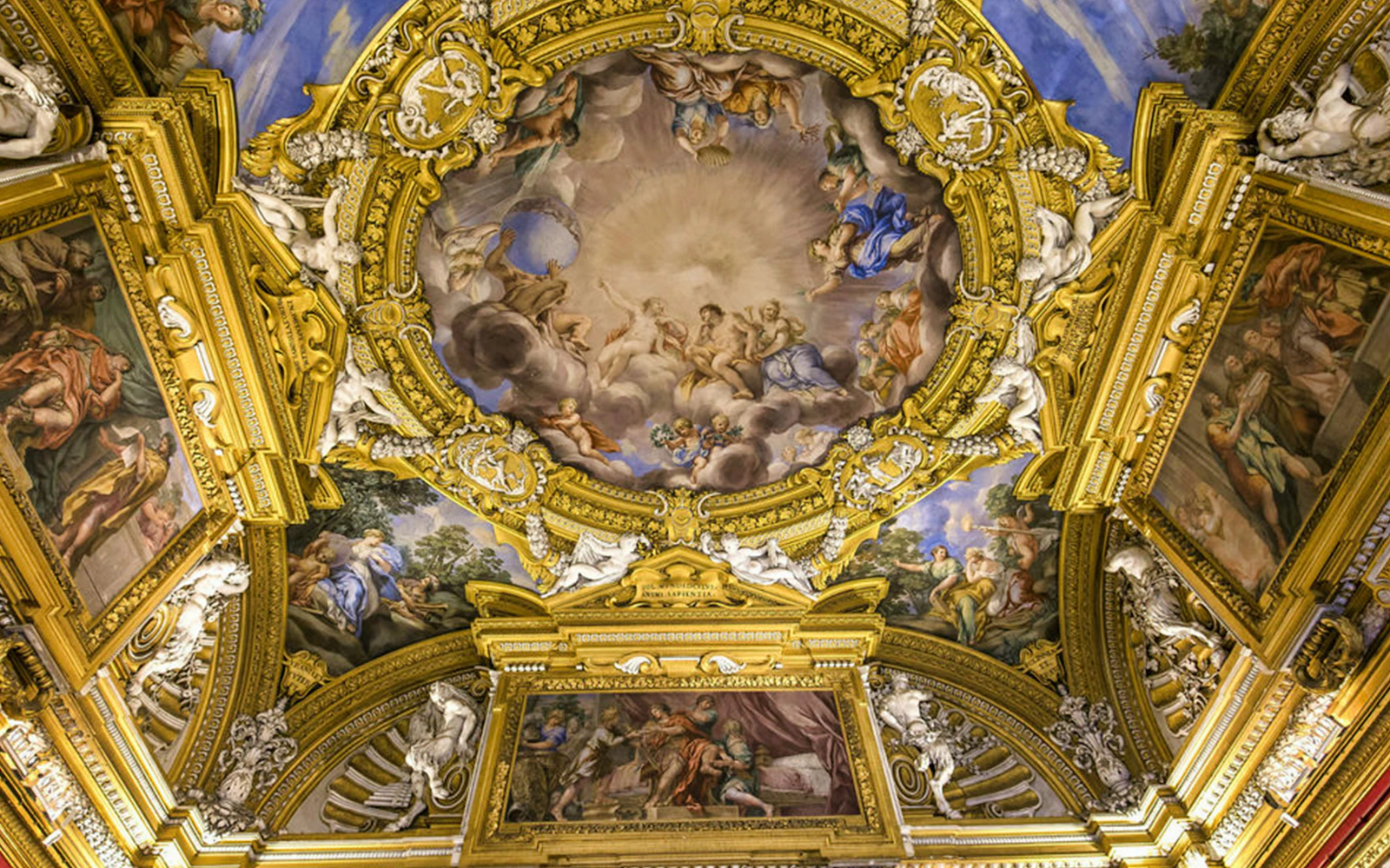
Palatine Gallery - The biggest gallery of Pitti Palace
The Palatine Gallery or the “Gallery of Palace” gives you a glimpse into the lavish Ducal lifestyle with its private chambers, grand public halls, and over 500 Renaissance and Baroque artworks from the Medici’s private collection. The gallery maintains its private character by presenting works in designated grand rooms rather than following a traditional chronological sequence. Here, you'll see masterpieces by legends such as Raphael, Titian, Rubens, and others from the era. Read more about this intriguing gallery and the best way to experience it.
Palatine Gallery | Quick facts
Why visit the Palatine Gallery?
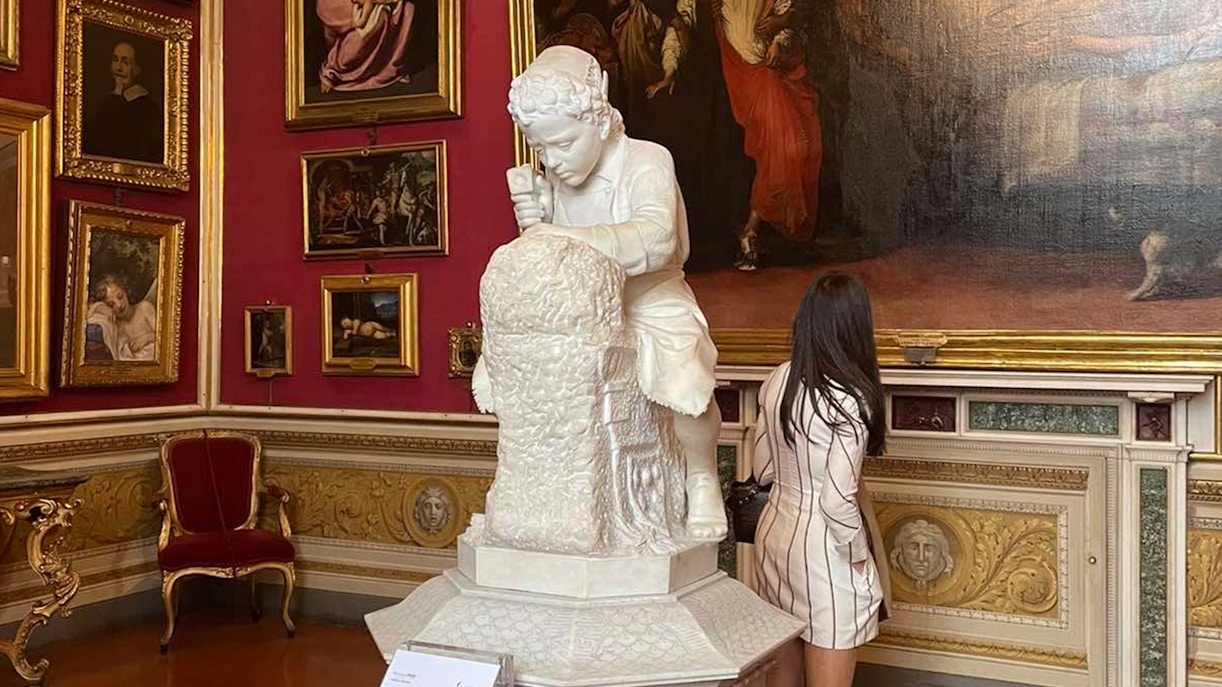
- Magnificent collection: The Gallery houses an impressive collection of over 500 masterpieces, including works by Titian and Raphael, as well as prominent 17th-century European paintings by artists such as Rubens, Van Dyck, and Murillo.
- Luxurious setting: The paintings are displayed in the ceremonial rooms of the palace, which were once the residence of the Medici dynasty, the Habsburg-Lorraine family, and the House of Savoy. The sculptures, vases, and tables with semi-precious stone inlays in these rooms add to its opulence.
- Historical symbolism: The Gallery was established in the late 18th and early 19th centuries by the Habsburg-Lorraine family, who selected the artworks from the main Medici collections. This period marked the transition from the Medici dynasty to the House of Lorraine.
- Unique perspective on the Renaissance: The Palatine Gallery imparts a fresh perspective on Renaissance art with its collections of privileged art connoisseurs of the time.
Sections within Palatine Gallery
Pass through the Antechambers of the Footmen and the Gallery of Statues, once an open portico with views of Ammannati’s courtyard, you'll arrive at the Castagnoli Room. Here, the Gallery divides into two sections: one leading to the former apartments of the Grand Duchess (right wing, rooms 4-11 and 16-18), and the other leading straight through the Hall of Music to the Grand Duke's quarters.
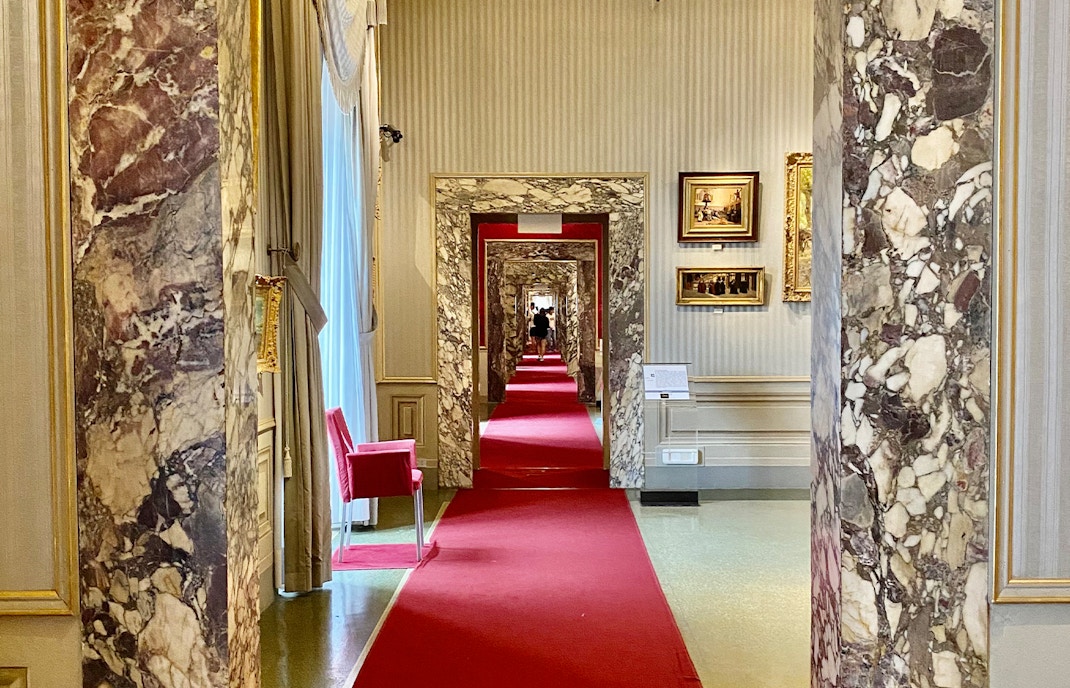
Antechambers and Gallery of Statues
These are the entrance spaces leading to the Palatine Gallery, displaying classic 17th-century picture gallery designs. The walls are covered with paintings in the style of quadrerie, combining rich fresco decorations and original framed artworks. Unlike modern museums, there's no strict timeline here; instead, you get a taste of the personal preferences of the palace's collectors.
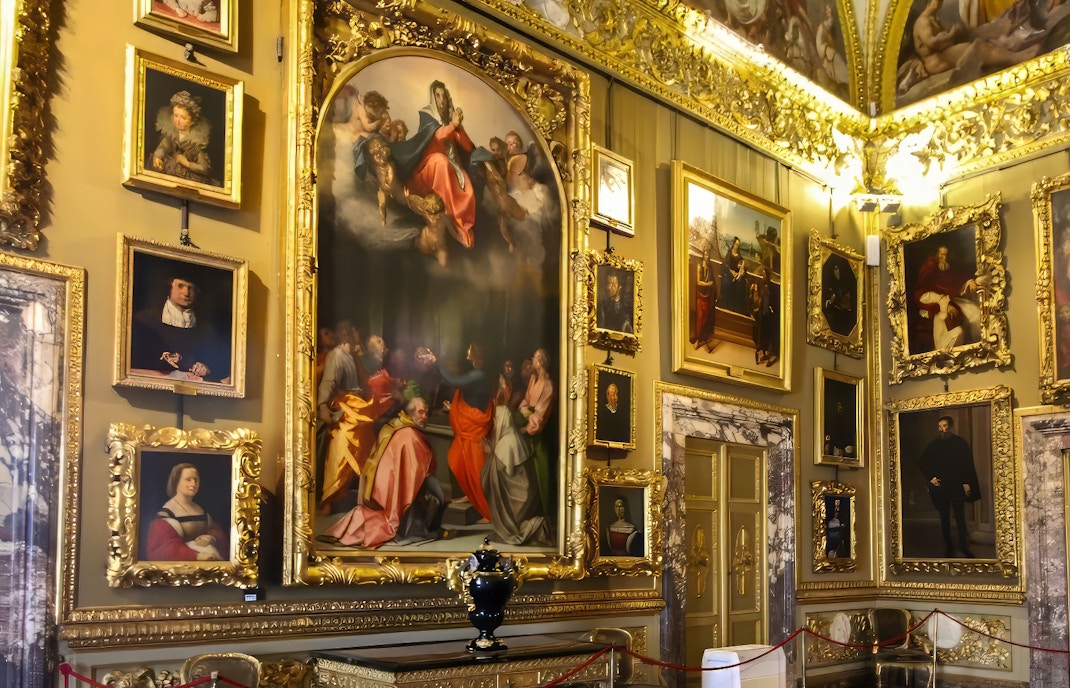
Quartiere del Volterrano
This section, known as the "Quartiere del Volterrano," consists of chambers once occupied by Grand Duchess Vittoria della Rovere. The rooms, including bedrooms, service areas, and private chapels, feature frescoed ceilings with scenes reflecting the duchess's devotion and moral virtues. Notable highlights include Baldassarre Franceschini's frescoes and Vittoria della Rovere's invaluable contribution to Florence's cultural heritage.
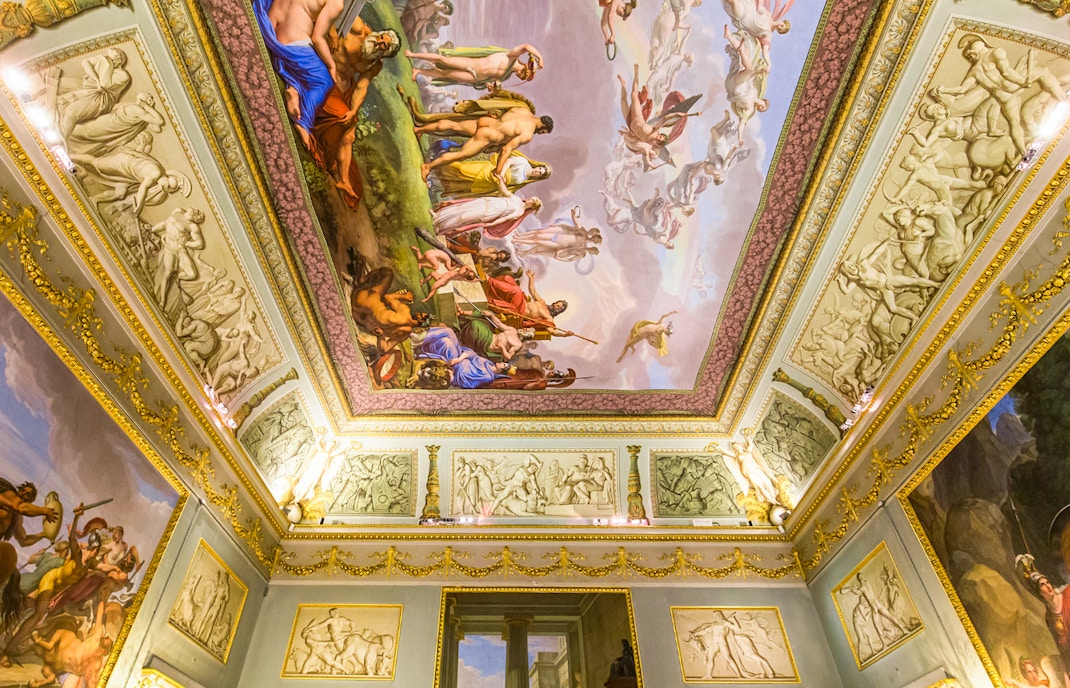
Grand Duke's Apartments
This section boasts the core works of the Palatine Gallery, starting from the Room of Prometheus. Embellished with frescoes, stuccoes, and reliefs celebrating the House of Medici, these rooms encase many famous works by Raphael, Botticelli, Filippo Lippi, Titian, and Caravaggio. Each room has its unique artistic experience, from mythological themes to Renaissance masterpieces.
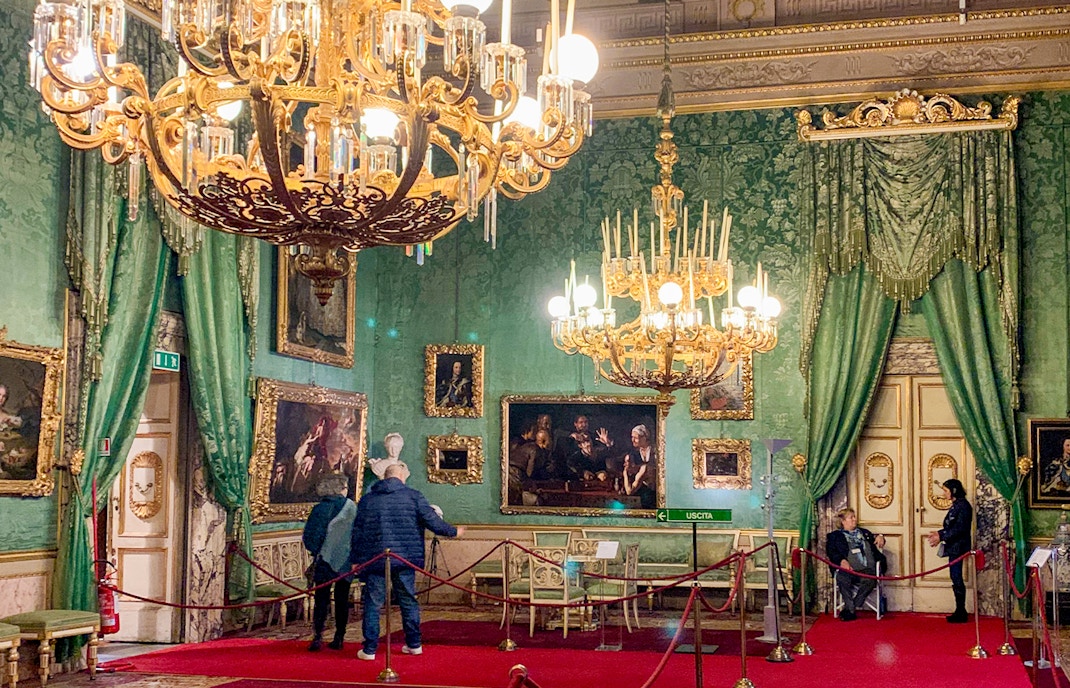
The Royal Apartments
Continuing from the Palatine Gallery, the tour extends to the Royal Apartments, comprising fourteen magnificent rooms that once served as the residence of the Medici and Lorraine grand ducal families. The rooms poetically narrate the tale of the palace's history and evolution over time via their unique styles. Highlights include the Green Room, with frescoes by Giuseppe Castagnoli, and the Throne Room, decorated for King Vittorio Emanuele II of Savoy.
Rooms of Palatine Gallery
- Room of Castagnoli: Named after the painter of the ceiling frescoes, housing portraits of the Medici and Lorraine ruling families, and the Table of the Muses, a masterpiece of stone-inlaid table.
- Room of the Ark: The room has a painting by Giovan Battista Caracciolo and a ceiling fresco depicting the Transportation of the Ark of the Covenant.
- Room of Psyche: Named after ceiling frescoes by Giuseppe Collignon, housing paintings by Salvator Rosa.
- Hall of Poccetti: Decorated with frescoes attributed to Matteo Rosselli and featuring works by Rubens and Pontormo.
- Room of Prometheus: Named after frescoes by Collignon and housing a collection of round-shaped paintings, including works by Filippino Lippi and Botticelli.
- Room of Justice: Featuring a ceiling fresco by Antonio Fedi and portraits by Titian, Tintoretto, and Paolo Veronese.
- Room of Ulysses: Frescoed by Gaspare Martellini and housing early works by Filippino Lippi and Raphael.
- Room of Iliad: Contains works by Andrea del Sarto and Artemisia Gentileschi.
- Room of Saturn: Showcases works by Raphael, Andrea del Sarto, and Fra Bartolomeo.
- Room of Jupiter: Features Raphael's Veiled Lady and paintings by Rubens, Andrea del Sarto, and Perugino.
- Room of Mars: Characterized by works from Rubens, including the Consequences of War and the Four Philosophers.
- Room of Apollo: Contains works by Il Rosso, Titian, and a Madonna with Saints.
- Room of Venus: Showcases Canova's Venus Italica and paintings by Salvator Rosa and Titian.
- White Hall: Once the ballroom of the palace, often used for temporary exhibitions.
- The Green Room: Frescoed by Castagnoli, exhibiting an intarsia cabinet and gilded bronzes.
- The Blue Room: The room has collected furniture and portraits of Medici family members painted by Sustermans.
Artists showcased at the Palatine Gallery
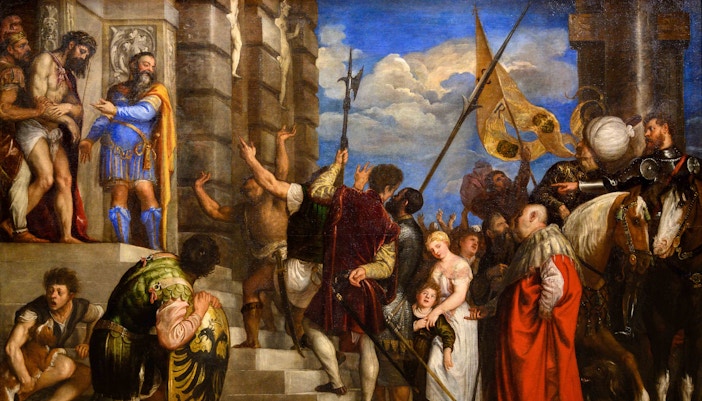
Titian (Tiziano Vecellio)
One of the most versatile and influential painters of the Italian Renaissance, Titian's works are known for their rich color palette and masterful use of light and shadow. His portraits and religious paintings are celebrated for their emotional depth and realism.

Raphael (Raffaello Sanzio)
A key figure of the High Renaissance, Raphael's paintings are characterized by their harmony, balance, and grace. Known for his Madonnas, portraits, and frescoes, Raphael's work epitomizes the ideals of classical beauty and perfection.
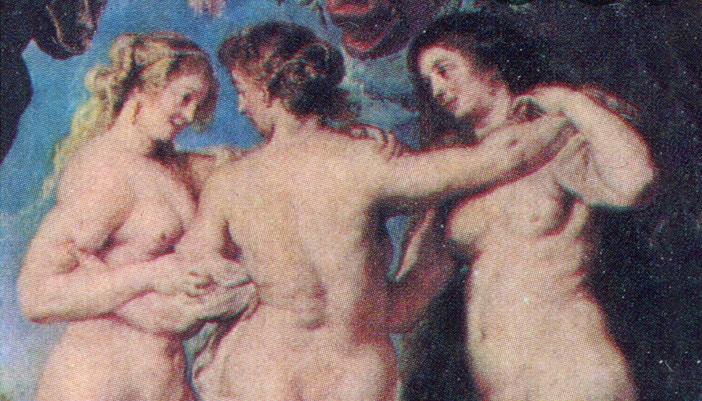
Peter Paul Rubens
A prolific Flemish Baroque painter, Rubens is renowned for his dynamic compositions, vibrant colors, and dramatic flair. His works often depict mythological, religious, and historical subjects with a sense of movement and vitality.
%20-%20Antwerp%20-%20The%20Carryng%20of%20the%20Cross.jpg?auto=compress%2Cformat&w=702.4499999999999&h=401.4&q=90&ar=7%3A4&crop=faces&fit=crop)
Anthony van Dyck (Antoon van Dyck)
A leading Flemish Baroque artist, van Dyck is best known for his elegant portraits, characterized by their refined style and psychological insight. His paintings capture the grace and sophistication of the European aristocracy.
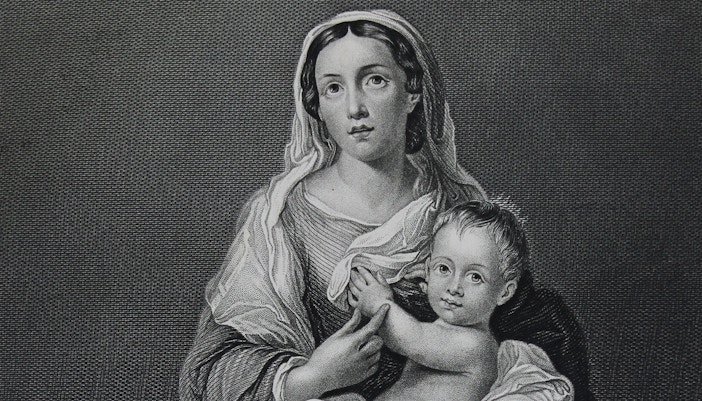
Bartolomé Esteban Murillo
A Spanish Baroque painter, Murillo is famous for his religious and genre paintings, which often depict scenes of everyday life with warmth and tenderness. His works are distinguished by their soft, luminous colors and emotive expression.
%20-%20Descent%20of%20Christ%20Into%20Limbo.jpg?auto=compress%2Cformat&w=702.4499999999999&h=401.4&q=90&ar=7%3A4&crop=faces&fit=crop)
Bronzino (Agnolo di Cosimo di Mariano)
An Italian Mannerist painter, Bronzino is known for his elegant portraits and allegorical works. His paintings exhibit a meticulous attention to detail and a sophisticated sense of style.
Famous paintings in the Palatine Gallery

1/6
The Portraits of Agnolo and Maddalena Doni by Raphael
These exquisite portraits depict merchant Agnolo Doni and his wife Maddalena, executed in oils between 1506-7. Influenced by Leonardo da Vinci, Raphael portrays the figures with a clarity of color and ease, set against an infinite landscape background, symbolically uniting the couple.
Sleeping Cupid by Caravaggio
Completed in 1608 during Caravaggio's time in Malta, this somber piece reflects the artist's use of chiaroscuro, depicting a sleeping cupid in a subdued manner.
The Three Ages by Giorgione
This work, attributed to Giorgione, presents symbols open to various interpretations, inviting viewers to contemplate the passage of time and the complexities of human experience.
Portrait of Prince Waldemar Christian of Denmark by Justus Sustermans
With a photographic quality, this portrait captures the essence of its subject, Prince Waldemar Christian of Denmark, in exquisite detail.
La Donna Velata (Woman with Veil) by Raphael
Believed to depict Raphael's lover Margerita Luti, this portrait showcases the masterful technique of the artist, located in the Sala di Giove (Hall of Jupiter).
The Bartolini Tondo by Fra' Filippo Lippi
Painted to commemorate the first-born child of silk merchant Roberto Bartolini, this tondo exemplifies Lippi's mastery of linear perspective and narrative composition.
Frequently asked questions about Palatine Gallery
No, you don't need a separate ticket, the access is included in your Pitti Palace tickets.
The Palatine Gallery is significant due to its impressive collection of Renaissance and early Baroque paintings, including masterpieces by Raphael, Titian, Tintoretto, Caravaggio, and Rubens. The gallery is housed in the Pitti Palace, which was once the residence of the Medici family, the Habsburg-Lorraine family, and the House of Savoy, adding to its historical significance.
The Palatine Gallery and the Royal Apartments together occupy 28 rooms, and it is recommended to allocate at least 1-2 hours to fully appreciate the art and the historical significance of the gallery.
While there is no particular number defined for maximum visitors inside the gallery, the management often regulates access during peak seasons when the palace sees a high surge of visitors. Considering the vast size of the gallery, it doesn’t happen very frequently, so we wouldn't recommend worrying much about it.
Yes, you can find guided tours for the Palatine Gallery and Pitti Palace. These tours can be arranged through authorized partners, such as Headout, and may include skip-the-line entry, a tour of the majestic Pitti Palace, and a tour through the beautiful Boboli Gardens.
The best bet for avoiding crowds is always the first two hours after the opening.
The Palatine Gallery is arranged in a decorative manner, with paintings covering most of the surface of the walls following symmetrical patterns. A recommended path to follow would be to explore the 28 rooms in a sequential order, taking the time to appreciate the art and the historical significance of each room.
The Palatine Gallery's collection is presented in a elaborate manner, with paintings covering most of the surface of the walls following symmetrical patterns, and the gallery arrangement is enhanced by carved and gilded frames, aiming to amaze and impress visitors who entered these staterooms.
While there are no hard rules outlining the specifics of what and what not to wear, it’s expected for visitors to dress modestly. Avoid wearing exposing clothes, offensive prints, and maybe wear comfortable shoes since a lot of walking is involved.
The Palatine Gallery is located in the Pitti Palace, the former residence of the Grand Dukes of Tuscany (Medici and Lorraine) and of the Italian royal family. The historical significance of the gallery is backed up by the Royal Apartments, which are richly decorated with furniture and accessories from the sixteenth to the nineteenth century, and the famous technique of commesso fiorentino (Florentine mosaic).
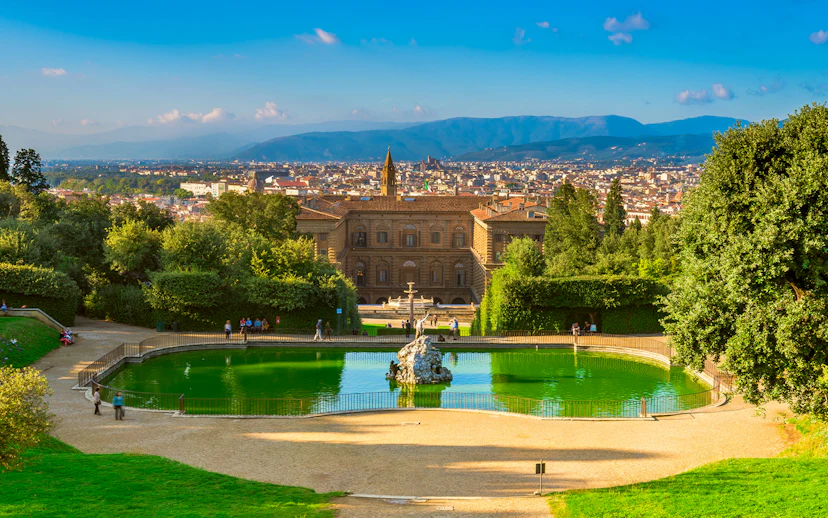
After exploring the Palatine Gallery, visitors can enjoy the Gallery of Modern Art, the Costume Gallery, the Treasury of the Grand Dukes (known as the Silver Museum), and the Boboli Gardens, which offer a magnificent view of both Florence and the Boboli Gardens, the park that surrounds the Florentine palace of the Medici.