Your complete guide to planning Florence to Chianti day trip

A Florence to Chianti day trip is easy to plan, with travel times of around 45 minutes to 1 hour each way by car or tour. Most visitors spend 5–7 hours in the region, so they can explore 2–3 wineries, enjoy a Tuscan meal, and explore the countryside. The key decision is how you want to do the trip: a guided tour, a self-drive route, or a multi-stop combo that includes places like Siena or San Gimignano. This choice directly affects how much time you spend in Chianti versus on the road.

This guide breaks down the best way to plan your day, choose the right option, and understand what to expect.

Quick facts: Florence to Chianti day trip

  • Travel time: 45 minutes to 1 hour each way by car or tour. Public transport exists but is slow and indirect — not ideal for a day trip.
  • Time on the ground: Around 5–7 hours after travel, enough for 2–3 winery visits, a relaxed lunch, and short stops in towns like Greve or Castellina.
  • What fits in a day: A focused wine experience works best. Multi-stop Tuscany tours (Chianti + Siena/San Gimignano) are doable but significantly reduce time spent at wineries.
  • What’s included (and what’s not): Guided tours include transport and pre-booked tastings. Wine purchases and extra tastings are usually not included unless specified. Lunch is available with select tours.
  • Best way to do it: Guided tours or private drivers are the easiest. Self-drive offers flexibility but requires planning and skipping tastings if you’re driving.
  • Should you stay overnight? Not required. Most visitors comfortably cover 2–3 wineries and lunch on a day trip. Overnight stays are only useful if you want a slower, multi-day Tuscany itinerary.

Everything you need to know about Chianti day trip

Should you do Chianti as a day trip

ApproachIs a day trip worth it? What this actually feels like Better option if not

Approach Focused Chianti (2–3 wineries + lunch)

Yes, best way to do it

A relaxed, wine-first day with enough time to enjoy tastings, a meal, and short countryside stops

Chianti + other Tuscany towns (Siena/San Gimignano)

Only with a guided tour

More time on the road, shorter stops at each place; wineries feel rushed

Do separate day trips or stay overnight in Tuscany

Slow, immersive vineyard experience

Not ideal as a day trip

Limited time means you’ll be watching the clock, especially with travel

Stay overnight in Chianti for a slower pace

Best way to do the trip

Most trips to Chianti start from central Florence, typically near Santa Maria Novella. If you’re driving, you’ll head straight out of the city.
The real choice is format. Guided tours handle transport, winery bookings, and timing end-to-end. Going on your own gives flexibility, but only with a car and some planning.

In Chianti, that decision shapes the day: seamless and structured, or flexible but hands-on.

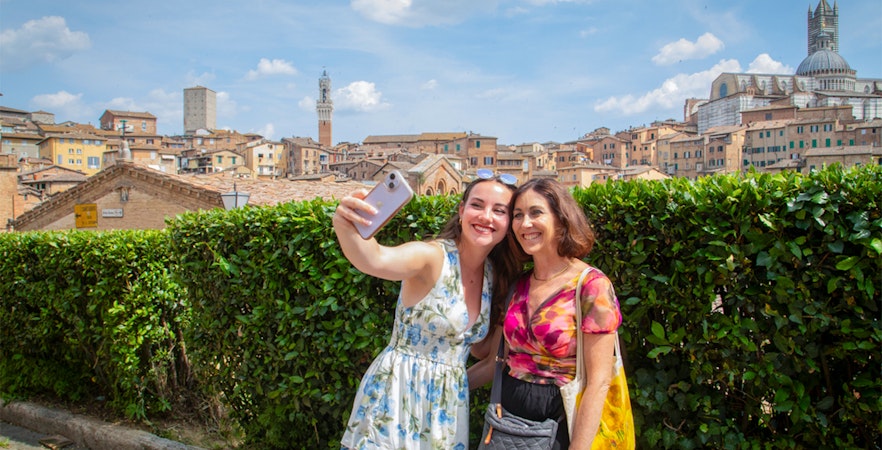
Tourists taking a selfie with Siena skyline in the background, featuring Torre del Mangia, Tuscany.

Getting to Florence from Chianti

By train (+ local bus)

  • How it works: Train Florence SMN → Poggibonsi → bus to Greve/Radda
  • Time: ~1.5 hours total
  • Cost: €8–12
  • Best for: Budget travel
  • Tradeoff: Limited winery access; coordination required

By car

  • How it works: Drive via SS222 (scenic) or Firenze–Siena highway
  • Time: 35–60 mins
  • Cost: Fuel + parking (~€1.50/hr in towns)
  • Best for: Flexibility
  • Tradeoff: Requires planning; drinking + driving constraints

By organized day tours (recommended)

  • How it works: AC coach from central Florence (usually near SMN), with pre-arranged winery stops
  • Time: 4–6 hrs (half-day) | 9–11 hrs (with Siena/San Gimignano)
  • Cost: €45–120
  • Best for: First-time visitors, no planning
  • Tradeoff: Fixed schedule

What will you see on a Florence to Chianti tour

Visitors walking through a Chianti vineyard with grapevines and a basket of grapes.
Tour group listening to a guide in an Albanian winery cellar.
Red wine bottles stacked in a winery cellar.
Tourists with guide tasting wine at a vineyard in Toledo.
Farmer pouring olive oil on bread in an olive grove.
Hilltop view of Montepulciano with vineyards in Tuscany, Italy.
Streets of San Gimignano with historic stone buildings and tourists exploring.
Siena Cathedral with tourists in the square, part of San Gimignano, Siena, Monteriggioni, Chianti day trip.
Women posing playfully with the Leaning Tower of Pisa in Italy.
Tourists enjoying pizza, pasta, and drinks on a food tour in Rome.
1/10

🍇 Vineyards & rolling countryside

This is the backdrop to everything. Expect rows of Sangiovese vines, olive groves, and cypress-lined roads stretching across low hills. It’s not one “viewpoint”, the landscape unfolds as you drive between estates.

Time needed: Ongoing, between stops
Local tip: Sit on the right side of the coach when heading south from Florence for the best vineyard views.

🍷 Chianti Classico winery (estate visit)

A working estate is the core stop. You’ll see production areas, learn how Chianti Classico is made, and understand what sets it apart from generic “Chianti.”

Time needed: 60–90 mins
Local tip: Smaller estates feel more personal; larger ones are more structured but efficient.

🪵 Cellars & barrel rooms

Cool, stone-lined cellars are where wines age in oak barrels. It’s quieter, slower, and often the most atmospheric part of the visit.

Time needed: 20–30 mins (within the estate visit)
Local tip: It’s significantly cooler here, you’ll notice it immediately.

🥂 Guided wine tastings

You’ll sit down for a structured tasting of 3 wines per winery, usually paired with olive oil, bread, and local cold cuts. It’s paced, not rushed, with explanations on grape varieties and ageing.

Time needed: 45–60 mins
Local tip: It’s normal to sip and not finish every glass, pacing matters more than it feels at first.

🫒 Olive oil & local produce

Most estates produce more than wine. Expect tastings of extra virgin olive oil, sometimes alongside honey, preserves, or balsamic-style condiments.

Time needed: 10–20 mins (often part of tasting)
Local tip: Olive oil here is peppery and fresh — very different from supermarket versions.

🏡 A small Chianti town (if included)

Stops are usually in places like Greve in Chianti, a quiet piazza, a few wine bars, and local food shops. It’s less about sights, more about soaking in the pace.

Time needed: 30–60 mins
Local tip: Don’t try to “cover” the town, pick a café or enoteca and settle in.

🏰 San Gimignano (if doing a combo)

Known for its medieval towers and skyline views, San Gimignano adds a distinct architectural contrast to Chianti’s countryside. It’s compact but busy.

Time needed: 1–1.5 hrs

⛪ Siena (if doing a combo)

A larger medieval city centered around Piazza del Campo, with more depth than a quick photo stop. Most itineraries give you free time to explore, with the option to join a guided walk covering the historic centre and cathedral.

Time needed: 1.5–2 hrs
Practical tip: Upgrade to guided tour if you want context quickly; otherwise, spend your time around the piazza, going deeper into the city eats into limited time.

🗼 Pisa (if doing a combo)

A compact but substantial stop: the tower, cathedral, and square are all in one place, with enough time to walk around, take photos, and explore beyond just the main viewpoint. Most visits are self-guided, with optional tower access if booked in advance.

Time needed: ~1–1.5 hours
Practical tip: If you plan to climb the tower, keep a close eye on timing. Group tours run on a fixed schedule, and delays here can cut into the rest of your day.

🍝 Traditional Tuscan lunch (if included)

On full-day tours, lunch is often part of the experience, either at a winery or in a town like Siena or San Gimignano. Expect simple, regional dishes like pasta, cured meats, cheeses, and local wine. It’s not a fine-dining stop, but it does help refuel for rest of the day.

Time needed: 45–75 mins
Practical tip: If lunch is included, keep earlier tastings light, it’s easy to overdo food + wine by mid-afternoon.

What does a Florence to Chianti day trip actually look like

The short answer: there isn’t one fixed version. Some trips are Chianti-first, built around wineries and tastings. Others are multi-stop Tuscany loops, where Chianti is one part of a longer day that may also include places like Pisa, Siena, or San Gimignano. The difference is pacing.

Half-day Chianti wine tour (~4–6 hours)

  • Morning / early afternoon: Depart central Florence around 9–10am. The drive along Via Chiantigiana (~45–55 mins) is scenic and uninterrupted, with useful context from your guide en route. You’ll visit two Chianti estates, starting with the first by mid-morning.
  • At the wineries: This is the core of the experience. Each stop typically includes a cellar visit, a short vineyard walk, and a seated tasting of ~3 wines per estate, paired with olive oil, bruschetta, and local cured meats. At smaller estates, this feels personal and unhurried.
  • Time here: ~1.5–2 hours per winery
  • Return: Back in Florence by early-to-mid afternoon, leaving your evening free.

Best for: If your main goal is to understand Chianti wine and enjoy the countryside without rushing.

Full-day combo tour — Pisa, Siena, San Gimignano & Chianti (~10–11 hours)

  • Morning: Early start (7–8am). First stop is usually Pisa, about an hour around Piazza dei Miracoli, before continuing onward. The pace is quicker from the outset.
  • Midday: Siena is the main cultural stop, with time around Piazza del Campo and the Duomo (often with lunch). San Gimignano follows, with free time to explore its medieval streets and towers.
  • Afternoon: Chianti comes last, a single winery visit with a guided tasting (~1–1.5 hours). It’s intentionally the most relaxed part of the day.
  • Return: Back in Florence by ~7–8pm. Keep evening plans flexible.

Best for: If you want a snapshot of Tuscany beyond just wine — architecture, towns, and landscapes together.

Should you stay overnight in Chianti?

A day trip works well here, but Chianti is one of the few places where staying overnight genuinely changes the experience.

  • Day trip: A structured visit from Florence with 1–2 wineries, tastings, and a quick town stop. You’ll see the highlights, but on a fixed schedule.
  • Overnight: A slower pace. You wake up in the countryside, visit wineries without rushing, and stay for sunset over the vines. Evenings mean long dinners at the estate or nearby trattorias, something a day trip doesn’t allow.

Cost reality:

  • Day trip: €65–120 (guided tour with tastings)
  • Overnight add-on: €80–140 extra (budget agriturismo + dinner + breakfast)

Trade-off: You’re paying ~€100 more for time and flexibility. Day trip equals efficient snapshot. Overnight means slower, more immersive.

Best time for a Florence to Chianti day trip

SeasonMonthsWhat it's likeCrowdsBook ahead

Peak

June–August

Hot, dry, vines in full leaf. Winery visits are lively but estates can feel busy. Midday heat between stops is real.

High — especially weekends

2–3 weeks minimum; popular half-day tours sell out faster than you'd expect

Shoulder

April–May, September–October

The best window: spring for green hills and wildflowers; late Sept–Oct for harvest energy and peak vineyard views. Comfortable temperatures throughout the day.

Moderate

4–7 days usually sufficient; harvest weekends in October book faster

Off-peak

November–March

Quieter estates, more personal tastings, and lower prices. Some small wineries reduce hours or close, so check ahead. The landscape is barer but still beautiful, especially with winter fog.

Low

Same-week or same-day booking is usually fine

By time of day

  • Morning departures (8–10am): Best for a classic estate experience — cooler weather, quieter vineyards, and winemakers more likely to be present. You’re also tasting earlier in the day, before palate fatigue sets in.
  • Afternoon departures: A different mood entirely. Tours like Siena + Chianti dinner arrive as the day cools — expect sunset views, slower tastings, and dinner on the estate.

💡 Pro tip: Visiting in September–October? Check if your dates overlap with the vendemmia (grape harvest). At smaller estates, you might see harvesting in action, not guaranteed, but it elevates the experience. Ask your operator when booking.

How to get around Chianti once you arrive

This is where Chianti differs most from typical day trip destinations. There's no single town centre to navigate — the region is a spread of estates, villages, and countryside roads. How you move around depends almost entirely on how you arrived.

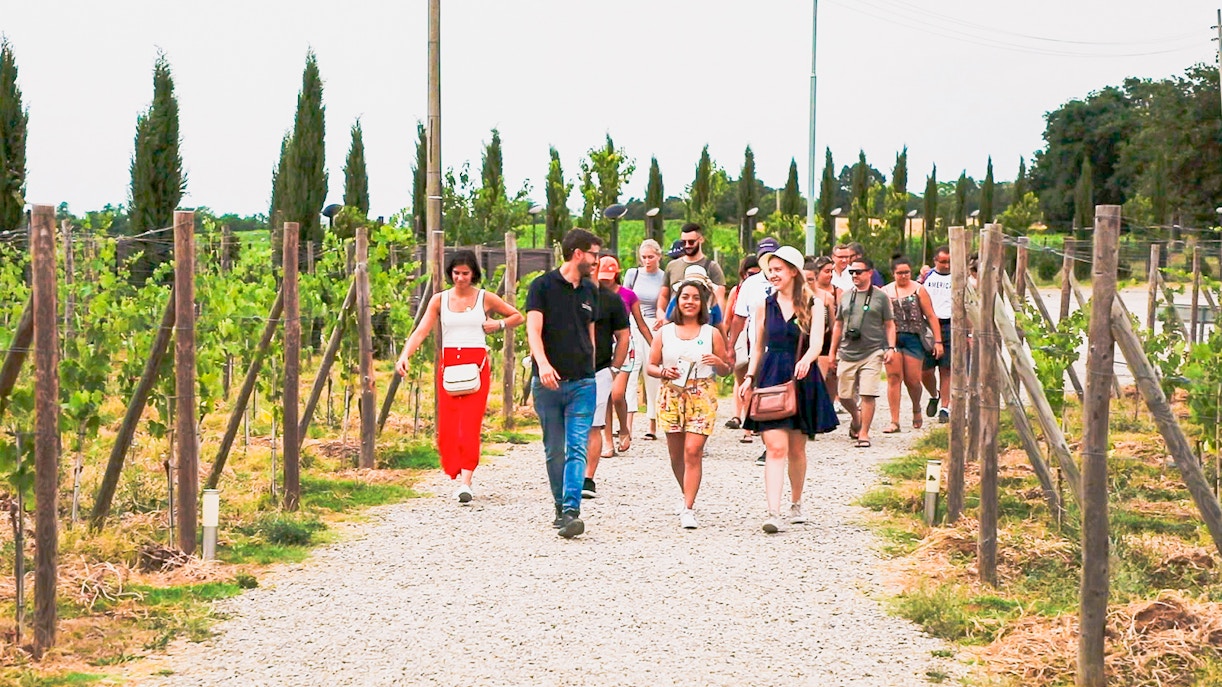
Group walking through vineyard on Siena, San Gimignano, and Chianti day trip.

Within Greve in Chianti, Radda, or Castellina, walking is the only realistic option — and the only one you need. These are small, compact hilltop towns where everything worth seeing is within 10–15 minutes of wherever the coach drops you. Flat shoes matter: the streets are cobbled and the terrain slopes.

When it makes sense: Any time you're in a town centre with free time.
Cost: Free.
Honest note: Don't try to walk between towns or from a town to a winery. Distances look short on a map and aren't walkable in practice.

Guests relaxing on AC coach bus using mobile devices.

SITA buses connect Florence to Chianti towns like Greve and Castellina, but they don't serve vineyard estates. Within the region, buses run infrequently, sometimes every 90 minutes to 2 hours, and schedules thin out sharply after 6pm.

When it makes sense: If you're based in a town and making a day of the local enotecas and piazzas rather than winery visits. Cost: €2–4 per journey.
Honest note: Not a realistic option for reaching estates. If you miss the last return bus, your options are a taxi or an expensive rideshare.

Smiling taxi driver with passenger in the back seat.

Taxis exist but are not abundant in rural Chianti. There's no Uber coverage outside Florence. Local taxi companies in Greve can be called in advance, but availability is unpredictable on busy weekends.

When it makes sense: As a backup if your tour ends early and you want to extend the day independently, or for getting from a town to a specific pre-booked estate.
Cost: €15–30 depending on distance.
Honest note: Don't rely on flagging one down. Save a local number before you travel.

Family enjoying private car transfer with child leaning out window.

Fast but expensive for short hops.

Available near train stations and major piazzas, taxis help skip uphill walks or tight ferry connections. Availability drops in smaller villages and late evenings.

  • Time: 10–25 mins per ride
  • Cost: €15–€40 per trip
  • Best for: Time-saving transfers, small groups
  • Cons: Expensive; limited supply in peak months

Tip: Reserve in advance during summer weekends.

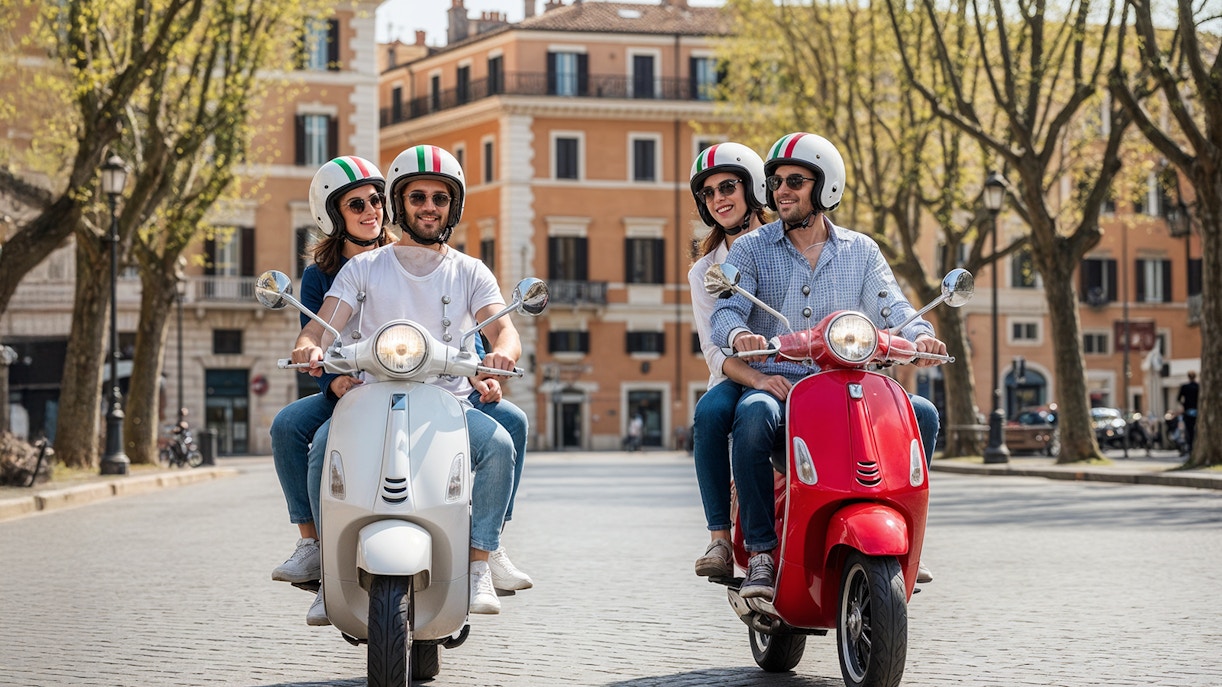
Couples riding Vespas on a cobblestone street in Rome.

Flexible but challenging in peak season.

Driving allows access to smaller lakeside villages and mountain viewpoints. Roads are narrow and winding, and parking fills quickly in Bellagio and Varenna.

  • Time: Flexible
  • Cost: Rental + fuel + €10–€25 parking
  • Best for: Multi-stop exploration, groups
  • Cons: Parking scarcity, summer congestion

Tip: Park once and switch to ferries for town-to-town movement.

What guided tours handle automatically
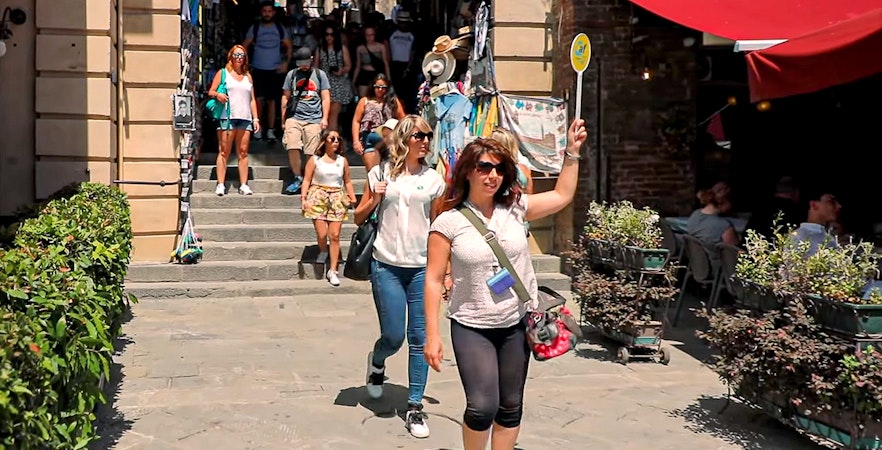
Most day-trippers on guided tours don’t think about getting around Chianti, there’s nothing to manage. The coach handles transfers, timings, and returns. For DIY visitors, the reality is simpler: Chianti rewards a car. Without one, you’re largely limited to towns, and reaching wineries, the main draw, is genuinely difficult independently.

Tour guide leading group in San Gimignano during day trip from Florence.

How to prepare for your Chianti day trip

Bottled water held in hands as a welcome drink.
  • Flat, closed-toe shoes. Gravel paths and cellar floors make sandals or heels impractical.
  • A light layer. Cellars stay at 12–14°C year-round; you’ll feel it within minutes.
  • Cash. Smaller estates may not accept cards for wine or olive oil purchases.
  • A small tote or soft bag. For carrying wine bottles back comfortably.
  • Water bottle. Wine is included; water isn’t always between stops.
  • Sunglasses + hat. Short walks in the vineyard are exposed, especially in summer.
  • A full backpack. Limited coach storage; you won’t need it.
  • An umbrella. Tours run in rain; a light jacket (Nov–Mar) is more useful.
Young woman booking online with a banking card and smartphone.

Pre-book: Everything, if you're going independently. Family estates require reservations and most do not accept walk-ins, particularly in peak season when their daily visitor slots are allocated weeks ahead. If you're on a guided tour, this is handled for you.

What's fine to sort on arrival: Town enotecas (wine bars) in Greve or Castellina don't require reservations and are a good fallback for additional tastings if you have free time.

Lead times by season:

  • June–August: Book 2–3 weeks out for popular guided tours; independent estate visits need similar lead time
  • April–May, September–October: 5–7 days is usually sufficient
  • November–March: A few days' notice is generally fine, but verify individual winery hours, some reduce to weekends only in winter
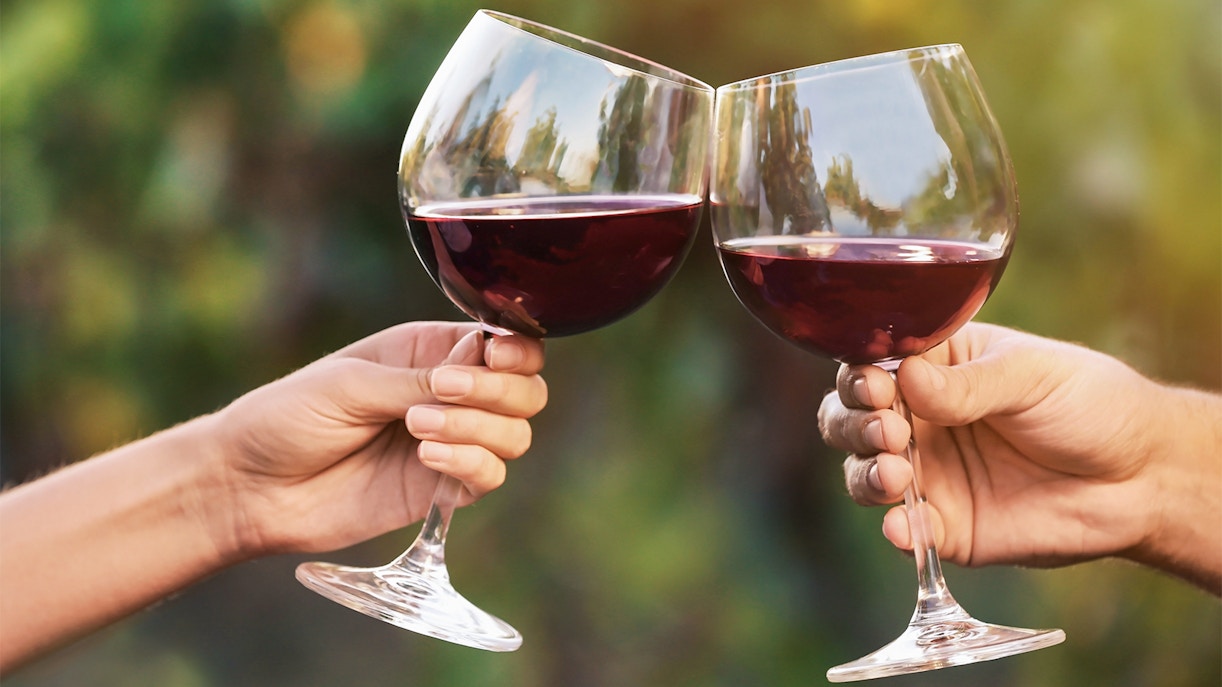
Toasting with red wine glasses in Chianti vineyard, Italy.
  • Assuming you can “drop into” wineries. Most require reservations; spontaneous visits rarely work
  • Overestimating public transport. Buses won’t get you to most estates or back reliably
  • Not planning post-tasting transport. Getting back without a car or tour can be tricky
  • Skipping water between tastings. It catches up faster than expected, especially in summer
  • Not flagging dietary restrictions in advance. Standard pairings include bruschetta, cured meats, and aged pecorino. Vegetarians are usually fine; vegans have limited options. Smaller estates can adapt, but only if told ahead

Dine, shop & stay near Chianti

Couple toasting with red wine at Popeye Village Winery.

Start your day in Florence with a light breakfast. In Chianti, food mostly takes care of itself, winery tastings come with olive oil, bread, cured meats, and cheese, and often double as a slow, built-in lunch.

  • If you want a proper sit-down meal. Keep it simple and local — Greve in Chianti or Panzano are your best bets. Look for pici with ragù, ribollita, or a bistecca alla Fiorentina to share. Short menus are a good sign. If it looks too polished or tourist-heavy, it probably is.
  • One timing note Lunch runs roughly 12:30 to 2:30pm and kitchens close outside that window. If your tour includes a meal, don't double up, you'll be too full to enjoy the tastings.
  • Dinner = back in Florence (or stay the night). After a day of tastings, keep it light. Unless you’re staying in Chianti, then dinner at an agriturismo is the best meal of the day.
Woman browsing souvenirs in a shop.

Chianti is less about souvenirs and more about things you actually use.

  • Chianti Classico wine. The obvious pick, but buying directly from estates often means access to small-batch labels you won’t find elsewhere
  • Olive oil & preserves. Locally produced and easy to carry back in small quantities
  • Cured meats & cheeses. Especially from places like Macelleria Falorni, known for regional specialties
  • Artisan goods. Olive wood kitchenware, handmade ceramics, and woven baskets are common across towns like Greve and Panzano

Where to find them: Town centres like Greve, Panzano, and Radda in Chianti have small lanes and enotecas clustered around main squares, easy to browse during short stops.

Luxury hotel room with king-size bed, modern decor, and large window.

A day trip shows you the highlights of Chianti, one or two wineries and a quick town stop. Staying overnight is about choosing where in Chianti to base yourself, because each area feels different.

  • Near Florence (San Casciano, Greve): Easiest access, more polished. Greve in Chianti is the main hub with restaurants and wine bars, but more practical than atmospheric.
  • Central Chianti (Panzano, Castellina): The sweet spot. Strong food scene, vineyard views, and still well-connected. Panzano in Chianti is especially known for quality, small-scale estates.
  • Deeper Chianti (Radda, Gaiole): Quieter, more scenic, more “old Tuscany.” Radda in Chianti is compact, hilltop, and feels more removed.
  • Where to stay: Agriturismos are the real experience, working vineyards or farms with rooms, meals, and tastings. Many wineries double as stays, so you can drink, eat, and stay put.

Local tips

  • Start earlier than you think. Morning visits feel calmer and cooler. By midday, especially in summer, both vineyards and towns get noticeably busier and hotter.
  • Eat light around tastings. Winery pairings include bread, cheese, and cured meats. A full lunch on top of that can feel heavy and cut into your energy.
  • Watch the light for photos. Golden hour in Chianti is real. Late afternoon vineyard views are softer and far better than harsh midday light.
  • When DIY-ing, stay near the main piazza. In towns like Greve in Chianti, everything clusters around the square. Wandering too far doesn’t add much on a short visit.
  • Build buffer into your return. Rural roads are slower than they look on maps. Even short distances can stretch, especially if you hit weekend traffic.
  • Carry small cash for quick buys. Wine shops and estate shops don’t always take cards for small purchases. It saves time during short stops.
  • Don’t rely on taxis last-minute. They’re limited and need to be pre-booked. If you don’t have a car or tour, getting back can be harder than expected.
  • Nobody tells you this: Chianti is quiet. Towns are small and the countryside dominates. The real experience is in the vineyards and views, not ticking off multiple “sights.”

Frequently asked questions about planning a Chianti tour from Florence

Yes, for a focused experience. You can comfortably visit 1–2 wineries and maybe a town like Greve. What you miss is depth. Chianti is spread out, so trying to cover multiple towns and estates in one day quickly feels rushed.