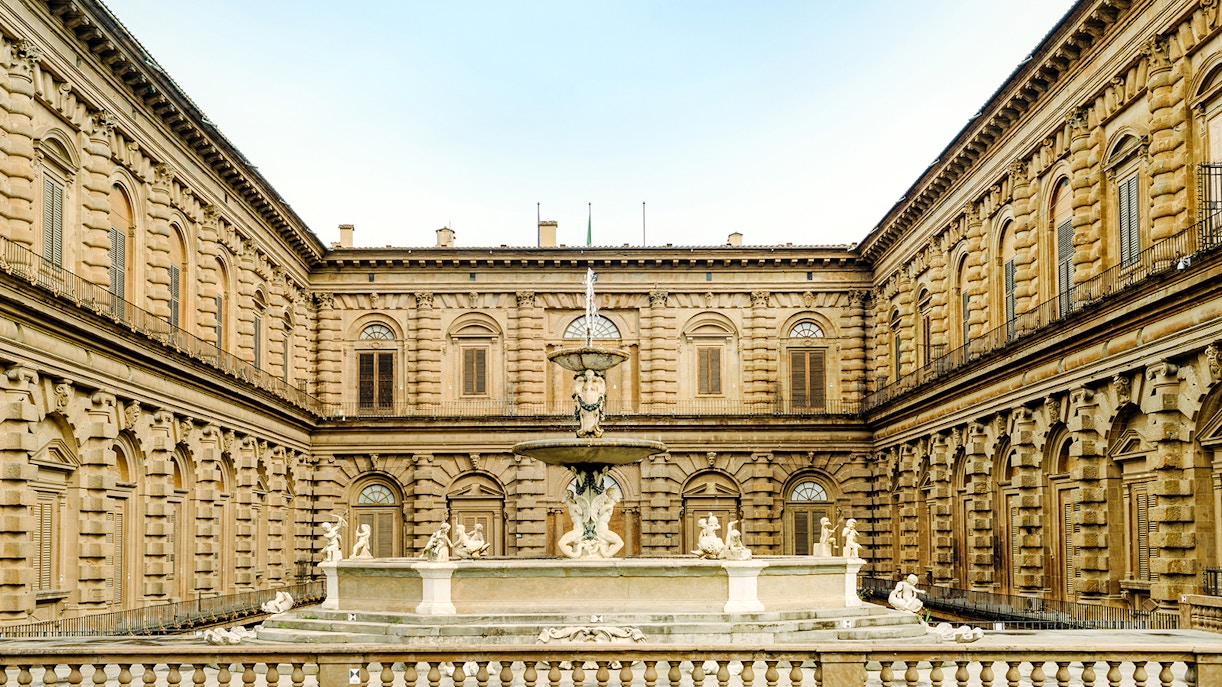
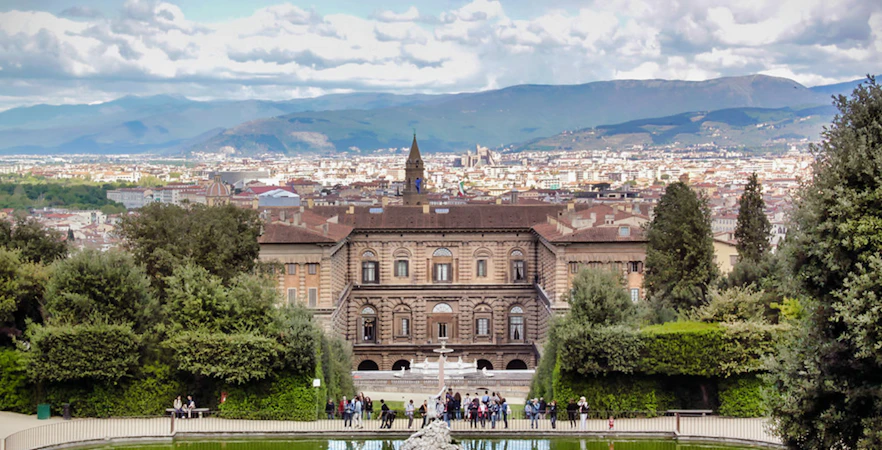
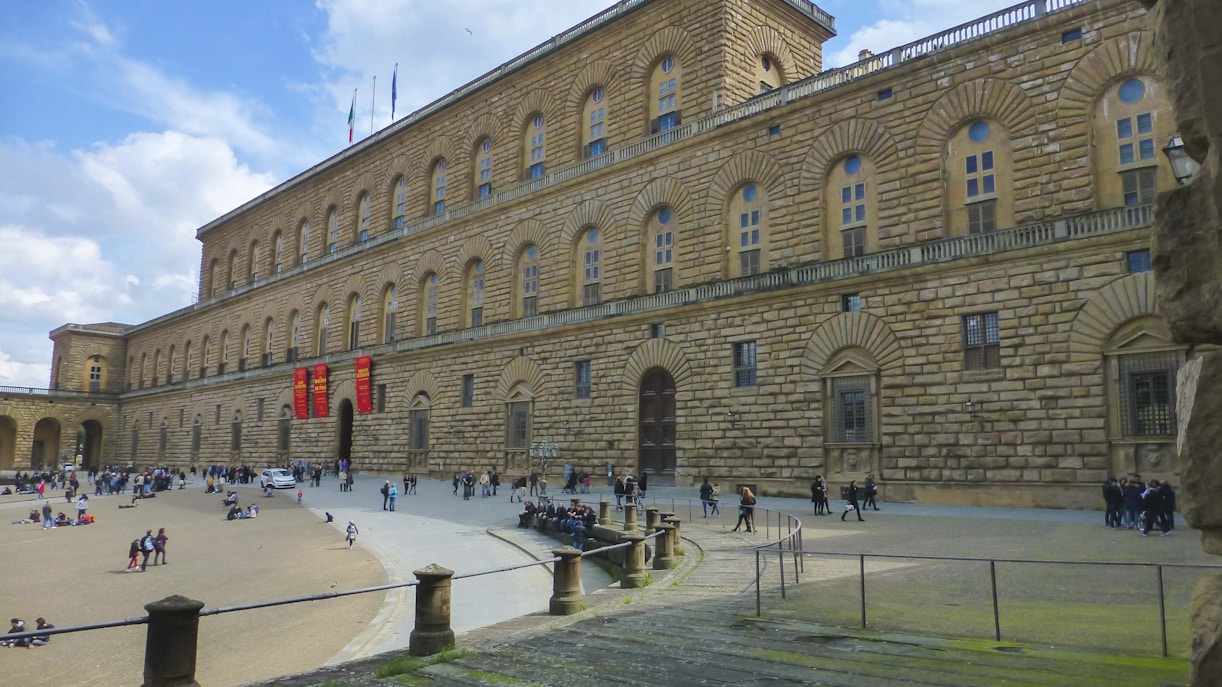
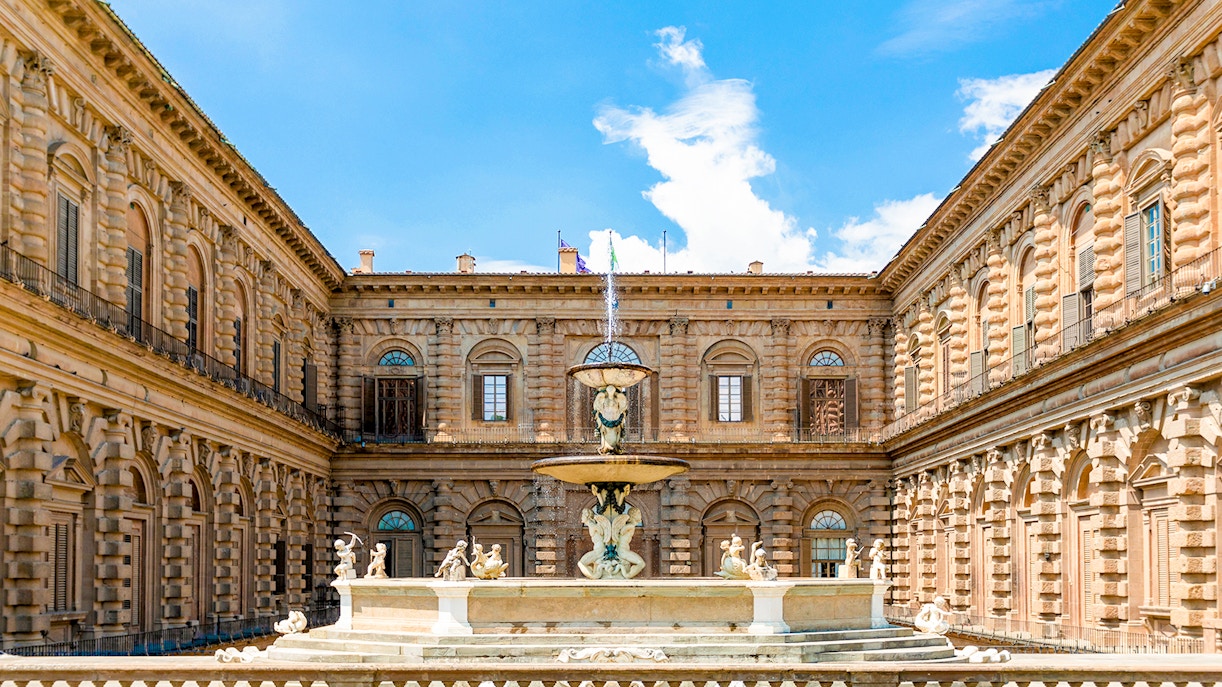
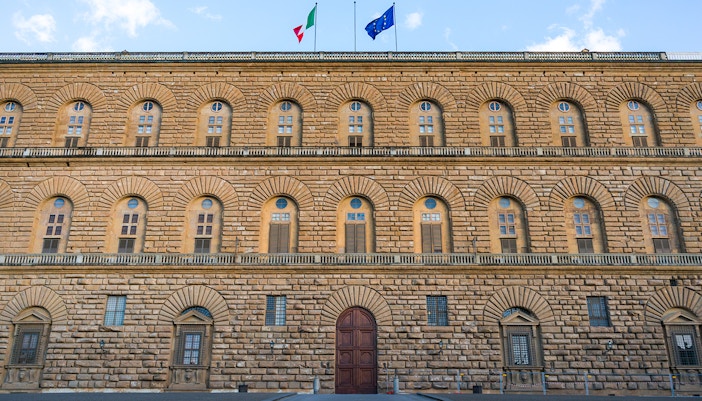
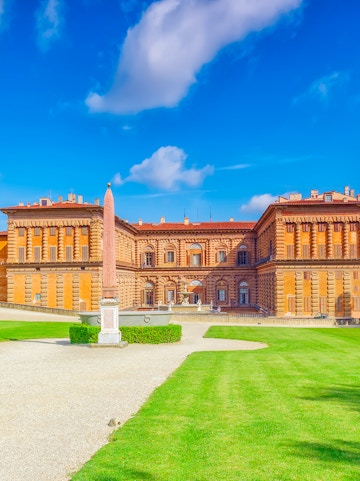
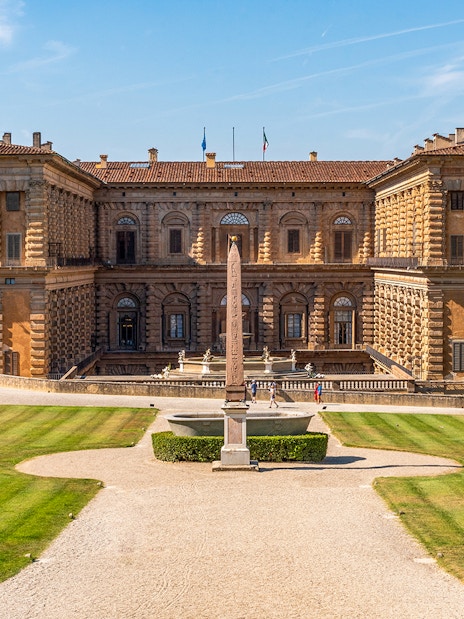
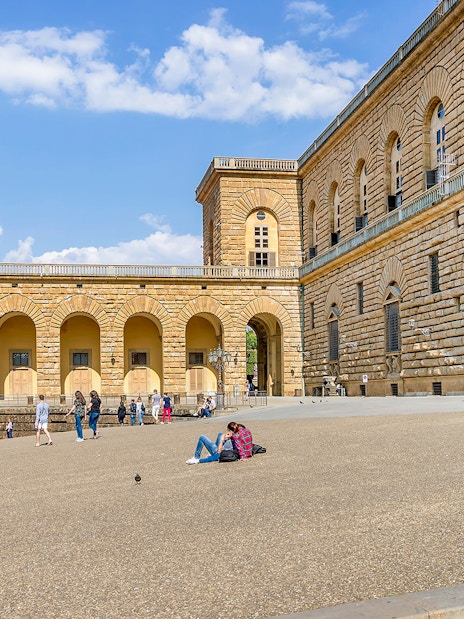
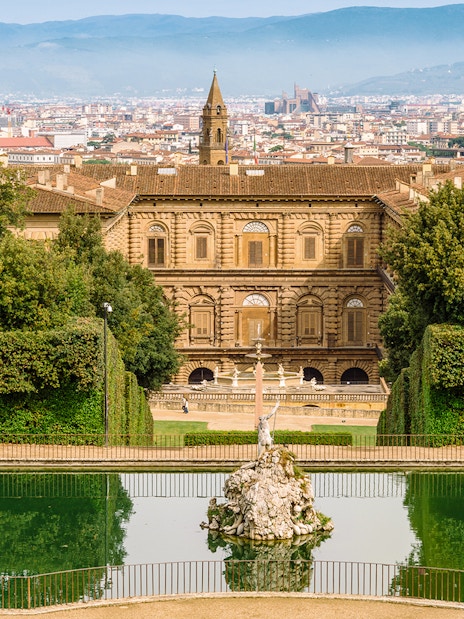
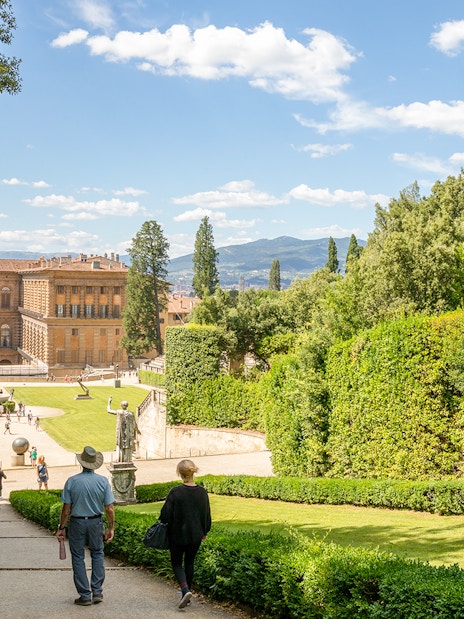
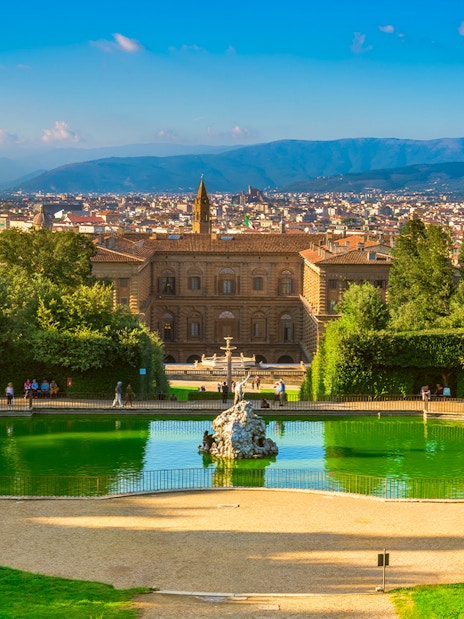
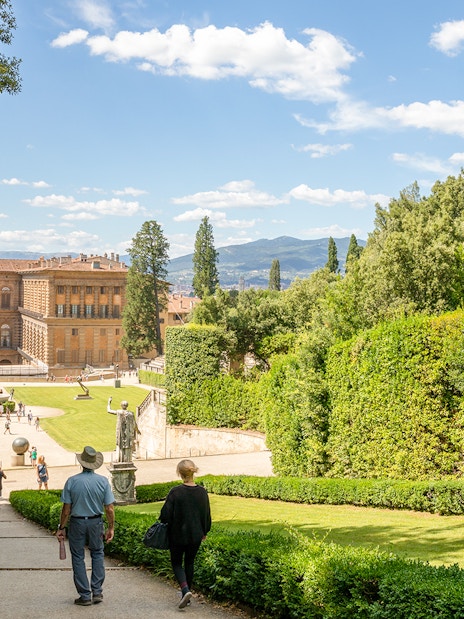
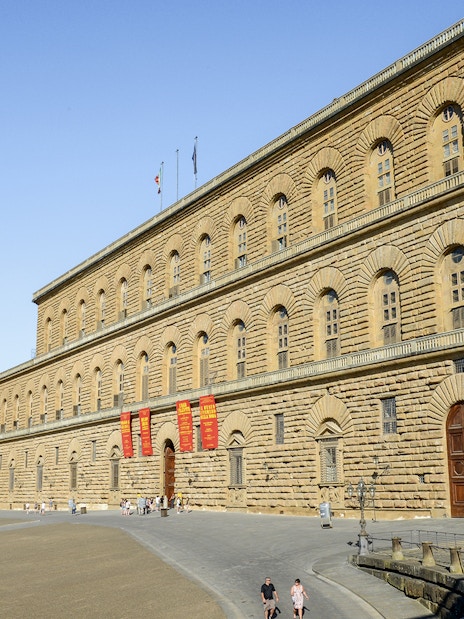
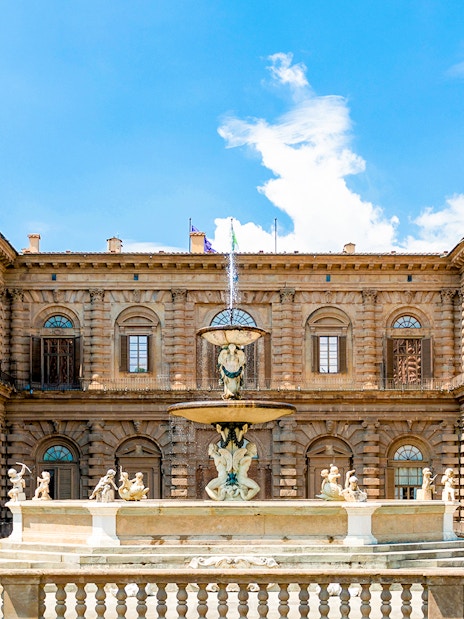
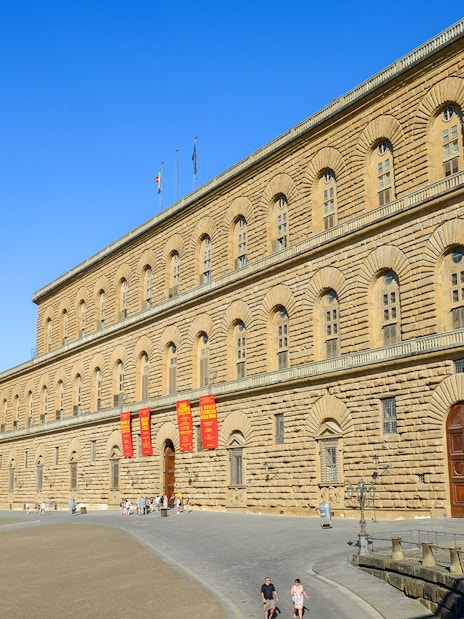
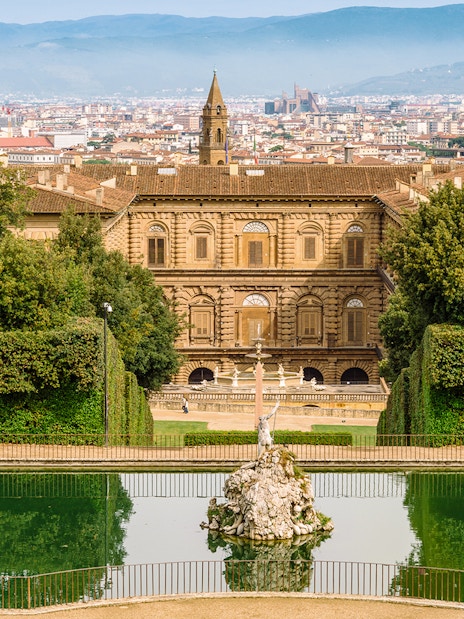
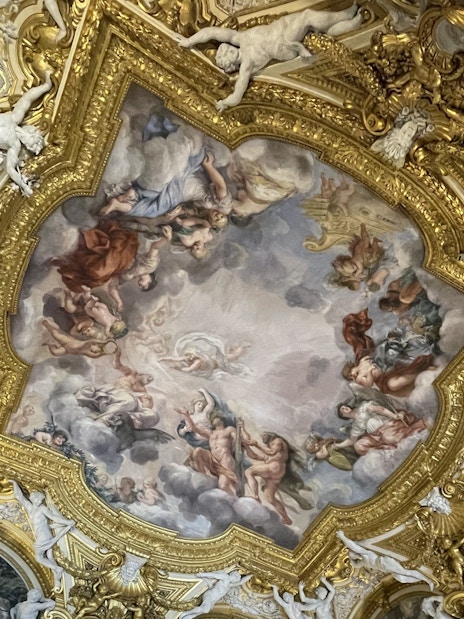
The architecture of Pitti Palace is a masterpiece of the Renaissance style, characterized by its grand scale, symmetry, and classical elements. Initially, the design, possibly by Filippo Brunelleschi but debated among historians, aimed to outshine the Medici's residence, reflecting Luca Pitti's ambition. The palace’s facade with its rusticated stone, arched windows and repetitive geometric patterns, gives it a fortress-like appearance.
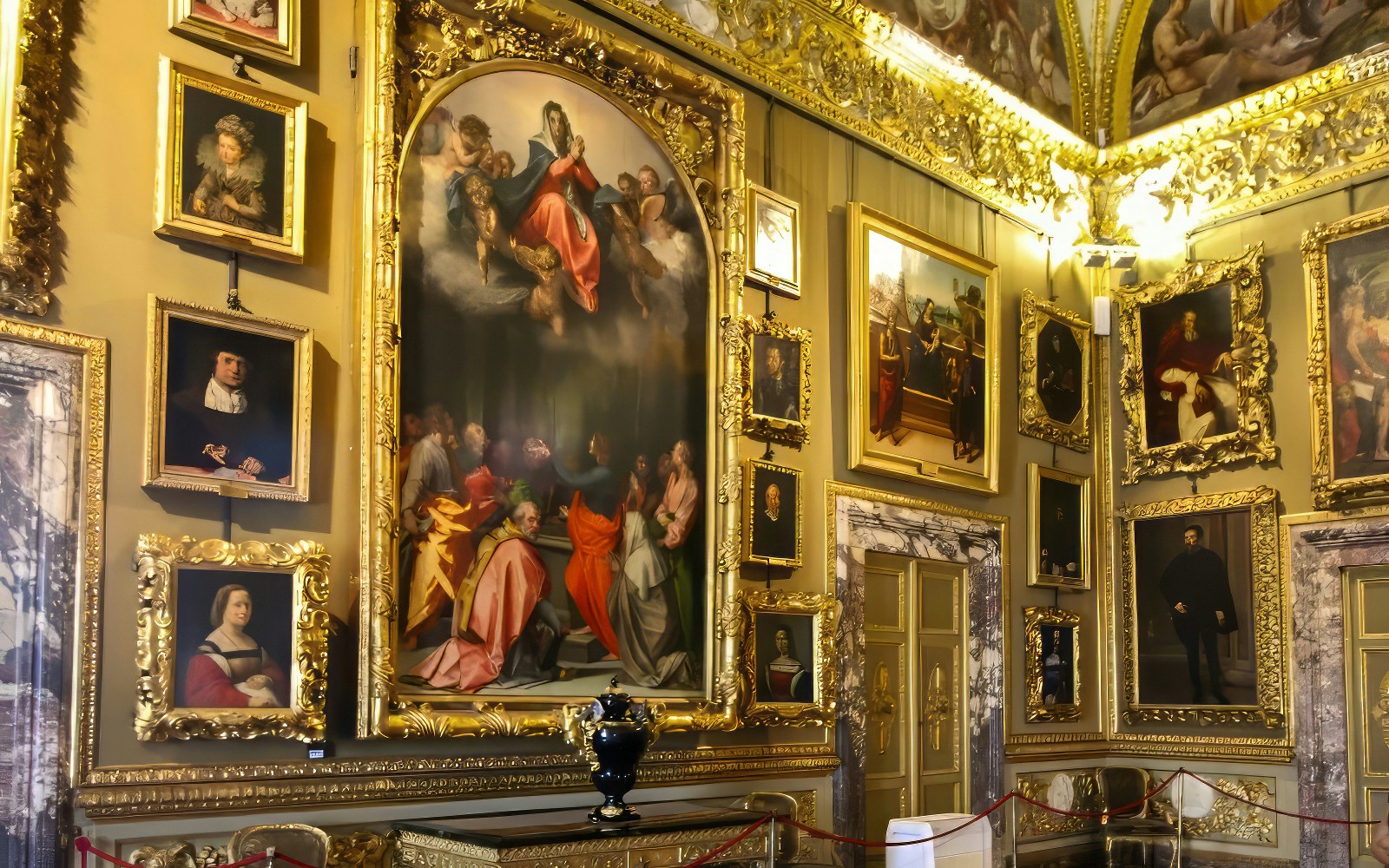
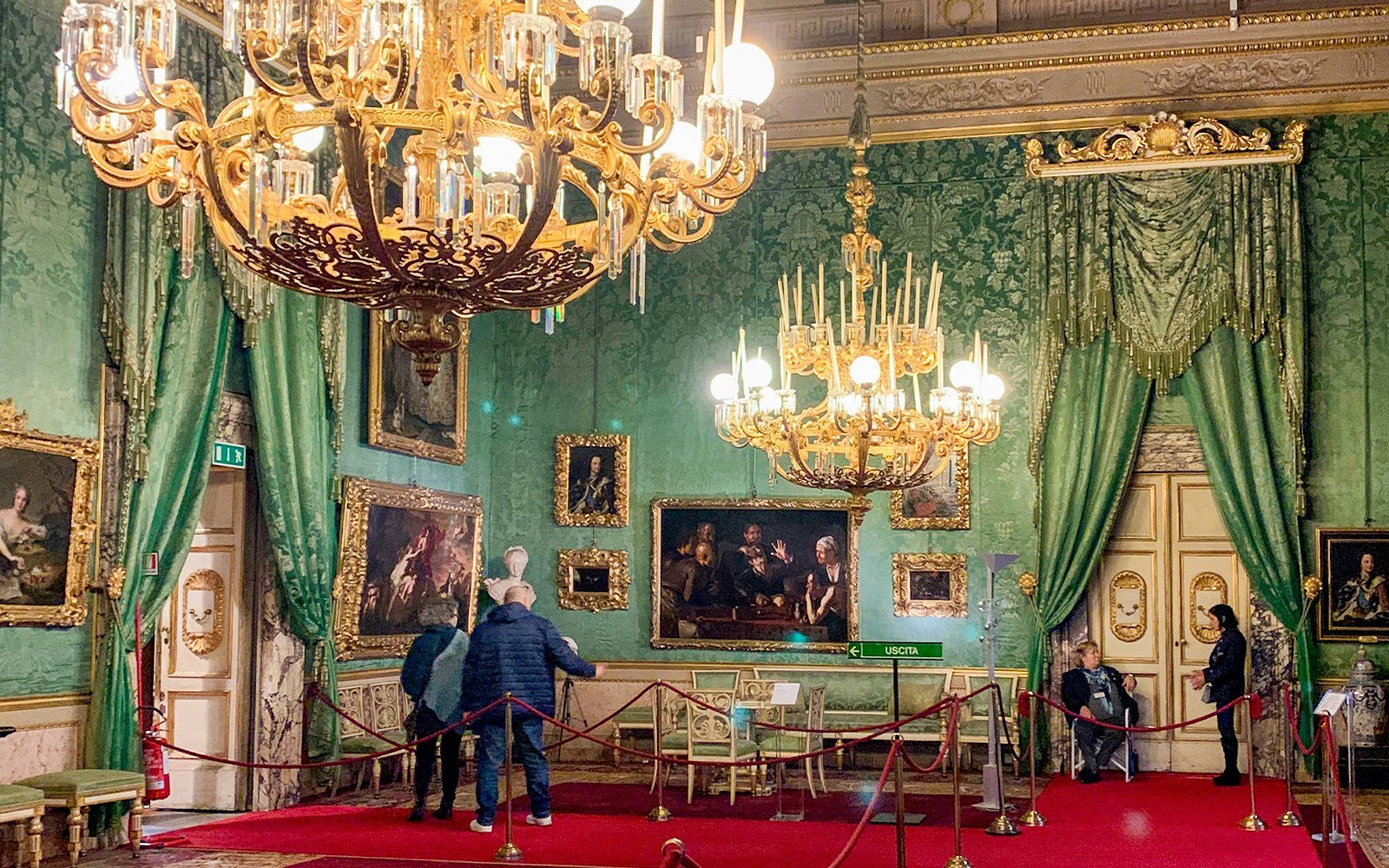
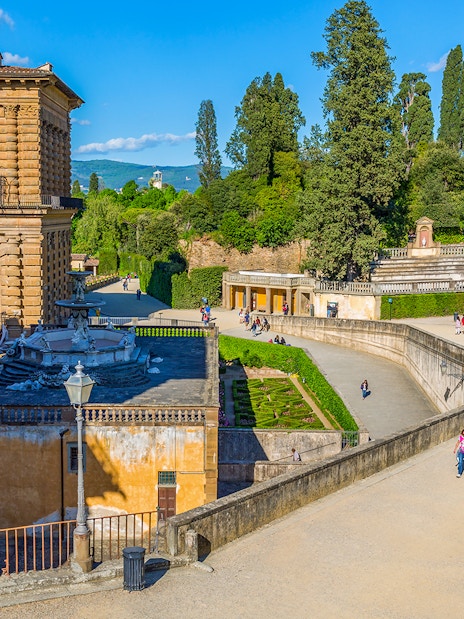
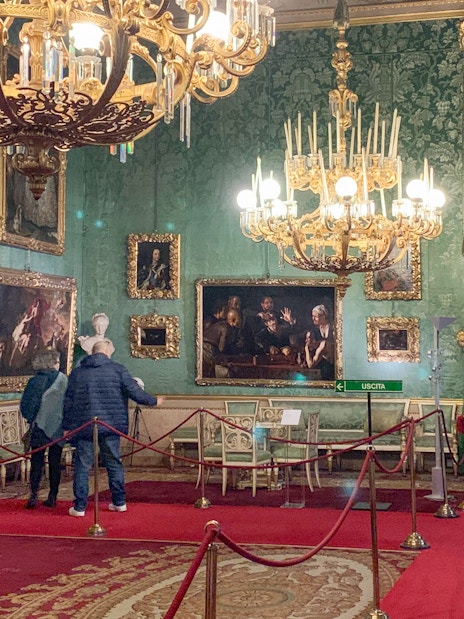
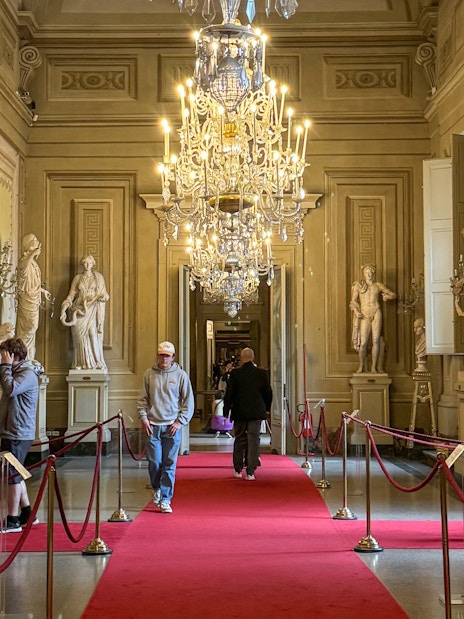
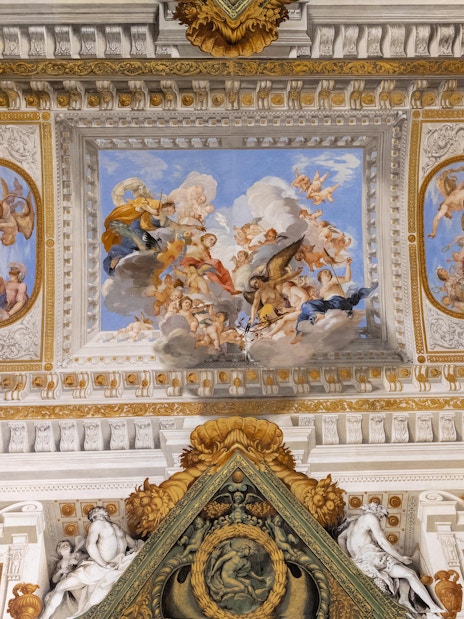
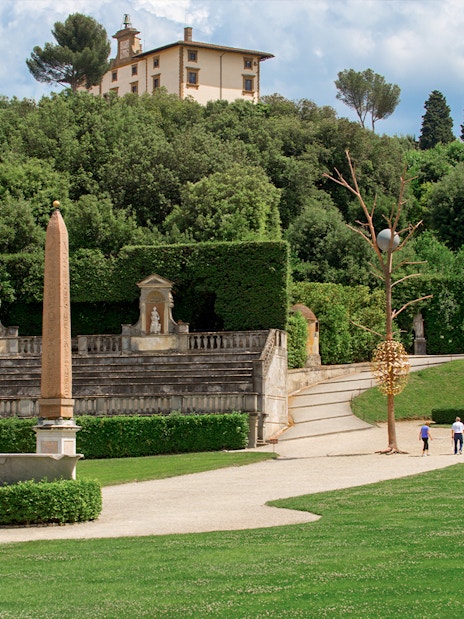
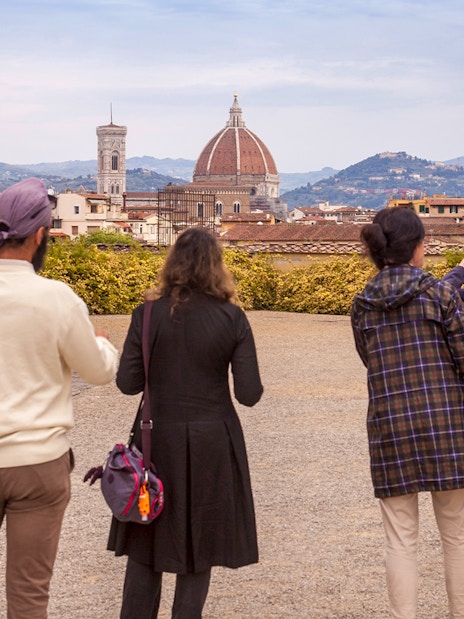
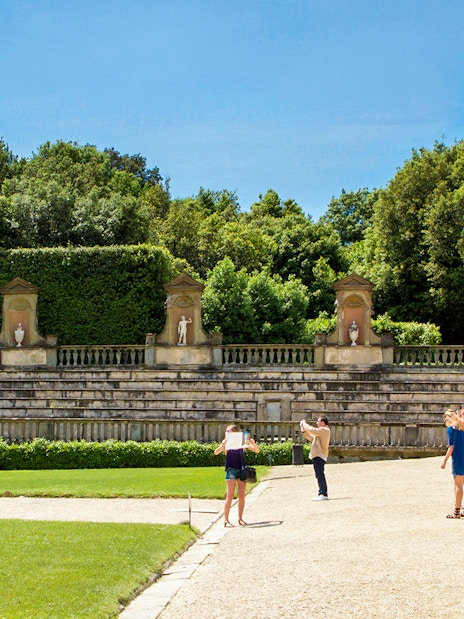
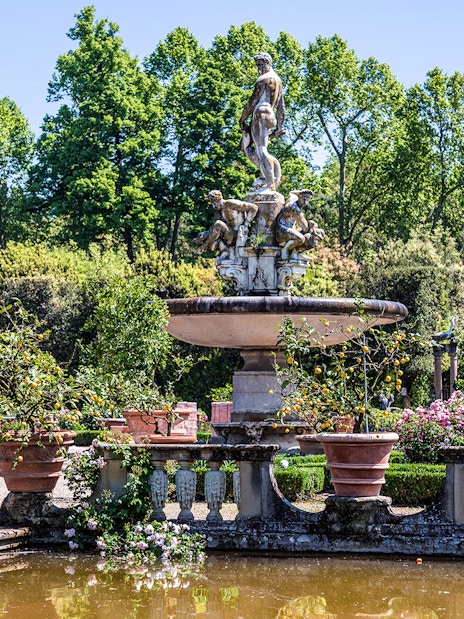
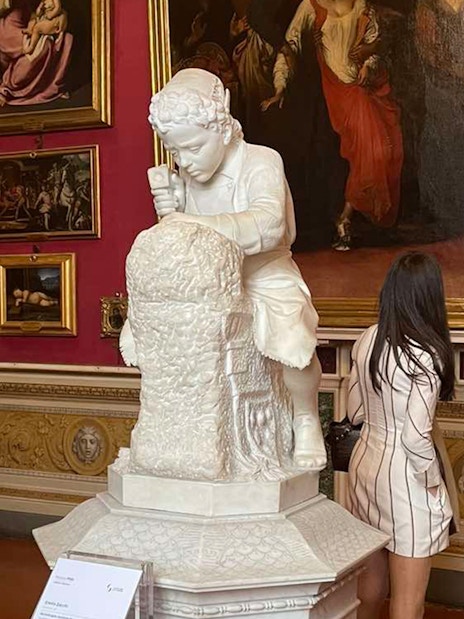
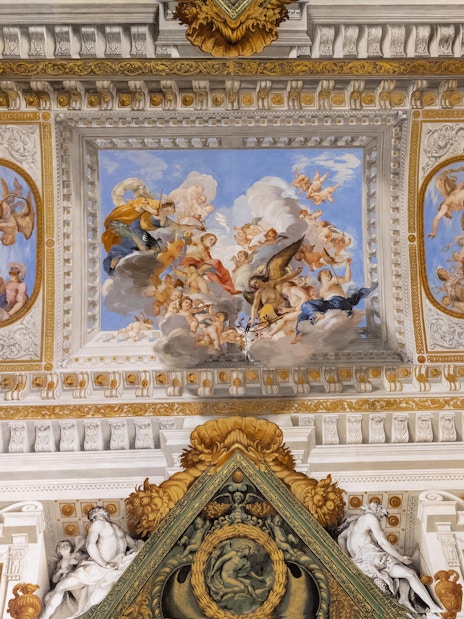
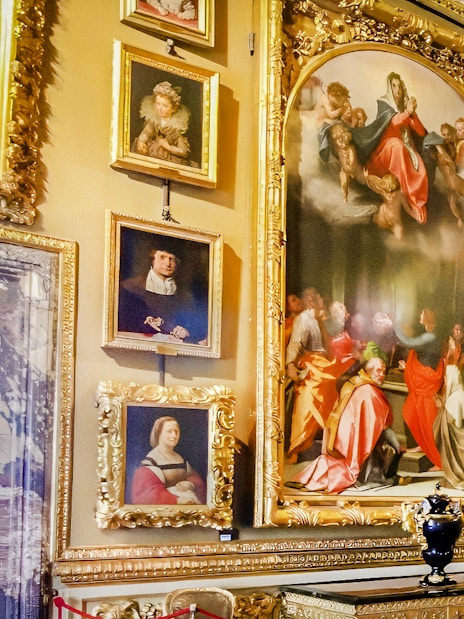
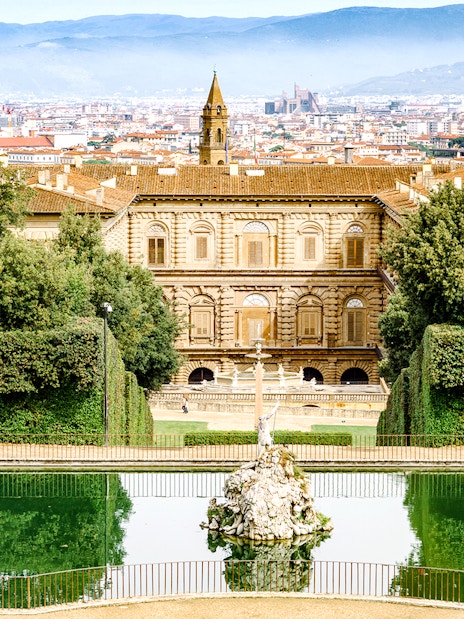
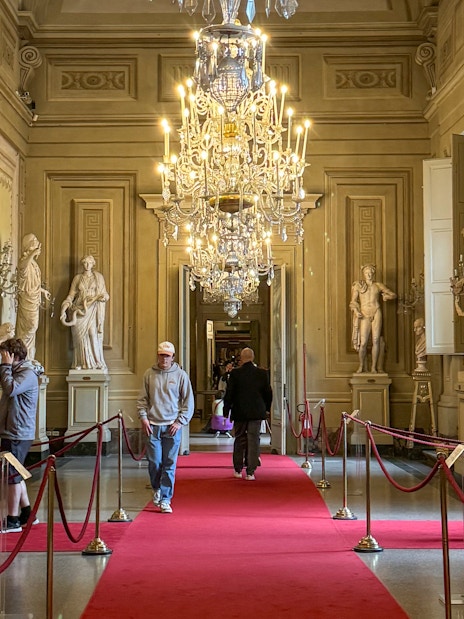
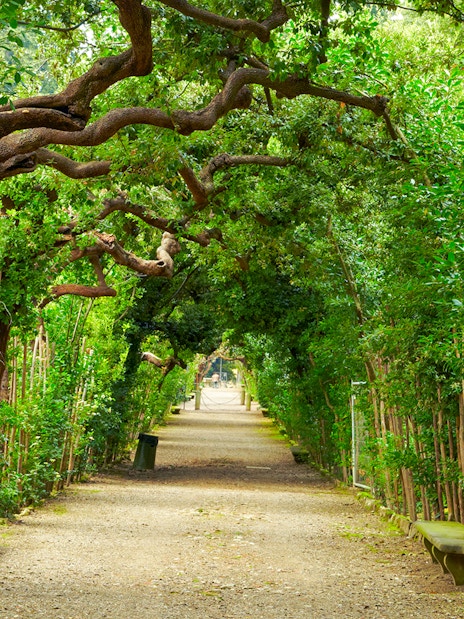
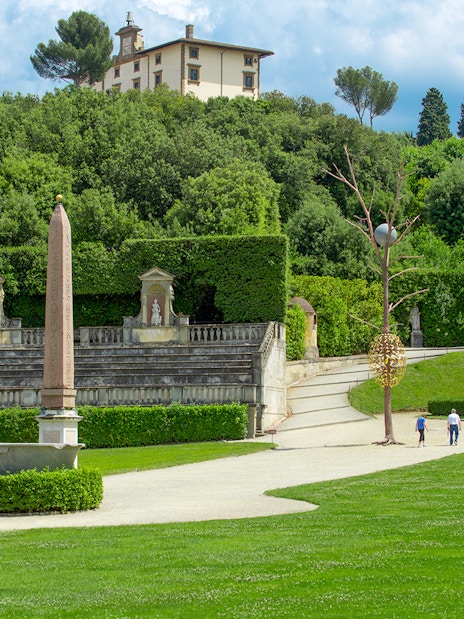
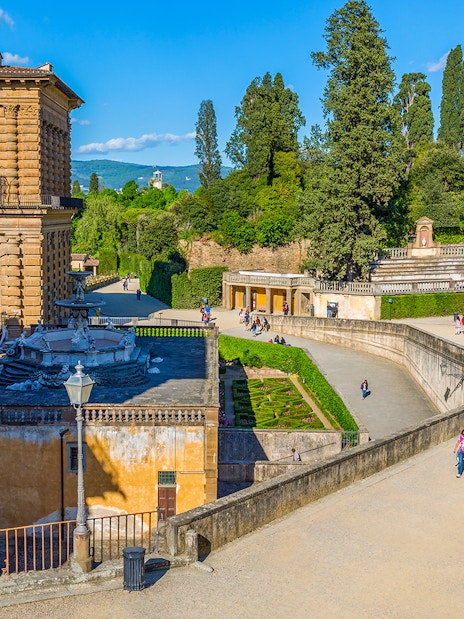
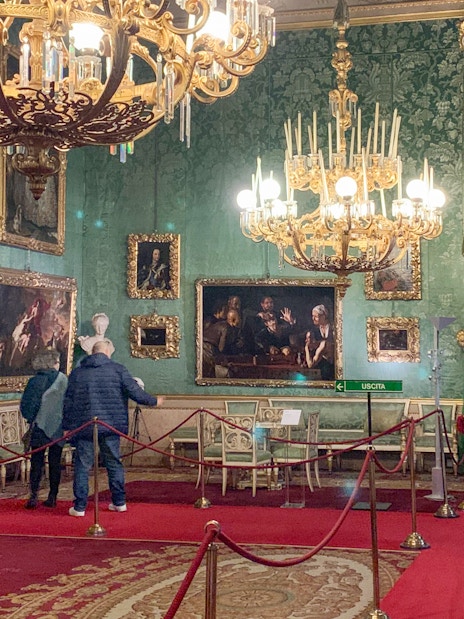
After being acquired by the Medici family in 1549, the palace expanded under architect Bartolomeo Ammannati, who added the grand courtyard and created the Boboli Gardens. Rennovations in the late 16th and 17th centuries, introduced the Baroque interiors, in the form of rich frescoes, stucco, and elaborate ceiling paintings to the palace’s rooms. The Palatine Gallery, located on the first floor, is a prime example of this Baroque interior.
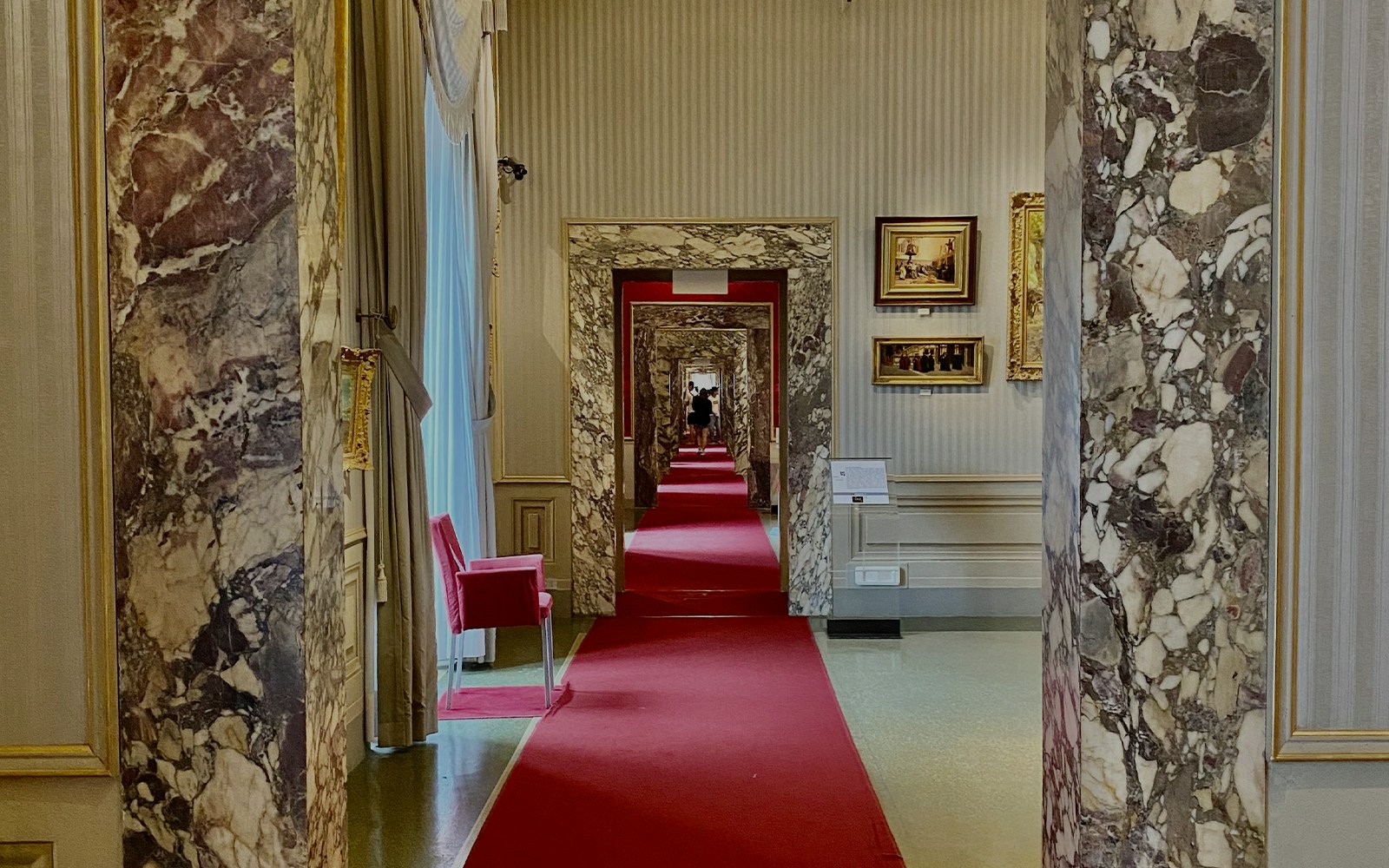
Today, the Pitti Palace, as a museum complex, showcases an evolving history of architectural styles from its original Renaissance core to the later Baroque and Neoclassical additions.